
How to Hire an NCCA-Registered Carpet Cleaner (or Oven Cleaning Pro) in the UK: 12 Questions to Ask
How to hire an NCCA-registered carpet cleaner or oven cleaning pro in the UK: 12 questions, red flags, contract rules and how to verify credentials.
Hiring professional carpet cleaning in the UK comes down to one filtering question and one walk-away red flag. Ask for an NCCA membership number, check it on ncca.co.uk in 60 seconds, and refuse any trader who insists on cash-only over £500. Everything else is detail.
TL;DR
- Filtering question: "Are you an NCCA member, and what's your registration number?" Verifiable in 60 seconds at the NCCA find-a-cleaner register.
- Walk-away red flag: cash-only insistence above £500. Illegal for VAT-registered traders and a guarantee that Consumer Rights Act 2015 remedies become unenforceable.
- Get 3 quotes minimum: NCCA member, marketplace, local. Expect £50–£75 per room (Checkatrade, 2026).
- Before you call, see our complete UK homeowner's guide to how to clean carpet.
This guide gives you the full 12-question hiring script, the 6 follow-up questions for the quote visit, the red flags that mean walk away, and a five-minute credential check that works for both carpet and oven jobs. We'll also cover Consumer Contracts Regulations 2013 cooling-off rules, Section 75 card protection, and the Consumer Rights Act 2015 re-perform remedy that NCCA members already follow as standard.
Before you contact anyone: what to prepare
Preparation saves money. NCCA member quotes are usually within 10–15% of each other when scoped from the same brief, so a clear brief is the single biggest lever you have. Spend twenty minutes on the seven steps below and you'll cut quote variance from £200 down to £40 on a typical three-room professional carpet cleaning job (Checkatrade benchmark, 2026).
- Measure each carpeted room in m². Photograph a tape measure in shot for proof.
- Photograph each room corner and any specific stains in daylight, not under bulb light.
- Note the carpet construction: wool, polyamide (nylon), polypropylene, sisal. Note oven type: pyrolytic (self-clean at 500°C), catalytic (liner-based), or non-self-clean.
- List specifics that change chemistry choice: pet households, smokers, allergies, recent illness.
- Set a budget range using the Checkatrade benchmark of £50–£75 per room plus an £85 minimum call-out. For deeper price detail, read our carpet cleaning cost guide.
- Decide on add-ons: sofa, mattress, stair-runner, oven, Scotchgard or alternative stain protector.
- Confirm a 3-quote minimum: one NCCA member, one marketplace listing (Checkatrade or MyBuilder), one local independent. If you're still weighing DIY, our carpet cleaner hire comparison shows when a Rug Doctor from B&Q makes sense.
Pro tip. Send the same brief and photo pack to all three quoters. Identical inputs make the outputs comparable.
Need help with Carpet Cleaning?
Tell us about your job and we will match you with the right professional for Carpet Cleaning.
Where to find a tradesperson you can trust

Trust starts with the directory you search. The National Carpet Cleaners Association has run a public member register since 1968, requires an entry exam and ongoing CPD, and lets consumers verify members in under a minute. That's the gold standard for professional carpet cleaning in the UK. For ovens, look for AMDEA member-approved services, which is the manufacturer-recognised route for pyrolytic and catalytic models.
Trade body directories
- NCCA (https://ncca.co.uk/find-a-cleaner/), the UK's registration body for carpet and upholstery technicians.
- TACCA (The Approved Carpet Cleaners Alliance), a second-tier verification body for fibre-specialist cleaners.
- BICSc, the British Institute of Cleaning Science, which trains and certificates individual cleaning operatives.
- BPCA (https://bpca.org.uk/), useful where pest treatment and carpet cleaning overlap (post-flea or post-moth).
- TrustMark, the government-endorsed umbrella scheme that verifies tradespeople against consumer protection standards.
Marketplaces and review platforms
Checkatrade, MyBuilder, Taskino and Local Heroes are useful starting points, but be honest with yourself: a directory listing is not the same as vetting. Read the platform's own description of what it actually checks. Insurance certificates and Companies House numbers are the minimum.
Personal referrals
Ask a neighbour, then ask them for the NCCA number, not the brand name. Brand recall is unreliable. A six-digit NCCA reference is not.
Avoid these channels
- Leaflet drops with no business address.
- Cold doorstep knockers using lines like "we're cleaning down the road, can do yours for £60".
- Facebook Marketplace ads with mobile numbers only and no VAT number.
- Pop-up ads quoting "from £19 a room", which is below the cost of the chemistry alone.
The 12 questions to ask BEFORE booking the visit
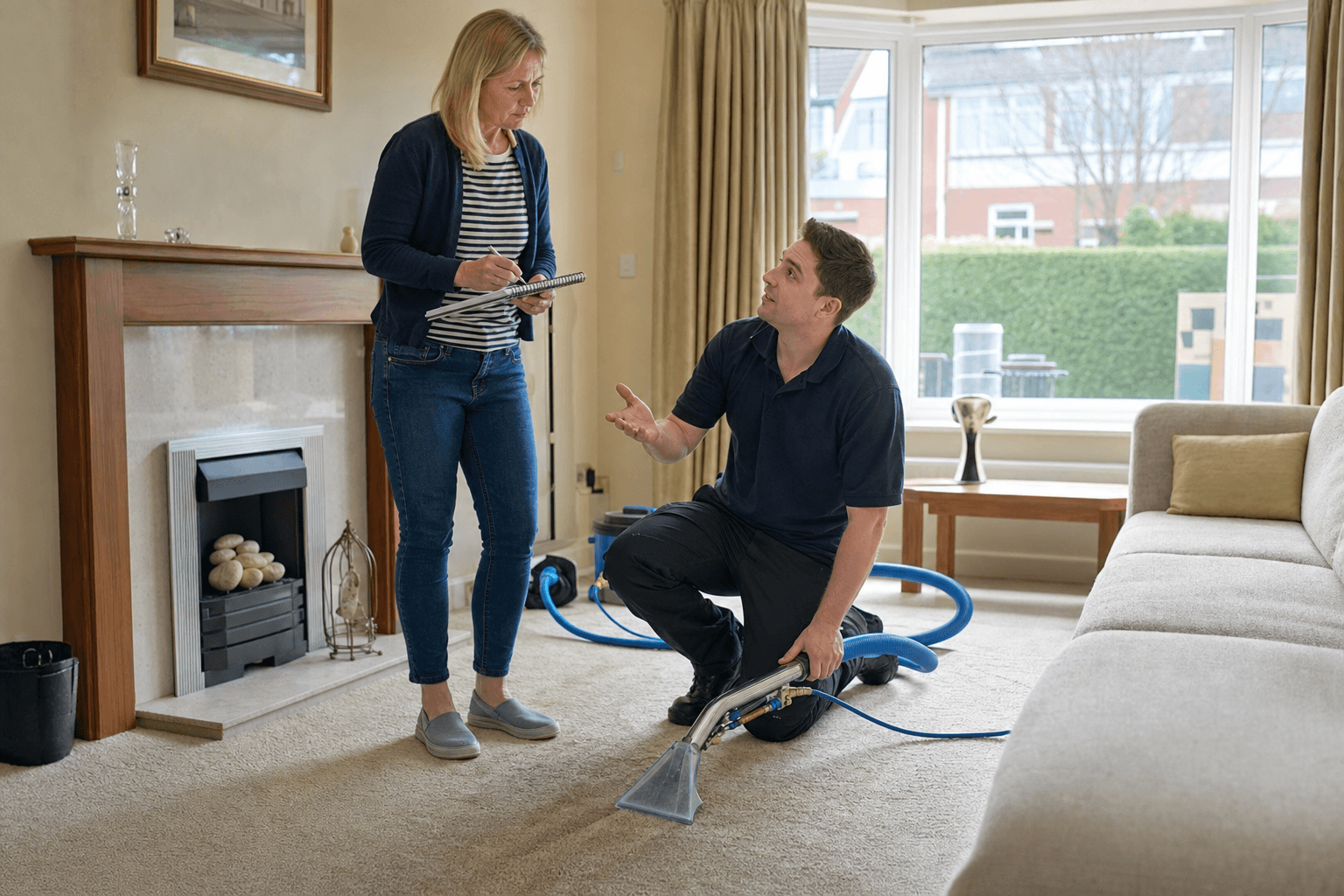
These twelve questions are the script. Ask them on the phone or by email before any quote visit is booked. A genuine NCCA registered carpet cleaner will answer them without hesitation. A chancer will hedge.
1. "What's your NCCA membership number, and can I check it on the register?"
- Good answer: number provided, member confirmed on ncca.co.uk within 60 seconds.
- Bad answer: "We're affiliated", "we work with them", or any vagueness without a number.
2. "Are you a sole trader or limited company, and what's your Companies House number?"
- Good answer: clear status, eight-digit number confirmable on the Companies House register.
- Bad answer: evasive, "the missus does the paperwork".
3. "What's your public liability insurance cover?"
- Good answer: £2m+, certificate of insurance emailed on request, insurer named (Hiscox, Axa, NFU).
- Bad answer: "we're covered" with no specifics, or anything under £1m.
4. "What method will you use, hot-water extraction or encapsulation?"
- Good answer: method tailored to fibre, explains drying time, mentions when each method wins.
- Bad answer: "just steam", which conflates HWE with a steam iron and tells you they're guessing.
5. "What chemistry do you use on wool? Is it pH-neutral?"
- Good answer: names a brand such as Prochem, mentions pH 6–8 for wool, explains why high pH strips lanolin.
- Bad answer: silence, or "same as polyamide" (which is wrong).
6. "What's the drying time, and what affects it?"
- Good answer: 4–6 hours for HWE in good conditions, 30 minutes to 2 hours for encapsulation, warns about UK damp and recommends a pedestal fan or open trickle vents.
- Bad answer: "couple of hours" with no caveats.
7. "Do you have a minimum call-out and what's your VAT status?"
- Good answer: £85 typical minimum, VAT shown separately if registered, threshold currently £90,000 turnover (HMRC, 2026).
- Bad answer: "we can do cash, save you the VAT". This is tax evasion and breaks your Section 75 protection in one sentence.
8. "Can you send a written quote scoped to my list and photos?"
- Good answer: yes, by tomorrow, line-item, on company letterhead with VAT number.
- Bad answer: "I'll ring you back" with no paper trail.
9. "Do you offer the Consumer Rights Act 2015 re-perform remedy if a stain doesn't lift?"
- Good answer: explicit re-perform within 7–14 days, named in writing, under Section 49 of the Consumer Rights Act 2015 (services performed with reasonable care and skill).
- Bad answer: "no guarantees", "depends", or "we'll see".
10. "If I add oven cleaning, do you bundle the carpet visit?"
- Good answer: yes, 10–15% bundle discount, separately priced line items so you can drop one without losing the other.
- Bad answer: no clear pricing, "we'll sort it on the day".
11. "For my pyrolytic oven, will you use any chemicals?"
- Good answer: "No. Manufacturer-approved methods only. Caustic strippers damage the catalytic liners and void Bosch, Neff and Siemens warranties."
- Bad answer: "we use our standard caustic". Walk away.
12. "What's your deposit, and how do I pay safely?"
- Good answer: 25% deposit maximum, BACS or card, balance on completion. Card payment over £100 gives you Section 75 protection from your card issuer if the job goes wrong.
- Bad answer: 100% up front, cash only, "PayPal friends and family".
Explore our Oven and fridge cleans service
See what is included, typical timings, and what to prepare before you book.
The 6 questions to ask DURING the quote visit
A site visit gives you information no phone call can. If a quoter refuses to attend in person and you've got a wool or sisal carpet, that's already a soft red flag. Ask these six during the walk-around.
1. "Show me the corner where you'll test for colour-fastness."
A confident technician picks the hidden corner (behind the sofa, under the curtain), wets a white cotton bud, and shows you the result before quoting.
2. "Can I see the chemistry label and dwell time?"
Pre-spray dwell time of 10–15 minutes is normal for hot-water extraction. The label tells you the active ingredient, pH and any COSHH 2002 hazard pictogram.
3. "How will you move furniture, and what won't you move?"
Pianos, baby grand, fish tanks and electronics typically stay. Sofas, sideboards and beds are moved in pairs or on sliders. Get this in writing.
4. "What's the plan if you find mould under the underlay?"
A good answer references underlay replacement and ventilation. For the deeper background, see our pillar guide on mould and damp problems (cross-referenced from Pillar 03).
5. "What time will you finish, including drying setup?"
Drying setup matters more than people realise. A pedestal fan left running for two hours after extraction halves residual moisture and prevents wicking (where soiling bleeds back to the surface as the pile dries).
6. "Where do you dispose of the extracted slurry?"
DEFRA waste-water rules require commercial operators to dispose of cleaning slurry through a foul-water connection, not a storm drain. A professional will name a depot or transfer station. An amateur will say "down the drain outside" — which is a Trade Effluent offence.
Red flags that mean walk away
These nine signals are auto-fails. One alone is enough; two is a guaranteed problem.
- No NCCA / TACCA membership AND no Companies House registration.
- Cash-only insistence above £500.
- 100% up-front payment demand before any work starts.
- "Today only" pricing or "if you book now" discounts.
- Cold doorstep knock with no prior contact.
- No written quote provided after 48 hours.
- Vague method description: "steam only", "shampoo and go".
- No public liability evidence after a polite request.
- "We don't bother with pyrolytic warnings, never had a problem." (This breaks COSHH 2002 and voids your oven warranty.)
Walk-away rule. If you feel pressured, hang up. Pressure is the single most reliable indicator that a job will end in a small-claims dispute.
Ready to book Carpet Cleaning?
Send a quick enquiry — we typically respond the same working day.
How to verify their credentials in 5 minutes
Verification takes one mug of tea. The four checks below cover 95% of risk on a professional carpet cleaner booking.
Trade body check
NCCA register at https://ncca.co.uk/find-a-cleaner/ (search by postcode or surname), TACCA member list, TrustMark scheme check at trustmark.org.uk. If the trader claims AMDEA approval for oven work, cross-check on the AMDEA member directory.
Companies House check
Search the limited company name or director at https://find-and-update.company-information.service.gov.uk/. Look for: active status, accounts filed within 9 months of year-end, no recent insolvency notices.
Insurance check
£1m public liability is the legal minimum many trade bodies require. £2m is preferred for residential carpet and upholstery, given that a single spilled bottle of pre-spray on a £3,000 wool runner can wipe out a £1m policy excess if there's collateral damage.
Reviews check
Look for: named jobs (postcode area, fibre type, "Berber wool in a SW19 first-floor flat" rather than "great job"), date stamps within the last six months, photos uploaded by the customer not the trader, and owner replies that engage with detail. Treat 5-star generic praise with caution. A pattern of 30 perfect reviews in 48 hours is a paid-review red flag.
How to read a written quote
The line items below are the minimum a written quote should specify for professional carpet cleaning. Use the table as a checklist when comparing three quotes side by side.
| Line item | What good looks like | What "no" looks like |
|---|---|---|
| Method | HWE, encapsulation or hybrid named | "Steam" alone |
| Rooms | Each room listed with m² | "Whole house" lump sum |
| Pre-spray | Brand named (Prochem, Craftex) | Generic "treatment" |
| Extraction passes | Two passes per spray, named | Not mentioned |
| Drying setup | Pedestal fan included | Not offered |
| Stain protector | Optional, £15–£25/room | Bundled silently |
| VAT | Shown separately | Hidden in total |
| Deposit | 25% maximum | 50%+ |
| Re-perform clause | Named, 7–14 days | Absent |
If a quote misses three or more rows, ask for a revised version before signing.
Learn more about Oven and fridge cleans
Browse how we deliver Oven and fridge cleans and the questions homeowners ask most often.
Contracts and consumer protection (UK-specific)
UK consumer law works in your favour when you book a written job. The Consumer Rights Act 2015 says services must be performed with reasonable care and skill, and Section 49 gives you a clear re-perform remedy when they aren't. Most NCCA members already follow this as standard.
When you legally need a written contract
There's no statutory minimum value above which a written contract is legally required for domestic cleaning. But a written scope is the easiest way to enforce Consumer Rights Act 2015 protections. Any quote over £42 is good practice to get in writing.
Cancellation rights
The Consumer Contracts Regulations 2013 give you a 14-day cooling-off period when the contract is formed off-premises (doorstep, phone, email, online). The trader must inform you of this right in writing. If they don't, the cooling-off period extends to 12 months.
Deposit limits
Rule of thumb: never more than 25%. A 100% up-front demand on a £400 job is a near-guarantee of dispute.
How to pay safely
BACS, debit card, or credit card (Section 75 protection on credit-card spends between £100 and £30,000). Platform escrow on marketplaces. Avoid cash on jobs over £500. Section 75 of the Consumer Credit Act 1974 makes the card issuer jointly liable with the trader if the work goes wrong, which is genuine consumer protection at zero cost.
After the job: snagging, retention, and disputes
Snagging in daylight, 24 hours after the clean, catches 90% of issues. Walk each room with the lights off and the curtains open. Photograph any wicking, residue, pile flattening or missed corners. Show the technician on the day if you can; if not, email photos within 48 hours.
How to snag properly
Look for: residual stains (especially around skirting), pile direction inconsistencies, lingering odour, sticky residue underfoot. Test by walking barefoot — if your socks stick, there's residual detergent.
When to release final payment
After snagging passes. A 75% deposit / 25% retention split protects both parties. If the trader insists on 100% on completion before snagging, that's negotiable.
How to escalate
First, follow the NCCA complaints procedure (member traders agree to it as a condition of registration). Second, contact Trading Standards via Citizens Advice on 0808 223 1133. Third, small-claims court for unresolved disputes under the Consumer Rights Act 2015. The Money Claim Online service handles disputes up to £10,000 for a £35–£455 court fee depending on claim value (gov.uk, 2026).
Thinking about Carpet Cleaning?
Share your postcode and job details for a no-obligation quote.
How Taskino vets the carpet cleaners on the platform
If running the 12-question script across three quotes sounds like a Saturday you'd rather not spend, Taskino does the legwork. Every professional carpet cleaner on the platform passes NCCA, TACCA or BICSc verification, a £1m public liability check, a Companies House lookup, and a customer-review screen before a quote ever reaches your inbox. We're not a vetting marketplace pretending to be a directory: the checks happen first, the conversation starts at "when can you come" rather than "are you legit".
Sources
- National Carpet Cleaners Association — UK registration body for carpet and upholstery cleaners
- Consumer Rights Act 2015, Section 49 — re-perform remedy for services
- Consumer Contracts Regulations 2013 — 14-day cooling-off period
- Department for Environment, Food & Rural Affairs — waste-water disposal rules for commercial slurry
- Health and Safety Executive, COSHH 2002 — caustic oven chemical handling rules
- Companies House public register — trader verification
- BPCA — British Pest Control Association
- gov.uk consumer protection — Section 75 and dispute escalation
- Checkatrade (2026) — professional carpet cleaning £50–£75/room, oven cleaning £45–£65
Frequently asked questions: How to Hire an NCCA-Registered Carpet Cleaner (or Oven Cleaning Pro) in the UK: 12 Questions to Ask
Short answers to common questions about this topic.
Our team will answer all your questions. we ensure a quick response.
Contact UsRelated posts
How to clean a carpet at home, real UK 2026 carpet cleaning prices, Rug Doctor vs pro, oven symbols decoded and how to hire a NCCA-registered cleaner.

UK 2026 carpet cleaning cost: £50-£75 per room, £85 minimum call-out, sofa £45-£90. Rug Doctor £28/day. Regional London surcharge and quote rules.
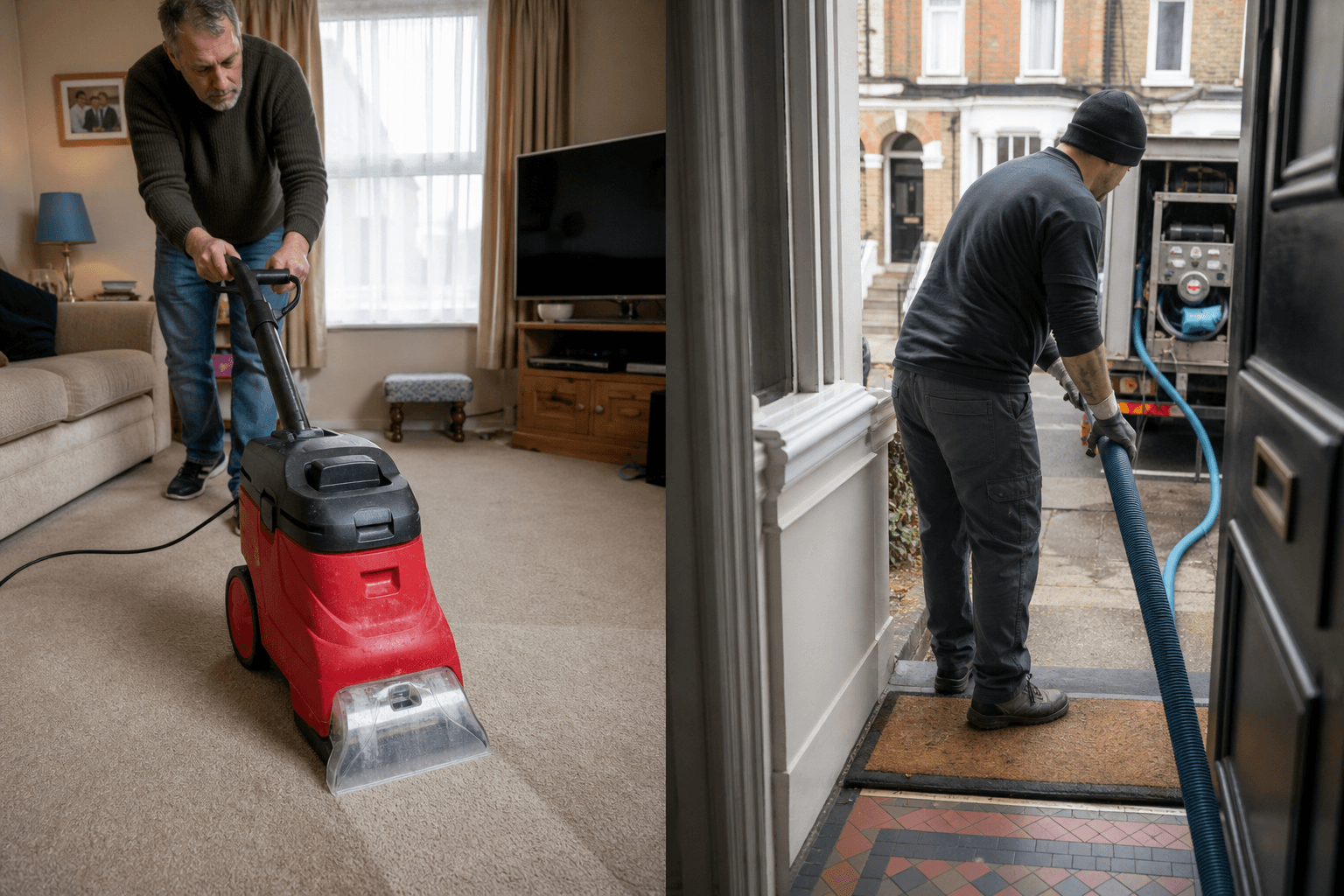
Rug Doctor at £28/day vs NCCA pro at £85 minimum: UK 2026 honest comparison of carpet cleaner hire, hidden costs and the £-per-hour decision.
Latest in Cleaning Services
View all in this category
Five reasons professional office cleaning is essential for your business, from productivity and image to hygiene, smart spending and specialist support.
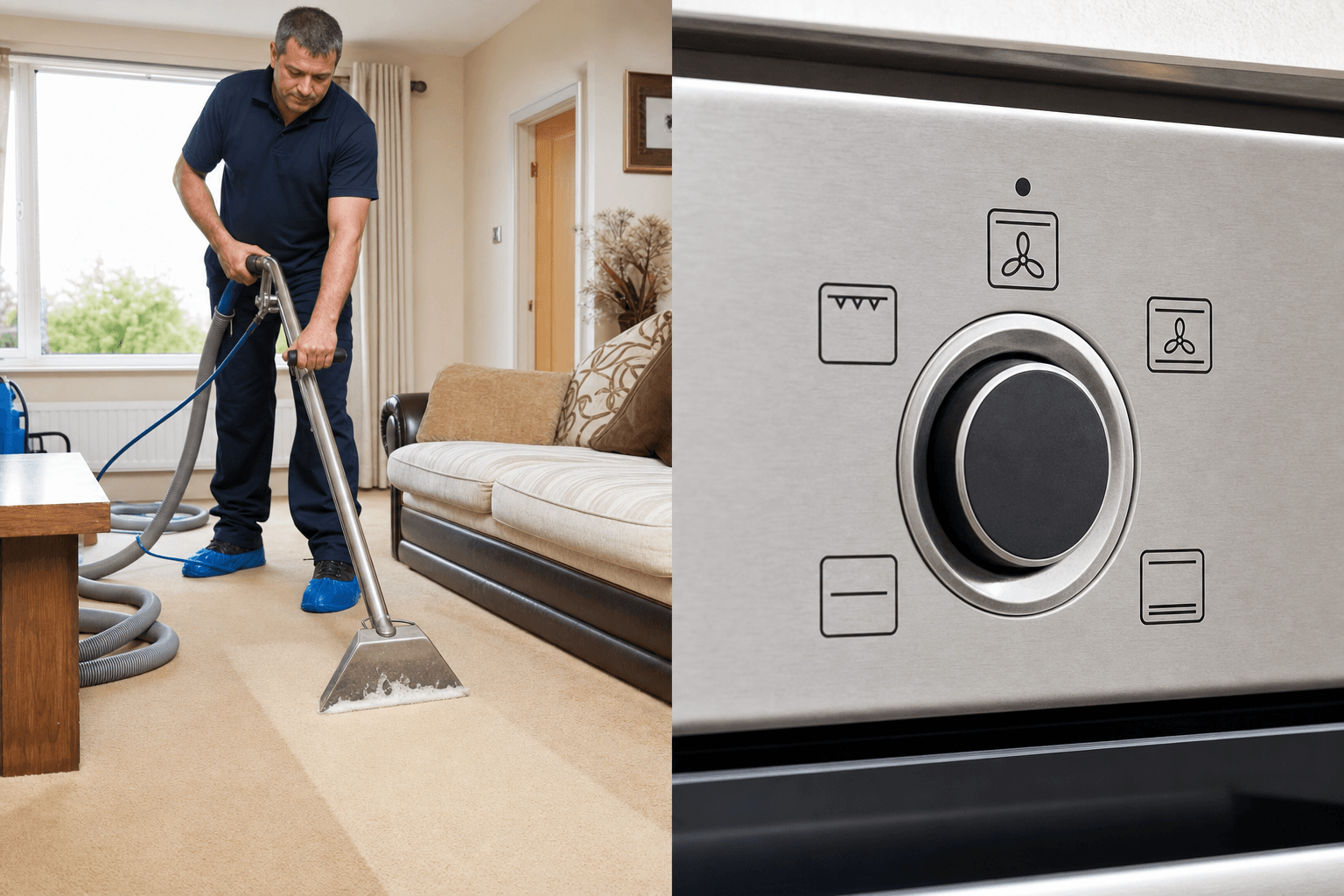
Steam vs dry vs hot-water carpet cleaning compared, plus every UK oven symbol decoded (fan, grill, broiling, pyrolytic) and which is right for your home.
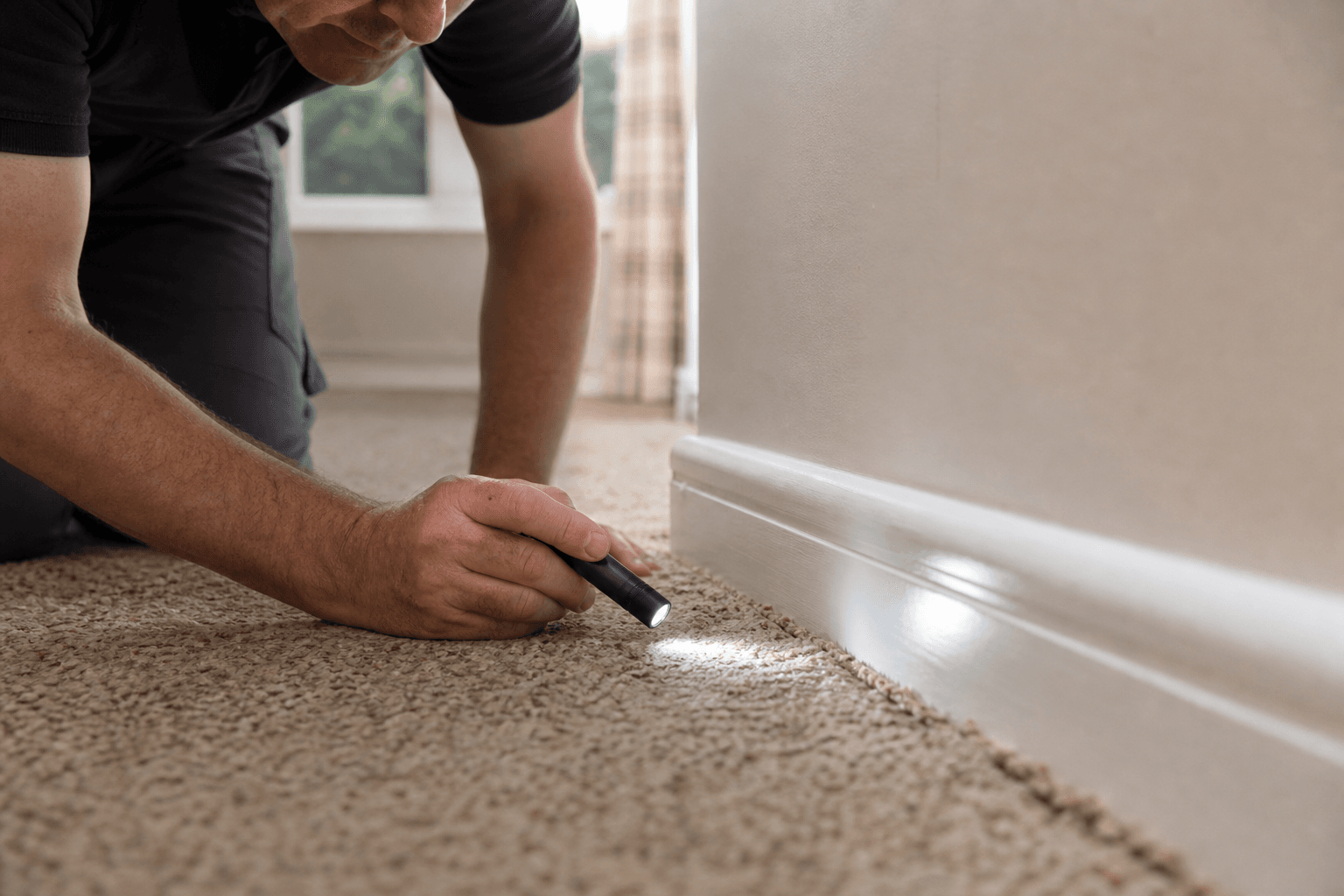
UK 2026 diagnosis: carpet beetles, moths, dust mites and pet stains. 7 causes, what to treat with (Rentokil, Acana), when to call a pro.
Related services
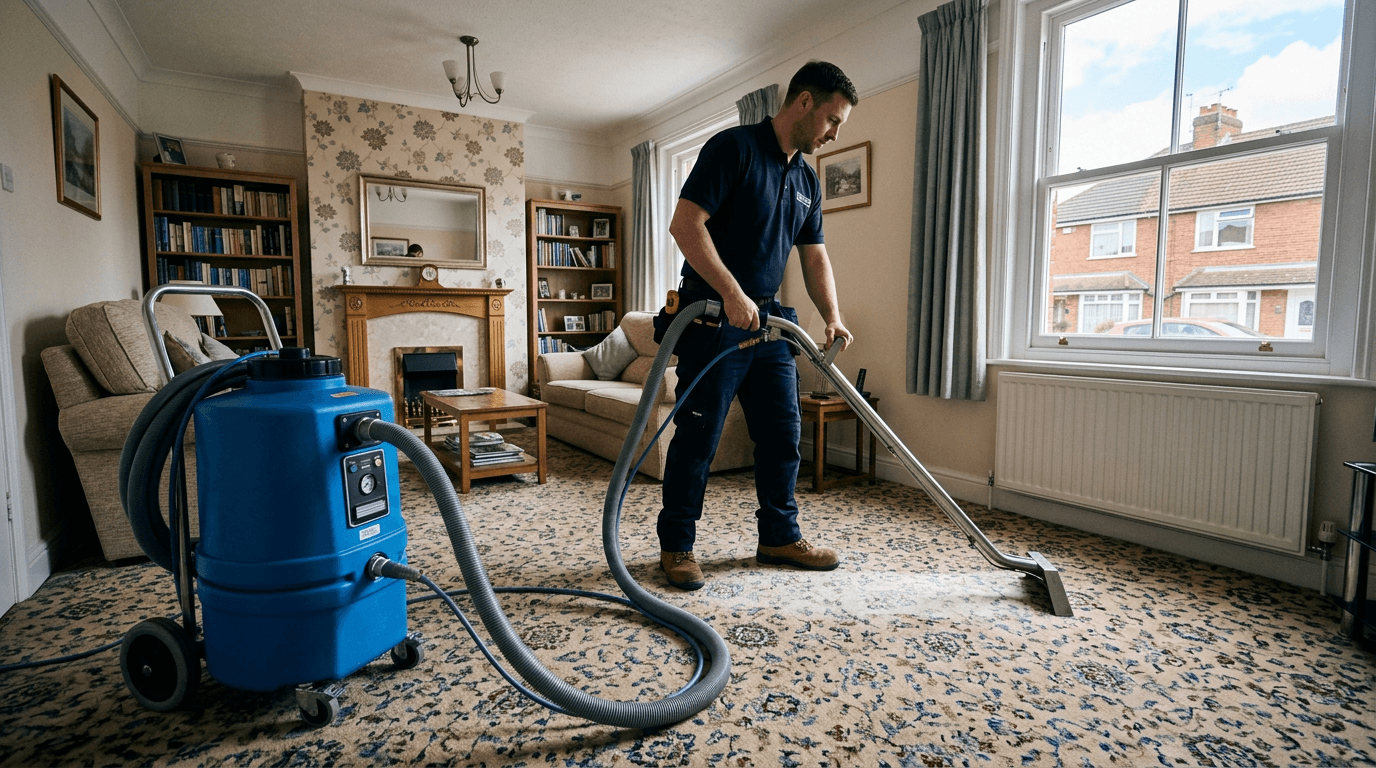
Professional carpet cleaning for homes across the UK. Taskino connects you with trusted cleaners who lift dirt, treat stains and refresh carpets with clear quotes and no hidden fees.
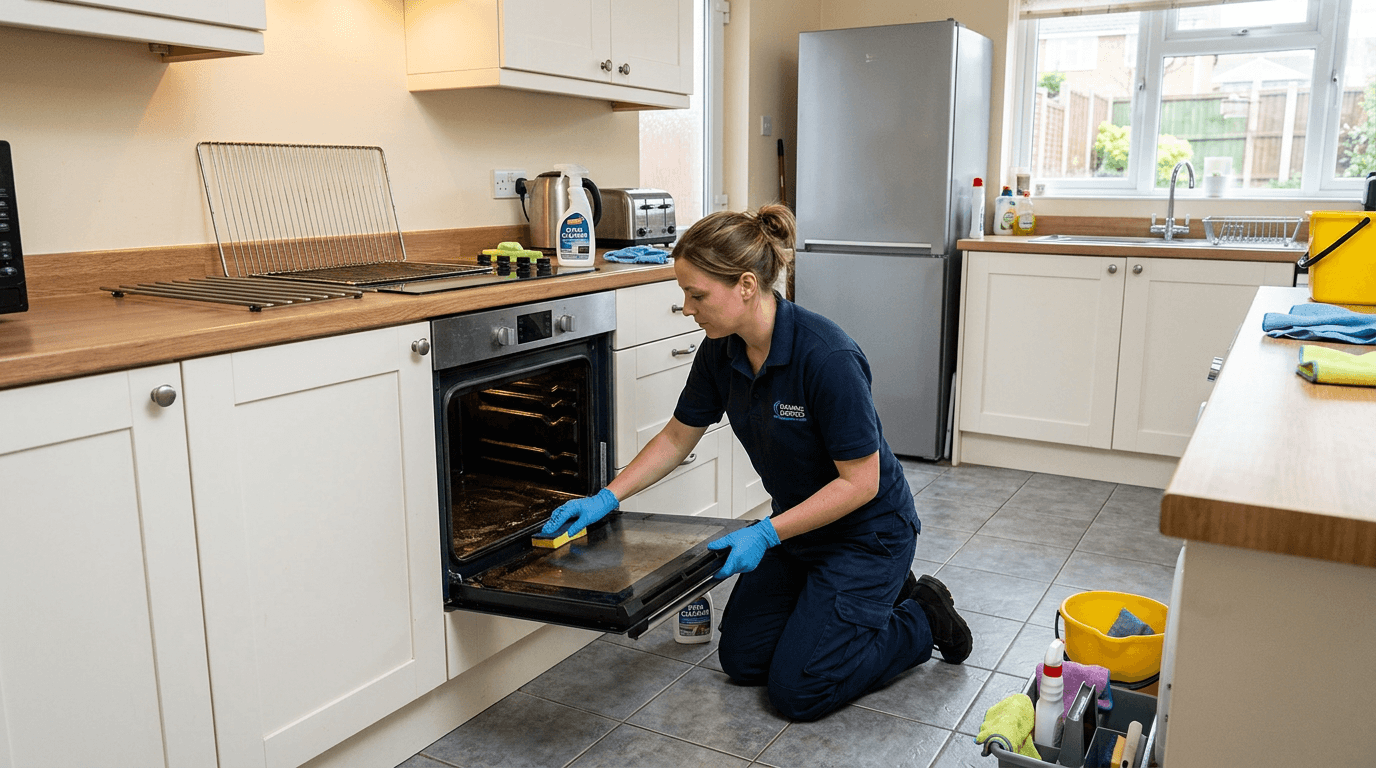
Professional oven and fridge cleans for UK homes. Remove grease, food residue and odours with trusted cleaners, safe products, tidy results and clear quotes.
Ready to Book Your Service?
Tell us what you need and our team will help you find the right professional quickly, with clear pricing and no hidden fees.