
Choosing the Right Hospital Cleaning Services: A Practical Guide
A practical guide to hospital cleaning services, covering routine and specialised work, how to choose a trusted provider, and the questions worth asking before you commit.
Cleanliness in a healthcare setting is never just about appearances. Where people are unwell, recovering or vulnerable, the standard of cleaning has a direct bearing on their safety and on the confidence of everyone who walks through the door. That is why hospital cleaning services sit in a category of their own, separate from a standard office or retail clean. The work is more detailed, the methods are more careful, and the consequences of getting it wrong are far more serious. Choosing the right provider is one of the most important decisions a healthcare site can make.
This guide takes a practical look at how healthcare cleaning works and how to choose well. We will cover what hospital cleaning services usually include, the difference between routine and specialised work, the questions worth asking before you commit, and the real benefits a professional approach brings. Taskino is a quote-first brand that helps you find and arrange the right team for the job, so the aim here is to leave you better informed, whether you run a small clinic, a dental practice, a care setting or a larger facility.
Good healthcare cleaning is not about doing more for the sake of it. It is about doing the right things, in the right order, with the right products and trained people. Get that balance right and you protect patients, support staff and present a setting that feels safe and well run. Get it wrong and even a tidy-looking space can hide problems you would rather avoid.
What do hospital cleaning services cover?
Hospital cleaning services cover far more than mopping floors and emptying bins. They combine routine upkeep of everyday spaces with careful, methodical attention to areas where hygiene really matters. The work usually spans waiting rooms, corridors, consulting rooms, washrooms, treatment areas and shared equipment, with each space handled according to how it is used and how much risk it carries.
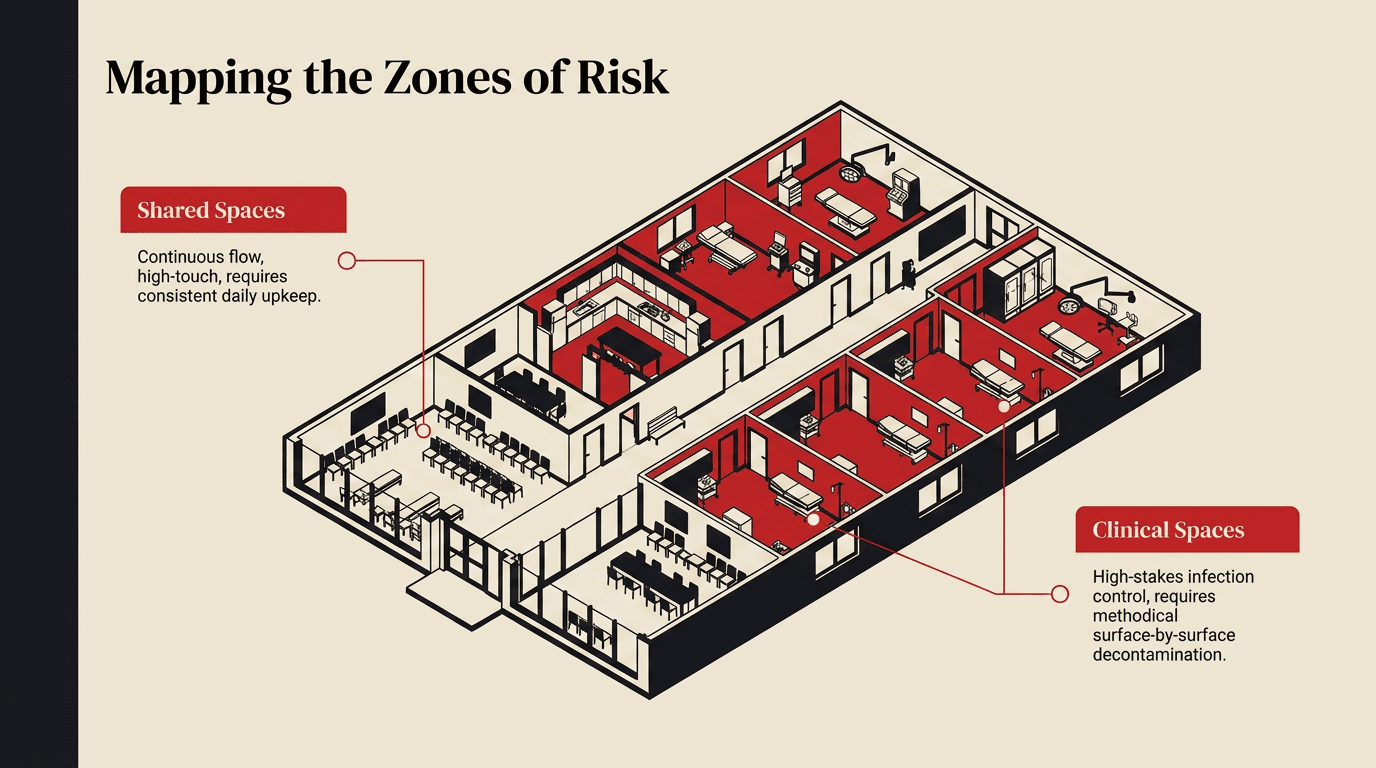
In practice, a healthcare clean is built around a clear method rather than a quick wipe-round. Surfaces are cleaned in a logical sequence, high-touch points get repeated attention, and different areas are treated differently depending on their purpose. A reception desk and a treatment room are not the same job, and a good provider plans for that. Medical office cleaning also tends to follow a documented routine so that nothing is skipped and standards stay consistent from one visit to the next.
It helps to think of healthcare cleaning in two broad layers:
- Routine cleaning: the daily and regular upkeep that keeps a site presentable, hygienic and pleasant to be in.
- Specialised cleaning: the more detailed work for sensitive or higher-risk areas, often handled by trained specialists using specific methods and products.
Most sites need both layers working together. The sections below break down what each one involves and how they fit a real healthcare environment.
Need help with Office Cleaning?
Tell us about your job and we will match you with the right professional for Office Cleaning.
Types of hospital and healthcare cleaning
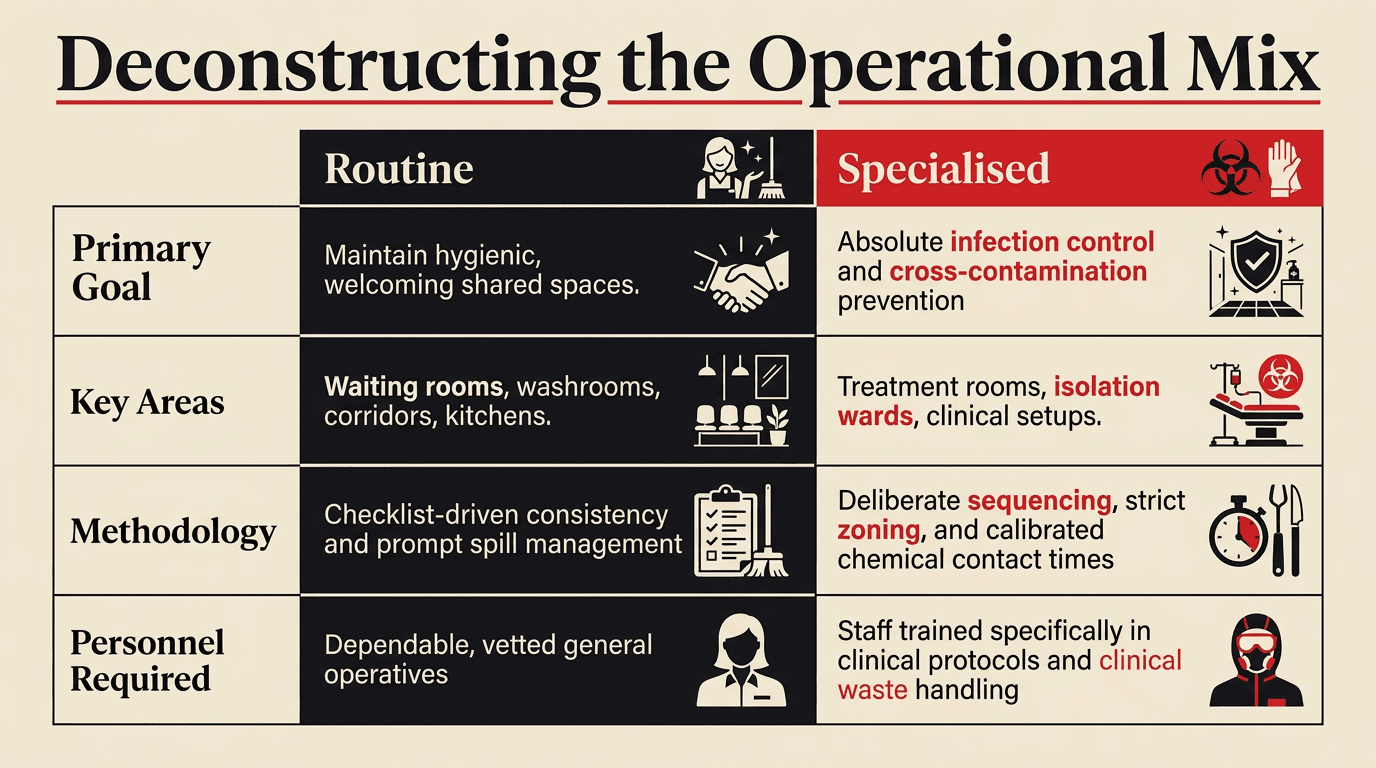
Healthcare cleaning splits broadly into everyday routine work and specialised cleaning for sensitive areas, and the two are planned differently. Routine cleaning keeps the whole site presentable and hygienic day to day, while specialised cleaning focuses on higher-risk spaces using more careful methods. Understanding the split helps you scope the service you actually need rather than paying for the wrong mix.
General and daily cleaning
General and daily cleaning is the backbone of any healthcare setting. It keeps waiting areas welcoming, washrooms fresh and shared spaces hygienic for the steady flow of patients, visitors and staff who pass through. Done well, it is barely noticed; done poorly, it is the first thing people spot.
Typical daily and regular tasks include:
- Floors: vacuuming, mopping and spot-cleaning spills promptly to keep walkways safe and clean.
- High-touch points: door handles, light switches, handrails, reception desks and waiting-room chairs cleaned and disinfected regularly.
- Washrooms: thorough cleaning, restocking and disinfecting, with frequent checks through the day.
- Waiting and reception areas: tidying, dusting, cleaning glass and keeping seating presentable.
- Waste: emptying bins and managing general waste safely and separately where needed.
- Kitchens and staff areas: wiping surfaces, cleaning shared appliances and keeping breakout spaces hygienic.
The key to daily medical office cleaning is consistency. A trained team works to an agreed checklist and keeps the standard steady, rather than relying on whoever has a spare ten minutes. That reliability is what stops small lapses building into bigger hygiene problems over time.
Specialised cleaning for clinical and sensitive areas
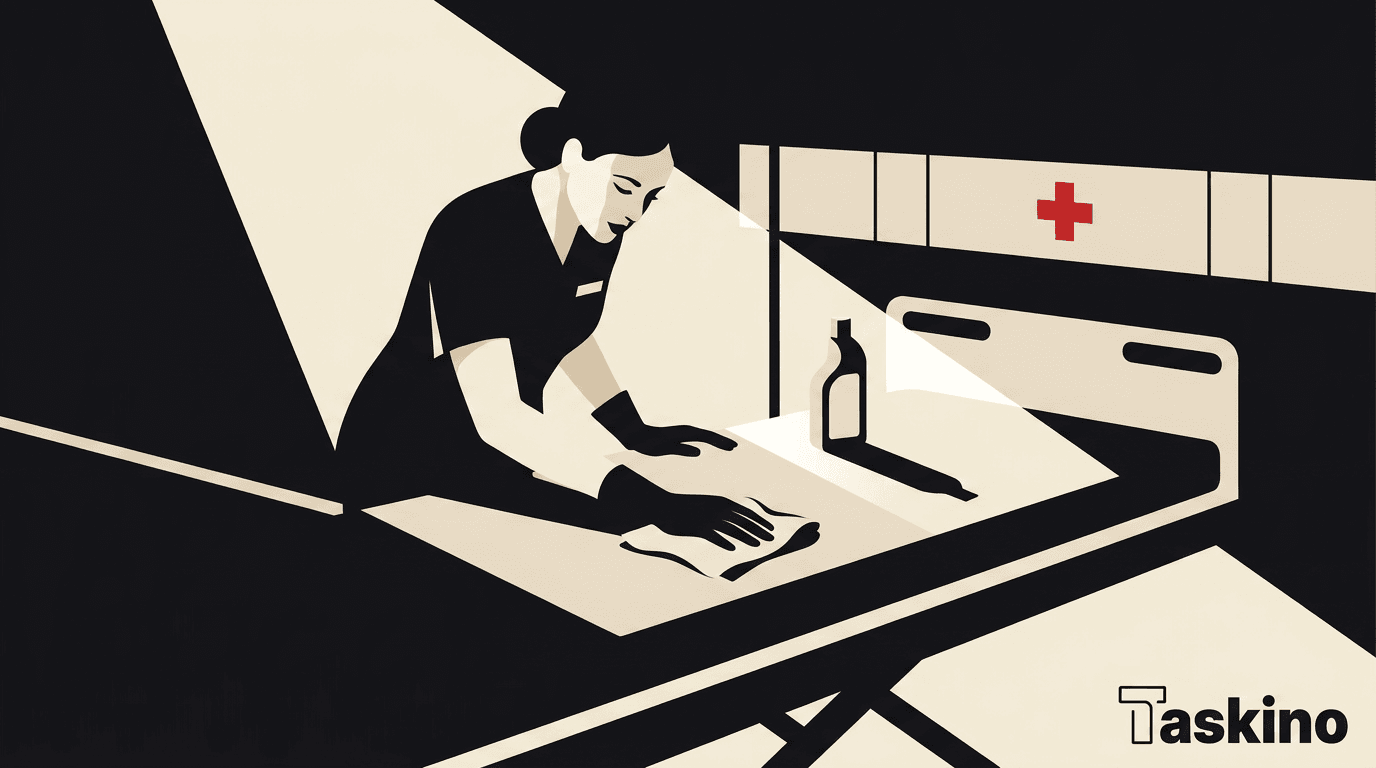
Specialised cleaning covers the spaces where the stakes are higher and the methods are more demanding. Think treatment rooms, clinical areas, isolation rooms and other sensitive environments where infection control is the priority. These areas need a careful, deliberate approach rather than a standard once-over, and they are usually handled by cleaners trained specifically for the work.
In practical terms, specialised healthcare cleaning often involves:
- Treatment and clinical rooms: detailed cleaning and disinfecting of surfaces, fittings and frequently touched equipment between uses or on a set schedule.
- Isolation and sensitive areas: extra-careful methods to limit the spread of germs, including the right protective equipment and clear procedures.
- Sequencing and zoning: cleaning from cleaner to dirtier areas, using separate equipment for different zones to avoid moving germs around.
- Correct products: disinfectants suited to the surface and the situation, used for the right contact time rather than wiped on and off.
- Spills and waste: dealing with clinical and sensitive waste safely, following a planned process.
This is where the gap between a general cleaner and a true healthcare specialist shows most clearly. Medical facility cleaning services that handle clinical areas need people who understand why each step matters, not just how to do it. Taskino can help you find and arrange specialist healthcare cleaning for these higher-risk spaces, working with experienced providers rather than treating clinical rooms like any other job. If your wider site also has more demanding one-off needs, our guide to specialist cleaning services is a useful companion read.
How to choose the right provider
Choosing the right provider comes down to three things: relevant experience, sound methods, and clear answers to the right questions. Healthcare cleaning is a specialist field, so a team that does excellent office work will not automatically be the right fit for clinical areas. The goal is a provider who understands healthcare settings and can prove it, not just one who turns up with a mop and good intentions.
Experience and trained staff
Experience in healthcare settings is the first thing to look for, because the demands are genuinely different. A provider who regularly works in clinics, surgeries, dental practices or care settings will understand the rhythm of the day, the importance of infection control and the need to work around patients and staff. That background is hard to fake and well worth asking about.
When you weigh up healthcare cleaning companies, look for:
- Relevant track record: real experience cleaning healthcare or medical environments, not only offices and shops.
- Properly trained staff: cleaners who understand hygiene methods, safe products and why the sequence matters.
- Vetted, reliable people: a settled team you can trust on site, ideally with consistent faces rather than constant turnover.
- Clear supervision: someone accountable for quality, with checks built into the routine.
Trained, dependable people are the heart of good medical cleaning services. Methods and products matter, but they only work in the hands of a team that knows how to apply them properly and cares about doing so every visit.
Methods, equipment and products
The right methods, equipment and products separate a thorough healthcare clean from a superficial one. A strong provider can explain how they clean, not just that they do, and their approach should reflect the sensitivity of each area. Vague answers here are a warning sign worth heeding.
Practical things to check include:
- Colour-coded equipment: separate cloths and tools for different areas, such as washrooms and treatment rooms, to avoid cross-contamination.
- Suitable disinfectants: products matched to each surface and used correctly, including the right contact time.
- Clear cleaning sequence: a logical order that works from cleaner to dirtier areas and tackles high-touch points properly.
- Well-maintained kit: clean, well-kept equipment, since dirty cloths and mops simply move germs around.
- Safe waste handling: a sensible process for general and clinical waste, kept separate where needed.
Good medical office cleaning service providers will happily talk you through all of this. The detail of their answer tells you a lot. A team that can describe its method clearly is usually a team that follows it.
Questions to ask before you commit
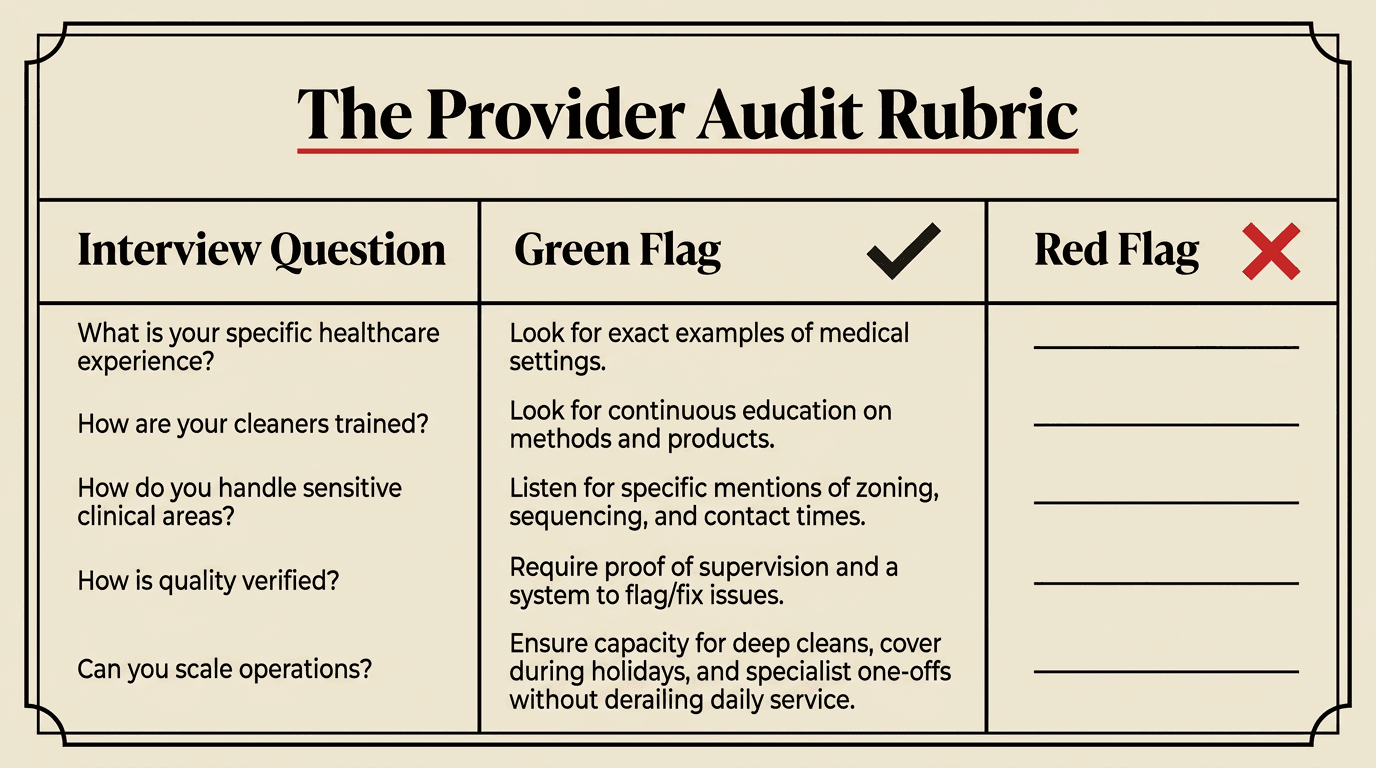
A short list of direct questions will tell you most of what you need to know before signing up. The aim is to test whether a provider genuinely understands healthcare cleaning and can deliver it reliably, rather than just saying the right words on a sales call. Honest, specific answers are a very good sign.
Useful questions include:
- What healthcare experience do you have? Ask for examples of similar settings they look after.
- How do you train your cleaners? Understand how staff learn the methods and stay up to date.
- How do you handle clinical and sensitive areas? Listen for a clear method, zoning and the right products.
- How do you check quality? Look for supervision, regular checks and a way to flag and fix issues.
- How do you handle requests, changes and cover? Holidays, busy spells and one-offs should not derail the service.
- Can you scale up when needed? Deep cleans, extra visits or specialist work should be available when the site needs them.
If a provider answers these clearly and without fuss, you are in good hands. If the answers feel vague or rushed, keep looking. Taskino can help you compare options and arrange a provider whose answers stack up, so you are not left guessing.
Explore our Office Cleaning service
See what is included, typical timings, and what to prepare before you book.
The benefits of professional healthcare cleaning
Professional healthcare cleaning delivers two big benefits above all: stronger infection control and greater confidence among patients and visitors. A clean, well-managed setting is safer to be in and feels safer too, and both of those matter enormously in healthcare. The value is practical and ongoing, not a one-off tidy that fades within days.
Infection control and a safer environment
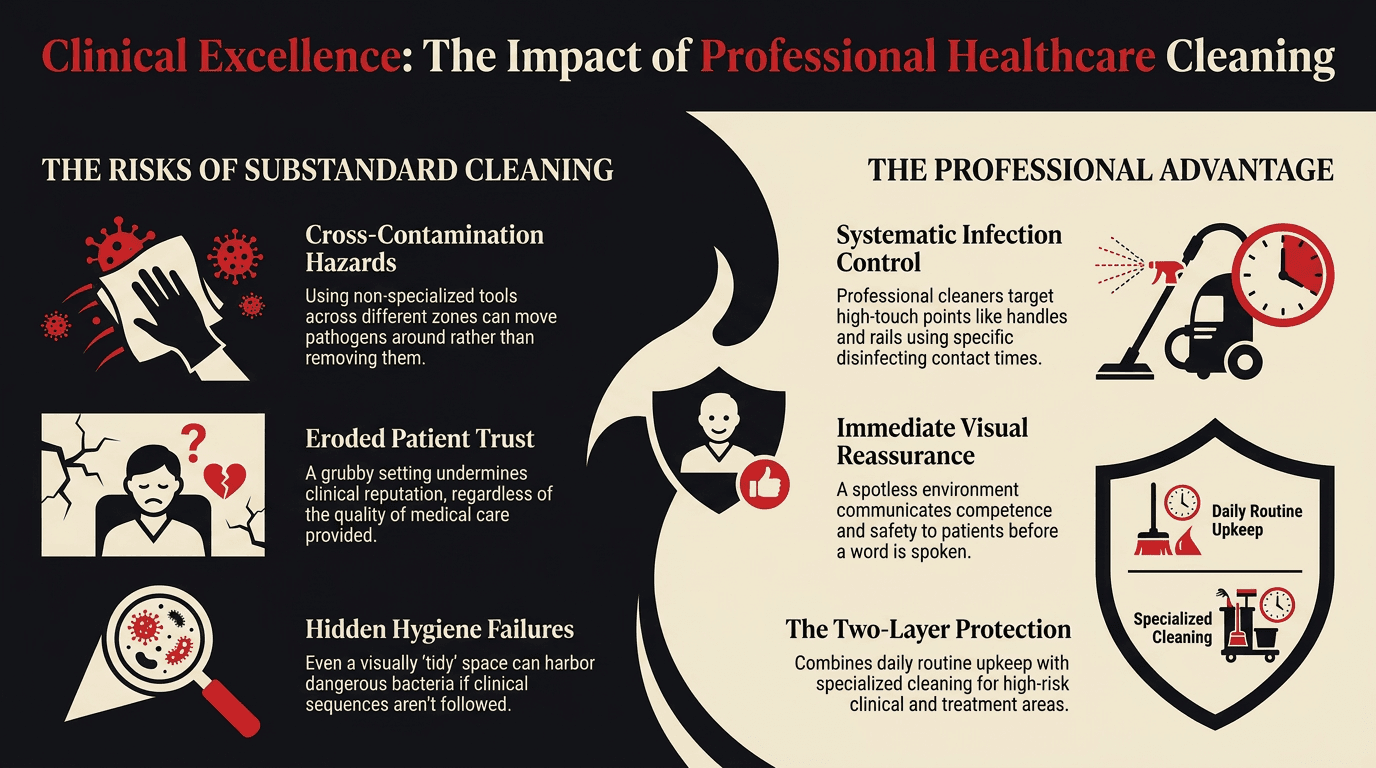
Infection control is the single most important reason to take healthcare cleaning seriously. In any setting where people are unwell, germs spread easily across surfaces, equipment and high-touch points, and thorough cleaning is one of the most effective everyday defences. Professional medical cleaning services reduce that risk methodically rather than leaving it to chance.
A professional approach supports a safer environment by:
- Targeting high-touch points: the handles, switches and shared surfaces that pass germs from person to person.
- Using correct disinfecting methods: the right products, used properly, for the surfaces that need them.
- Preventing cross-contamination: zoning and separate equipment so cleaning does not spread the problem.
- Managing waste safely: keeping general and clinical waste handled and separated sensibly.
- Keeping spaces consistently clean: a steady routine, so standards hold day after day rather than slipping between visits.
The result is a setting that genuinely supports health rather than quietly working against it. Consistent, well-planned medical facility cleaning services reduce avoidable risks and give staff one less thing to worry about as they get on with patient care.
Patient and visitor confidence and experience
Confidence is the second great benefit, and it is easy to underestimate. People form a judgement about a healthcare setting within moments of arriving, and cleanliness is central to that first impression. A fresh, well-kept space reassures patients and visitors that they are in safe, capable hands before a single word is spoken.
A spotless waiting room, clean washrooms and tidy treatment areas all send the same message: this is a place that pays attention and takes care. That reassurance matters when people are anxious or unwell, and it shapes how they feel about the care they receive. The reverse is also true, since a tired or grubby setting can undermine trust no matter how good the clinical work behind it. Strong medical office cleaning protects that experience and, with it, the reputation of the whole site.
This same principle applies across business settings too. If you also run office or workplace spaces, our piece on why professional office cleaning is essential for business explores how presentation builds trust in a commercial context.
Choosing well and getting started
Choosing the right hospital cleaning services comes down to matching a capable, experienced provider to the real needs of your setting. Routine cleaning keeps the whole place presentable and hygienic, while specialised cleaning protects your higher-risk areas with careful methods and trained people. The best providers prove their experience, explain their methods clearly and answer your questions without hesitation. That combination is what keeps patients safe and confident and lets your team focus on care.
Take your time, ask the questions that matter, and look for a provider whose approach you genuinely trust. If you would like help finding and arranging the right team, whether that is dependable daily cleaning or specialist healthcare cleaning for sensitive areas, contact us for a quote and we will help you arrange a service that fits your setting. You can also explore the wider range of cleaning services we coordinate, and if your needs sit closer to a workplace clean, our team can arrange professional office cleaning to the same dependable standard. For sites with food preparation areas, the practical lessons in our guide to commercial kitchen cleaning mistakes to avoid are well worth a look too.
Frequently asked questions: Choosing the Right Hospital Cleaning Services: A Practical Guide
Short answers to common questions about this topic.
Our team will answer all your questions. we ensure a quick response.
Contact UsRelated posts
A clear guide to specialist cleaning services in the UK, covering kitchens, post-construction, ducts and healthcare, plus how to choose the right provider.
Avoid the top 5 commercial kitchen cleaning mistakes, from skipped deep cleans to neglected extraction, and keep your kitchen safe and hygienic.
Five reasons professional office cleaning is essential for your business, from productivity and image to hygiene, smart spending and specialist support.
Latest in Cleaning Services
View all in this categoryFive reasons professional office cleaning is essential for your business, from productivity and image to hygiene, smart spending and specialist support.

How to hire an NCCA-registered carpet cleaner or oven cleaning pro in the UK: 12 questions, red flags, contract rules and how to verify credentials.
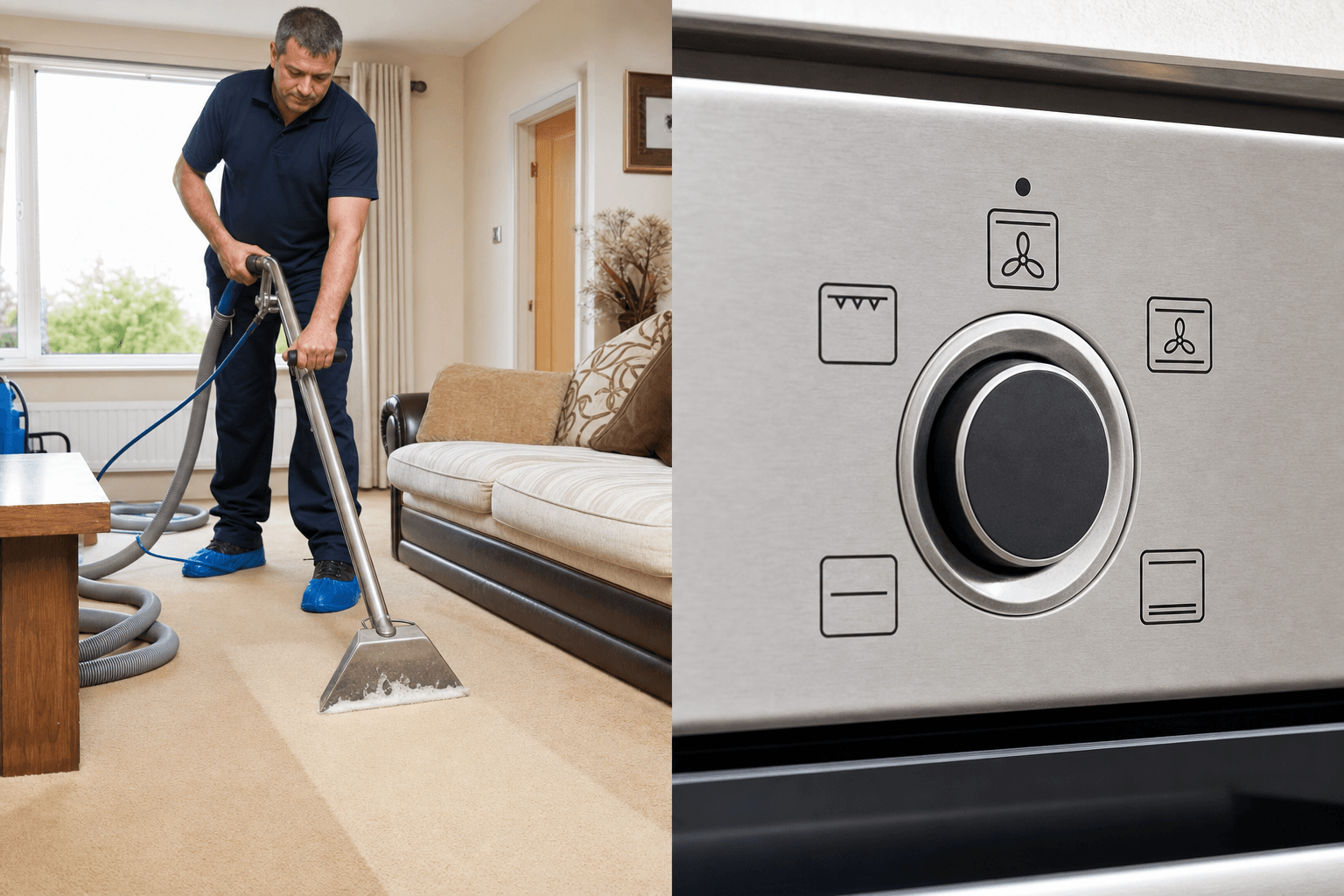
Steam vs dry vs hot-water carpet cleaning compared, plus every UK oven symbol decoded (fan, grill, broiling, pyrolytic) and which is right for your home.
Related services
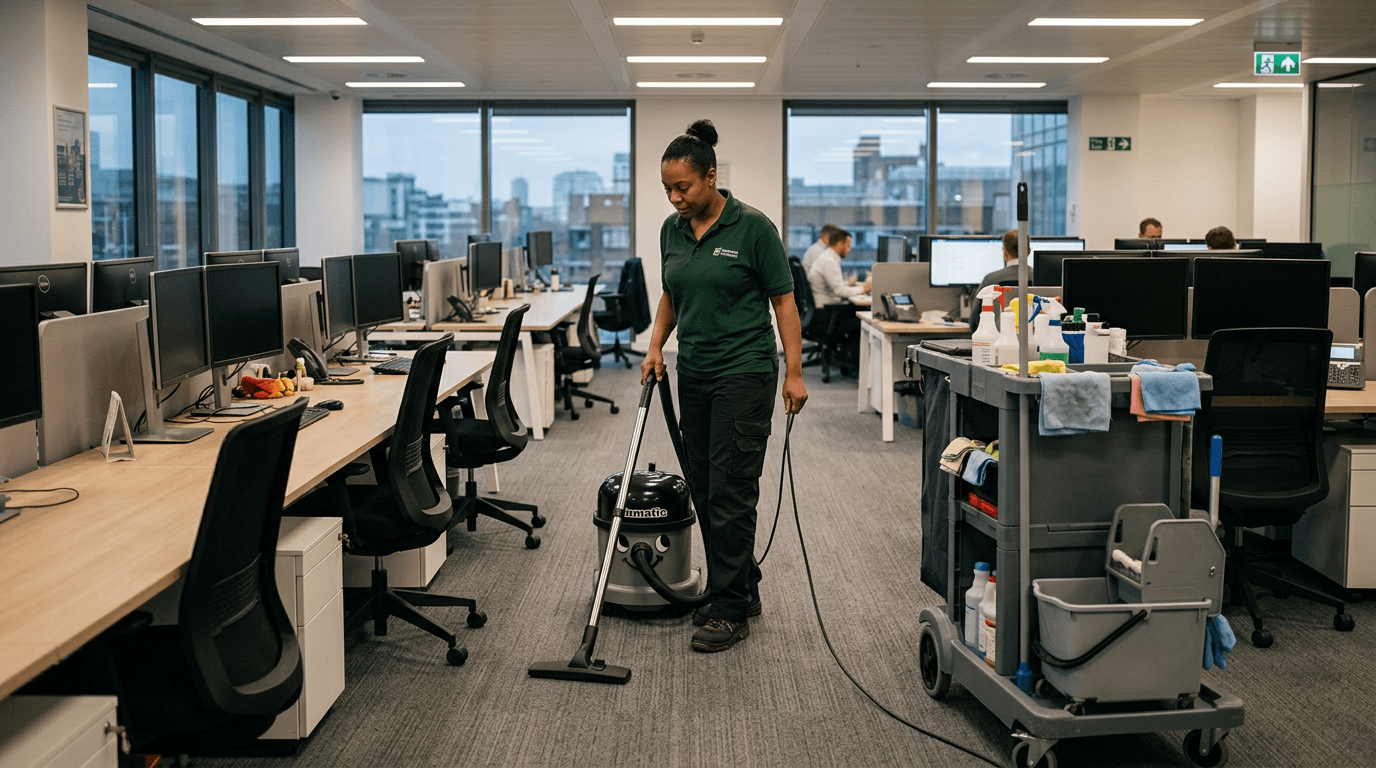
Professional office cleaning for UK workplaces of every size. Taskino coordinates trusted, fully insured cleaners with flexible schedules, consistent results and clear quotes - no hidden fees.
Ready to Book Your Service?
Tell us what you need and our team will help you find the right professional quickly, with clear pricing and no hidden fees.