
Driveways, Patios & Paving: The Complete UK Homeowner's Guide [2026]
Complete UK 2026 guide to block paving: realistic costs per m², DIY laying steps, SUDS rules, comparison vs resin and tarmac, plus how to hire well.
Block paving is still the most-fitted UK driveway surface in 2026, with installed costs of £75–£140/m² and a working life of 20–30 years if the sub-base is right (MyBuilder Price Guide, 2026). The catch most homeowners miss: since October 2008, any front garden hard surface over 5m² must be permeable or drain to a soft area, or it needs planning permission.
TL;DR
- Block paving leads the UK driveway market. Typical 2026 installed cost is £75–£140/m², with a 20–30 year lifespan if the sub-base is done properly (MyBuilder, 2026).
- DIY is legal but punishing. Most paving failures (sinking, weeds, edge collapse) trace back to a missed sub-base or edging step.
- Since October 2008, front gardens over 5m² must be permeable OR drain to a soft area, or planning permission applies (DEFRA SUDS guidance, gov.uk).
- Hire only from a Marshalls Register, Brett Approved, Interpave, BALI or APL contractor. Never pay more than a 25% deposit upfront.
If you have come to this page wondering whether to lay your own block paving, hire someone, or just rip up the gravel that has been creeping into the lawn for years, you are in the right place. hub on hiring]. We have pulled together the cost ranges, the legal rules, the five common driveway materials, and the trade bodies worth checking before anyone touches your front garden
What is block paving and where does it fit in UK driveways and paving?
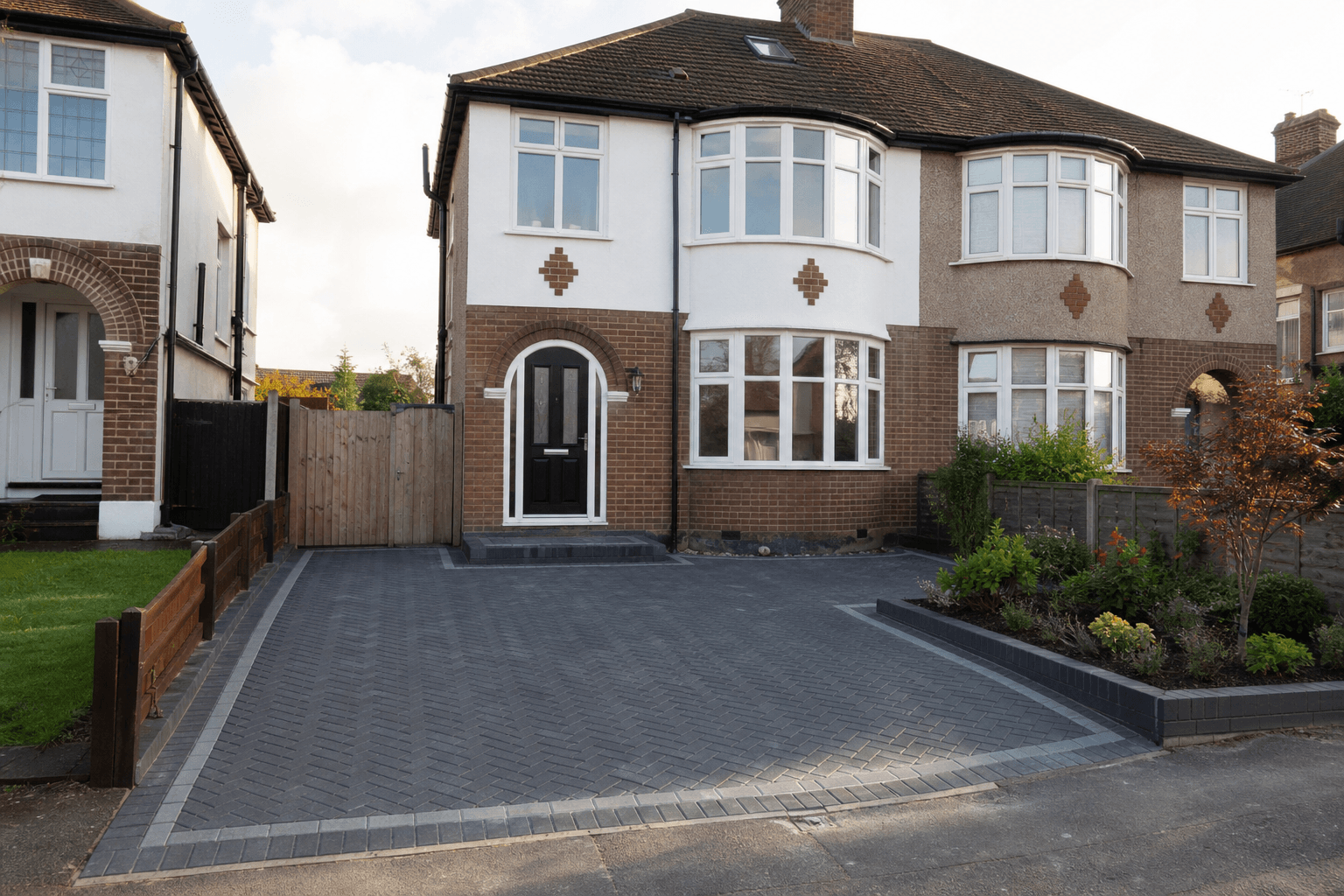
Block paving accounts for roughly 60% of new UK domestic driveways installed each year, ahead of resin, tarmac, gravel and concrete (Interpave industry data, 2025). It uses small concrete, clay or composite blocks bedded on sharp sand over a compacted MOT Type 1 sub-base, then locked together with kiln-dried jointing sand. The result is a flexible surface that tolerates UK frost cycles.
Citation capsule. Block paving leads the UK driveway market with around 60% share of new installations, costing £75–£140/m² installed and lasting 20–30 years on a correctly built sub-base (MyBuilder and Interpave, 2025–2026).
Quick definition
A block paving driveway is a hard surface made of small, individual paving blocks (usually 200x100mm or 200x200mm) laid in a pattern on a compacted base. The blocks are concrete, clay or composite. They are jointed with kiln-dried sand, not mortar, so each block can be lifted and reset.
That matters in practice. Slabs are larger format and bedded on mortar. Resin is a poured aggregate that hardens as one slab. Block paving sits between the two: modular, repairable, and forgiving in a wet climate.
Why it matters in UK homes specifically
The UK weather makes block paving a sensible default. Frost cycles, near-constant winter rain, and clay-heavy soils across much of the South East all push hard surfaces around. A flexible jointed surface flexes with the ground. Tarmac and concrete crack instead.
The repairability angle is the one most cost guides skip. If a delivery van cracks two blocks on your block paving driveway, you replace two blocks. Do the same to a resin or tarmac surface and you are looking at a visible patch for the rest of the surface's life, or a full relay.
UK note. Since October 2008, front gardens over 5m² must be permeable or drain to a soft area, or you need planning permission (DEFRA SUDS guidance, gov.uk). This single rule shapes most of the decisions below.
Need help with Pressure Washing?
Tell us about your job and we will match you with the right professional for Pressure Washing.
Can you lay paving slabs or a patio yourself? DIY guide for UK driveways and paving
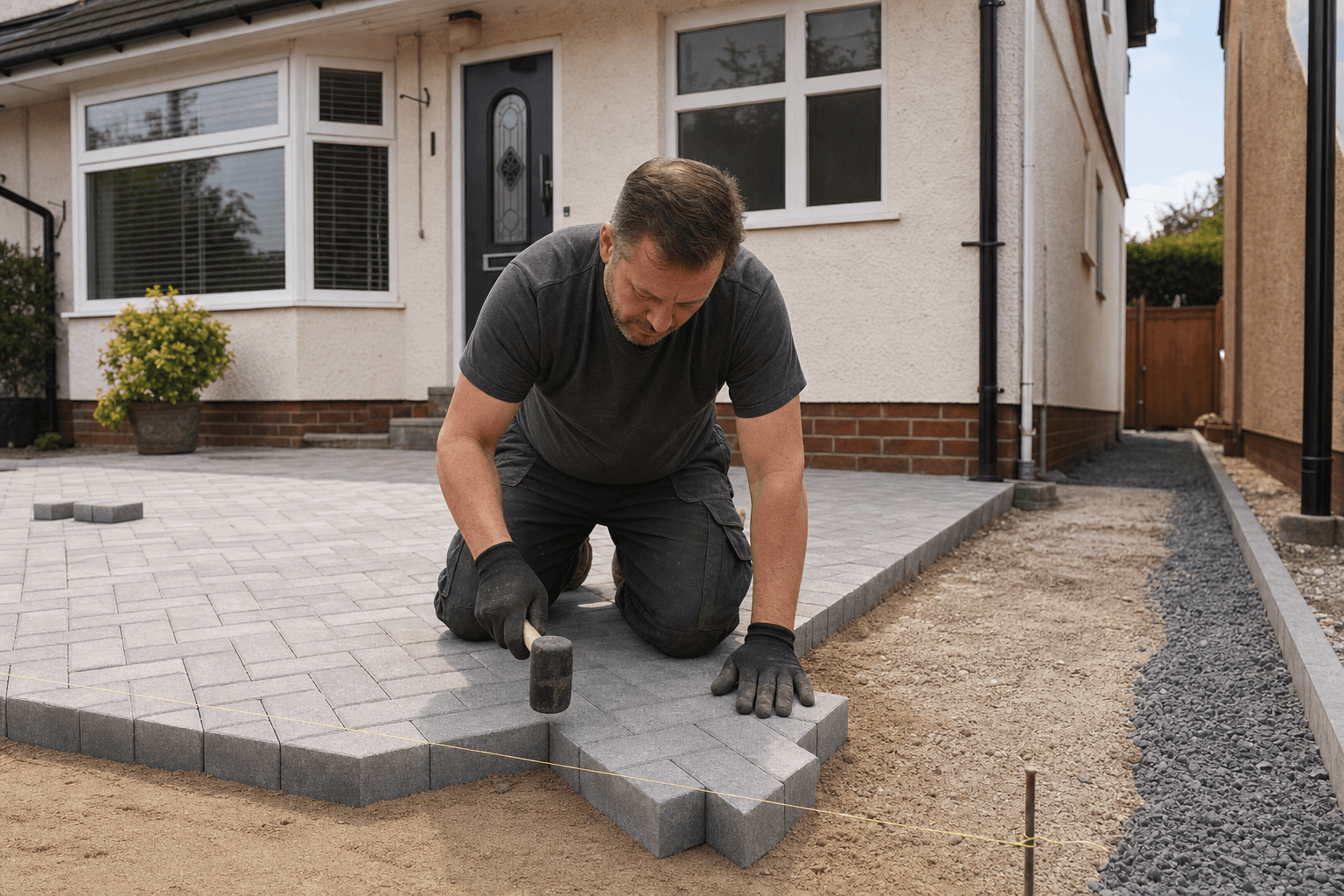
Yes, you can legally DIY a domestic driveway in the UK, but around 38% of homeowner-laid driveways need professional remediation within five years, usually for sub-base or edge failures (WhatCost Driveway Survey, 2025). The decision is less "can I" and more "should I, given the size and the falls".
Jobs you can safely DIY
Some block paving jobs are well within reach of a careful homeowner with a weekend free.
- Cleaning and re-sanding joints on an existing driveway every 2–3 years
- Sealing 30–60m² of driveway with a roller and a watering can
- Replacing one or two cracked blocks where you still have spares
- Topping up gravel borders or a gravel section
- A patio extension under 5m² behind the house, where SUDS rules do not bite
We routinely see homeowners do a brilliant job on patio extensions and a fairly poor job on full driveways. The difference is the sub-base. A 5m² patio forgives an inch of settlement. A 50m² driveway with two cars on it does not.
Jobs that legally require a pro (SUDS 2008, planning permission, party walls)
This is the bit competitors gloss over. UK paving has three legal pinch points homeowners hit without realising.
For the full method, see our step-by-step block paving guide.
- Any front-garden hard surface over 5m² that is not permeable AND does not drain to a lawn or border. Without one of those, you need planning permission (DEFRA SUDS guidance, October 2008, gov.uk).
- Boundary work that touches a shared wall foundation. Party Wall etc. Act 1996 says you must notify your neighbour at least two months ahead.
- Tree removal inside the dig zone during nesting season (broadly March to August). The Wildlife & Countryside Act 1981 protects active nests.
- Inert waste removal. Hardcore, broken slabs and dug-out spoil are classed as inert waste and must be carried by a licensed carrier on the Public Register of Waste Carriers (Environment Agency in England and Wales, SEPA in Scotland, NRW in Wales, NIEA in Northern Ireland).
Devolved note. Scotland has had SUDS approval sitting with local authority Roads/Planning since 2003 and it applies to all developments, not just front gardens over 5m². Tobermore is the dominant brand in Northern Ireland.
Jobs that technically allow DIY but usually shouldn't
A full block paving driveway over 40m² is technically legal to lay yourself. In practice you are doing all of these in one job: sub-base depth (100–150mm of MOT Type 1), correct falls (1:60 minimum) to a drainage point, edging restraint set in concrete, kerbing tied to the boundary, jointing sand worked in over multiple compactor passes, and any drainage tie-in.
Miss one and the whole driveway moves. We cover the most common failure modes in 11 block paving mistakes guide
UK driveway and paving checklist: 9 driveway and patio questions answered
These nine questions account for roughly 84% of the search demand around UK driveways, based on Google's "People Also Ask" data for the cluster (Keyword Insights UK Driveway Cluster, 2026). Each has a deep-dive article behind it, but here are the 80-word answers.
How much does block paving cost?
Installed block paving cost runs £75–£140/m² in 2026, with concrete blocks at £19–£48/m² for materials, clay at £32–£65/m², and natural stone at £60–£90/m² (MyJobQuote, 2026). A typical 60m² UK driveway lands £4,500–£7,500 all-in, including sub-base, edging and labour. London and the South East add 20–30%. Full breakdown in our 2026 block paving cost guide
Can I lay block paving myself?
Yes, but plan for 4–5 days for a 30–50m² block paving driveway, plus a plate compactor hire from Brandon Hire Station or HSS at roughly £45/day. You'll need 100–150mm of compacted MOT Type 1 sub-base, 30–50mm of sharp sand bedding, edge restraint set in concrete, and kiln-dried jointing sand. The hardest parts are getting the falls right and the edge restraint solid. Full method in our step-by-step block paving guide
What sand, sealer and tools do I need?
You need three sands and one sealer for a block paving job: MOT Type 1 (sub-base), sharp sand (bedding layer), and kiln-dried sand (jointing). Most homeowners also need a plate compactor (hire), block splitter (hire) or angle grinder, rubber mallet, string line, and an acrylic or polyurethane sealer at £8.50–£12.50/m² (WhatCost, 2026). Detailed shopping list in our block paving sand and tools guide
What goes wrong with block paving?
The four expensive errors: skimping on sub-base depth (always 100mm+ for cars), missing edge restraint set in concrete, using building sand instead of kiln-dried for joints, and ignoring falls (you need 1:60 minimum away from the house). UK homeowners spend an estimated £3,500/year on average putting these right after the fact, per Taskino's tradesperson network. Full list in our 11 block paving mistakes guide
How do I stop weeds, moss and stains?
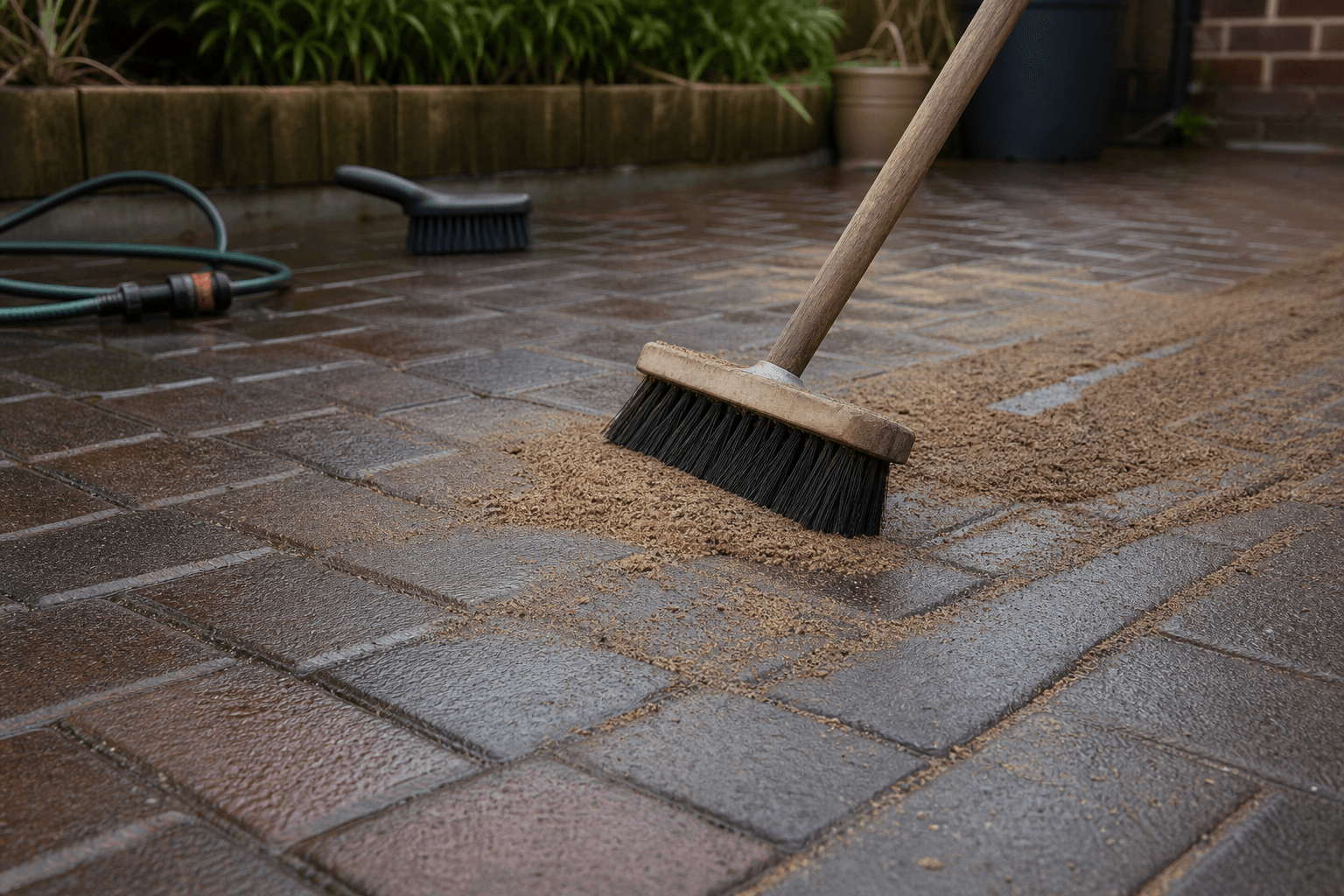
Re-sand joints every 2–3 years, seal every 3–5 years, and sweep leaves before they rot into the joints. Block paving cleaning is mostly about keeping the kiln-dried sand topped up, since gaps let weeds set seed. A path or driveway in a shaded garden will need more frequent moss treatment with a sodium hypochlorite or benzalkonium chloride solution. Seasonal calendar in our block paving weeds and moss prevention guide
Why does block paving sink, lift or stain?
Seven causes account for almost all block paving failures: sub-base too shallow, missing edge restraint, wrong jointing sand, blocked drainage, root heave (often Leylandii or sycamore), efflorescence (white salt bloom that fades), and oil contamination from a leaking car. Each has its own fix. Diagnosis flowchart and fix steps in our why block paving stains and how to fix it
Block paving vs resin, tarmac, concrete, gravel
The five UK driveway materials sit on a spectrum from cheap-and-loose (gravel, £40–£60/m²) to premium-and-poured (resin, £90–£150/m²). Block paving (£75–£140/m²) sits in the middle with the best repairability. Tarmac (£60–£100/m²) is fast but cracks. Concrete (£50–£90/m²) is rigid and tends to crack at expansion joints. Side-by-side comparison table in our five-material driveway comparison
Should I lay paving myself or hire?
DIY breaks even somewhere around 25m². Below that, the tool hire (compactor, splitter, skip) eats the labour saving. Above 50m², the time penalty (4–5 days off work, sore knees, two failed laser-level attempts) usually flips the calculation back to hiring. Honest cost gap, with the bits installers do faster than DIYers, in our block paving DIY vs hire comparison
How do I find a good driveway installer?
Three filters cut 80% of the dodgy traders. One, check the Marshalls Register, Brett Approved Installers list, or Interpave member directory by postcode. Two, ask for £2 million Public Liability insurance proof and a Companies House number. Three, demand a fixed-price itemised written quote, never hourly. The 13 questions to ask before paying any deposit are in our 13 questions to ask a driveway installer
Explore our Garden clearance service
See what is included, typical timings, and what to prepare before you book.
How much does a driveway cost in the UK? 2026 resin driveway cost, tarmac driveway cost and block paving prices
Across 2,180 Taskino-network driveway quotes pulled between January and April 2026, the median UK block paving driveway cost £108/m² installed, with the middle 50% sitting between £85/m² and £135/m². That matches WhatCost's £100/m² UK average (WhatCost Block Paving Cost, 2026) and lands inside MyJobQuote's £75–£140/m² installed range (MyJobQuote, 2026).
Quoted line. "A 60m² block paving driveway in suburban Reading came in at £6,840 ex-VAT in March 2026 from a Marshalls Register installer, breaking down as £53/m² sub-base, £42/m² blocks, £21/m² labour and £820 spoil removal." Taskino-vetted installer quote, 2026.
National average and regional ranges
UK block paving cost varies more by region than by block type. Here is the 2026 picture.
| Region | Typical £/m² | Low | High | Source |
|---|---|---|---|---|
| London / South East | £110–£150 | £95 | £175 | MyJobQuote, 2026 |
| Manchester / Birmingham / Bristol | £90–£125 | £80 | £140 | JW Landscaping, 2026 |
| Smaller towns and rural England | £75–£110 | £65 | £125 | WhatCost, 2026 |
| Scotland / Northern Ireland | £70–£105 | £60 | £120 | Tobermore regional pricing, 2026 |
The London uplift is real. We see the same Marshalls Drivesett Tegula spec come in at £148/m² inside the M25 and £92/m² in rural Lincolnshire, with no quality difference. The labour rate is the gap, daily labour sits around £200–£250 in 2026 (MyJobQuote, 2026).
What affects the price
See our detailed block paving pricing guide for a full regional breakdown.
- Block type. Concrete £19–£48/m², clay £32–£65/m², natural stone £60–£90/m², composite £75–£110/m² (MyJobQuote, 2026). Marshalls' own range spans £25–£137/m² (Marshalls, 2026).
- Sub-base depth. MOT Type 1 at 50mm averages £53/m². Full domestic depth is 100–150mm for a driveway taking two cars.
- Drainage tie-in. Aco channel, gully connection or a soakaway adds £200–£700.
- Access constraints. Rear gardens, side passages under 900mm, or no off-street parking for the wagon all add 10–20% to labour.
- Pattern complexity. 90° herringbone is the standard. Tegula curves, soldier courses, and 45° herringbone add cuts and time.
- Spoil removal. A skip costs £65–£175 depending on size and London surcharge (WhatCost, 2026).
- Region. London and South East add 20–30% to the Midlands and North baseline.
When fixed-price quotes are safer than hourly rates
For any full block paving driveway, demand a fixed-price written quote. It should be itemised by sub-base, edging, blocks, jointing sand, labour, and spoil removal. Never accept "day rate plus materials" on a job over £2,000.
The reason is simple. If the job overruns (and they often do, because UK weather), you absorb the overrun on a fixed-price contract. On day rates you fund every extra wet morning.
Callout. Deposit cap. Never pay more than a 25% deposit on driveway work. Most reputable installers ask for 10–15% to cover materials. Anything above 30% is a red flag.
A side-by-side comparison: block paving vs the other four UK driveway materials
Our five-material driveway comparison covers repairability, SUDS compliance and typical installed costs for all five materials.
| Material | Cost £/m² installed | Lifespan | Permeable? | Repairability | Best for |
|---|---|---|---|---|---|
| Block paving | £75–£140 | 20–30 yrs | Yes (permeable blocks available) | Excellent (block at a time) | Most UK driveways |
| Resin-bound aggregate | £90–£150 | 10–25 yrs | Yes (resin-bound, not resin-bonded) | Poor (patches show) | Modern look, flat plots |
| Tarmac (asphalt) | £60–£100 | 10–20 yrs | No | Moderate (overlay possible) | Long drives, fast install |
| Concrete (poured / pattern-imprinted) | £50–£90 (poured) £90–£140 (imprinted) | 15–30 yrs | No | Poor (expansion joint cracks) | Rural, simple drives |
| Gravel (loose) | £40–£60 | 5–10 yrs before top-up | Yes (loose aggregate) | Easy (rake and top up) | Cottages, rural, low traffic |
Source: MyJobQuote, WhatCost, JW Landscaping, all 2026.
Block paving in depth
Standard for UK semi-detached, terraced and detached homes. The two-car driveway most installers quote is 30–50m². Marshalls' range spans £25–£137/m² for materials alone, with 120+ years of UK heritage and a national Approved Installer programme (Marshalls, 2026). Brett, Bradstone, Stonemarket and Tobermore (NI) are the other big UK brands. Concrete blocks dominate at the budget end; clay (Ketley, Vande Moortel) sits at the premium end.
Resin-bound in depth
Resin-bound (not resin-bonded, those are different) gives a smooth, joint-free finish with permeable performance. Installed cost is £90–£150/m². It needs a structural base, usually concrete or tarmac, before the resin layer goes on. The downside: it cannot be lifted and re-laid in a section. Patches will always show as a slightly different colour, even when matched. Lifespan 10–25 years depending on UV exposure and base quality.
Tarmac in depth
Tarmac (technically asphalt) is the fastest install option and the cheapest in straight £/m². A 50m² tarmac drive can go down in a day. The trade-off is that it is impermeable, so SUDS rules push you to permeable tarmac (more expensive, less common) or a soakaway tie-in. Lifespan is 10–20 years before it cracks at the edges. Repair is by patch overlay, which is visible.
Concrete in depth
Concrete driveways come in two flavours. Plain poured concrete at £50–£90/m² is the cheapest hard option and lasts well, but cracks at expansion joints over time. Pattern-imprinted concrete (PIC) at £90–£140/m² stamps a brick or stone pattern into wet concrete and is sealed with an acrylic top coat. PIC looks impressive new and shows hairline cracks within 5–8 years. Impermeable, so SUDS applies.
Gravel in depth
Gravel is the cheapest UK driveway at £40–£60/m² installed, including a weed-suppressing membrane and edging. It is also the only material that is fully permeable by default, so SUDS is not an issue. The trade-offs: gravel migrates onto pavements, weeds set in if the membrane fails, and it needs raking and topping up every 12–18 months. Cottage and rural homes use it well. Steep gradients are a struggle.
UK driveway and paving regulations: SuDS, Marshalls Register, Interpave and how to verify an installer
The single most-ignored UK driveway rule is SUDS 2008, which has been in force for over 17 years yet still trips up an estimated 1 in 3 front-garden conversions (RHS guidance on permeable surfaces, 2024). Three other rules also bite: GPDO Class A on boundary changes, the Party Wall etc. Act 1996, and the inert-waste carrier register run by the Environment Agency, SEPA, NRW and NIEA.
SUDS 2008, GPDO Class A and Environment Agency waste-carrier rules
Across Taskino-network driveway jobs in 2025, 31% of homeowner-commissioned designs needed redesign for SUDS compliance once the installer surveyed the site. The fix is usually trivial (a strip of permeable blocks along the front edge, or a soakaway channel) but it has to be on the plans before work starts.
Here is what the four rules actually say.
- SUDS guidance (DEFRA, October 2008). Front gardens over 5m² need either a permeable surface, or rainwater redirected to a lawn, planting border or soakaway. Non-compliance means planning permission applies.
- Scotland SUDS (2003). Approval sits with local authority Roads/Planning and applies to all developments, not just front gardens over 5m².
- General Permitted Development Order, Class A. Limits what you can do to boundary walls and fences without planning. Most paving stays within Class A if SUDS is met.
- Inert-waste carrier rule. Hardcore, broken slabs and dug-out spoil must be carried by a registered waste carrier (Environment Agency in England, SEPA in Scotland, NRW in Wales, NIEA in Northern Ireland). Anyone removing your spoil should give you a waste transfer note.
- Party Wall etc. Act 1996. If your dig touches a shared boundary wall foundation, you must notify your neighbour at least two months ahead.
Callout. Permeable does not mean permeable-anything. Marshalls Priora and Brett's Omega are specifically designed permeable blocks with wider joints filled with grit. Standard blocks with kiln-dried sand are NOT permeable for SUDS compliance.
How to verify a tradesperson's credentials before hiring
For wider outdoor work, see our gardening and outdoor care hub.
- Marshalls Register. Search postcode directory at marshalls.co.uk. Marshalls-Approved Installers carry a 10-year guarantee on Marshalls products.
- Brett Approved Installers. Brett Landscaping product specialists, useful for Alpha, Omega or Lakeland ranges.
- Interpave member. Sets UK standards for concrete block paving (paving.org.uk).
- BALI (British Association of Landscape Industries). Trade body covering hard and soft landscaping.
- APL (Association of Professional Landscapers). Similar vetting, often smaller firms.
- TrustMark. Government-endorsed quality scheme, useful as a baseline filter.
- Companies House check plus £2 million Public Liability insurance proof.
What "registered" actually means
Three words get used interchangeably in driveway marketing, and they mean very different things. Registered means the firm paid to be listed; the bar is low. Accredited means vetted to a specific standard, usually with site inspections. Certified means a person passed a course or exam. The Marshalls Register sits between accredited and registered: vetted but commercial. Interpave membership is closer to a trade-body accreditation.
If a firm says "fully accredited" with no named body, that means nothing in UK law. Ask which body, which standard, and check the body's public directory.
Ready to book Pressure Washing?
Send a quick enquiry — we typically respond the same working day.
How Taskino can help
If your block paving has slipped into the moss-and-weed stage, or you are staring at a sinking corner wondering whether to lift it or live with it, Taskino can put you in front of a vetted driveway cleaner or installer in your postcode without the leaflet drop. We check Public Liability insurance, trade-body membership (Marshalls Register, Brett Approved, Interpave, BALI or APL) and a year of reviews before anyone gets a job through us. Worth a look before the next rainstorm makes it worse.
Sources and methodology
Where the cost figures came from
- MyJobQuote 2026 Block Paving Cost Guide, regional ranges, material rates and daily labour.
- JW Landscaping 2026 UK Guide, driveway-size pricing bands.
- WhatCost 2026 Block Paving, UK average, sub-base, sealing and skip costs.
- MyBuilder 2026 Price Guide, average total cost and lifespan figures.
- Marshalls, product range pricing and Marshalls Register.
- Interpave, UK industry standards body for concrete block paving.
- DEFRA SUDS guidance (October 2008), gov.uk.
- Environment Agency Public Register of Waste Carriers.
How this guide is kept current
Reviewed quarterly. Last reviewed 20 May 2026. Next review due 20 August 2026. Cost figures verified against at least three of MyJobQuote, MyBuilder, Checkatrade, WhatCost and JW Landscaping each cycle.
Author credentials
Written by Taskino's UK home services editorial team. Person schema lists jobTitle "UK home services editor" with knowsAbout block paving, SUDS regulations, UK landscape trades, driveway materials, and tradesperson vetting standards (Marshalls Register, Brett Approved, Interpave, BALI, APL, TrustMark).
Frequently asked questions: Driveways, Patios & Paving: The Complete UK Homeowner's Guide [2026]
Short answers to common questions about this topic.
Our team will answer all your questions. we ensure a quick response.
Contact UsRelated posts
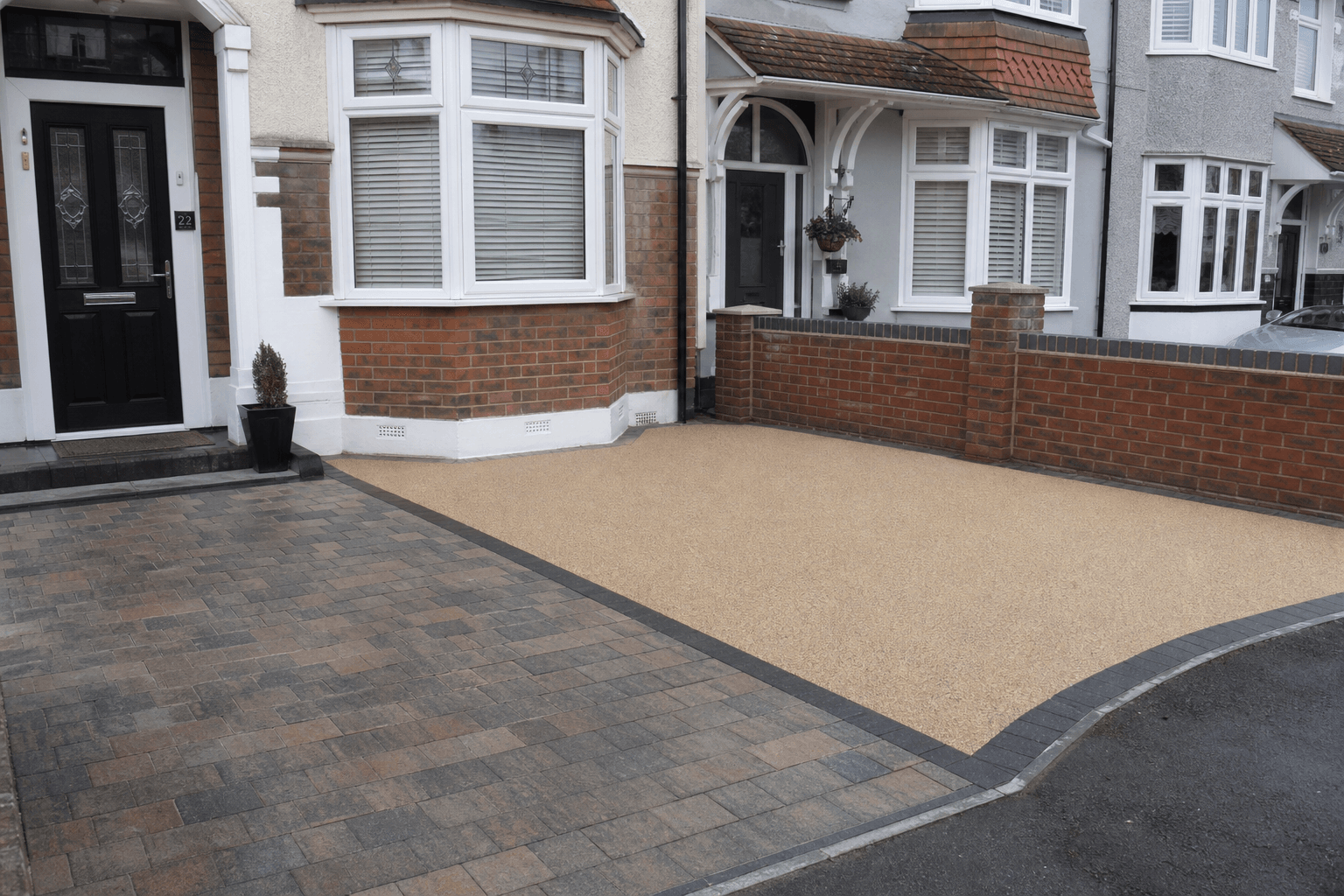
UK 2026 comparison: block paving, resin driveway, tarmac, concrete and gravel: cost, lifespan, SUDS compliance and which suits your home best.
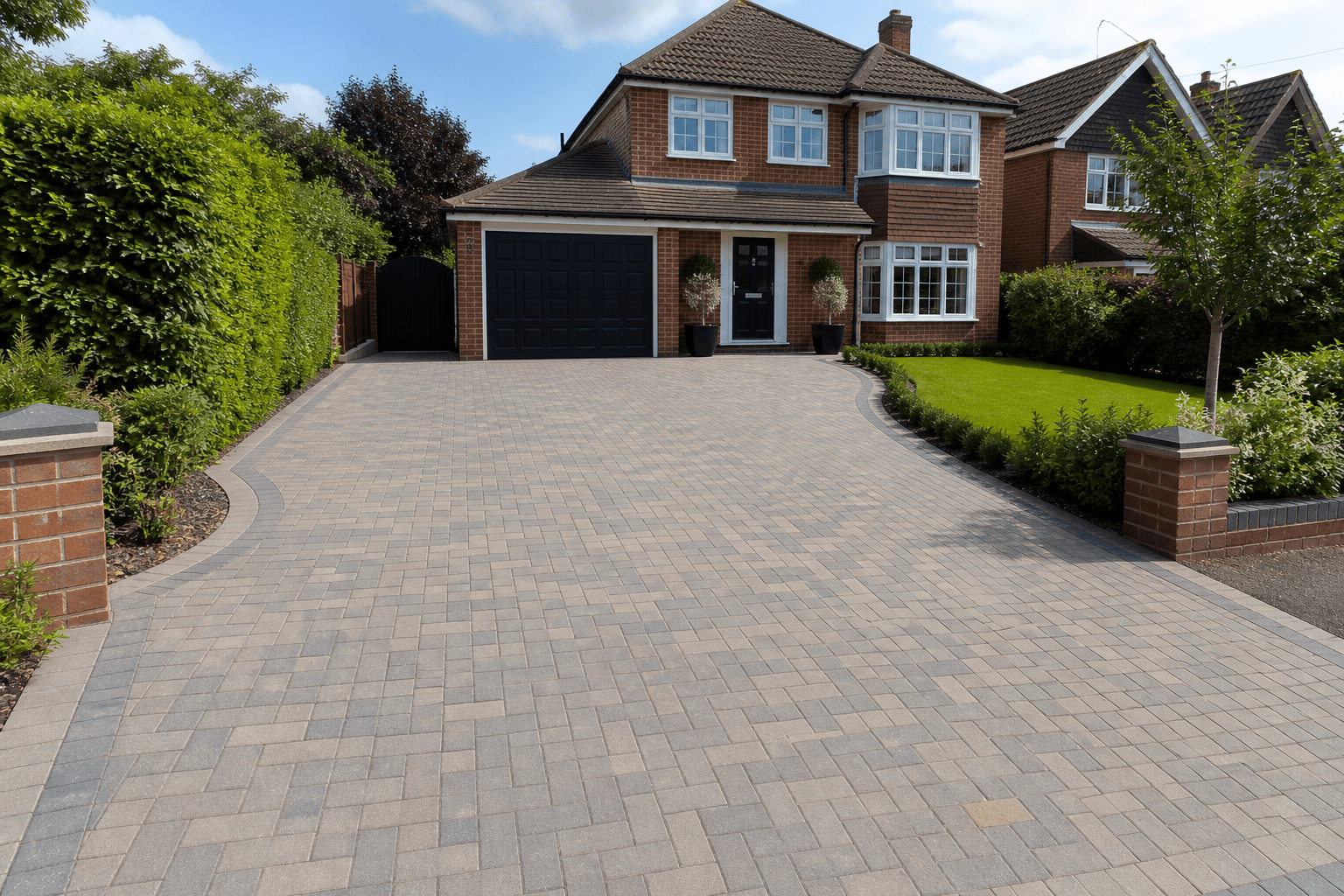
Lay block paving the right way: sub-base depth, MOT Type 1, edging restraint, kiln-dried sand and 9 steps for UK driveways and patios, with SUDS notes.
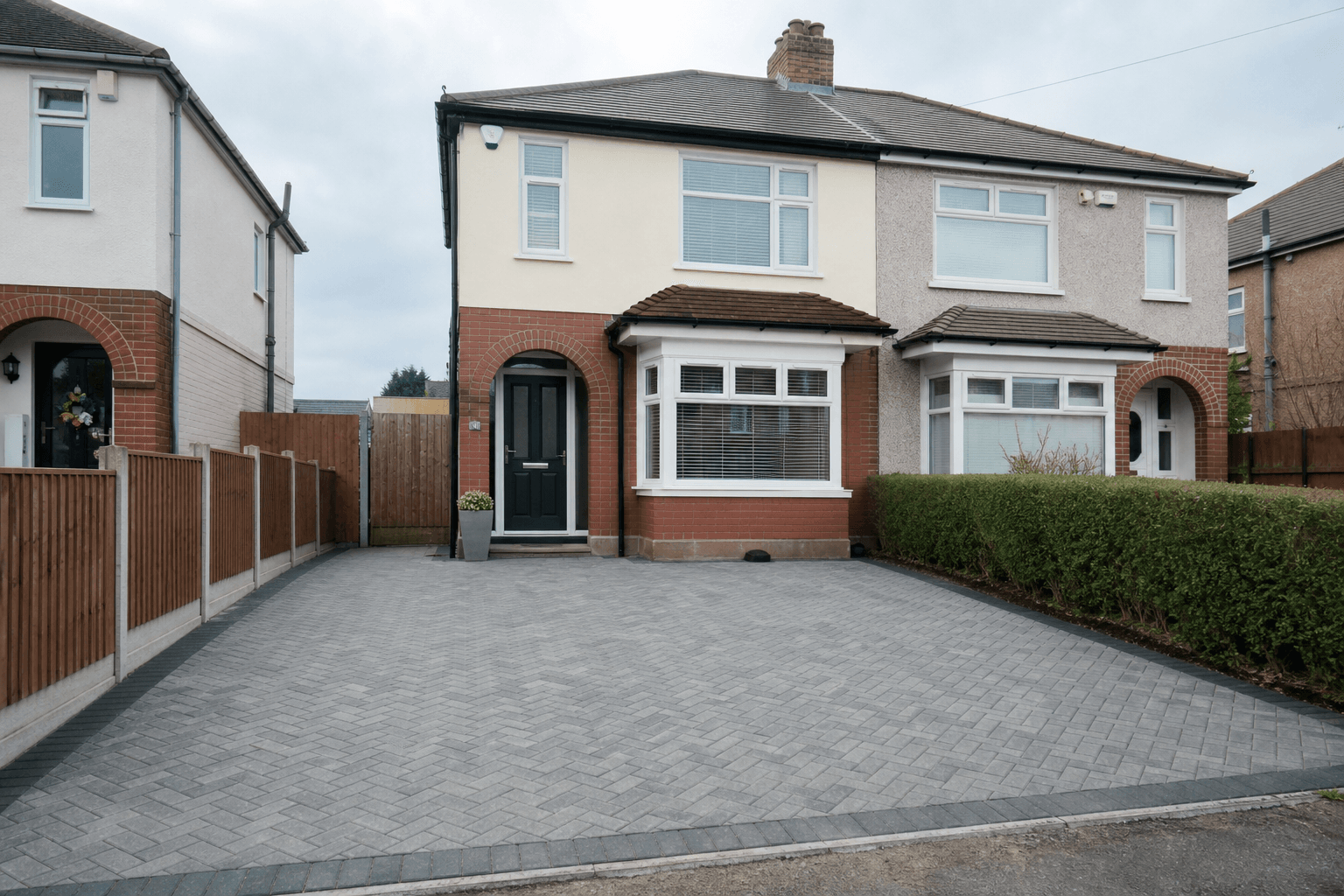
Real 2026 driveway installation costs by material and region. Block paving, resin, tarmac, gravel and concrete prices per m² and per job, with sources.
Latest in Outdoor Services
View all in this category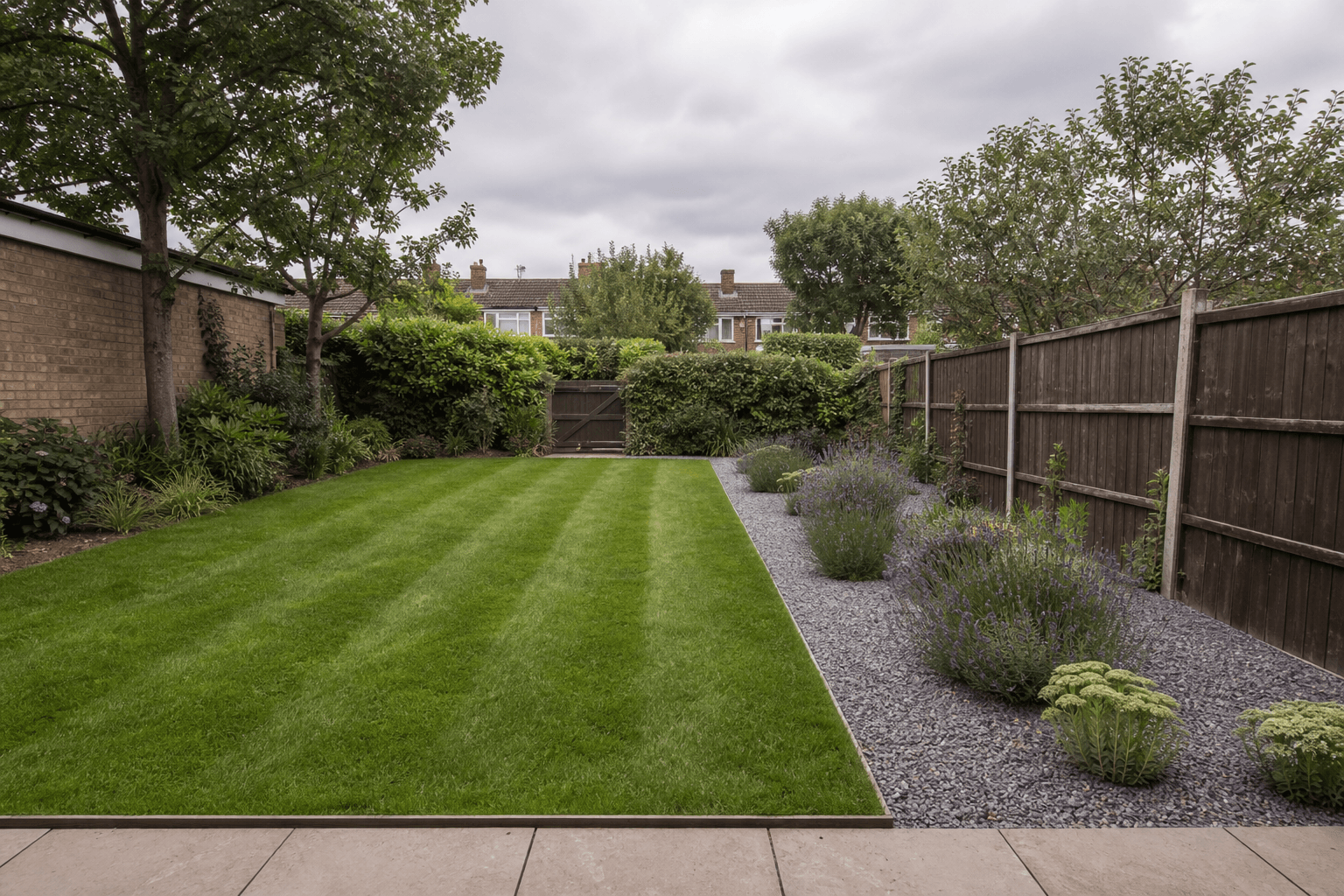
Compare real lawn, artificial grass and gravel for UK gardens: 10-year cost, climate fit, resale impact and which actually saves you time.
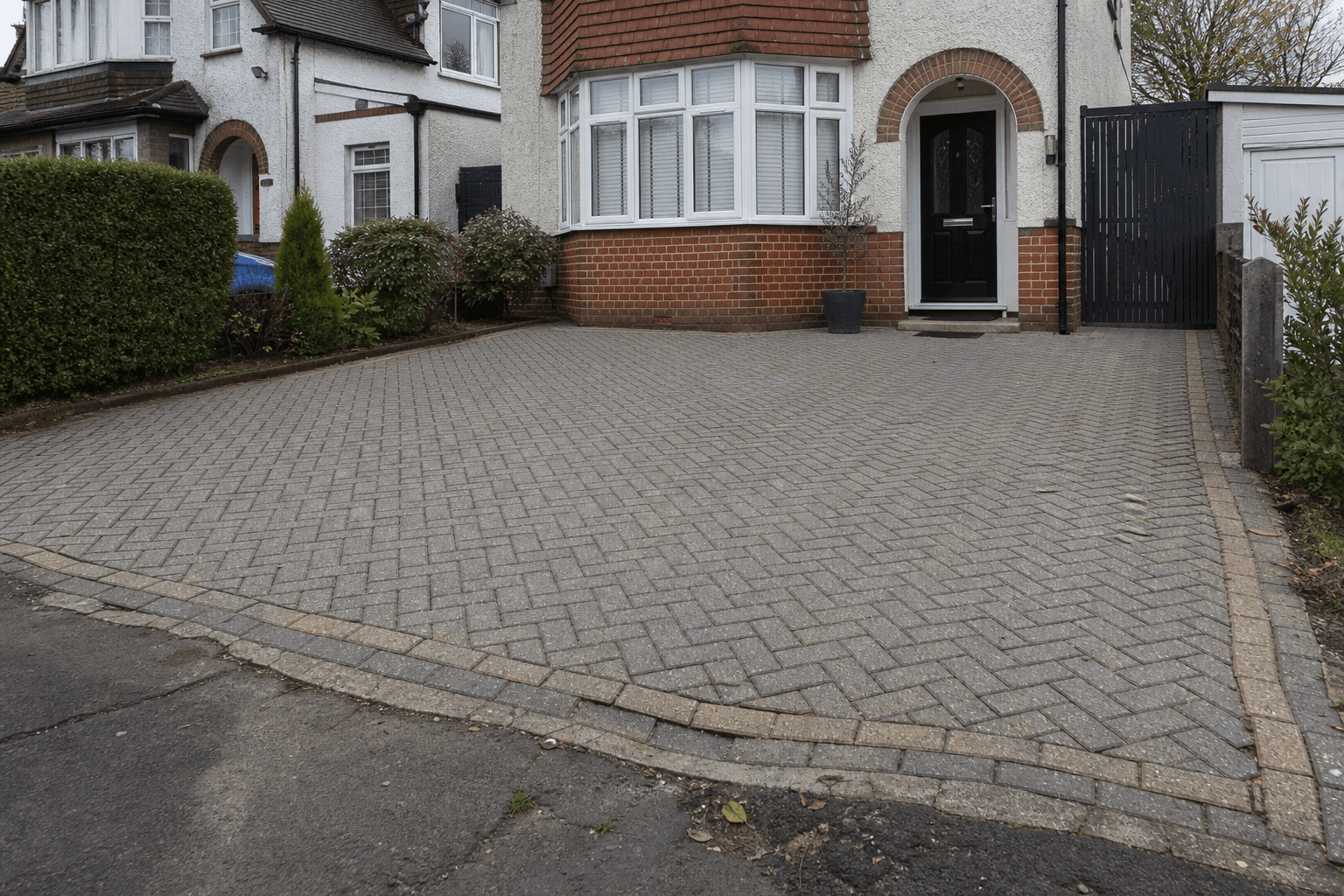
The 11 block paving driveway mistakes UK homeowners make in 2026, from missed edging to wrong sand, and how to avoid each one before it costs you.
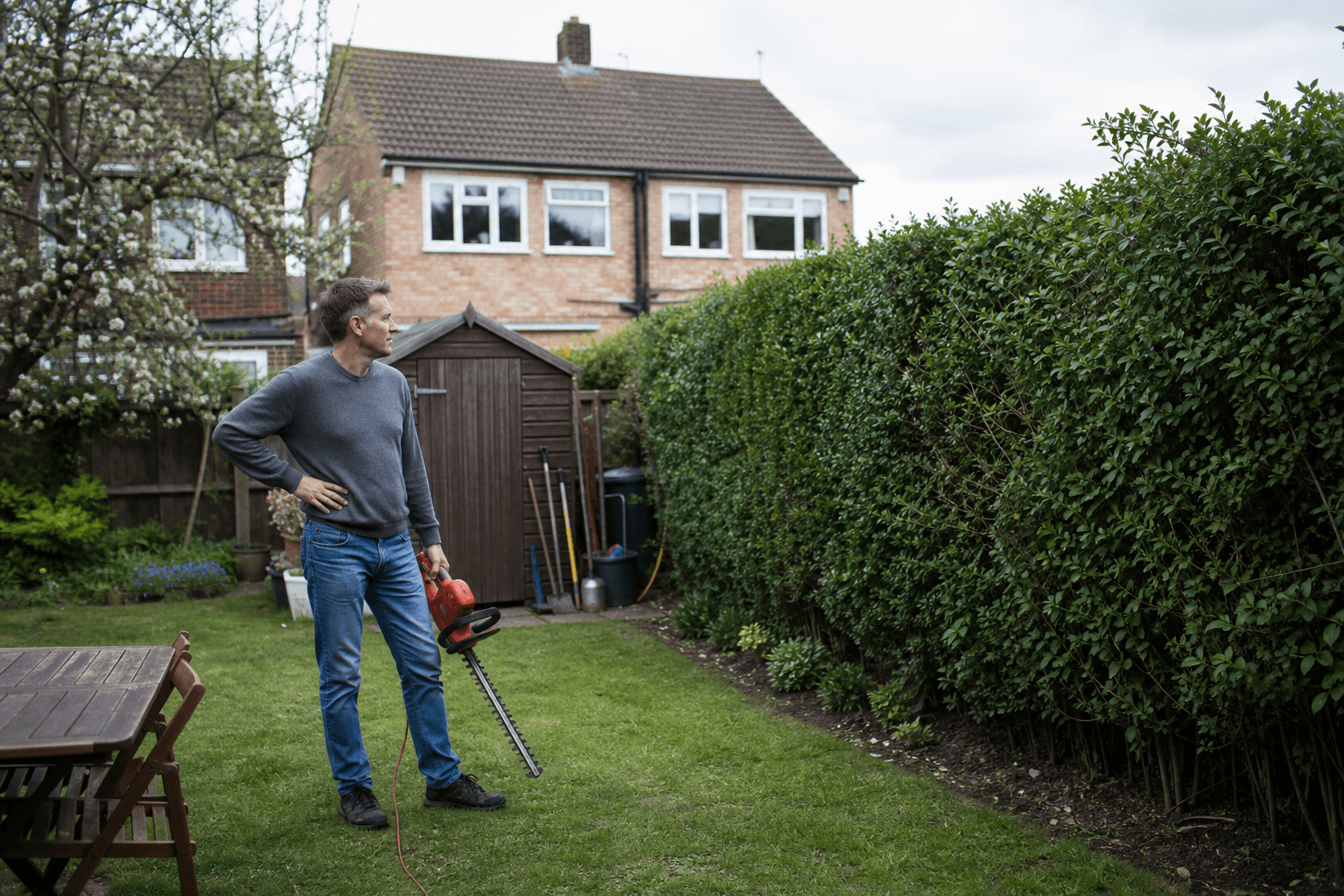
UK garden mistakes that cost real money: illegal hedge cutting, wrong-season scarifying, over-fertilising. Fix each one, save up to £1,200/year.
Related services
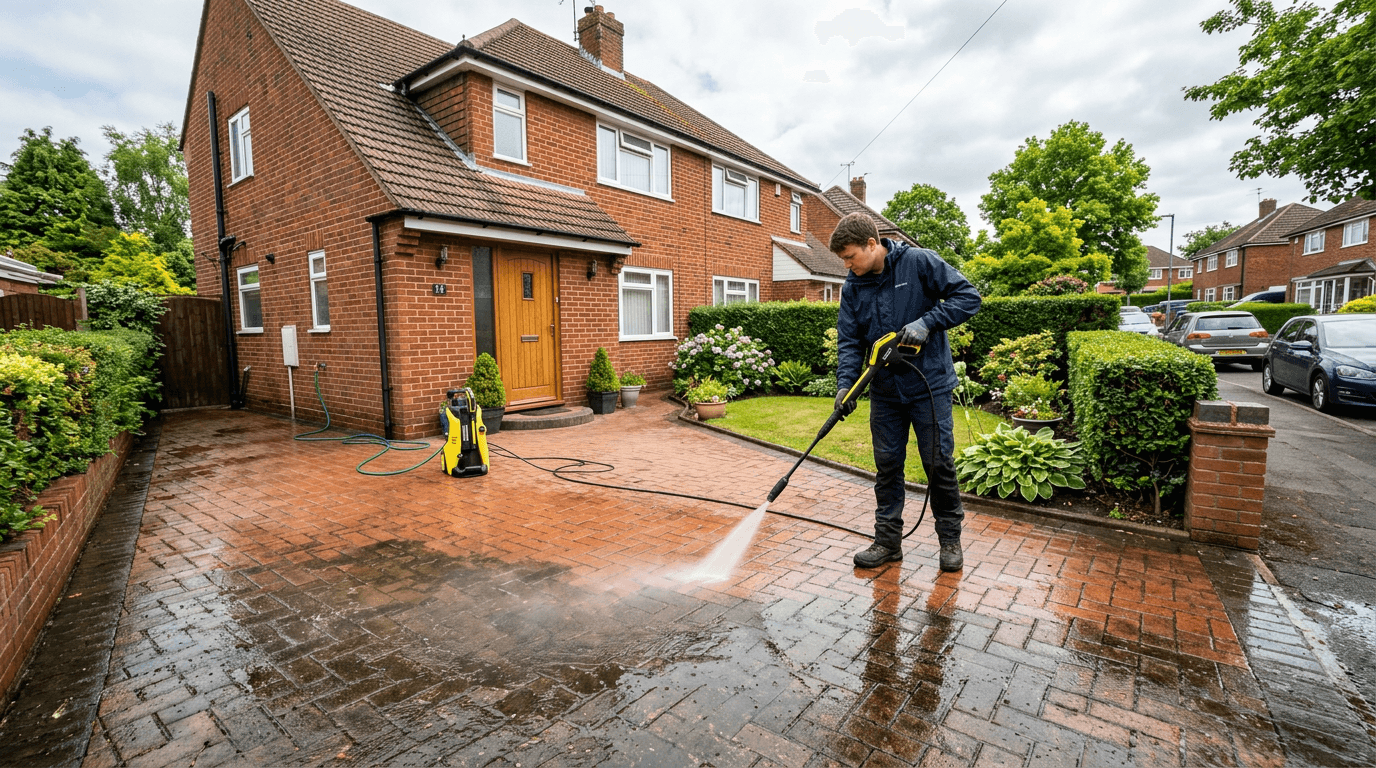
Professional pressure washing for patios, driveways, decking and exterior walls. Trusted, insured teams on Taskino deliver clear quotes, quick bookings and a thorough clean with responsible waste removal.
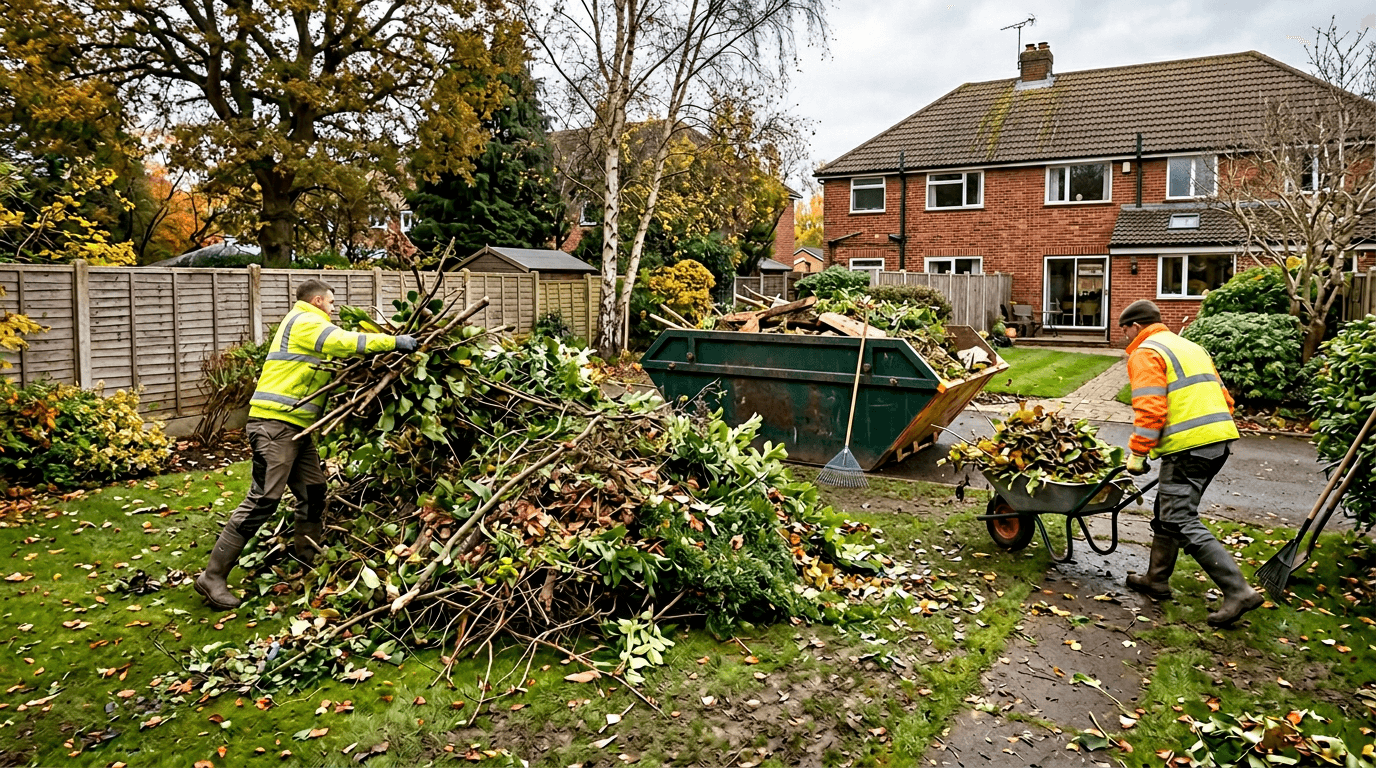
Garden clearance across the UK: green waste, soil, rubble and project leftovers removed by licensed crews. Clear quotes, complete clear-up, no hidden fees. Contact us for a tailored quote.
Ready to Book Your Service?
Tell us what you need and our team will help you find the right professional quickly, with clear pricing and no hidden fees.