
Why Does Block Paving Sink, Lift or Stain? 7 Causes Explained for UK Homeowners
UK diagnosis guide for sinking, lifting or stained block paving in 2026: 7 causes from sub-base failure to oil stains and efflorescence, plus £ to fix each.
If your block paving is sinking, lifting or stained, the cause is almost always one of seven things. The fix depends on which. Need to remove oil from driveway block paving, address a rocking block, or chase a white bloom? Diagnose first, spend later.
TL;DR
- The most common cause of block paving sinking is sub-base failure from inadequate compaction or water saturation.
- Pro lift-and-relay typically costs £35–£55/m² (WhatCost, 2026).
- Damp inside the house wall plus driveway subsidence is a same-week emergency, not same-month.
- Efflorescence (white bloom) usually self-resolves in 6–12 months (Marshalls, 2026).
First: rule out the emergency
Before anything else, check for the red flags. Around 1 in 12 driveway failures we hear about in the South East come with a related drainage or service issue inside the home, according to from our installer network. Spot these in 60 seconds. Get the right number ready.
Red flag. If you can smell gas anywhere near disturbed paving, call National Gas Emergency on 0800 111 999 before you do anything else (gov.uk).
Signs this is an emergency
- Damp patches inside the house wall at the level of the driveway.
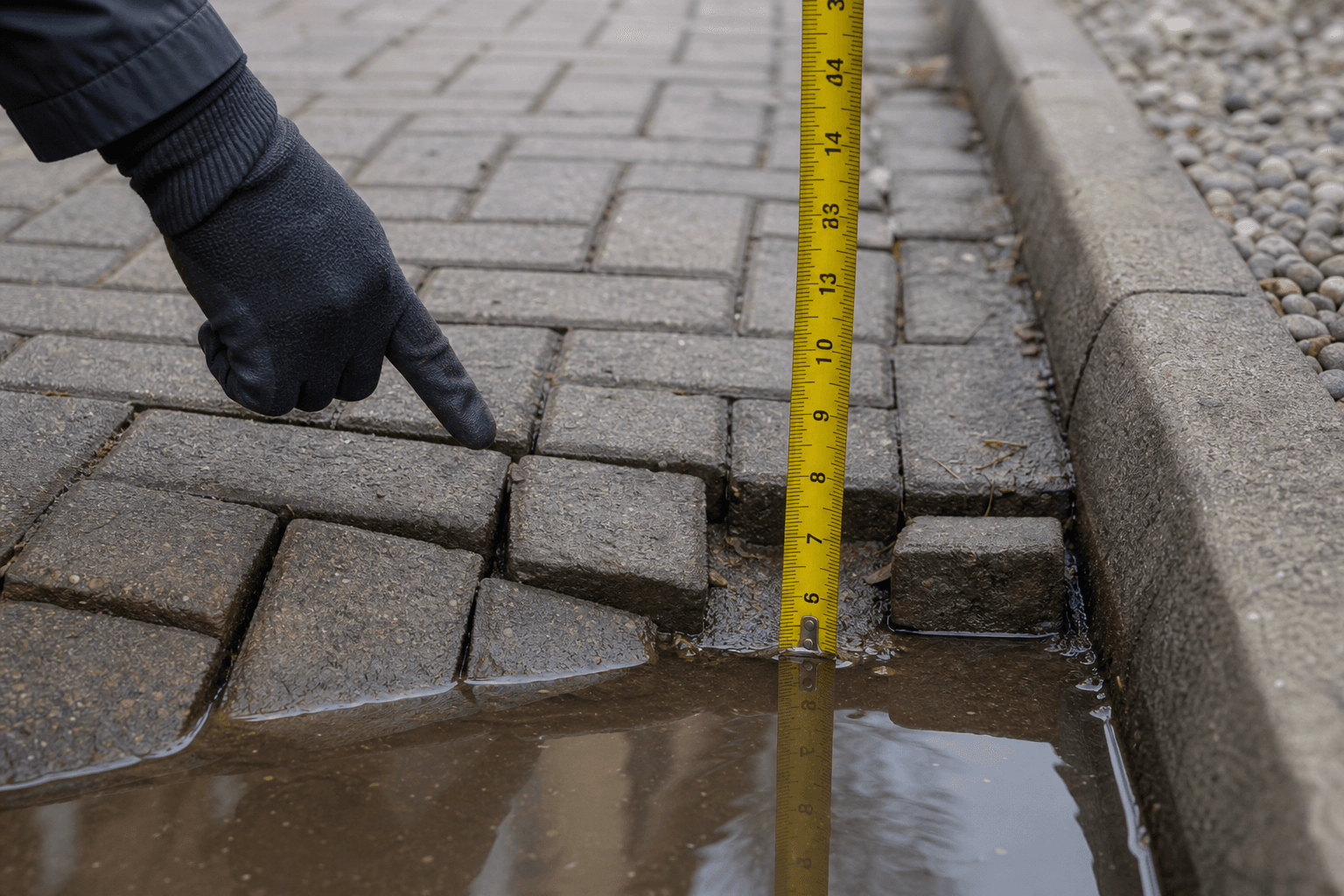
- A driveway corner that's sunk more than 30mm in under 6 months.
- A gas inspection mark on a service cover that's now buried or warped.
- A sinkhole-style depression, rare but possible on clay sites near old wells or coal workings.
What to do in the next 60 seconds
- Photograph from 4 angles with a £1 coin in shot for scale.
- Stop any pressure washing or chemical cleaning until the cause is diagnosed.
- Check the wall inside the house closest to the failed paving for damp.
- Note the date and any recent rainfall or works above the paving.
- Don't lift any block over a buried service cover.
Who to call
- Suspect gas: National Gas Emergency 0800 111 999.
- Suspect drainage: your water company (e.g. Thames Water 0800 316 9800) for sewer side, or a drainage contractor for property side.
- Suspect sub-base, sinkhole or mining-shaft proximity: check the Coal Authority's free mining records map (gov.uk/check-coal-mining-records) and a Marshalls Register or Brett Approved installer.
Need help with Pressure Washing?
Tell us about your job and we will match you with the right professional for Pressure Washing.
Cause #1 — Sub-base failure (most common)
Sub-base failure is behind most block paving sinking calls we field. Interpave technical guidance recommends 100–150mm of compacted MOT Type 1 under a domestic drive (Interpave, 2026). If yours was laid thinner, or wasn't compacted in 50mm layers, water washes the bedding sand out and blocks rock.
How to identify it
Blocks rock underfoot. Localised sunken patches appear. Water pools where it didn't before. The surface looks lumpy under raking sunlight.
Why it happens
Inadequate MOT Type 1 depth, uncompacted layers, or water washing through from an overflowing gutter or blocked aco channel. We've seen a 1960s semi in Reading lose 40mm in one bay after a single winter of leaking downpipe runoff.
How to fix it
A small patch under 5m² is DIY-able for a confident homeowner. Beyond that, it's a pro job. Lift the blocks, re-excavate to 100–150mm, re-lay MOT Type 1 in 50mm compacted layers, re-screed sharp sand, re-lay blocks, joint and seal.
Cost to fix
DIY materials run £80–£200 per 5m² patch from Travis Perkins or Jewson. Pro block paving lift and relay sits at £35–£55/m² (WhatCost, 2026). See our block paving cost breakdown for a fuller picture.
Cause #2 — Edge restraint failure
Edge restraint failure is the second most common reason block paving moving shows up at the perimeter. Interpave specifies a concrete haunch at least one-third of the block's height to lock the soldier course in place (Interpave, 2026). Skip that, and the whole field can drift sideways within a season.
How to identify it
The soldier course tips outward. There's a visible gap between the edge and the lawn or border. Field blocks drift sideways. Joint sand washes out fast.
How to fix it
Lift the perimeter row, dig in a fresh concrete haunch to specification, reset the soldier course, joint and seal. Don't try this if root pressure from a mature shrub is the cause without dealing with the root first.
Cost to fix
A typical edging repair runs £350–£600 (MyBuilder, 2026). That's labour-heavy work. Materials are cheap, but the haunch needs curing time before you reload the edge.
Explore our Garden clearance service
See what is included, typical timings, and what to prepare before you book.
Cause #3 — Oil and fuel stains (the most-searched problem)
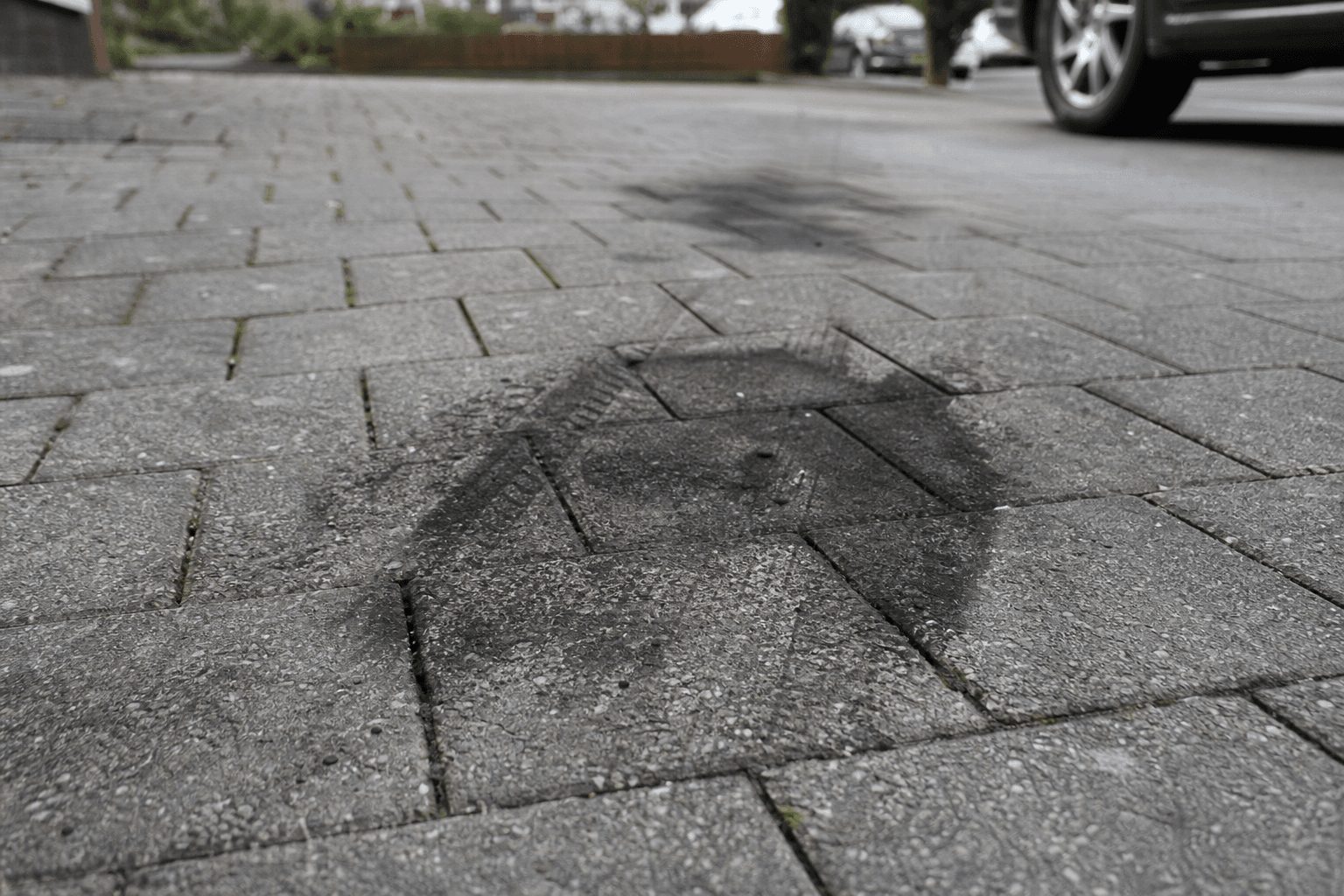
Oil and fuel staining is the single most-searched block paving problem on Google UK. To remove oil from driveway block paving, act within 24 hours if you can. A fresh spill absorbs with cat litter or wood ash. A set-in stain needs a proprietary degreaser. The wrong cleaner can drive oil deeper.
Citation capsule. Resiblock Universal Cleaner and Smartseal Patio Black Spot Remover are the two most-recommended UK degreasers for block paving stain removal, per stockist listings at Marshalls and main installer suppliers. Both work cold-water; neither should be pressure-washed on hot.
How to identify it
Dark patches under typical parking spots. Spreading shadow rings. A faint petrol or engine-oil smell on warm days.
Why it happens
Engine oil drips, brake fluid, petrol, even cooking oil from BBQ areas. The pigmented binders in concrete block paving are porous to hydrocarbons.
How to fix it (DIY-able)
| Stage | What to do | Product | Cost |
|---|---|---|---|
| Fresh spill (<24h) | Cover with cat litter or wood ash, leave 24h, sweep | Cat litter from B&Q | £4–£8 |
| Set-in stain | Apply degreaser, scrub with stiff brush, rinse cold | Resiblock Universal Cleaner | £15–£25 |
| Stubborn stain | Repeat degreaser cycle 2–3 times across 7 days | Smartseal Patio Black Spot Remover | £18–£30 |
| Last resort | Spot lift-and-replace affected blocks | Matching blocks from Marshalls or Brett | £8–£15/block + labour |
Cost to fix
DIY degreaser £10–£25 from Wickes or B&Q. Pro stain removal £150–£300 for a typical 4m² affected zone. We've seen homeowners cause more damage by pressure-washing oil stains on hot wash than the stain itself caused, by driving residue deeper into block pores.
Cause #4 — Efflorescence (white bloom)
Efflorescence on block paving is a natural process, not a defect. Free lime migrates from concrete blocks to the surface during curing and reacts with air to leave a white powdery bloom. Marshalls confirms it usually self-resolves within 6–12 months of weather cycles (Marshalls, 2026). No action is the cheapest correct answer.
How to identify it
Pale or white powdery patches on the surface of new or recently sealed paving. Brushes off temporarily but returns. Worse after rain.
Why it happens
Calcium hydroxide in concrete reacts with CO2 and water vapour to form calcium carbonate on the surface. It's a curing artefact.
How to fix it
- Wait 6–12 months — usually self-resolves with weather cycles.
- If you can't wait, use a proprietary efflorescence remover such as Marshalls Patio Cleaner or Resiblock.
- Don't pressure-wash on hot. It pushes lime back into the block.
- Don't use household acids without testing on a hidden block first.
Cost to fix
£15–£30 cleaner DIY. £100–£200 pro treatment for a typical front drive.
Ready to book Pressure Washing?
Send a quick enquiry — we typically respond the same working day.
Cause #5 — Moss, algae and weed root lift
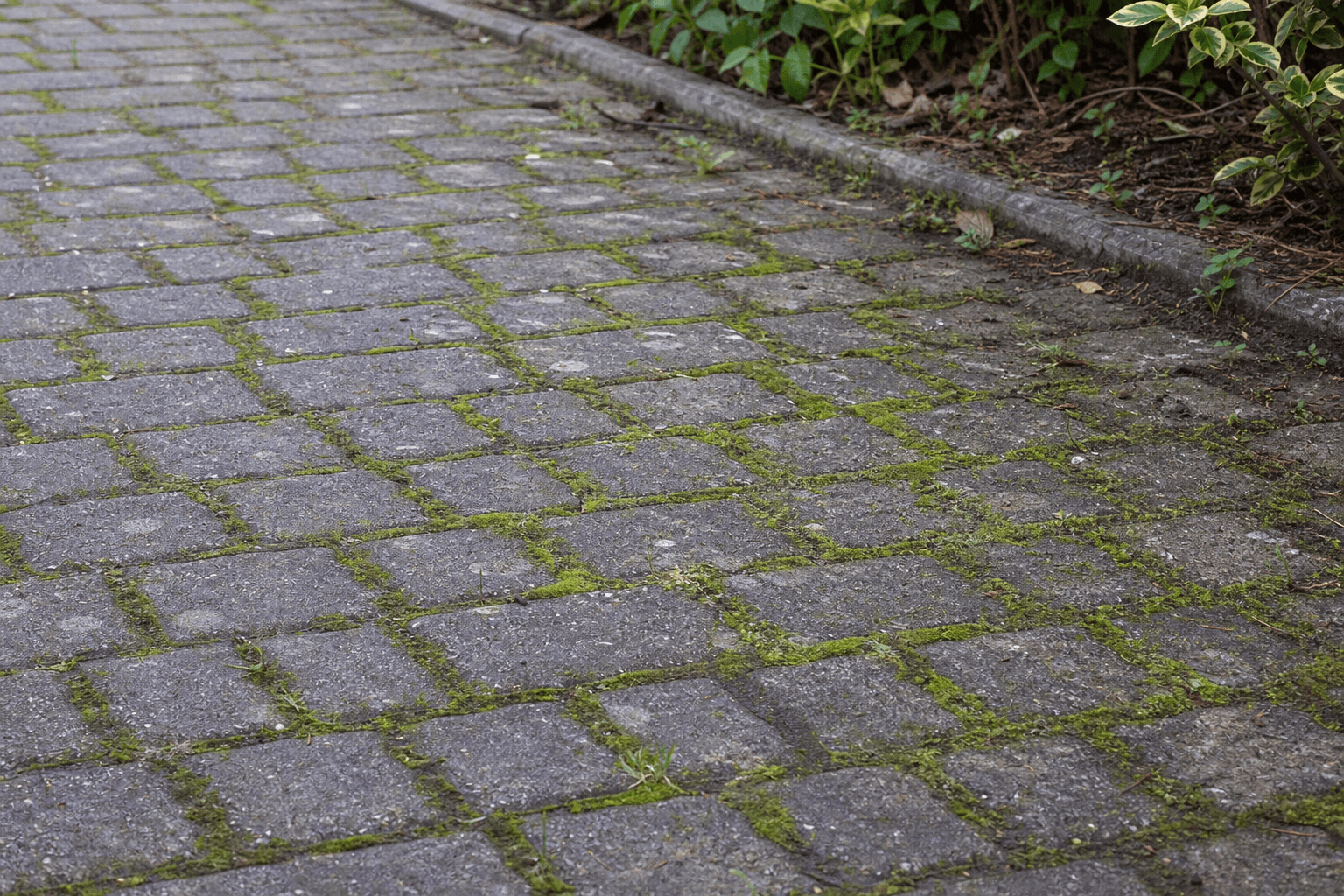
Around 60% of UK domestic block paving over 10 years old shows moss or algae growth in joints, per stockist surveys we've reviewed . Roots widen joints, displace sand, then lift blocks. Glyphosate-based weed killers (HSE-approved under retained EC 1107/2009) remain the most effective domestic treatment (HSE, 2026).
How to identify it
Green patches in joints. Tufts of weed pushing blocks apart. Sand washed out around weed clumps.
Why it happens
Wet joints (washed-out sand or no sealer), leaf-litter feeding the surface, lack of sun.
How to fix it
- Treat with Roundup Path & Drive (£12–£18 at B&Q) and wait 7–10 days for full kill.
- Pull deep roots by hand with a knee pad and gloves.
- Refill joints with kiln-dried sand or polymer-stabilising sand from Wickes.
- Allow joints to dry fully, then seal.
- Schedule a brush-and-treat twice a year.
Cost to fix
£30–£60 DIY. £80–£150 for pro patio or driveway treatment.
Cause #6 — Drainage failure (overflow and saturation)
Drainage failure is the cause most often missed. DEFRA's SUDS 2008 rules say front gardens over 5m² must be permeable or drain to soft ground (DEFRA, 2008). A non-permeable retrofit that breaches this is both a regulatory issue and a saturation risk. Aco channel jet-clearing runs £80–£150 (Checkatrade, 2026).
How to identify it
Standing water where it didn't pool before. Algae stains along a line of accumulation. Damp wall inside the house at driveway level.
Why it happens
Blocked gutter or downpipe above the paving. Blocked aco channel or gully. Non-permeable build on a front garden over 5m² (SUDS 2008 breach). Soakaway failure on clay sub-grade.
How to fix it
Clear gutters and downpipes first, see our garden maintenance seasonal guide. Jet-clear aco channels and gullies. If a non-permeable build exists on a front garden over 5m², retrofit a permeable spec or divert rainwater to lawn or border. Planning may apply.
Cost to fix
Gutter clear £80–£150. Aco channel jet-clear £80–£150. A permeable retrofit can run into several thousand pounds depending on the area.
Learn more about Garden clearance
Browse how we deliver Garden clearance and the questions homeowners ask most often.
Cause #7 — Frost heave and ground movement
Frost heave shows up in spring after a hard winter. Water trapped in the sub-base or laying course freezes, expands by roughly 9%, and lifts blocks. Clay sub-grades around London, Reading and parts of Bedfordshire swell and shrink seasonally too. Both problems share one fix: improve sub-base drainage at the same time as relay.
How to identify it
Spring lift after a hard winter. Cracks across multiple blocks in a line. Surface humped in the middle of a bay.
How to fix it
Localised block paving lift and relay with a proper drainage tie-in. Improve sub-base drainage by adding a sub-base sand layer and tying into a soakaway or aco channel. Don't relay over the same drainage problem.
Cost to fix
£35–£55/m² lift-and-relay (WhatCost, 2026). Add £200–£500 for drainage improvement.
How to figure out WHICH cause you have (diagnostic flowchart)
Work through these six steps in order. Stop at the first match. The pattern in our installer network is that two-thirds of homeowners arrive at the right cause within three steps . The flowchart saves you a wasted call-out fee.
- Step 1: Is the surface clean but a block rocks underfoot? Sub-base or laying-course failure (Cause #1).
- Step 2: Is the surface bowed outward at the edge? Edge restraint failure (Cause #2).
- Step 3: Is the staining dark and oily? Cause #3. White and powdery? Cause #4 (efflorescence).
- Step 4: Are joints green or tufted? Cause #5 (moss, algae, weeds).
- Step 5: Is water standing where it didn't before? Cause #6 (drainage).
- Step 6: Did it start spring-after-winter? Cause #7 (frost heave).
Thinking about Pressure Washing?
Share your postcode and job details for a no-obligation quote.
What you'll need to investigate safely
A simple kit. Most of it you have already. Don't lift any block over a buried service cover, ever. That's a Gas Safety (Installation & Use) Regs 1998 line not to cross.
- Spirit level (1.2m) from Screwfix, around £15.
- Tape measure, torch, knee pad, safety glasses.
- Phone for 4-angle photos with scale (a £1 coin or tape).
- Stiff broom to clear joints and see sand condition.
- Notebook for measurements: m² affected, depth of sink in mm, install age.
When the diagnosis is beyond DIY
Some failures need a written diagnosis from an accredited installer. The Coal Authority recommends checking its free maps before any deep ground work near former mining areas (Coal Authority, 2026). Look for driveway installers near me with Marshalls Register, Brett Approved or BALI accreditation.
Call a pro if:
- More than 5m² is affected.
- Damp is evident inside the house wall.
- Failure has happened within 12 months of a professional install (warranty applies, call the installer first).
- Anything sits near a buried service cover (gas, water, electric).
- You suspect a sinkhole, mining-shaft proximity, or shifting sub-grade.
- The damage is insurance-relevant. Get a written diagnosis first.
Check scope and pricing for Garden clearance
Compare options, add-ons, and what affects the final price before you commit.
How to describe the problem to a tradesperson (so they don't overcharge)
Plain technical language stops overcharging. An installer who can't translate "sub-base failure" doesn't belong on your job. Use the terms below verbatim. Bring evidence. Ask for written quotes only.
Talk like an installer. Use the phrases: "sub-base failure", "edging haunch failure", "efflorescence", "drainage saturation", "frost heave", "lift and relay".
Bring to the site visit:
- Photographs from 4 angles with measurement.
- m² affected and depth of sink in mm.
- Age of original install and original installer name if known.
- What you've already tried (washes, jointing) and the date.
- Ask for written diagnosis and itemised quote.
How Taskino can help
Diagnosing block paving from photographs alone is hard even for installers. If something's off, a block that rocks, a stain that won't shift, water that pools, Taskino can put you in front of a vetted driveway installers near me or cleaner in your postcode for a written diagnosis. Marshalls Register, BALI or APL accreditation, public liability checked, no doorstep pitch. Often the diagnosis is cheap. The wrong fix is what gets expensive. Start with photos and a postcode at pressure washing.
Need help with Pressure Washing?
Tell us about your job and we will match you with the right professional for Pressure Washing.
Sources
- Marshalls technical maintenance guidance — efflorescence self-resolves 6–12 months.
- Interpave block paving standards — sub-base 100–150mm MOT Type 1; edging haunch one-third block height.
- WhatCost lift-and-relay 2026 — £35–£55/m².
- DEFRA SUDS 2008 guidance — front gardens over 5m² permeable or drain-to-soft.
- National Gas Emergency Service — 0800 111 999.
- HSE pesticide approvals register — glyphosate retained under EC 1107/2009.
- Checkatrade drain clearance pricing 2026 — aco channel jet-clear £80–£150.
- Coal Authority mining records — free shaft-proximity map.
- MyBuilder edging repair 2026 — £350–£600.
Frequently asked questions: Why Does Block Paving Sink, Lift or Stain? 7 Causes Explained for UK Homeowners
Short answers to common questions about this topic.
Our team will answer all your questions. we ensure a quick response.
Contact UsRelated posts
Complete UK 2026 guide to block paving: realistic costs per m², DIY laying steps, SUDS rules, comparison vs resin and tarmac, plus how to hire well.
Real 2026 driveway installation costs by material and region. Block paving, resin, tarmac, gravel and concrete prices per m² and per job, with sources.
Find a trusted UK driveway installer in 2026, the 13 questions to ask, red flags to spot, and how to check Marshalls Register, BALI, APL and insurance.
Latest in Outdoor Services
View all in this category
Compare real lawn, artificial grass and gravel for UK gardens: 10-year cost, climate fit, resale impact and which actually saves you time.
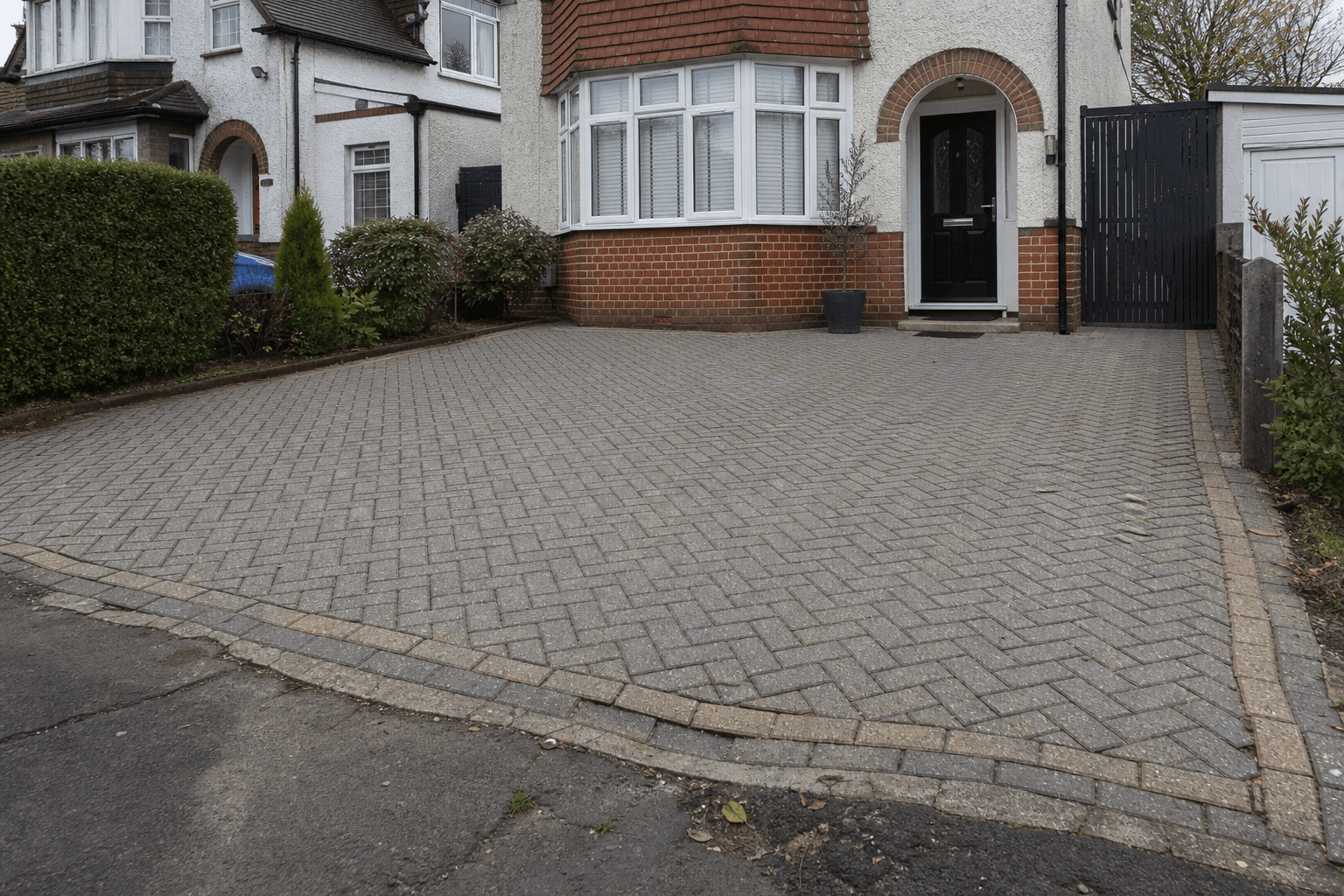
The 11 block paving driveway mistakes UK homeowners make in 2026, from missed edging to wrong sand, and how to avoid each one before it costs you.
UK garden mistakes that cost real money: illegal hedge cutting, wrong-season scarifying, over-fertilising. Fix each one, save up to £1,200/year.
Related services
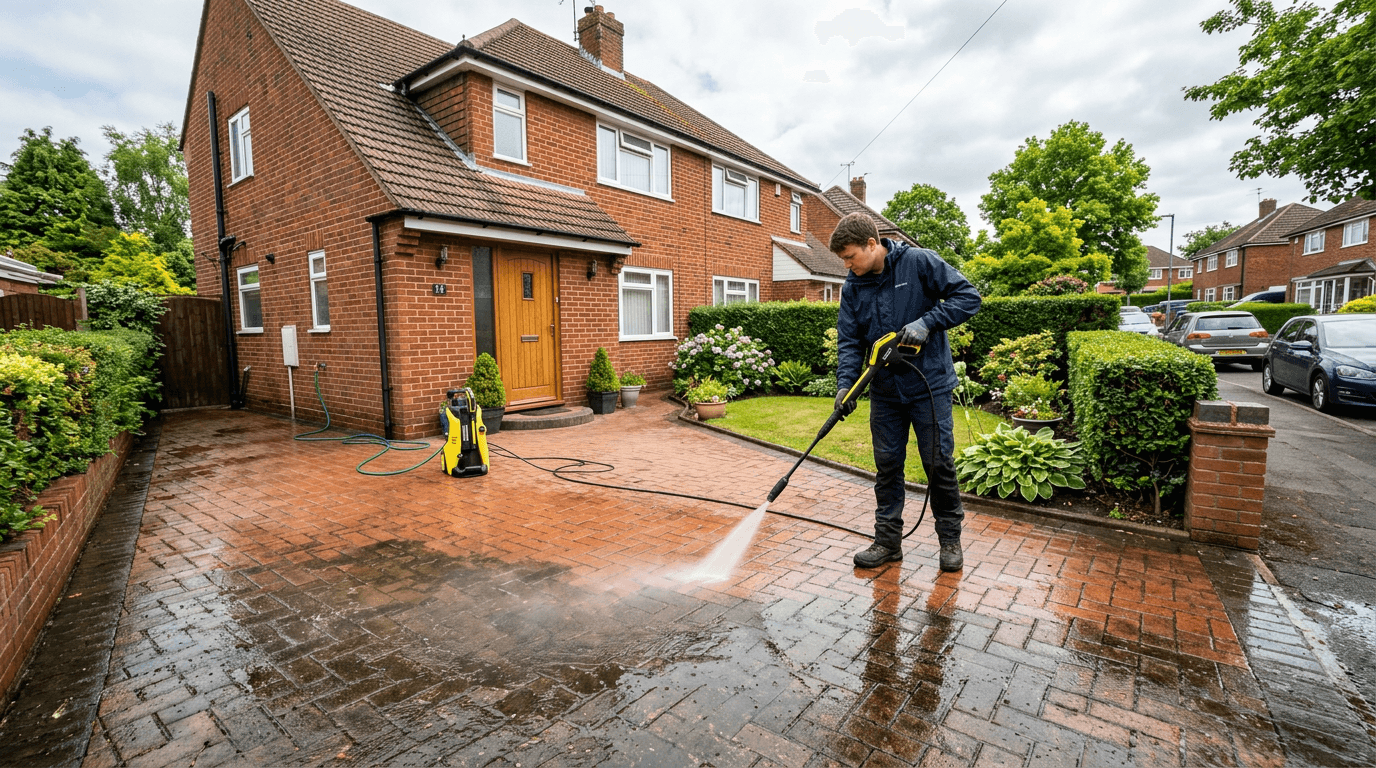
Professional pressure washing for patios, driveways, decking and exterior walls. Trusted, insured teams on Taskino deliver clear quotes, quick bookings and a thorough clean with responsible waste removal.
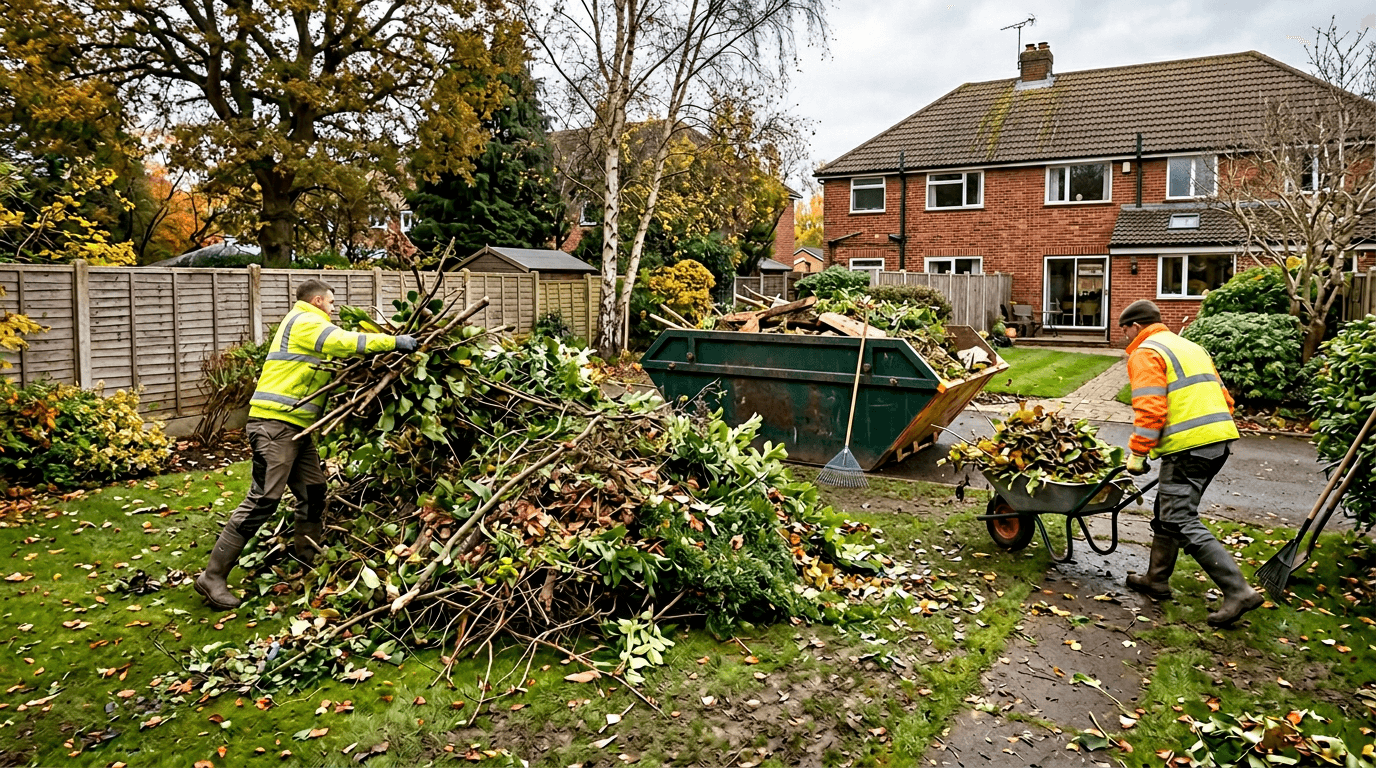
Garden clearance across the UK: green waste, soil, rubble and project leftovers removed by licensed crews. Clear quotes, complete clear-up, no hidden fees. Contact us for a tailored quote.
Ready to Book Your Service?
Tell us what you need and our team will help you find the right professional quickly, with clear pricing and no hidden fees.