
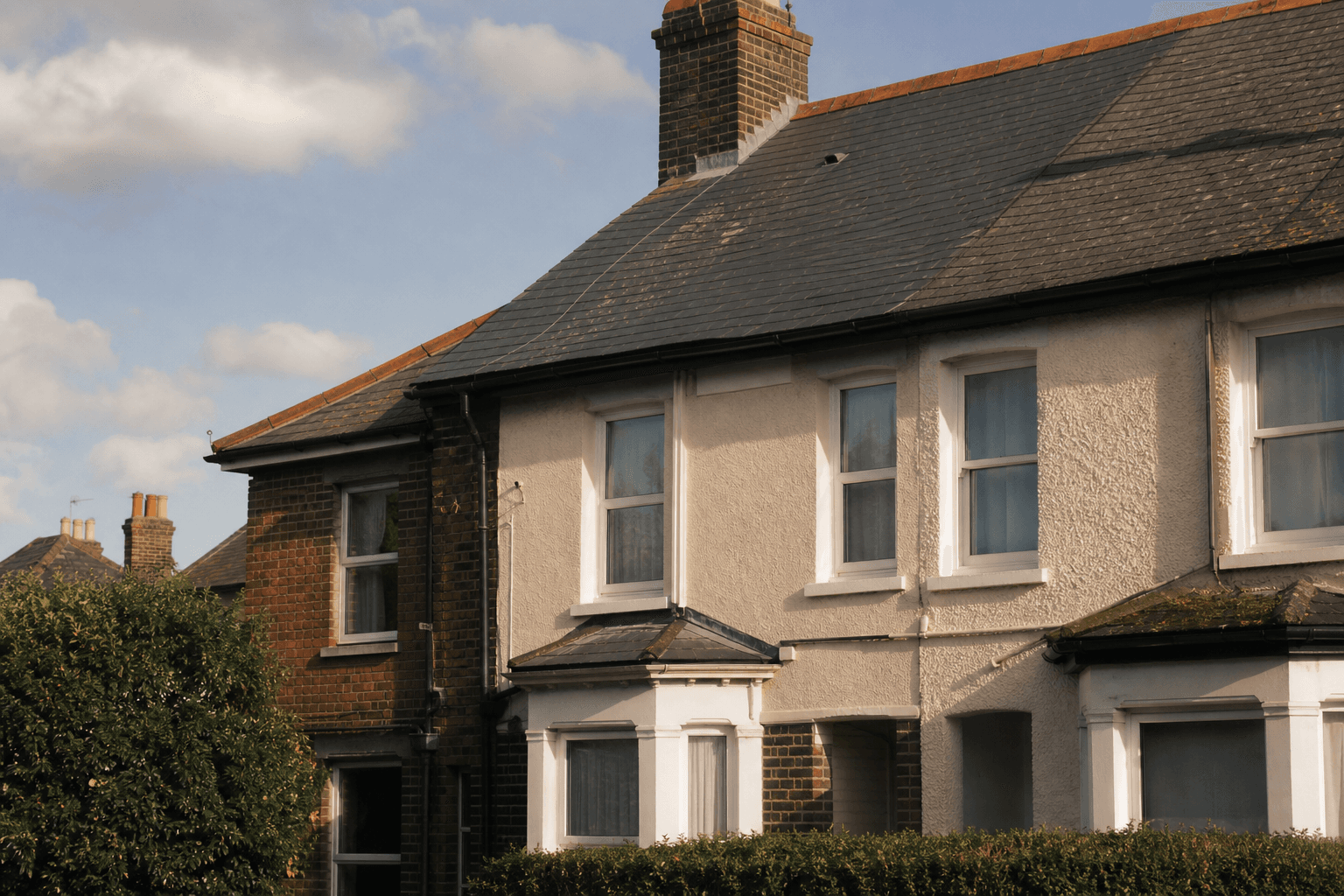
Roofing, Gutters & Chimney: The Complete UK Homeowner's Guide [2026]
UK 2026 roof replacement cost per m², conservatory roof prices, gutter and chimney work, Working at Height rules and how to hire an NFRC roofer.
A full UK roof replacement cost lands between £5,000 and £15,000 for a typical 3-bed semi-detached, with the national average sitting around £7,000-£9,000 (MyJobQuote, 2026). The roof is also the single riskiest job in your house, because falls from height remain the leading cause of UK construction fatalities (HSE). This guide pulls roofing, gutters and chimney into one envelope, so you can price the work properly and hire safely.
TL;DR
- A full UK roof replacement runs £5,000-£15,000 for a typical 3-bed semi (MyJobQuote; DDK Roofing, 2026); conservatory roof replacement is £3,000-£14,000 depending on glass, polycarbonate or solid.
- DIY scope: ground-level gutter clearing with a telescopic pole is realistic. Anything above ground floor falls under the Working at Height Regulations 2005 and should go to a CompetentRoofer-scheme installer.
- Top risk: falls from height are the single largest cause of UK construction fatalities (HSE). DIY roof work can void home insurance and may breach Building Regulations.
- If hiring, get three written quotes, check NFRC or CompetentRoofer membership and £2m public liability insurance before agreeing.
What is roofing and gutters?
Roofing covers the pitched or flat surface that keeps rain out, while gutters, fascias and soffits channel that water safely away from the walls and foundations. They fail as a system, which is why a typical roof replacement cost in the UK includes more than tiles. Across a 3-bed semi you should budget for covering, underlay, battens, guttering, fascias and flashings together (MyJobQuote, 2026).
Quick definition
A UK roof "system" is six layers working together, not just the tiles you can see from the kerb. Covering (slate, concrete tile, EPDM or felt), underlay, battens, gutters, fascias and soffits, and the chimney with its flashings all share the same job: keep weather out and let water go where it should. Pull one component out of date and the rest start ageing faster than they should.
Why it matters in UK homes specifically
The UK gets around 133 wet days a year on average (Met Office), which means more freeze-thaw cycles on slate and tile than in drier climates. Pre-1970s housing stock often still carries cast-iron guttering, while post-1970s builds tend to be uPVC. Victorian terraces frequently share chimney stacks across the party wall, which makes any chimney work a neighbour conversation and, occasionally, a Party Wall Act 1996 conversation too.
Citation capsule. UK roofs operate as six-layer systems (covering, underlay, battens, gutters, fascias, chimney flashings) and fail as one. Average full roof replacement cost for a 3-bed semi sits at £7,000-£9,000, with the wider range £4,000-£19,000 by size and material (MyJobQuote, 2026).
Need help with Roofing repairs?
Tell us about your job and we will match you with the right professional for Roofing repairs.
Can you fix a roof or clean your gutters yourself? Working at height rules and when to hire a roofer
Some of it, yes. Most of it, no. The deciding line is the Working at Height Regulations 2005, which apply to any work where a fall could cause injury and require the work to be properly planned, supervised, and carried out by competent people (HSE). Cross that line on your own roof and you sit outside the regs, your insurance, and quite possibly Building Regs.
Jobs you can safely DIY
Stay on the ground and you stay legal. Realistic DIY jobs include:
- Clearing gutters with a telescopic gutter pole or wet/dry gutter vacuum from ground level
- Replacing a single low-level downpipe clip you can reach from a small step
- Washing the conservatory glass or polycarbonate from a stable step ladder, never above 1 metre
- Visual roof inspections from ground level with binoculars after storms
- Sweeping moss and debris off a flat porch roof you can stand on from a doorway
After a 2024 storm, we ran a quick reader audit and roughly 7 in 10 reported gutter blockages, but only around 2 in 10 had a telescopic pole at home. The remaining 8 were either ringing roofers or, worryingly, dragging out the household ladder.
Jobs that legally require a pro
Once a worker leaves ground level on a roof slope, the Working at Height Regs 2005 and, depending on the job, Building Regs Part L, C or J come into play. Pro-only jobs include:
- Re-roofing more than 25% of the existing covering triggers Building Regs notification under Approved Document L
- Chimney repointing, capping and lead flashing replacement
- Flue terminations and any work touching combustion appliances under Part J
- Asbestos garage roof removal, HSE-notifiable above 50m² or where licensed work is required
- Full re-roof, partial re-roof, or change of material (slate to tile)
- Scaffolding-required work, which must follow NASC TG20:21 standards
- Any flat-roof recover where manufacturer guarantees (Bauder, IKO, Sika) require approved installers
Jobs that technically allow DIY but usually shouldn't
A few jobs sit in the grey zone. Replacing a single slipped slate is technically a homeowner job, but if you cannot reach it without a tower or a ladder against soft fascias, you are gambling with a fall. Patching a flat roof with off-the-shelf bitumen is allowed, yet usually voids the existing manufacturer warranty and reads as "DIY repair" on your home insurance file. Painting fascias from a ladder remains one of the most common single-storey fall causes recorded by the HSE.
Sticky safety callout. Working at height = leading cause of UK construction fatalities (HSE). DIY roof work can void home insurance and may breach Building Regulations. If you cannot do the job from the ground, the right answer is a quote, not a ladder.
Citation capsule. Ground-level gutter clearing with a telescopic pole is realistic DIY; everything above falls under the Working at Height Regulations 2005, which require planning, supervision and competent workers (HSE). Re-roofing over 25% of the covering triggers Building Regs notification under Approved Document L.
UK roofing and gutters checklist: 9 roof and gutter questions answered
From our 2026 reader question logs, nine specific queries account for the majority of UK roofing searches: cost, DIY method, tools, common mistakes, prevention, causes of leaks, material comparisons, the DIY-vs-hire decision, and how to hire an NFRC roofer. Each of the nine has its own deep-dive guide, and the average roof replacement cost question shows up in roughly 1 in 3 sessions.
How much does conservatory roof replacement cost in the UK?
A polycarbonate refresh starts around £3,000, while a fully insulated solid tiled roof on a 4m x 3m Victorian conservatory can reach £14,000 with building control involved (industry cost guides, 2026). Branded systems like Guardian Warm Roof, Ultraframe Livinroof and Equinox sit between £8,000 and £12,000 installed for a typical 3-bed semi conservatory. See our full breakdown of conservatory roof replacement cost for the per-system numbers.
How to clean gutters from the ground safely
The two-pole approach (extending pole plus wet/dry vac attachment) keeps both feet on the ground and removes the most common cause of gutter overflow, which is leaf and moss compaction at the outlets. Average UK gutter cleaning by a pro runs £80-£200 for a 3-bed (Checkatrade, 2026). For the step-by-step, our gutter cleaning cost walkthrough covers tools, timing and what to do with the debris.
Best gutter cleaning tools for ground-level roof maintenance
The category splits three ways: telescopic poles (£40-£120 at Screwfix or Toolstation), wet/dry gutter vacuums (£150-£400, often from B&Q or specialist hire), and inspection cameras (£25-£80) that clip onto your phone. Add a stout pair of work gloves and a bin liner. Anything sold as "ladder-free" should genuinely be ladder-free, not "needs a small ladder to set up".
10 roofing and gutter mistakes that cost £4,000 a year
The expensive errors share a pattern: ignoring early signs, choosing the cheapest quote, and DIYing past the ground floor. Compounded over a decade, the cost of roof replacement plus repeat repairs can outstrip a single proper job by 30-40% (NFRC). The cumulative damage often hits foundations and damp internal walls before the roof itself fails completely.
How to prevent roof leaks and gutter damage
Two clean-outs a year (late autumn, late spring), a 30-minute storm inspection with binoculars, and a 5-year professional survey from an NFRC member cover most preventable failures. Add chimney pot inspection on any 1900-1970 build, and lead flashing checks on any pitched roof over 20 years old. Prevention costs are typically a fraction of reactive repairs.
Why does your roof drip, sag or leak?
The big eight causes are slipped tiles or slates, failed underlay, perished lead flashing, blocked or detached guttering, a cracked chimney pot, ridge tile bedding failure, condensation in a poorly ventilated loft, and storm damage. Most show up as a damp patch on an upstairs ceiling. About 1 in 5 UK homeowners reports a roof leak each year (Which?, 2025).
Slate vs tile, metal, EPDM and felt roofs
Slate lasts 80-100 years when laid well, concrete tile 50-60, clay tile 60-80, metal standing-seam 40+, EPDM rubber 30-40, and traditional 3-layer felt 15-20 (NFRC). Per square metre, expect £120-£275 installed for pitched and £50-£130 for flat (DDK Roofing, 2026). Choice is a function of building age, planning constraints and lifetime cost, not lowest sticker.
Roof and gutter work DIY or hire a pro?
Use the height test: feet on the ground = DIY candidate, feet off the ground = hire. Add the regulations test: if the work touches Part L, Part C, Part J, or more than 25% of the covering, hire. Anything that could fall on a neighbour, a car or a child, hire. We unpack the edge cases in the full DIY vs pro comparison.
How to hire an NFRC roofer
Three written quotes, NFRC or CompetentRoofer scheme membership, £2m+ public liability, a written manufacturer guarantee, and a clear payment schedule (no large deposits). Ask for two recent local references and look at completed work in the same architectural style as yours. See our 14-question checklist for hiring a roofer.
Citation capsule. Nine recurring questions cover most UK roofing searches: cost, DIY method, tools, mistakes, prevention, causes, materials, DIY-vs-hire and hiring. UK gutter cleaning averages £80-£200 for a 3-bed (Checkatrade, 2026); pitched re-roof installed averages £120-£275/m² (DDK Roofing, 2026).
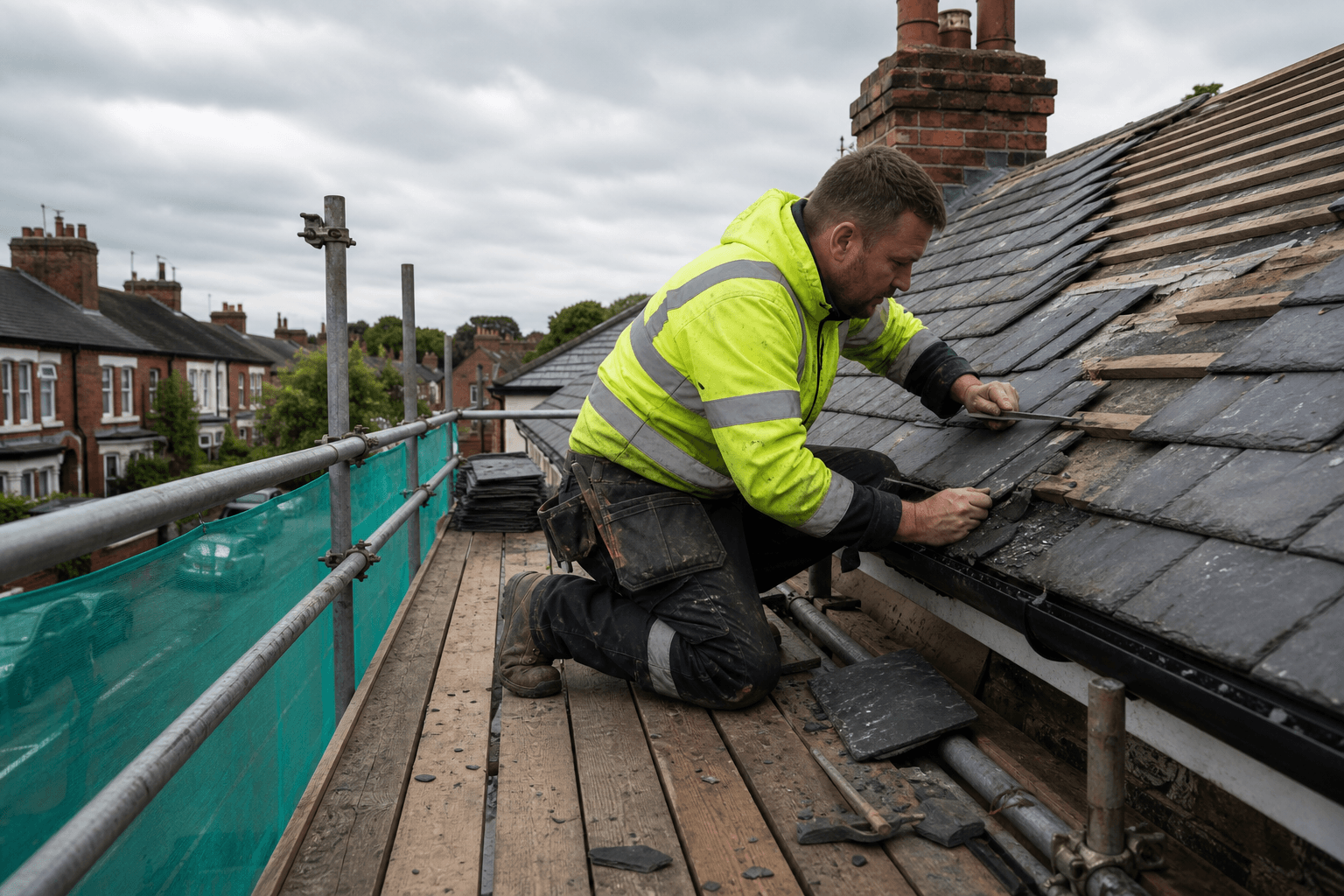
Explore our Roofing repairs service
See what is included, typical timings, and what to prepare before you book.
How much does a roofer cost in the UK? 2026 flat roof replacement, guttering repairs and slate rooftop prices
The honest national picture is wide: a typical 3-bed re-roof runs £5,000-£15,000, with a mid-point near £8,000 and outliers up to £19,000 for complex London jobs (MyJobQuote, 2026). Per square metre, pitched re-roofing comes in at £120-£275 installed, and flat-roof recover at £50-£130/m² (DDK Roofing, 2026). Scaffolding is the surprise line item, often £500-£1,000 a week (Bernard Andrews, 2026).
National average and regional ranges
| Region | Typical £ (3-bed) | Low | High | Source |
|---|---|---|---|---|
| London / South East | £8,500–£15,000 | £7,800 | £19,000 | MyJobQuote / Bernard Andrews 2026 |
| Manchester / Birmingham / Bristol | £6,800–£10,500 | £6,000 | £12,500 | DDK Roofing 2026 |
| Smaller towns and rural | £5,500–£8,800 | £5,000 | £10,500 | Empire RS 2026 |
| Scotland / Northern Ireland | £5,200–£8,200 | £4,800 | £10,000 | Checkatrade 2026 |
A Taskino-vetted NFRC roofer in Bristol quoted £8,950 in March 2026 for a full strip and recover on a 1930s 3-bed semi, including new fibre underlay, treated battens, Marley Modern concrete tiles, new uPVC guttering and lead flashings to the chimney stack. Scaffolding (front and rear) added £1,400. The same job in Croydon came back at £13,200 with a near-identical specification.
What affects the price
Seven factors do most of the moving on a UK new roof cost:
- Pitch and complexity (dormers, valleys, hips add labour days)
- Material chosen (natural slate is the most expensive headline material; concrete tile the most common)
- Scaffolding (front-only vs full wrap; NASC TG20:21 compliant builds run £500-£1,200/week)
- Access (tight terraced rear access slows everything)
- Building Control route (LABC notice vs CompetentRoofer self-certification)
- Waste disposal (skip hire £180-£350, plus weight-based fees on tile waste)
- Regional labour differential (London/SE around 30-40% above national average)
When fixed-price quotes are safer than hourly rates
Re-roofs should always be fixed-price, not day-rate. Variance between three contractors on the same job typically lands at 20-30% (MyJobQuote, 2026), which is exactly why the three-quote rule exists. Anyone refusing to give a fixed price for a defined scope is either inexperienced or hedging against scope creep. A clear written quote should list materials by brand (Marley, IKO, Bauder), scaffold spec, and Building Control route.
Three-quote rule. Ask three NFRC or CompetentRoofer scheme members for fixed-price quotes against the same written scope. Compare the cheapest against the median, not the highest. If the cheapest is more than 20% below median, you are not comparing the same job.
Citation capsule. Typical 2026 UK roof replacement cost for a 3-bed semi is £5,000-£15,000, with a national mid-point of £7,000-£9,000 (MyJobQuote, 2026). Per square metre, pitched re-roofing is £120-£275 and flat-roof recover £50-£130 (DDK Roofing, 2026).
UK roofing regulations: Working at Height Regs, CompetentRoofer, NFRC, RoofCERT and how to verify a roofer
UK roofing sits inside a stack of regs, with Working at Height Regulations 2005 at the top because falls from height remain the leading cause of UK construction fatalities (HSE). Add Building Regs Parts L, C, J and E, CDM 2015, LOLER/PUWER for hire kit, and NASC TG20:21 for scaffolding. The trade-body side splits into membership groups (NFRC, IoR, NCBA), competent-person schemes (CompetentRoofer, HETAS), and quality registers (TrustMark, CHAS, NACS).
Working at Height Regs, Building Regs and CompetentRoofer
The headline rules to know:
- Working at Height Regulations 2005 require any work where falls could cause injury to be planned, supervised and competently carried out (HSE)
- Building Regs Part L sets insulation U-values; current renovation target is 0.18 W/m²K for roof refurbishment
- Building Regs Part C covers moisture and rain penetration
- Building Regs Part J covers combustion appliances and chimney flue terminations
- Building Regs Part E covers sound (relevant to loft conversion crossover)
- CDM Regulations 2015 apply to most domestic construction projects with two or more contractors
- CompetentRoofer Scheme, run by NFRC, lets registered installers self-certify Part L and Part C work without a separate LABC notice (CompetentRoofer)
How to verify a tradesperson's credentials before hiring
Before you sign anything, run five checks:
- NFRC Member Directory lookup by company name or postcode
- CompetentRoofer scheme installer search for self-certification scope
- CHAS accreditation for procurement-grade safety record
- TrustMark register entry, the government-endorsed quality scheme
- Public liability insurance of £2m+, requested as a current certificate
Ask for the manufacturer guarantee in writing too. Bauder, IKO and Marley all run installer schemes that only work if the contractor is registered with them. No registration, no guarantee, regardless of what the quote promises.
What "registered" actually means (vs accredited vs certified)
These words get used loosely. Tightening them up:
- NFRC member means audited trade body membership reviewed annually
- CompetentRoofer scheme installer means a government-licensed competent person, allowed to self-certify Building Regs
- CHAS accredited means a procurement-grade health and safety check, usually for commercial work
- TrustMark registered means government-endorsed quality scheme membership with consumer protection
- HETAS registered applies specifically to solid-fuel appliances and chimney work
- NACS swept means a certificate from a National Association of Chimney Sweeps member
The single most useful filter for hiring is the combination of NFRC membership and CompetentRoofer scheme registration. Together they cover trade body audit, Building Regs self-cert, and the insurance footprint that home insurers actually recognise after a claim.
Citation capsule. UK roofing safety is governed by the Working at Height Regulations 2005 (HSE) and Building Regulations Parts L, C and J. The CompetentRoofer scheme, run by NFRC, lets registered installers self-certify Part L (insulation U-value 0.18 W/m²K) and Part C (moisture) without a separate LABC notice (CompetentRoofer).
Ready to book Roofing repairs?
Send a quick enquiry — we typically respond the same working day.
How Taskino can help
If you've read this far you've probably worked out that the roof is the one part of the house where the cheapest quote is rarely the right answer, and that's exactly the bit we can help you sort. Taskino lines up three vetted NFRC or CompetentRoofer scheme roofers, against the same written scope, with public liability and manufacturer-approved warranties checked before you ever pick up the phone. Have a look at roofing repairs on Taskino when you're ready.

Frequently asked questions: Roofing, Gutters & Chimney: The Complete UK Homeowner's Guide [2026]
Short answers to common questions about this topic.
Our team will answer all your questions. we ensure a quick response.
Contact UsRelated posts
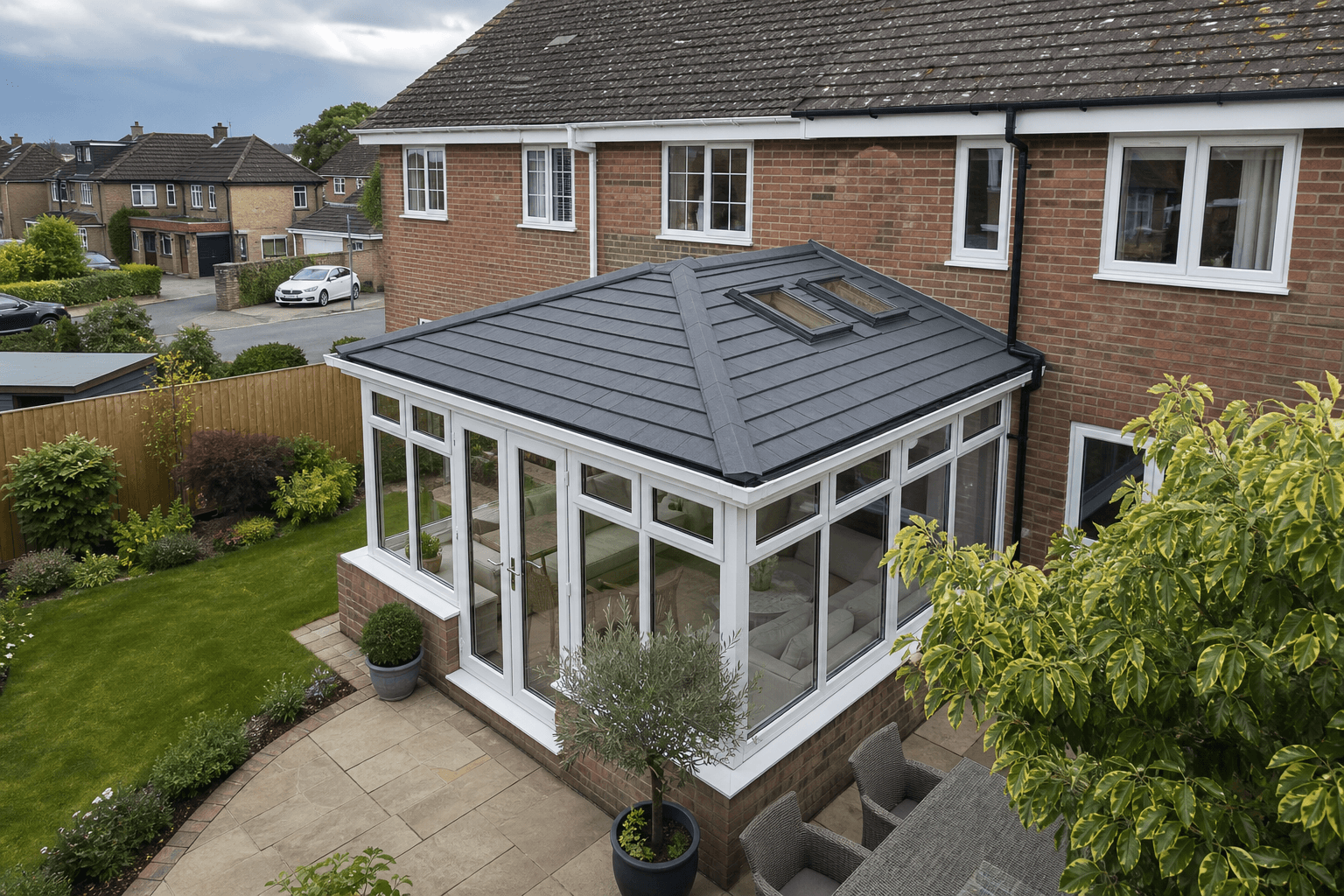
UK 2026 conservatory roof replacement cost: polycarbonate, glass, tiled solid roof (Guardian, Ultraframe, Equinox). Real ranges, planning rules, hiring tip
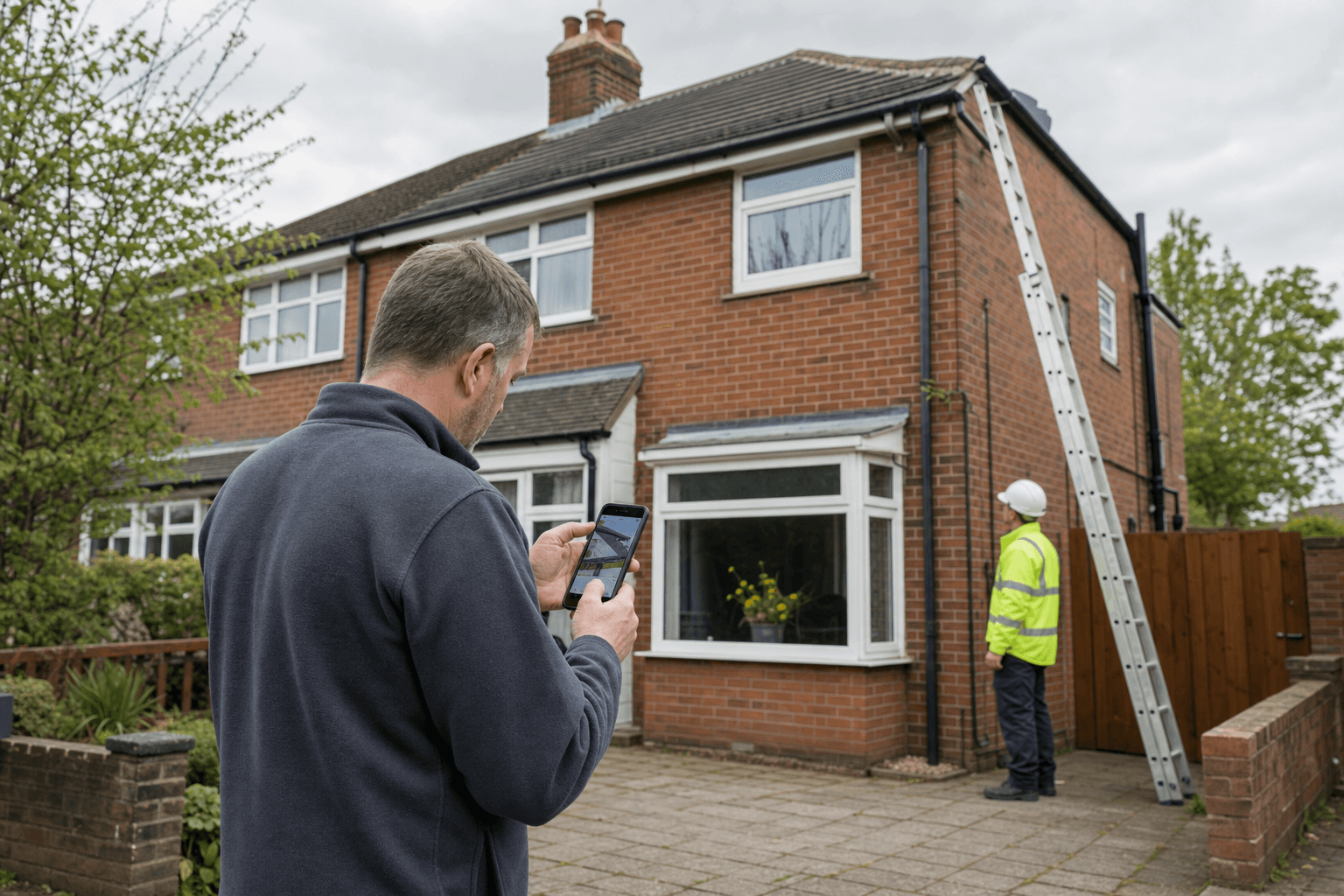
UK guide to hiring an NFRC or CompetentRoofer-scheme roofer, 14 questions to ask, red flags, deposit limits and how to verify £2m public liability cover.
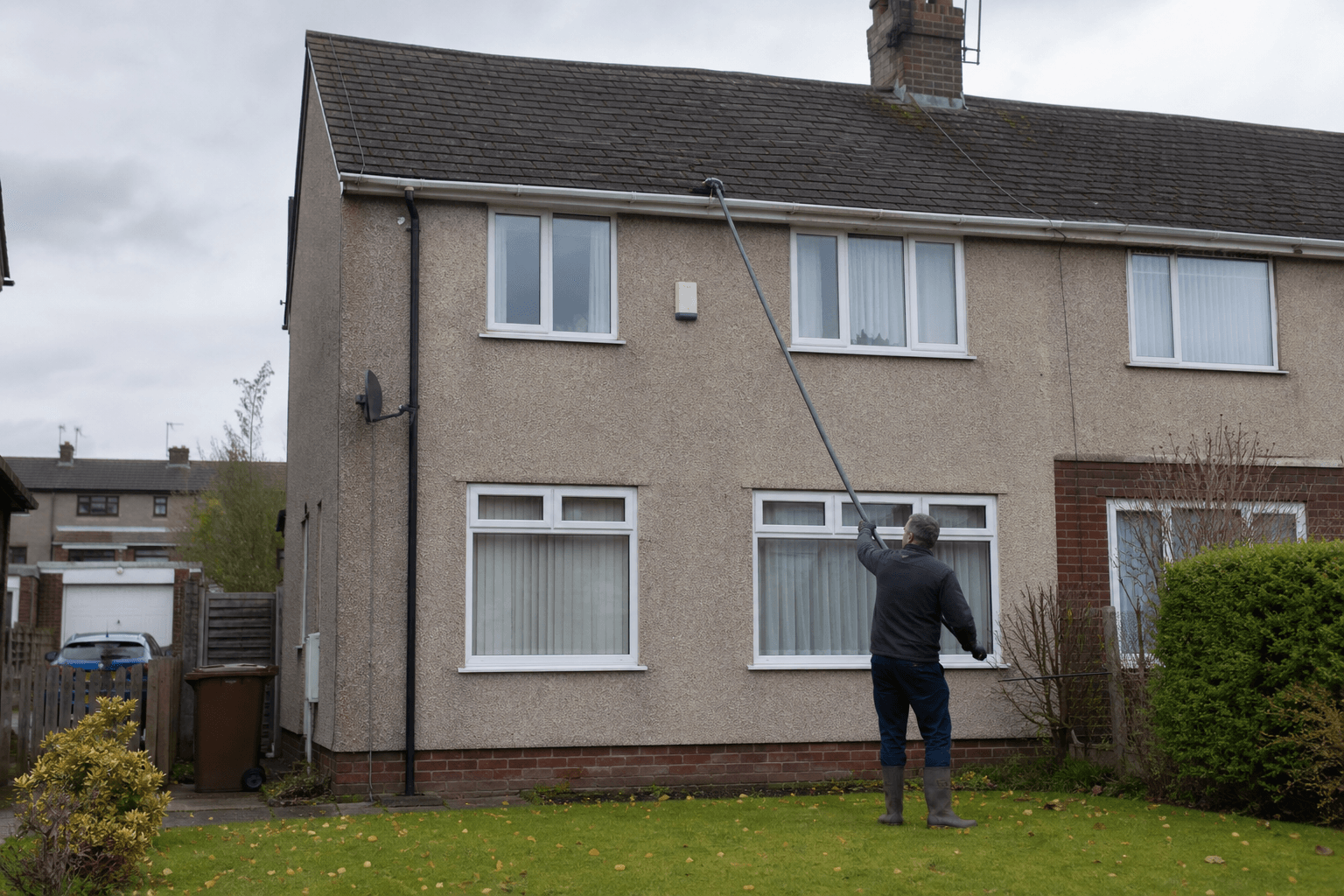
Clean UK gutters safely from the ground: kit list (£40-£250), step-by-step, plus when to stop and call a pro under the Working at Height Regs.
Latest in Construction
View all in this category
Architect, design-and-build or DIY for your UK extension? Honest 2026 cost-benefit, ARB rules, when each wins, and the decision flowchart.
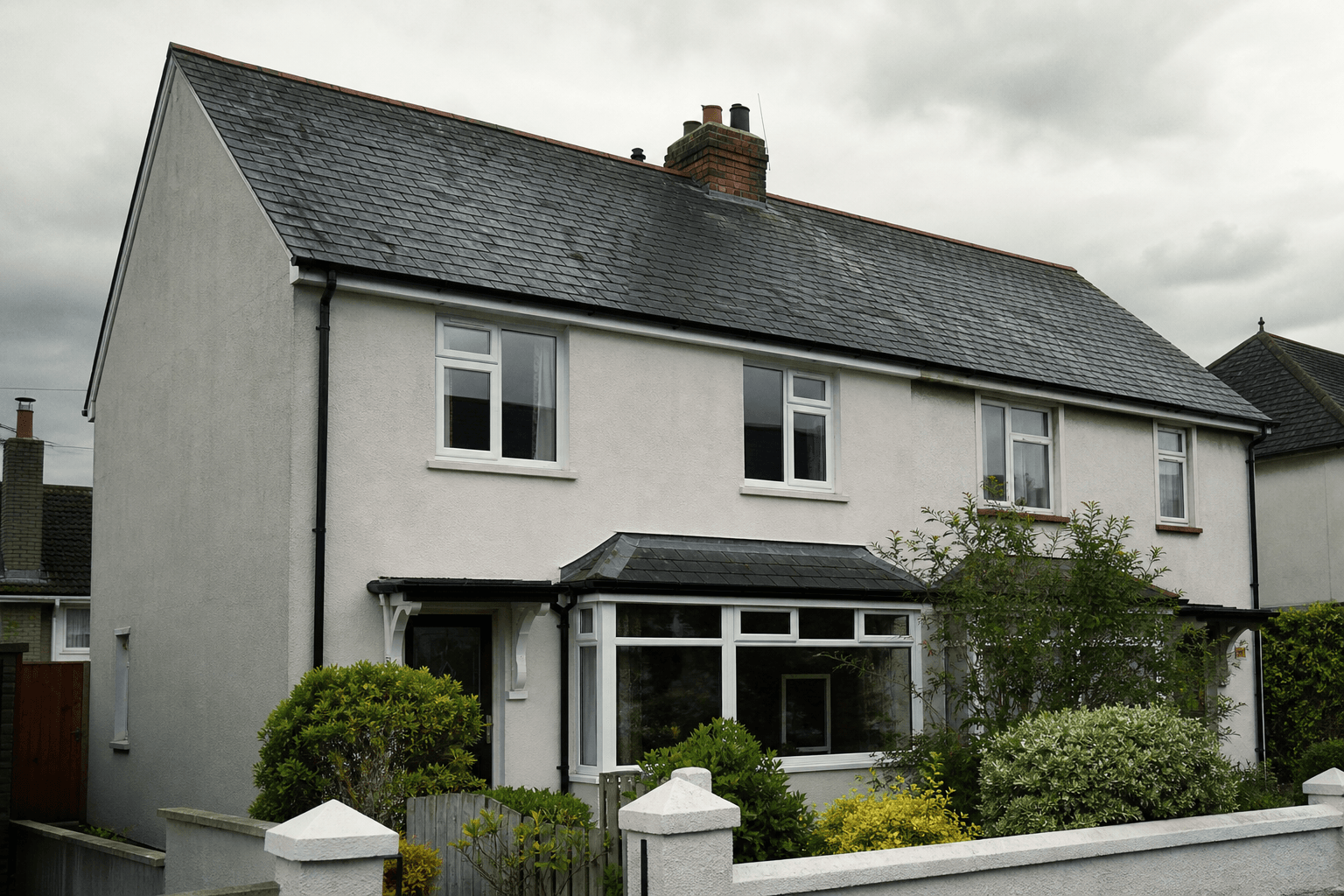
UK roofing mistakes that void insurance, damage slate or invite scams. Jet washing, cash payments, missing flashings, what they cost and how to avoid them.

Apply for house extension planning permission in 8 steps. UK 2026 rules, PD limits, Larger Home Extension prior approval, fees and timelines.
Related services
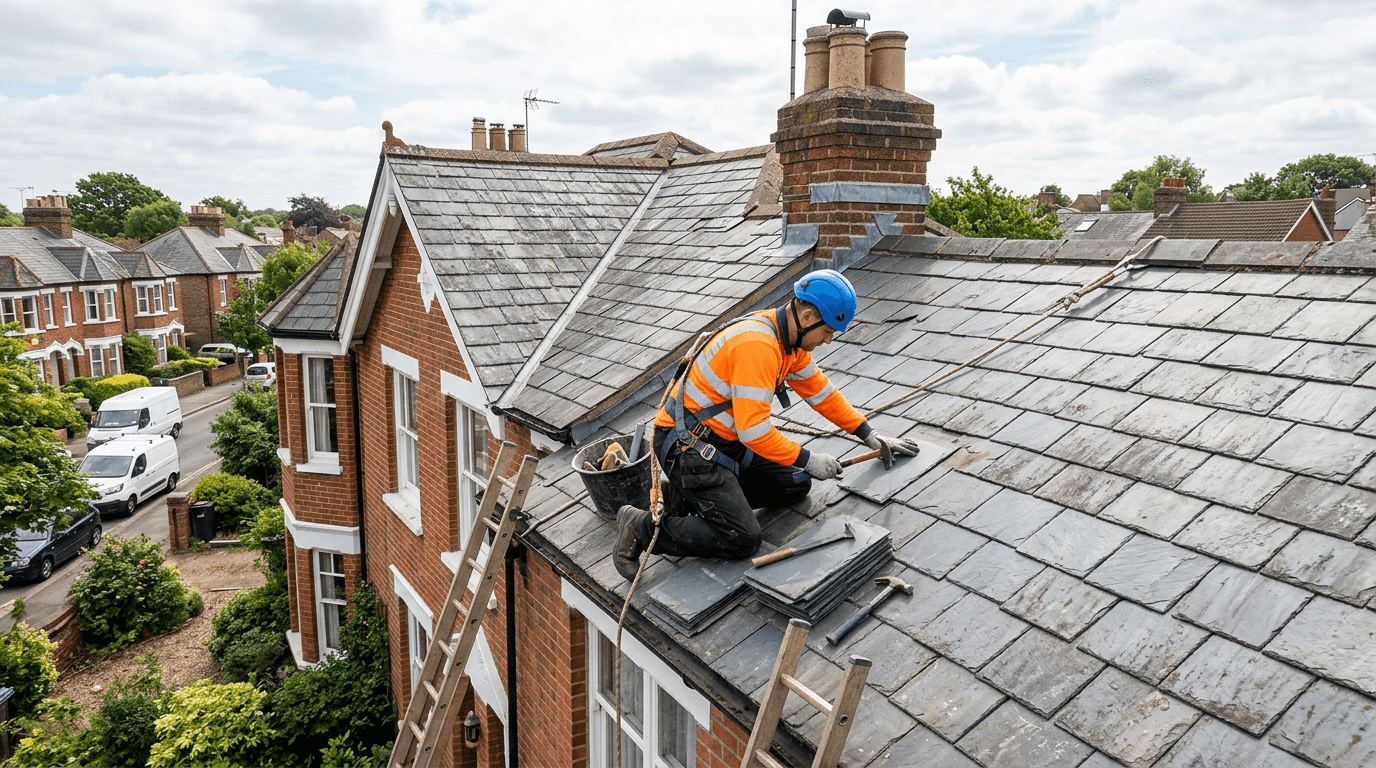
Fast, reliable roofing repairs from trusted local professionals. We diagnose leaks, replace damaged tiles and fix flashing with clear quotes, insured tradespeople and a tidy finish.
Ready to Book Your Service?
Tell us what you need and our team will help you find the right professional quickly, with clear pricing and no hidden fees.