
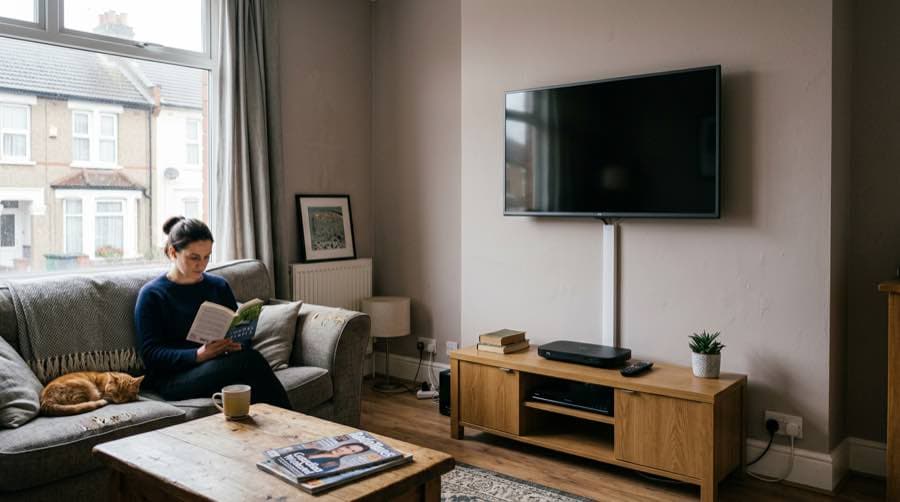
TV mounting at home: what to check before you book
Wall type, stud positions, VESA and weight ratings, and cable routing: what to check before TV mounting so your screen stays secure and cables stay tidy.
Mounting a television on the wall is one of the quickest ways to make a living room feel more spacious. You gain floor space, reduce clutter from stands, and it becomes easier to arrange seating so everyone can see the screen clearly. On paper, the job sounds simple: a bracket, a handful of fixings, and you are finished. In practice, the type of wall, the combined weight of the screen and hardware, and the route for power and signal cables all decide whether the result stays solid for years or turns into loose fixings, cracked plaster, or a mess of visible leads.
Most problems start when someone guesses the wrong fixing or skips a clear cable plan. A bracket fixed only into plasterboard without a sound anchor can work loose. A heavy load on the wrong part of a stud wall can flex or damage the lining. Poor planning around sockets and HDMI cables often means trailing leads, awkward extension blocks, or a hole cut in the wrong place. If you are about to book TV mounting help, a short checklist saves time, keeps quotes accurate, and helps you brief a fitter so nothing important is left to chance.
This guide walks through what to check in a typical UK home before you commit to a date. You will learn how wall construction affects fixings, how to think about weight and bracket ratings, how to plan power and tidy cable routes, and how to set a sensible viewing height. You will also see when it is wiser to call a professional rather than treat the job as a casual weekend task. Whether you use a local handyman or a specialist installer through a marketplace like Taskino, the same questions apply: know your wall, know your hardware, and agree the finish you want before anyone drills the first hole.
You do not need to become an expert overnight. You only need enough detail to describe the room accurately, to read a bracket specification sheet, and to spot gaps in a quote. That small amount of preparation usually shortens the visit, avoids last-minute changes, and gives you confidence that the television will stay exactly where you want it.
Start with the wall: what you are fixing into
The wall behind the television is doing almost all of the work. Solid masonry, such as brick or block, often gives the most predictable fixing, provided you use the right plugs and screws for the load. Timber stud walls are common in modern UK homes and extensions. Here the strength sits in the vertical studs, not in the plasterboard skin between them. Fixing only into plasterboard without a proper cavity anchor or a stud is risky for heavier screens, especially if people will tilt or swivel the mount.
Studs, centres, and plasterboard
If you have a stud wall, you need a reliable way to locate the studs. Electronic stud finders help, but they are not infallible, particularly when there is insulation or wiring nearby. Measuring from a corner or an electrical back box can hint at centres, yet timber spacing is not always perfectly regular in older work. When the position of the television matters for viewing, you sometimes need a small exploratory fix to confirm where the stud truly runs before you commit the final bracket holes.
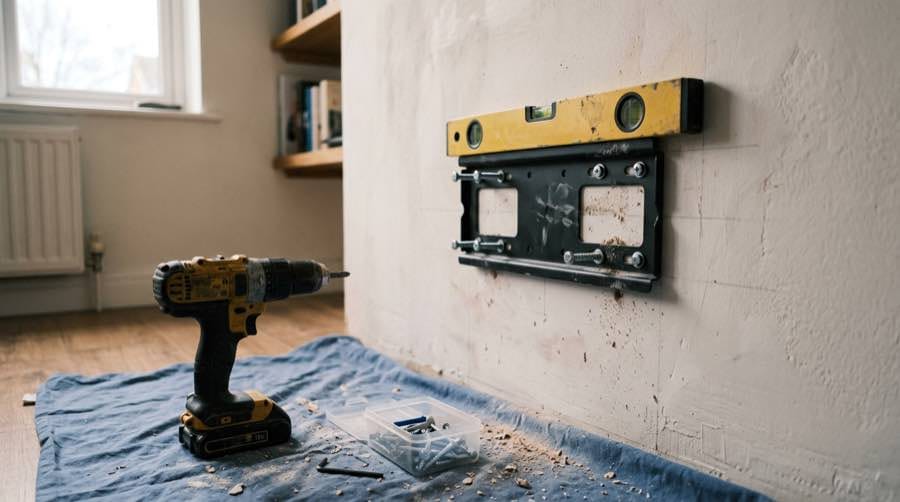
Dot-and-dab walls add another wrinkle: plasterboard is stuck onto blockwork with adhesive blobs, leaving a small cavity. A long screw might miss the solid background or only bite in one place. That is why experienced fitters treat these walls carefully, choosing fixings that bridge the gap safely and checking that the load path makes sense. If you are unsure what you are dealing with, it is better to say so up front than to discover a hollow sound halfway through the job.
Need help with TV Mounting?
Tell us about your job and we will match you with the right professional for TV Mounting.
Weight, VESA, and choosing a bracket
Every wall mount is rated for a maximum weight and a range of screen sizes. Your television’s weight is listed in the manual or on the manufacturer’s product page. Add a sensible margin for any adapters or soundbar brackets you might hang from the same assembly later. The pattern of holes on the back of the screen is called the VESA pattern: the horizontal and vertical spacing between those holes. The bracket must match that pattern, or you need an adapter plate that is itself rated for the load.
Think about how you use the room. A fixed mount is the simplest and often the slimmest to the wall. A tilting mount can reduce glare from windows or ceiling lights. A full-motion arm adds flexibility for corner seating but puts more stress on fixings when the arm is extended, so the quality of the wall anchor matters even more. None of that replaces correct installation: a heavy-duty bracket badly fixed will still fail. When you book TV mounting, mention the exact screen size and weight and whether you already own a bracket or expect the fitter to supply one.
Power, aerial, and signal cables
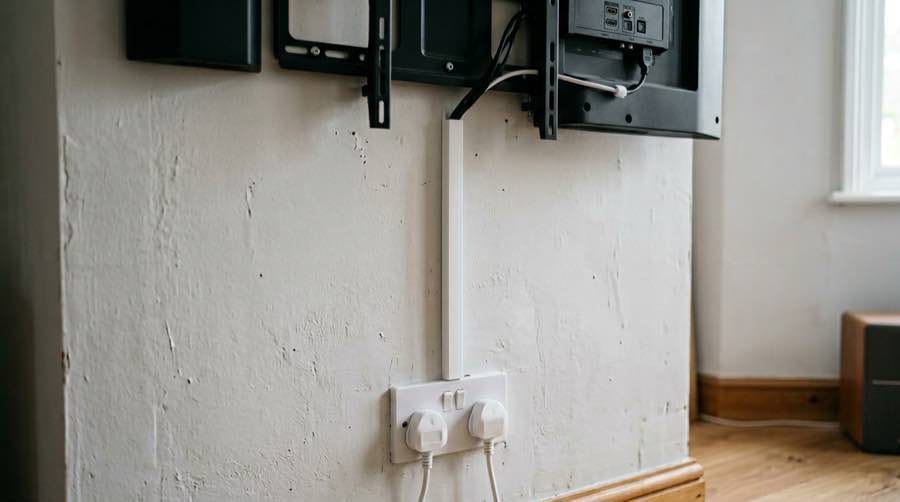
A neat wall-mounted television usually needs a plan for power and for the leads that carry picture and sound. In many homes the nearest socket is lower down or off to the side. Extension leads across the floor are a trip hazard and rarely look acceptable long term. Some customers chase a new spur or move a socket as part of a wider electrical job; that work belongs to a qualified electrician, not to ad hoc drilling. Be clear about what you want the finished room to look like and what already exists behind the wall.
For signal paths, measure HDMI runs before the bracket goes up. It is frustrating to discover your cable is too short once the television is fixed at height. If you route cables through the wall, agree entry and exit points and whether you want brush plates or trunking on the surface. Surface trunking is quicker and reversible; chasing is neater but more disruptive. If you rent, check what your landlord allows before cutting channels. A good installer will talk you through trade-offs without pushing a single one-size-fits-all answer.
Explore our TV Mounting service
See what is included, typical timings, and what to prepare before you book.
Viewing height, glare, and layout
A common starting point is to place the centre of the screen near eye level when you are seated, then adjust for sofa height and personal preference. Too high, and you strain your neck; too low, and furniture or soundbars get in the way. If the only usable wall is above a fireplace, be honest about comfort: that position is often higher than ideal for long viewing sessions. Glare from windows can sometimes be improved with curtains, blinds, or a slight tilt on the mount, but it cannot fix a fundamentally bad sun angle.
Stand back and picture normal use: film nights, gaming, daytime news. Walk the seating positions you care about and check whether anyone will be craning upward. If the room is narrow, a full-motion mount might help; in a wide room, a fixed position might be perfectly fine. Sharing a clear photo of the wall and seating with the person carrying out your TV mounting helps them recommend height and bracket type before they arrive with tools.
When DIY is a bad idea
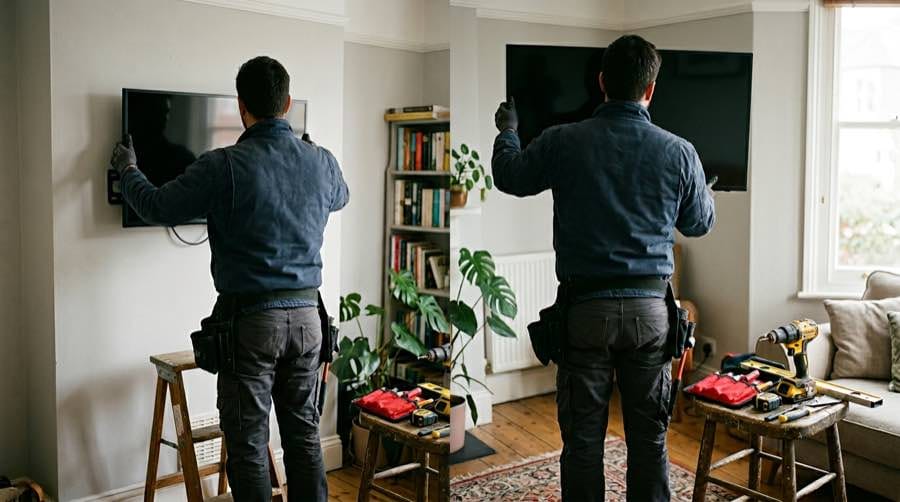
Smaller screens on solid walls with straightforward cable access are sometimes within reach of a confident DIYer who reads the instructions and uses the correct fixings. Large, heavy screens, tall installations, dot-and-dab walls, or any doubt about wiring should push you toward professional help. The cost of a failed mount is not only the repair bill; it can include injury or damage to expensive equipment. A handyman or specialist who does TV mounting regularly carries the right detectors, anchors, and experience to stop problems before they start.
Ready to book TV Mounting?
Send a quick enquiry — we typically respond the same working day.
Questions to ask before you book
Use this list when you compare quotes or brief someone for the job. It keeps expectations aligned and reduces surprises on the day.
Does the price include the bracket, or should you supply a VESA-compatible mount yourself?
Will the installer confirm stud or solid fixing points before drilling the final pattern?
How will power and HDMI routes be handled, and is trunking or chasing included in the quote?
Is patching and making good around the bracket included if exploratory holes are needed?
Will they level the mount, torque the fixings correctly, and test that the screen is secure before leaving?
What happens if the wall type is different from what you described (for example dot-and-dab instead of plain stud)?
Conclusion
TV mounting works best when the wall, the bracket, and the cable plan are thought through together. Check the construction you are fixing into, match the mount to the weight and hole pattern of your screen, and decide early how power and leads should look in the finished room. Share photos, measurements, and honest uncertainty with the person you hire so the quote reflects real conditions. When you take a few minutes to prepare, you are more likely to get a secure, tidy result you will be happy to live with every day.
Related posts
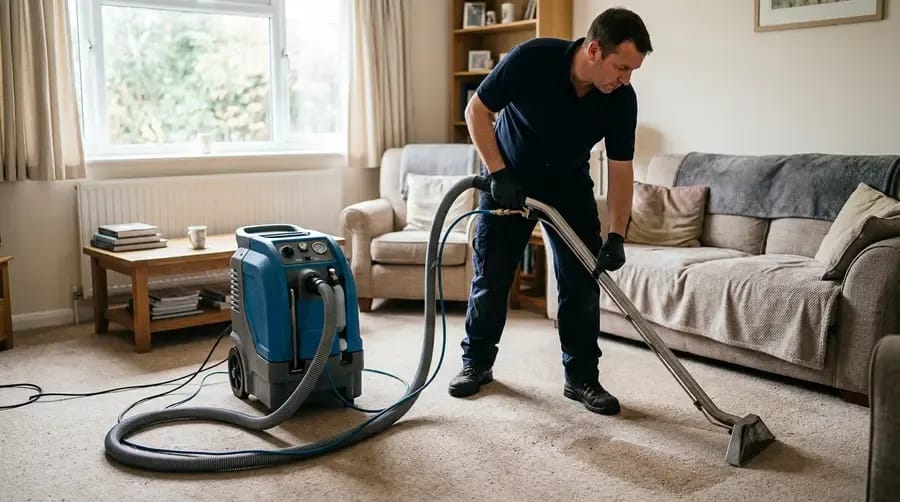
Prepare your home for carpet cleaning: vacuuming, spotting problem areas, managing drying, and aftercare. A clear checklist for better results.
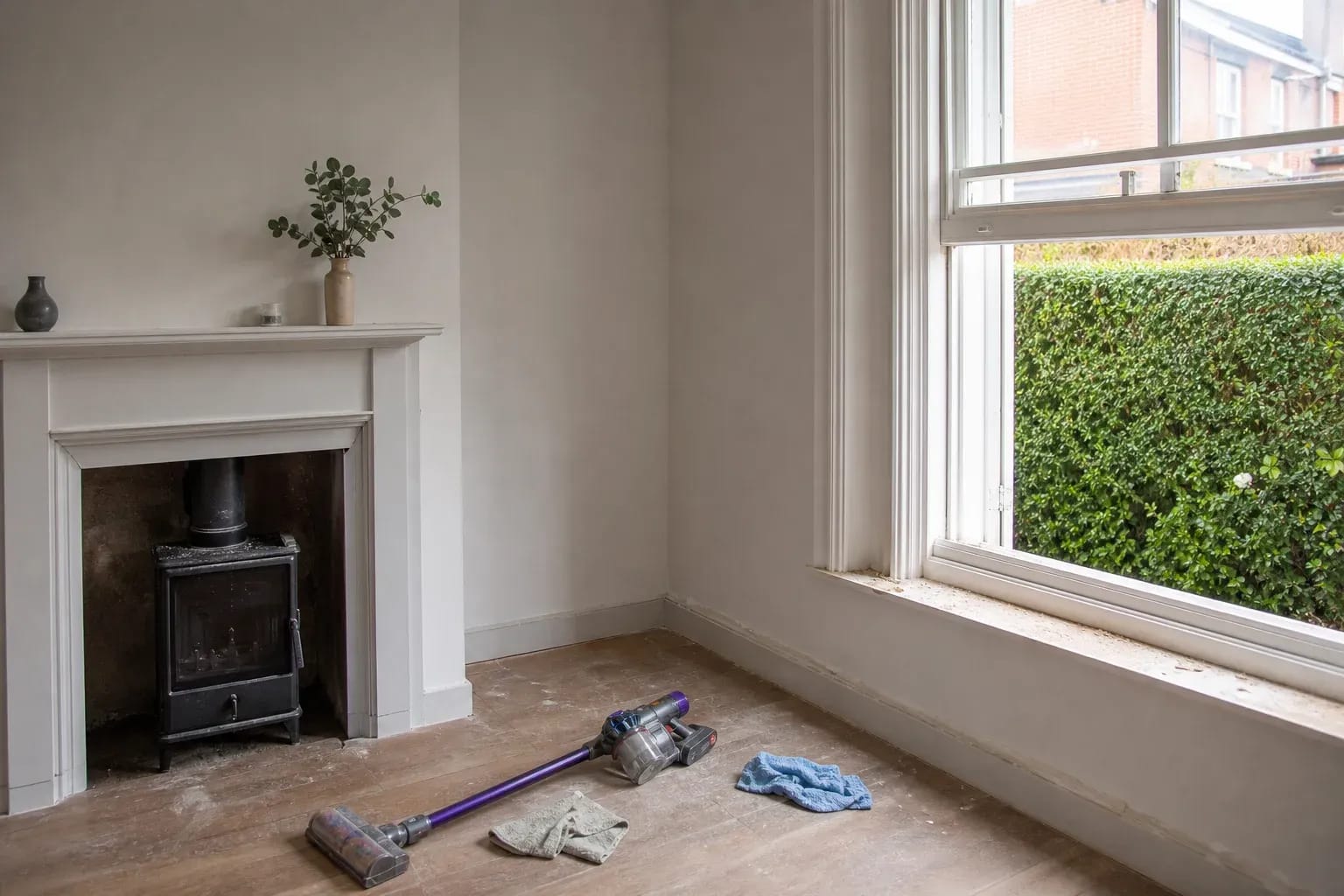
Step-by-step after builders cleaning checklist for UK homes: dust control, safe cleanup, kitchens and bathrooms, plus when to book professional cleaners via Taskino.

Understand the difference between regular and deep cleaning. What each includes and when to do each.
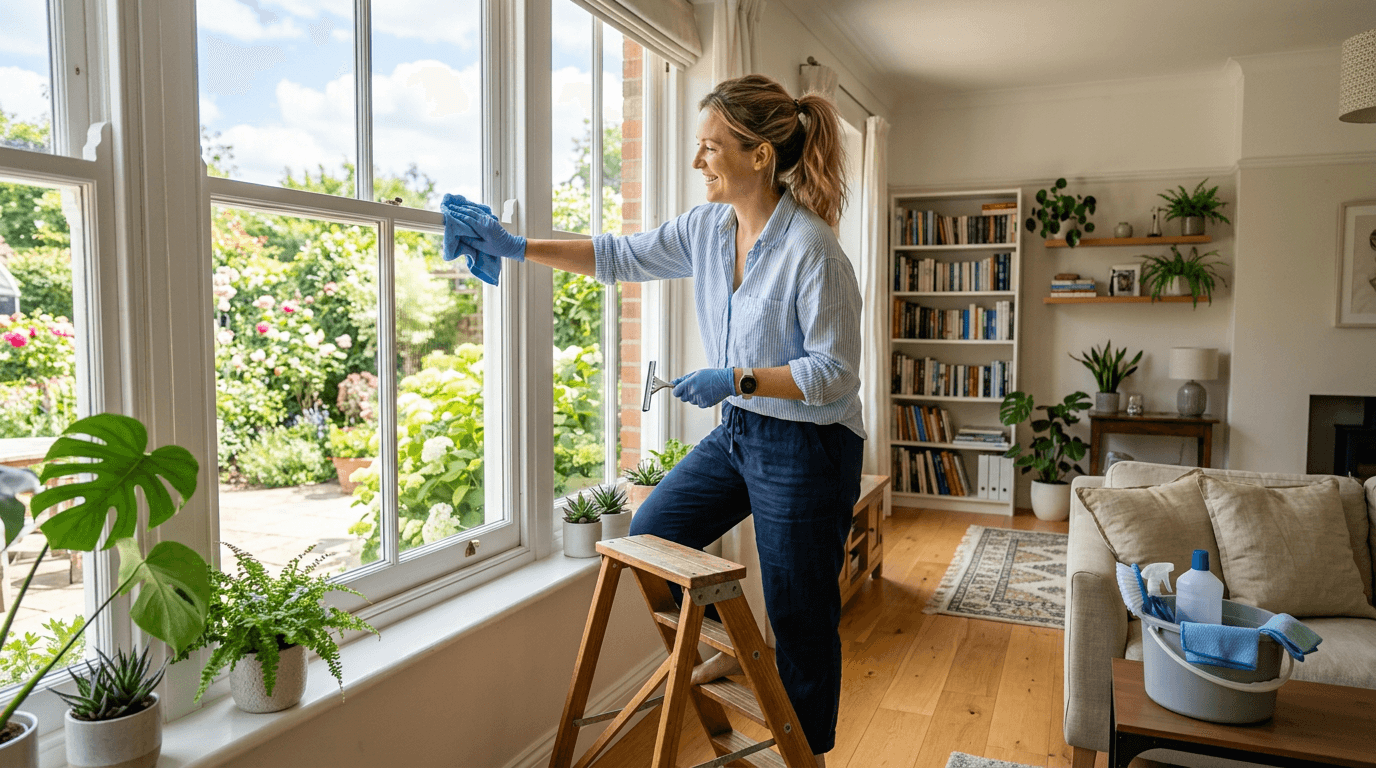
Why summer is ideal for deep cleaning. Room-by-room tips and when to get professional help.
Latest in Handyman
View all in this category
Part P notifiable electrical work in 2026: a room-by-room list of what you can legally DIY in a UK home and what needs an NICEIC electrician.
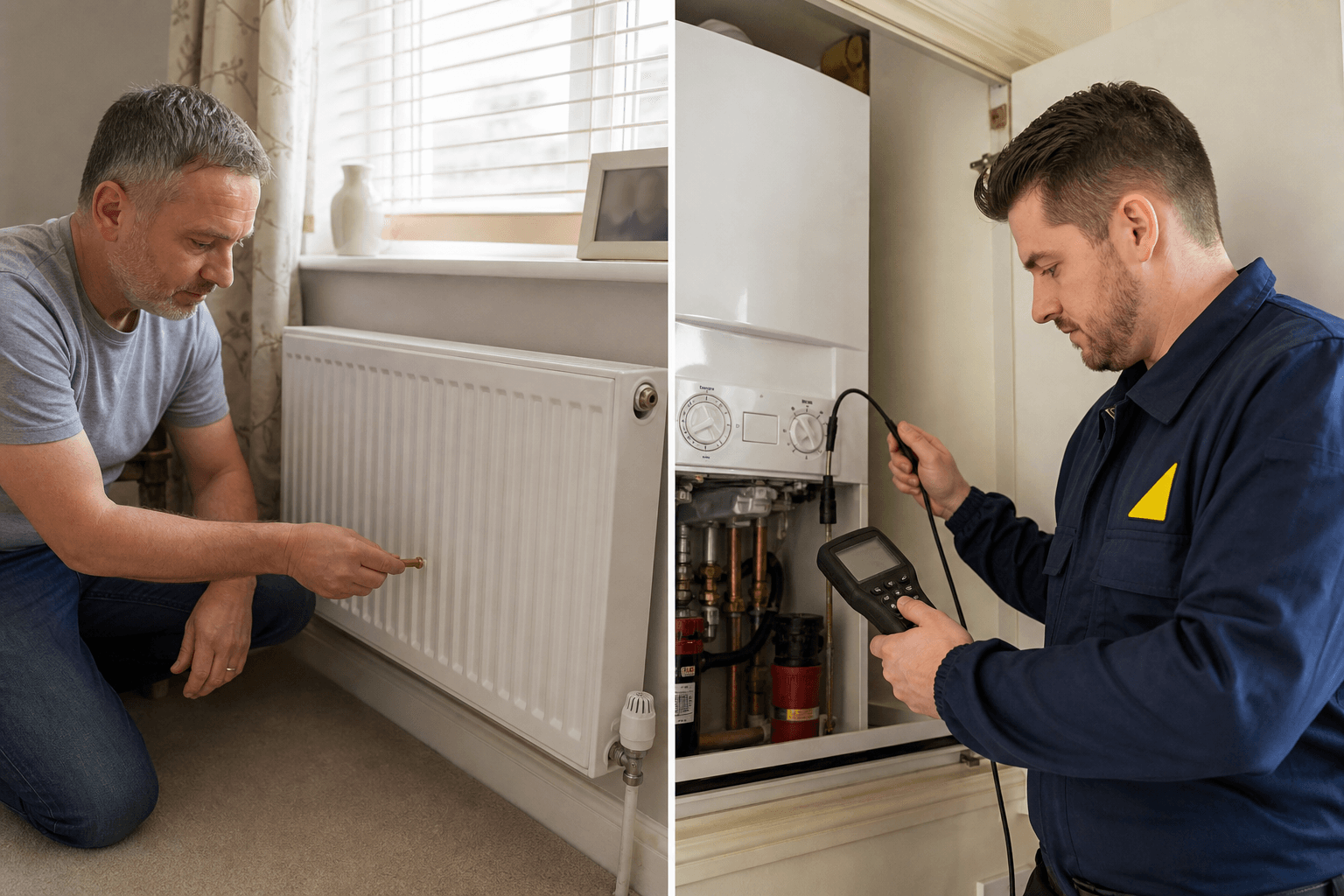
DIY gas work is a criminal offence in the UK. What's legal (bleeding, repressurising), what isn't, and when to call a Gas Safe engineer.
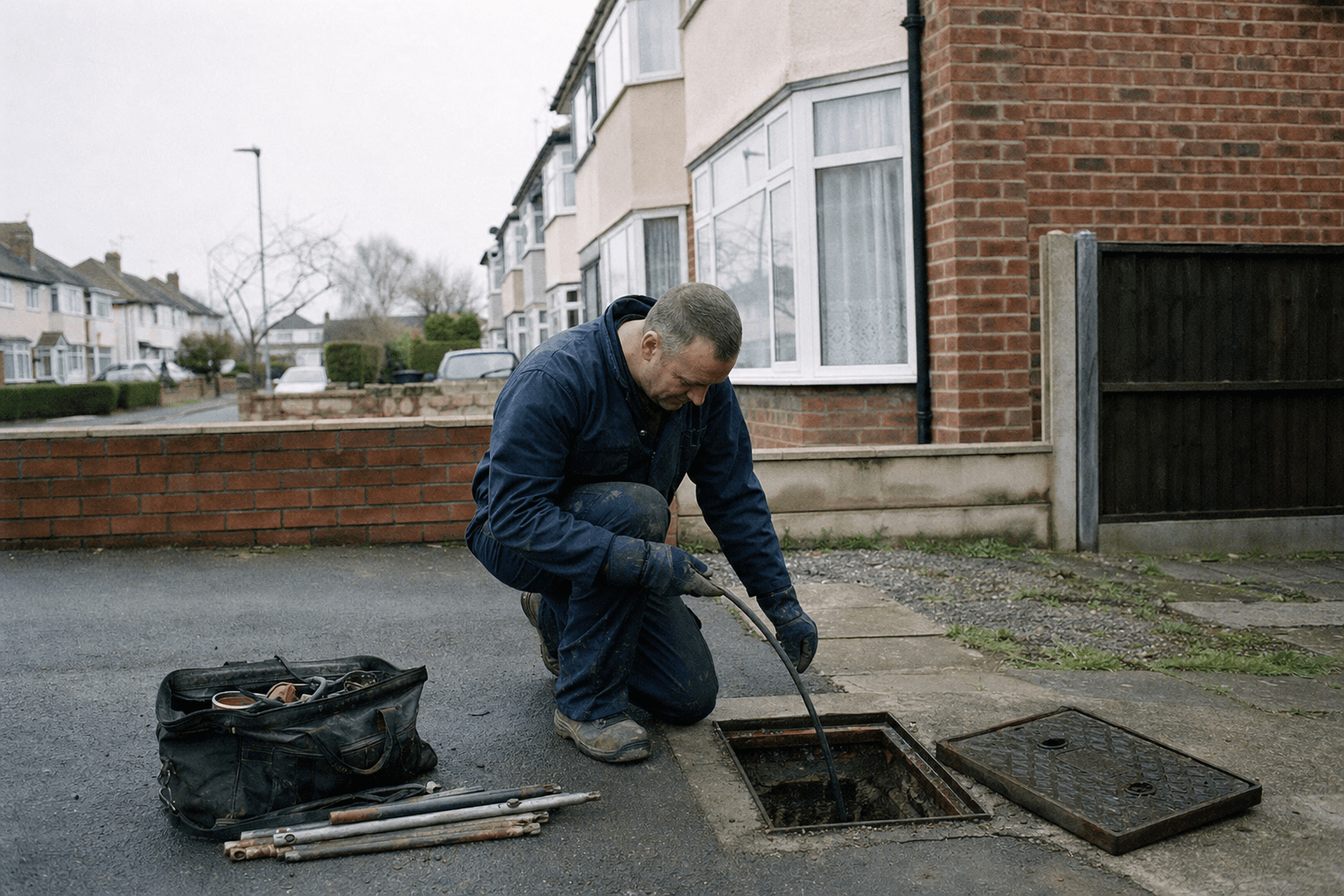
Hire a UK plumber for a blocked drain: 13 questions, who owns outside drains, and how to report a blockage to your water company. Get a fair quote.
Related services
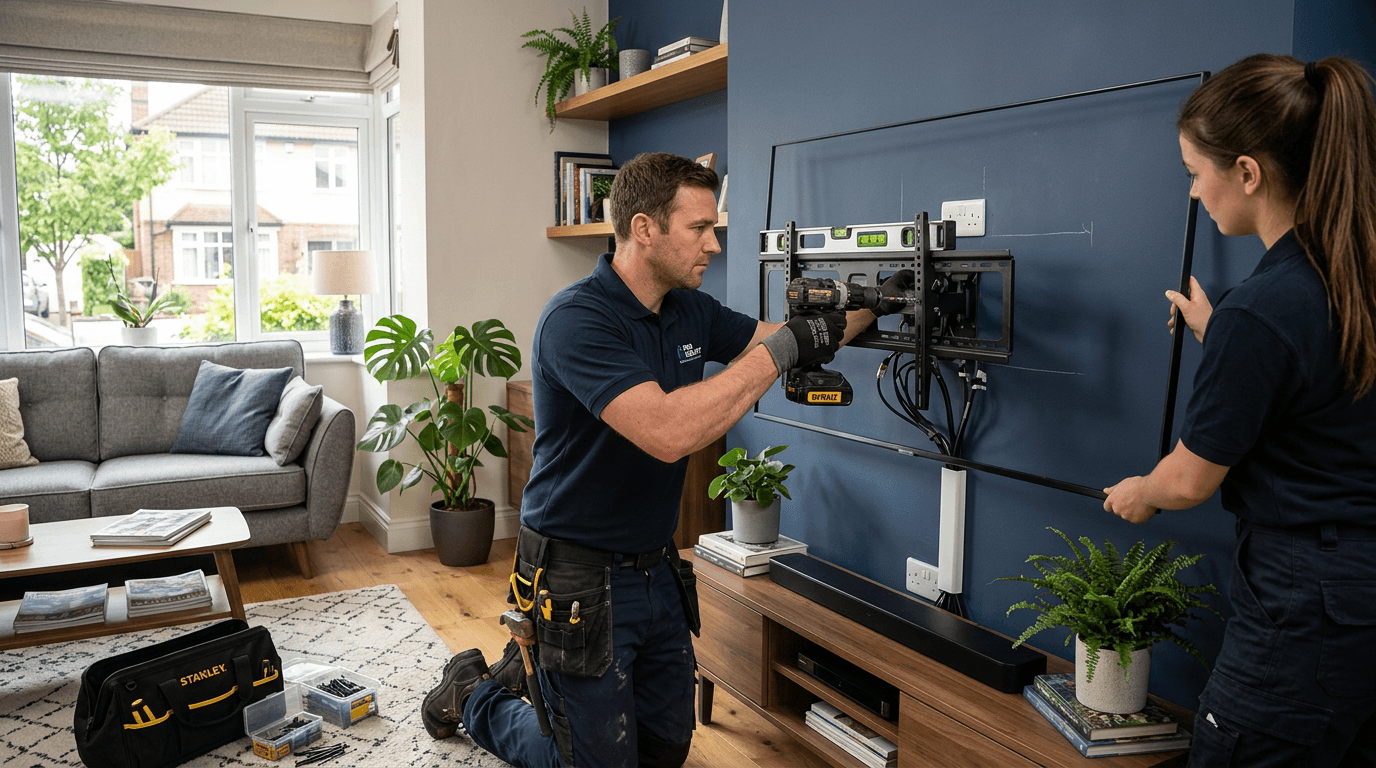
Wall mounting for flat-screen TVs across the UK: secure fixings for plasterboard, stud and masonry, tidy cable routing and the right viewing height. Vetted installers, clear quotes. Message us with your TV size and wall type.
Ready to Book Your Service?
Tell us what you need and our team will help you find the right professional quickly, with clear pricing and no hidden fees.