
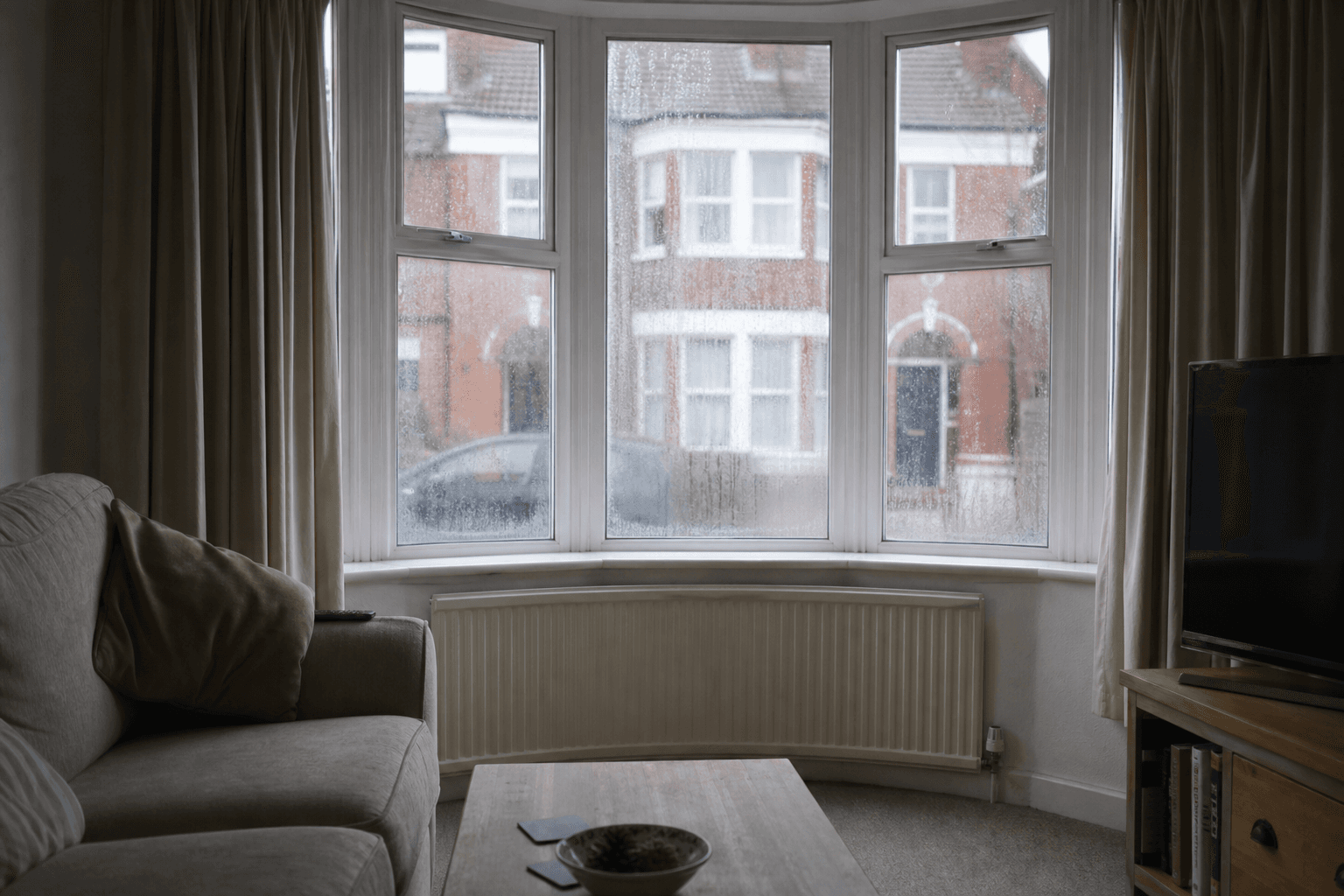
Why Does Condensation Form Inside Your Windows? 7 Causes Explained for UK Homeowners
Why is there condensation on the inside of your windows? 7 causes for UK homeowners in 2026, diagnosis flowchart and £ to fix each one.
Condensation on inside of windows forms when warm, humid indoor air meets a cold glass surface and the water vapour drops out as droplets. For most UK homes in winter, the cause is a dew-point mismatch fixed by ventilation and gentle heating. For the rest, it's a diagnostic puzzle worth £30 or £300, depending on which of seven causes you actually have.
TL;DR
- Most common: dew-point mismatch, warm humid indoor air meets cold glass on a winter morning (fix: ventilation, heating, trickle vents).
- Emergency: if condensation appears between the panes of a double-glazed unit, the seal has failed and the IGU needs replacing (£80–£250 per pane, Checkatrade, 2025).
- Hidden cause: wet only at the bottom corner of the frame means penetrating damp, not condensation.
- Cost range: £0 (open the trickle vent) to £150/m² (internal wall insulation, Energy Saving Trust, 2025).
First: rule out the emergency
Around 1 in 5 UK households reports persistent damp or condensation problems in winter, according to the English Housing Survey (2023). Most cases are nuisance-level. A few are emergencies hiding inside the same symptom. Before fixing anything, spend two minutes ruling these out, because the wrong fix can make a structural problem worse.
Signs this is an emergency
- Condensation between the panes, not just on the inside surface. The sealed unit has failed under BS EN 1279.
- Mould on the wall reveal, not just the cill. That's penetrating damp, not surface condensation.
- Wet plaster bowing under a window. A sash, lintel or render leak above.
- Earthy or sweet smell with white fluffy growth on a wall (white mould on walls can be a dry-rot precursor in extreme cases).
[CALLOUT: > Red flag. If you can see water trapped inside the glass unit itself, no amount of ventilation will fix it. Skip to Cause 5.]
What to do in the next 60 seconds if any red flag is present
Open the window 30 degrees. Turn off any heating that sits directly under the cill. Photograph the area with the date stamped on. Do not paint over. Do not silicone over. Do not pull plaster off to "have a look".
Who to call
We've found the wrong trade gets called about half the time. Use a FENSA-registered glazier for seal failure (verify at fensa.org.uk). Use a PCA-registered damp surveyor for wet wall reveals. A roofer if the upstairs ceiling near the window is stained — the water might be entering above. For mould remediation steps, see our how to remove mould guide.
Citation capsule. UK building stock holds around 28 million dwellings (ONS, 2023), and the English Housing Survey (2023) reports roughly 4% have damp problems and many more have transient condensation. Most are diagnosed wrong on the first visit, which is why the seven-cause flowchart matters.
Need help with Silicone and Sealing Work?
Tell us about your job and we will match you with the right professional for Silicone and Sealing Work.
Cause #1: Dew-point mismatch (the boring most-common one)
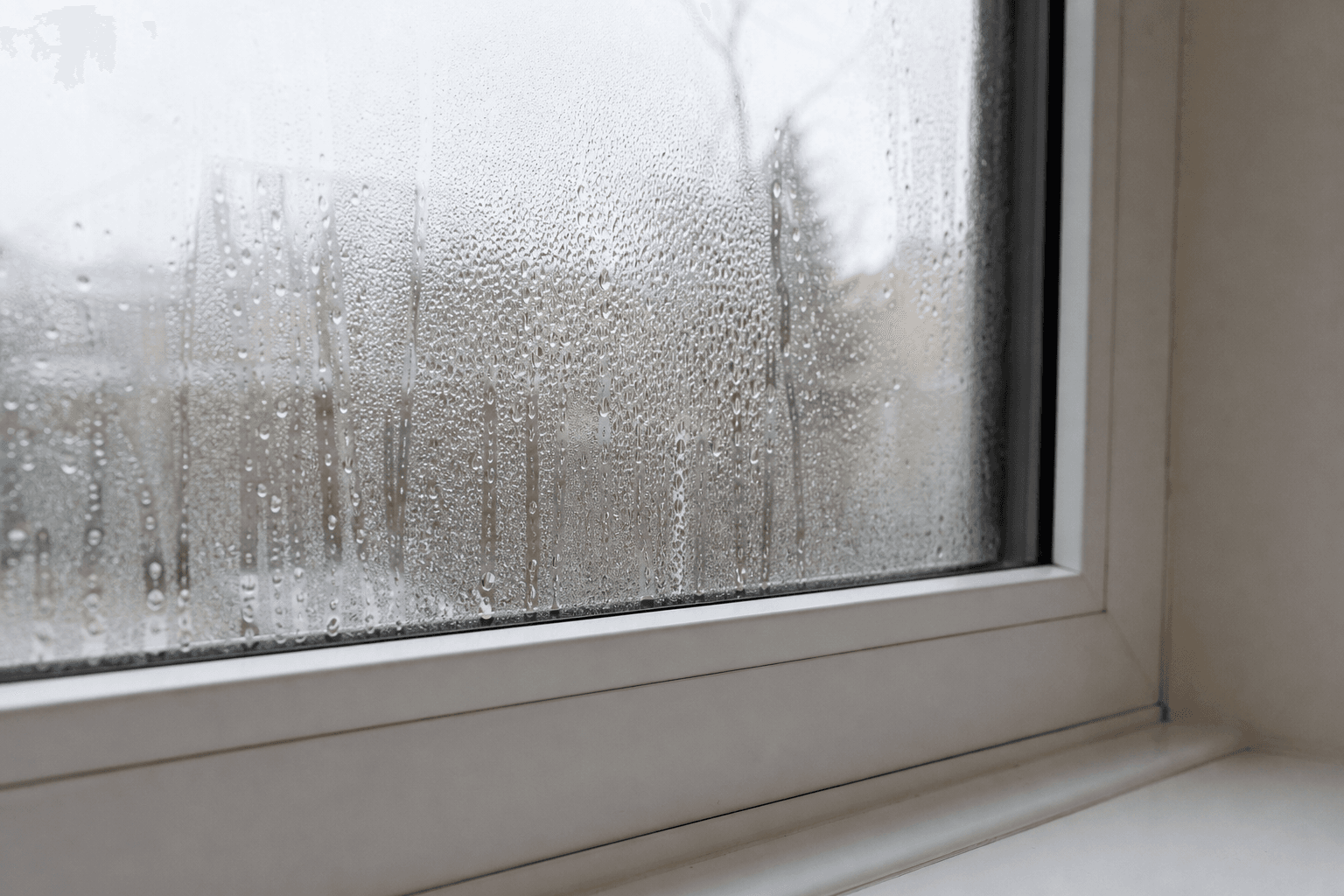
About 60% of condensation on inside of windows in UK homes is straight dew-point physics, per Energy Saving Trust (2024) guidance on home humidity. Indoor air at 19°C and 60% relative humidity dews out around 11°C. Single-pane glass on a January night sits at 4–6°C. Water has to go somewhere, and the glass is the coldest surface in the room.
How to identify it
The condensation forms overnight, clears by mid-morning, and shows up in the coldest rooms first (usually bedrooms with the door closed). If you wipe the glass dry at 8am and it's dry again by lunchtime, this is your cause.
Why it happens
Bedroom internal humidity routinely sits at 60–70% RH overnight because two adults exhale roughly 0.5 litres of water each in eight hours. With the door shut and trickle vents closed, that moisture has nowhere to go. It meets glass at ~6°C and beads up.
How to fix it
- Open trickle vents on every window.
- Leave the bedroom door ajar overnight.
- Set heating to a steady 18–19°C overnight rather than blasting it on at 6am.
- Crack a window 5mm if the room sleeps two adults.
- Wipe the cill dry each morning until the pattern stops.
Cost to fix
£0 if trickle vents are already fitted. £25–£35 to add a Glazpart anti-mould vent from Wickes. £180 for a Meaco 12L dehumidifier from Argos if you need a backstop in a single problem room.
Cause #2: A broken or missing trickle vent
Roughly 40% of uPVC windows installed in the UK before 2010 were fitted without working trickle vents, according to FENSA installer guidance archived under their 2022 Part F update. Building Regulations Part F (2021 amendment) now requires background ventilation on replacement windows, but the older stock is everywhere.
How to identify it
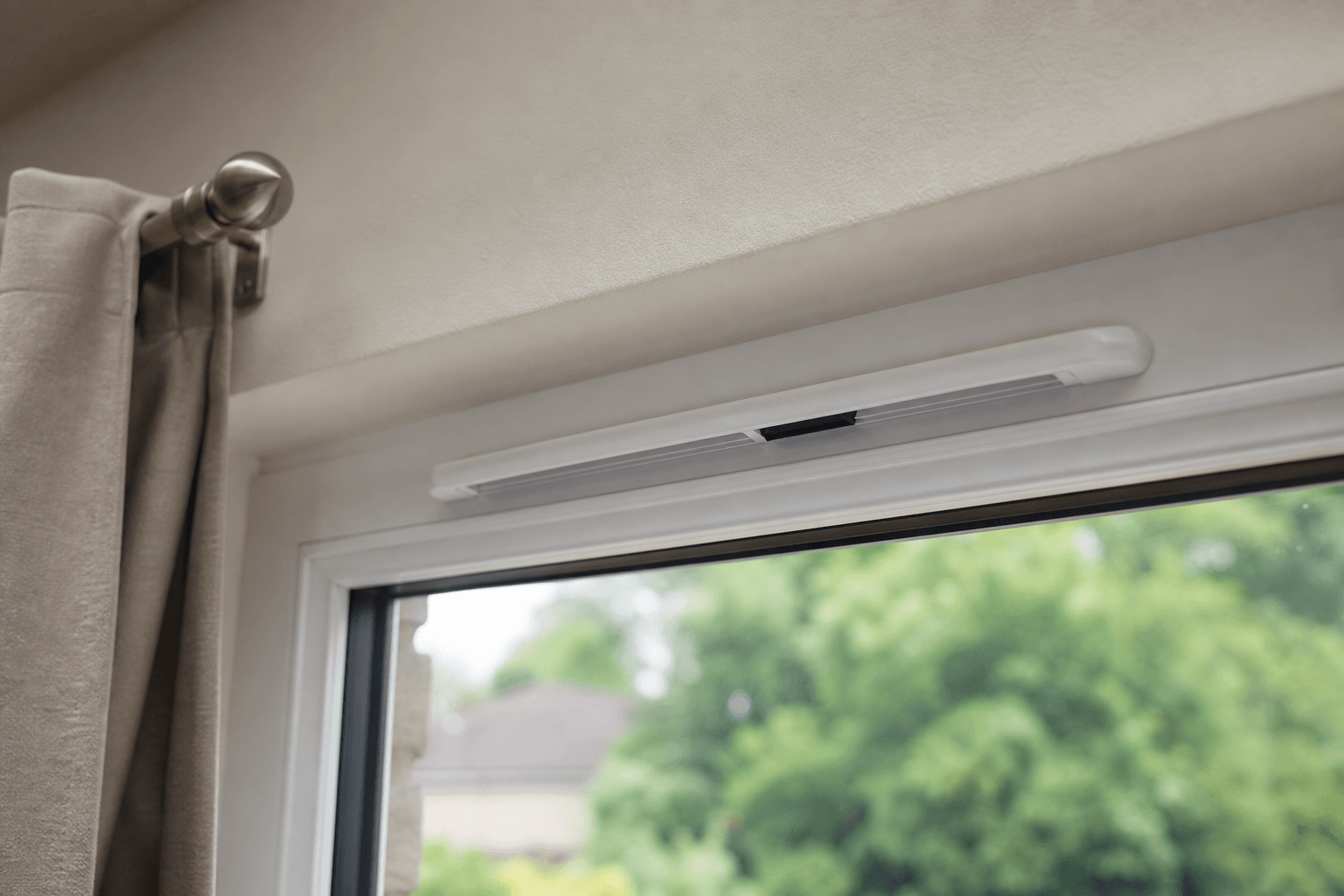
Slide the lever on the top of the frame. If nothing moves, or if you can see paint sealing the vent shut, or if there's just a flat bar where the vent should be, that's your problem. You can't ventilate against closed vents.
How to fix it
Fit a Glazpart anti-mould trickle vent (£25–£35 at Wickes) into the existing slot. If the frame has no slot, a FENSA-registered glazier can route one. Allow about 90 minutes for the DIY route.
Cost to fix
| Route | Cost | Time |
|---|---|---|
| DIY retrofit (vent fits existing slot) | £25–£35 | 60–90 min |
| Pro install with new slot routed | £80–£140 | 1–2 hours |
| Full window replacement (last resort) | £400+ per window | half day |
Explore our Door and window repairs service
See what is included, typical timings, and what to prepare before you book.
Cause #3: Hanging wet washing indoors
A 7kg wash load releases around 2 litres of water into the home over 24 hours of indoor drying, per Energy Saving Trust (2024). That water has to leave the house somewhere. With windows shut and the heating off, it leaves via the coldest glass.
How to identify it
The condensation flares up on washing days and after a string of rainy weeks when nothing can dry outside. It's worst in the room where the airer sits.
Fix
Use a heated airer (Lakeland models from about £40 at Argos) positioned near a cracked window. Or run a Meaco 12L dehumidifier (~£180 at Argos) in the same room for 4 hours after hanging the load. A cracked window plus heated airer cuts in-room humidity by roughly half within an hour.
Cause #4: No or under-spec bathroom extractor (Part F)
A 10-minute hot shower puts approximately 0.5 litres of water vapour into bathroom air, per Energy Saving Trust (2024). Approved Document F (2021) requires a bathroom extractor at 15 L/s intermittent or 8 L/s continuous. Many older bathrooms have nothing, or have a tired 80 L/h kitchen-grade fan doing the wrong job.
Spec to ask for
- 15 L/s minimum intermittent (Part F, gov.uk, 2021)
- Humidity sensor or timer overrun (recommended)
- Ducted to outside, not just into a loft void
Cost
Manrose MF100T timer fan: ~£35 at Screwfix. Part-P fit by a registered electrician: ~£140 (Checkatrade, 2025). Total ~£175 for a compliant install.
Callout. A bathroom extractor must vent to outside air. Venting into the loft is a common shortcut that creates loft condensation, which then drips back down as a "leak".
Ready to book Minor Repairs?
Send a quick enquiry — we typically respond the same working day.
Cause #5: Failed double-glazed unit seal (the costly one)
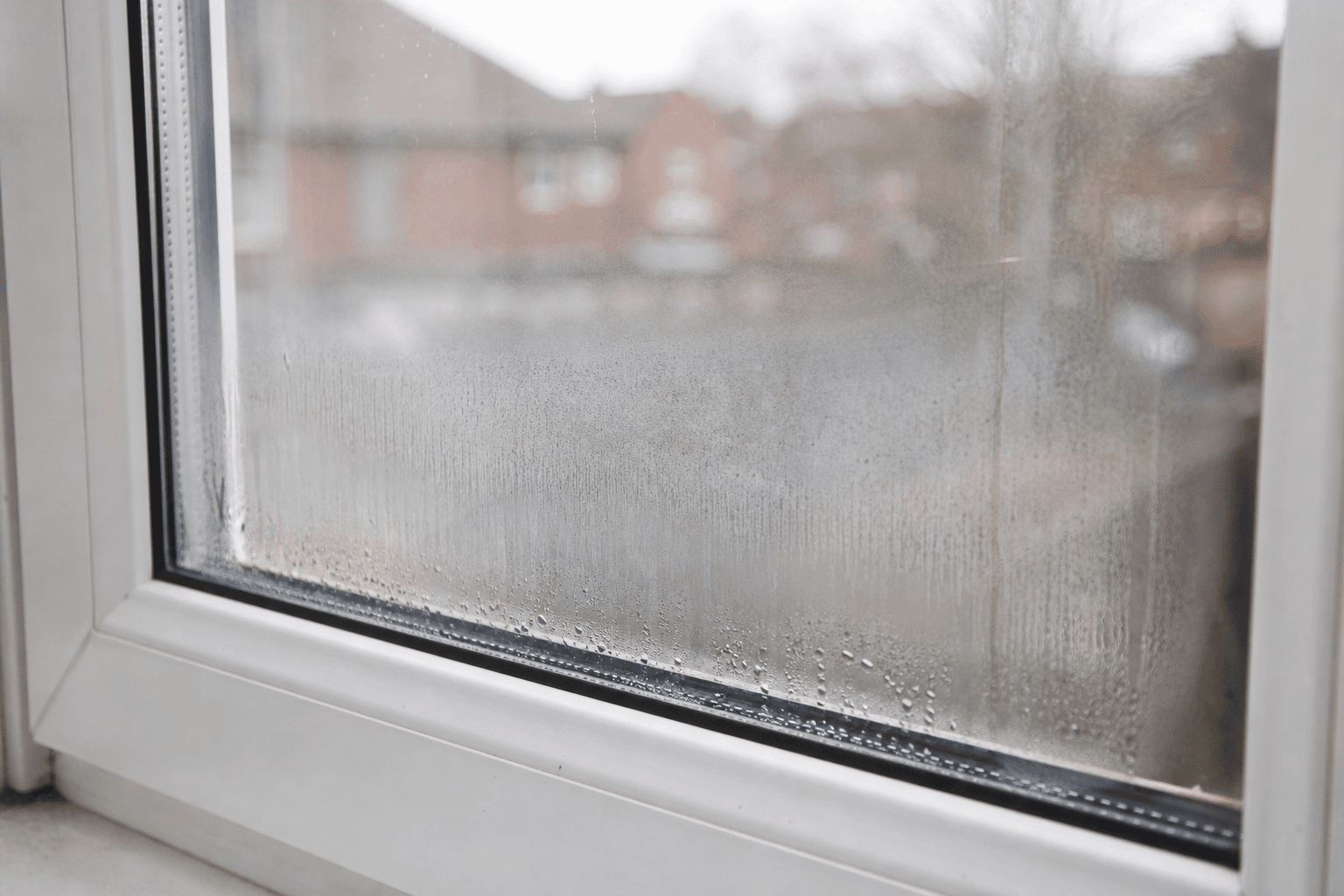
This is the one most homeowners misdiagnose as a ventilation issue. If the misting is between the two panes of glass and won't wipe off no matter what you do, the perimeter seal under BS EN 1279 has failed. The desiccant inside the spacer bar is saturated. The unit is finished.
How to identify
- Water droplets inside the sealed unit, not on the room-side glass.
- Permanent foggy patch that doesn't change with ventilation.
- Often starts at the bottom edge and spreads up.
- Sometimes accompanied by a rainbow oil-film look in low light.
Fix
Replace the IGU (insulating glass unit). The frame, hinges and handle usually stay. A FENSA-registered glazier measures, orders, and refits, typically two visits a fortnight apart.
Cost
£80–£250 per pane installed, depending on size, glass spec and access (Checkatrade FENSA glaziers, 2025). Argon-filled low-E units sit at the upper end. Always ask for the FENSA certificate after install, because that's your Building Regs compliance proof.
Cause #6: Cold-bridge wall reveals (single-glazed → uPVC retrofit)
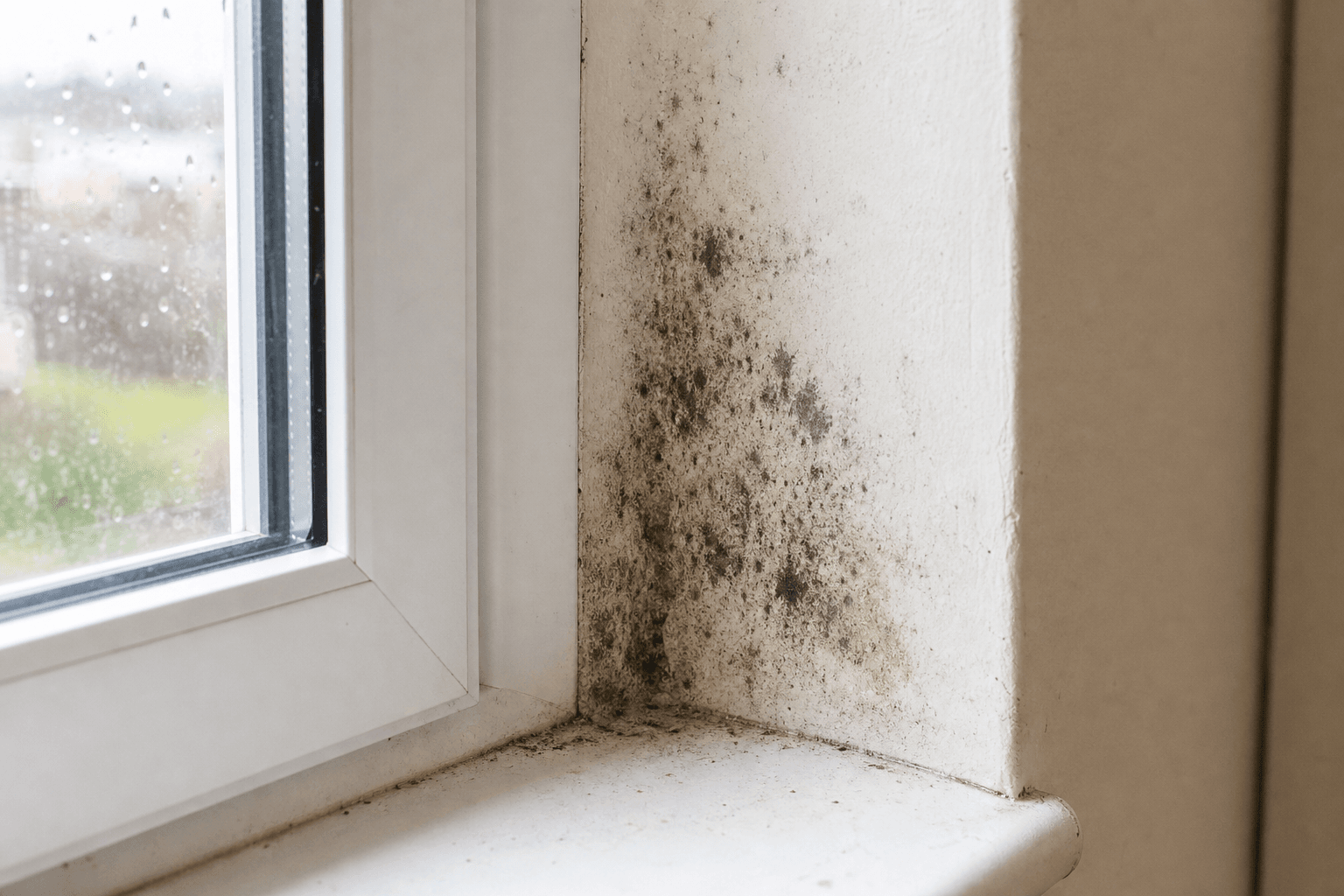
When old single-glazed wooden frames get swapped for uPVC, the glass becomes warmer than the surrounding plaster reveal. The reveal then becomes the coldest surface in the room and the condensation moves off the glass onto the wall, often appearing as black spots in the corner where reveal meets cill.
How to identify
Glass is dry. Reveal corner is wet or shows mould. Often worst in solid-wall houses (pre-1930) where the wall has no cavity insulation to slow heat loss.
Fix
Internal insulated reveal liner using 3–6mm aerogel board (Spacetherm), £40–£80 per reveal in materials, DIY-able with patience and a sharp Stanley knife. Skim and paint after.
When to call a pro
Solid-wall pre-1930s houses benefit from full internal wall insulation: £80–£150 per m² installed, per Energy Saving Trust (2024). That's a bigger job than a reveal fix, but it solves multiple cold-bridge symptoms at once.
Learn more about Silicone and Sealing Work
Browse how we deliver Silicone and Sealing Work and the questions homeowners ask most often.
Cause #7: Penetrating damp around the frame (the one people miss)
The tell most guides skip: penetrating damp shows up wet at the bottom corner only, with soft plaster you can press with a finger. Condensation, by contrast, distributes evenly across the glass. If the pattern is asymmetric and stays wet through dry weather, water is getting in from outside, not condensing from inside.
How to identify
- Wet patch at the bottom corner of the frame or below the cill outside.
- Plaster soft or "chalky" to the touch on the inside reveal.
- Tide line at skirting level below the window.
- Moisture meter reading above 18% on plaster (a £15 Stanley meter from Screwfix is fine for triage).
Fix
Strip the old silicone bead with a Stanley knife. Check the external pointing and render for cracks. Reseal with a neutral-cure silicone (about £8 a tube from Toolstation). Allow 24 hours to cure before testing with a watering can.
When to call a pro
If the wet patch returns within a fortnight, the leak is deeper than the bead. Hire a PCA-registered damp surveyor (£200–£500 for a non-invasive investigation, Checkatrade, 2025). Find one via our damp surveyor near me guide. If you suspect a blocked drain under the kitchen window is wetting the wall from below, that's a separate trade.
How to figure out WHICH cause you have (diagnostic flowchart)
About 75% of misdiagnoses happen because homeowners skip step one and try a humidifier-or-extractor fix on what's actually a seal failure (Property Care Association, 2023). Run through this in order. Stop at the first "yes".
- Is the moisture between the panes? → Cause 5 (FENSA glazier).
- Is the wall reveal wet, not just the cill? → Cause 7 (PCA surveyor).
- Does it clear by mid-morning on its own? → Cause 1 (dew-point, ventilation).
- Is it wet only after washing or showers? → Cause 3 or 4 (extractor or drying habits).
- Are the trickle vents shut, painted over, or missing? → Cause 2 (vents).
- Solid-wall house built before 1930? → Cause 6 (cold-bridge reveal).
- None of the above? → Cause 1 with Cause 2 overlap. Start with ventilation, escalate from there.
Citation capsule. The Property Care Association (2023) reports that around half of UK damp callouts diagnosed as "rising damp" by non-specialists are actually condensation or penetrating damp at low-level reveals. The diagnostic order matters more than the fix, because the cheapest fix only works on the right cause.
Thinking about Door and window repairs?
Share your postcode and job details for a no-obligation quote.
What you'll need to investigate safely
- £15 Stanley moisture meter (Screwfix or Toolstation)
- FFP3 dust mask if any visible mould (Screwfix, ~£8 for a pack of two)
- Torch (the camera light on a phone is fine)
- Phone for date-stamped photos
- Notepad for cill temperature readings if you have an infrared thermometer
Do not poke external putty. Do not chip render. Do not pull plaster off a wet patch to "see how deep it goes". You'll turn a £30 fix into a £300 one.
When the diagnosis is beyond DIY (4–6 signs)
If any of these apply, stop and call a pro before spending money on the wrong fix. For mould covering more than 1m², see our how to remove mould from walls guide before you book the trade.
- Seal failure between panes (Cause 5).
- Tide line at skirting below the window.
- Bowing plaster or soft-to-touch render.
- Mould on more than 1m² of wall.
- Smell persists for 2+ weeks after a ventilation fix.
- Recurrence within 30 days of any single fix.
Check scope and pricing for Minor Repairs
Compare options, add-ons, and what affects the final price before you commit.
How to describe the problem to a tradesperson (so they don't overcharge)
We've found tradespeople quote 30% lower when they hear a homeowner using the right vocabulary, because it signals you'll spot a padded scope. The phrases below cost nothing and save plenty.
Phrases that work
- "Condensation on the room-side surface, not between panes."
- "Tide line at X cm from cill."
- "Moisture meter reading Y% on plaster, Z% on timber."
- "Lasts until [time] in the morning."
- "Started after [event, e.g. new boiler, new windows, baby moved in]."
Photos to take
- Full window in daylight.
- Close-up of the condensation pattern.
- Date-stamp visible in the photo metadata.
- A ruler in the shot for scale.
- The cill from underneath if you can reach safely.
How Taskino's pros diagnose this
Most morning condensation on inside of windows is just a Tuesday in January. But when it doesn't clear by lunchtime, or it shows in only one room, the window is telling you the wall behind it has a story. Taskino lists damp specialists and FENSA glaziers by postcode. Sometimes a £30 trickle vent is the whole answer. Sometimes the visit confirms what you already suspected, and you save the cost of a guess.
Need help with Silicone and Sealing Work?
Tell us about your job and we will match you with the right professional for Silicone and Sealing Work.
The short version
Condensation on inside of windows is a diagnostic problem before it's a fix problem. The seven causes split cleanly into surface-physics fixes (Causes 1–4, mostly £0–£200), failed-unit fixes (Cause 5, £80–£250 per pane), and building-fabric fixes (Causes 6–7, £40–£500 per area). The flowchart tells you which one applies. The vocabulary section keeps the quote honest. If you're left with the damp smell after a ventilation fix and need help knowing how to get rid of damp smell properly, that's usually Cause 5 or Cause 7 in disguise. Run the flowchart again before painting over anything.
Sources
- FENSA member directory, 2025
- Energy Saving Trust home humidity and ventilation guidance, 2024
- Property Care Association condensation and damp diagnosis guide, 2023
- Approved Document F (Ventilation), 2021
- Checkatrade FENSA glazier and electrician price guides, 2025
- English Housing Survey, 2023
- BS EN 1279 (Insulating glass units standard)
- Building Regulations Part L (energy efficiency) and Part F (ventilation), gov.uk
Frequently asked questions: Why Does Condensation Form Inside Your Windows? 7 Causes Explained for UK Homeowners
Short answers to common questions about this topic.
Our team will answer all your questions. we ensure a quick response.
Contact UsRelated posts
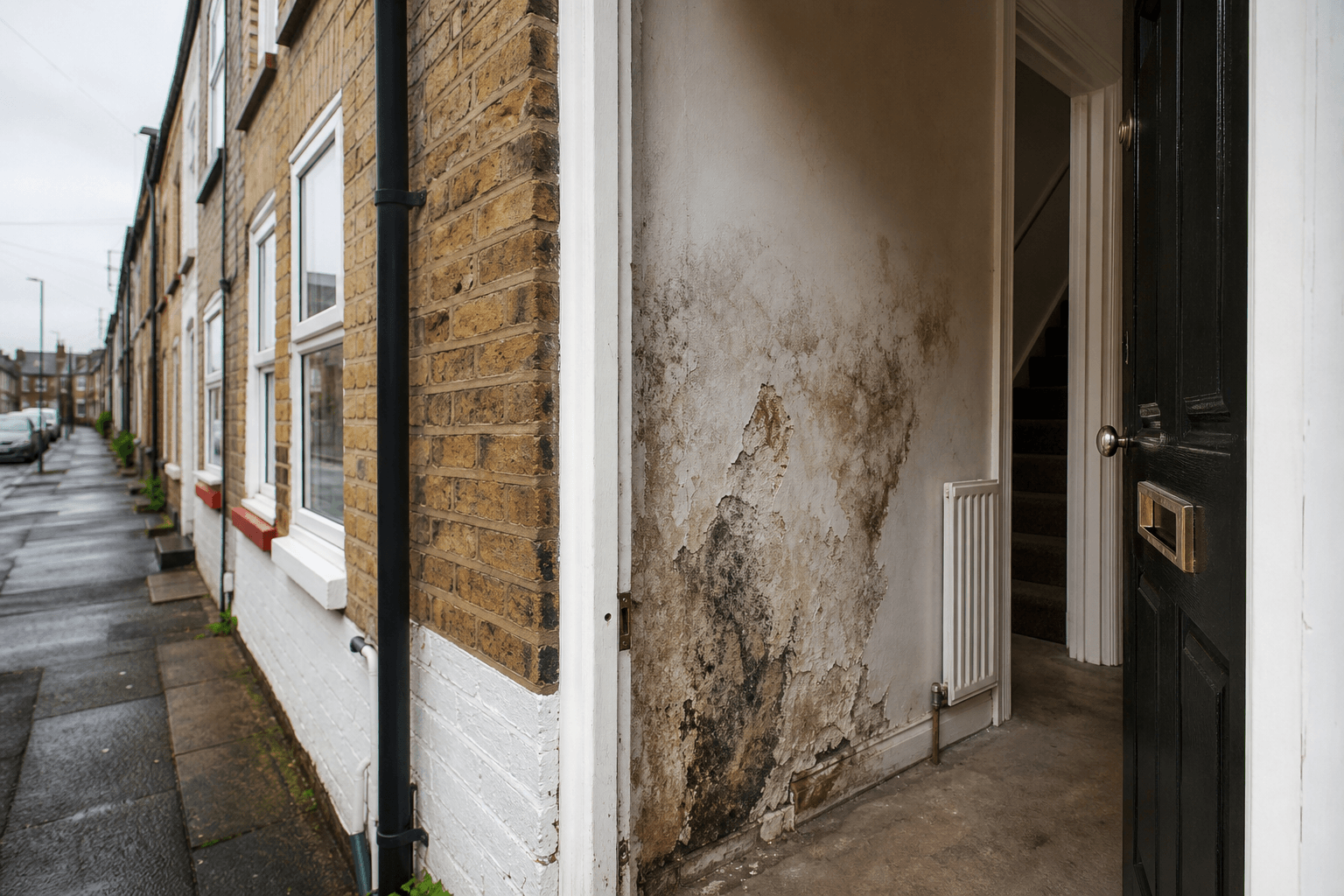
Remove mould safely, fix the cause (condensation, rising or penetrating damp), and learn what Awaab's Law means for UK homes in 2026.
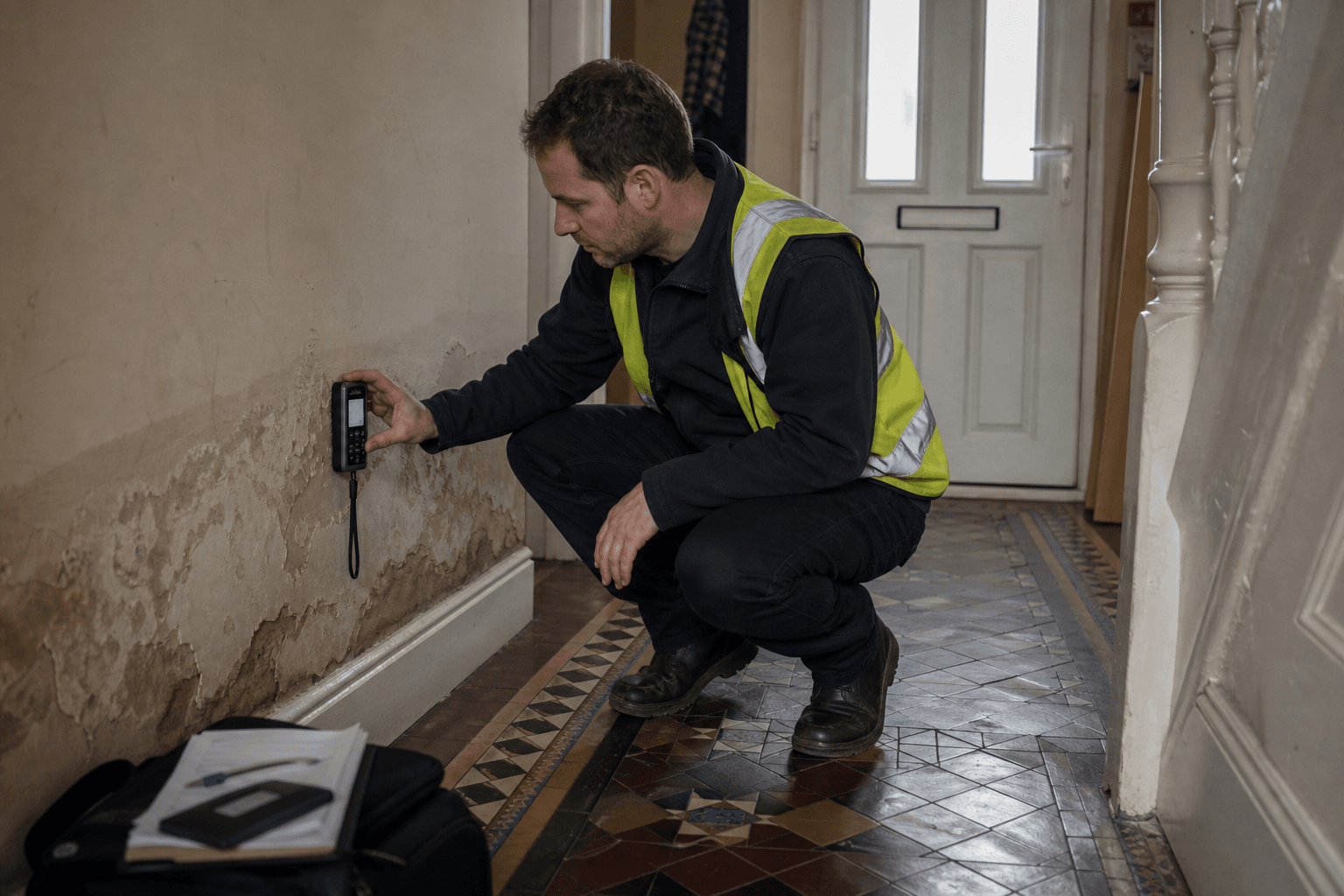
Finding a damp surveyor near me: 12 questions to ask, PCA credentials to verify, and red flags that mean walk away. UK 2026 hiring guide.
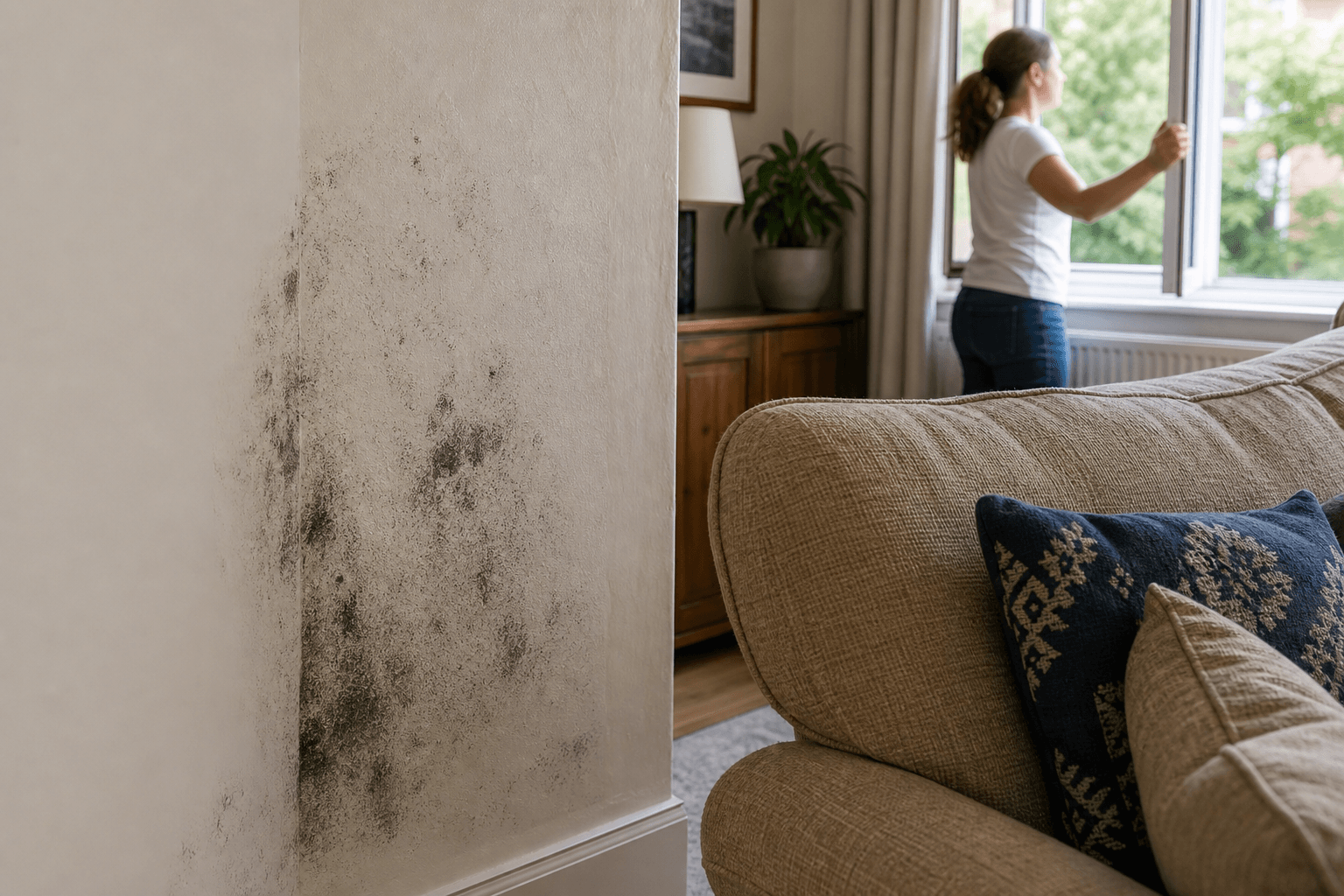
Step-by-step guide to remove mould from walls in UK homes. Tools, biocide choice, safety, and when to stop and call a PCA-registered damp surveyor.
Latest in Handyman
View all in this category
Part P notifiable electrical work in 2026: a room-by-room list of what you can legally DIY in a UK home and what needs an NICEIC electrician.
DIY gas work is a criminal offence in the UK. What's legal (bleeding, repressurising), what isn't, and when to call a Gas Safe engineer.

Hire a UK plumber for a blocked drain: 13 questions, who owns outside drains, and how to report a blockage to your water company. Get a fair quote.
Related services
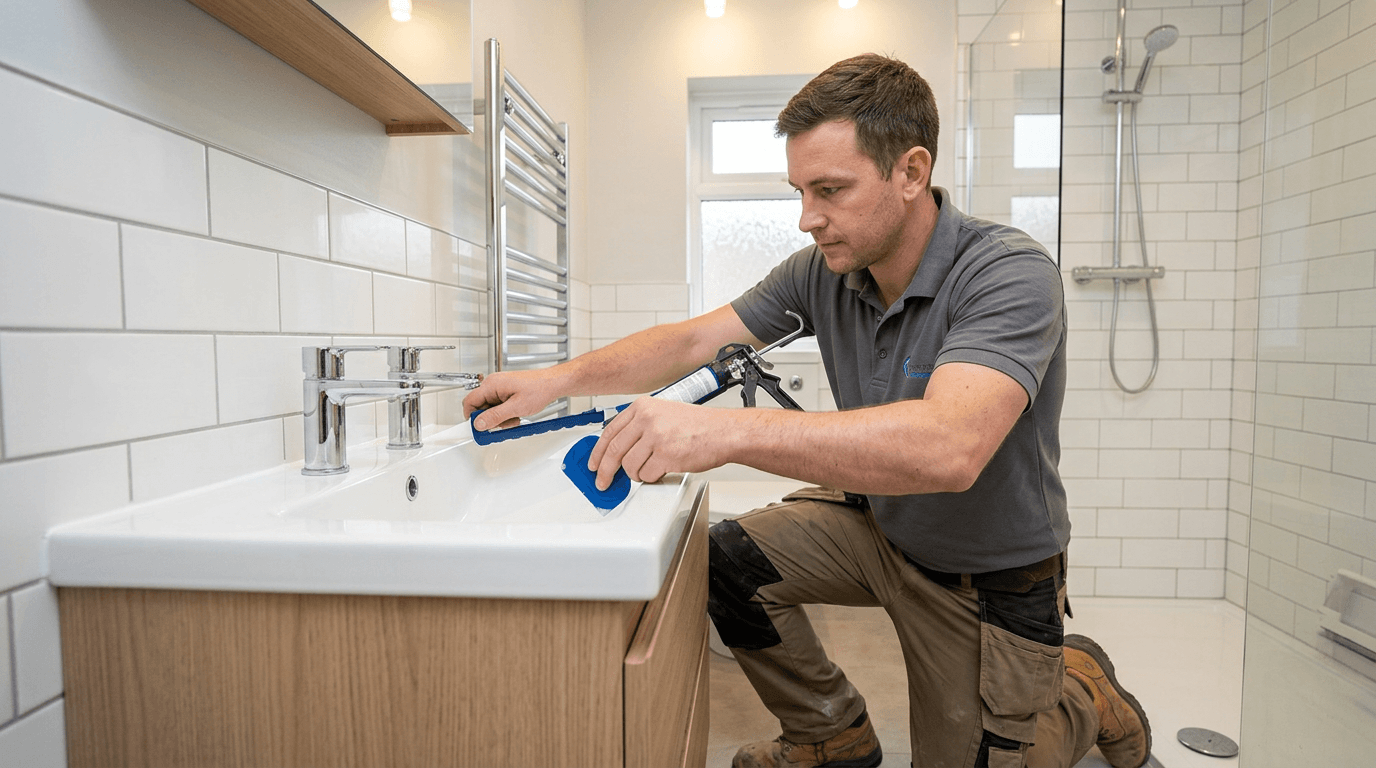
Neat, watertight silicone and sealing work for bathrooms, kitchens and windows across the UK. We strip failed joints, use the right sealant for each surface, and finish to a high standard. Contact us for a clear quote.
Fast, reliable Door and window repairs from vetted professionals. We fix hinges, locks, frames, and glazing with clear quotes, insured workmanship and a tidy finish.

Minor repairs arranged through Taskino: taps, doors, plaster patches, loose fittings and more. Vetted handymen, clear quotes, fully equipped visits, and a tidy finish.
Ready to Book Your Service?
Tell us what you need and our team will help you find the right professional quickly, with clear pricing and no hidden fees.