
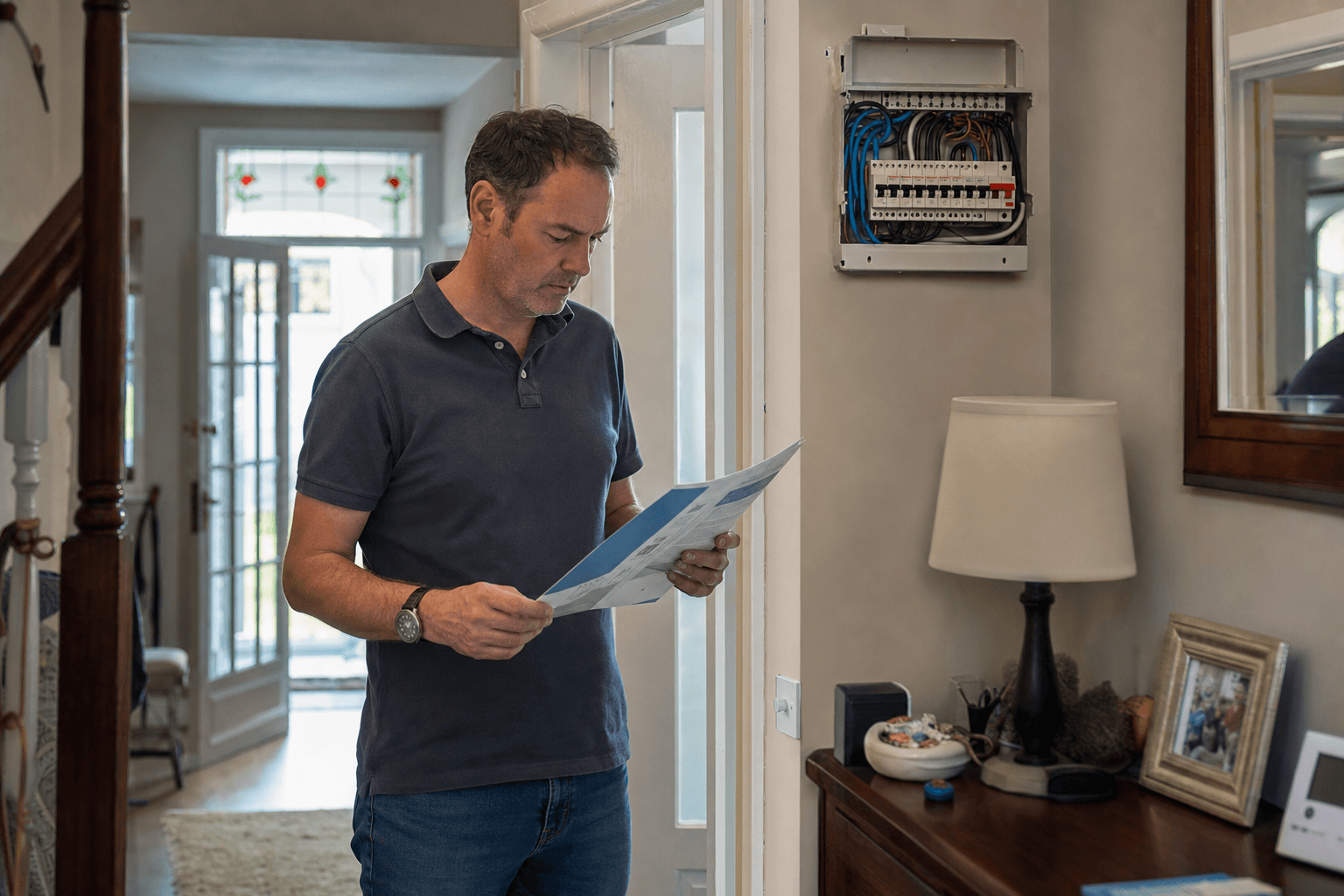
Notifiable Electrical Work DIY or Hire a Pro? An Honest UK Comparison [2026]
Part P notifiable electrical work in 2026: a room-by-room list of what you can legally DIY in a UK home and what needs an NICEIC electrician.
If your job appears on the Part P notifiable list, hire a registered electrician. The £5,000 fine under section 35 of the Building Act 1984, plus the risk of an unsellable house at EICR, dwarfs the £100-£300 you would save doing it yourself (legislation.gov.uk, 1984).
TL;DR
- If Part P calls it notifiable, hire an NICEIC electrician. The £5,000 fine and unsellable-house risk dwarfs the £100-£300 you would save.
- DIY wins on like-for-like socket, switch, and ceiling-rose swaps outside bathrooms and kitchens.
- Hire wins on any new circuit, anything in a bathroom, anything on the consumer unit, and any garden or outbuilding feed.
- Cheapest legal middle path: LABC notification (£200-£400) plus a non-registered electrician, but a registered competent person is almost always cheaper.
Legal flag. Notifiable Part P work without a registered electrician equals a criminal offence plus a fine of up to £5,000 plus a potentially unsellable house at the EICR stage.
The honest answer
Part P (Building Regulations Approved Document P) defines a list of notifiable electrical work that must either be done by a registered competent person, or notified to Local Authority Building Control before starting (gov.uk, 2013 ed.). Doing notifiable work without either route is a criminal offence under the Building Act 1984.
That sounds severe, but the practical bar is reasonable. Most homeowner DIY (replacing a faceplate, swapping a like-for-like ceiling rose, changing a light fitting outside a bathroom) sits firmly in the non-notifiable bucket. The notifiable list targets the genuinely high-risk work, like new circuits, consumer unit changes, and bathroom or outdoor jobs.
Most homeowners get the DIY-versus-hire decision wrong in the same place: they assume anything that looks small is fine. Part P is not about job size. It is about location and circuit impact.
Need help with Electrical jobs?
Tell us about your job and we will match you with the right professional for Electrical jobs.
When does DIY make sense?
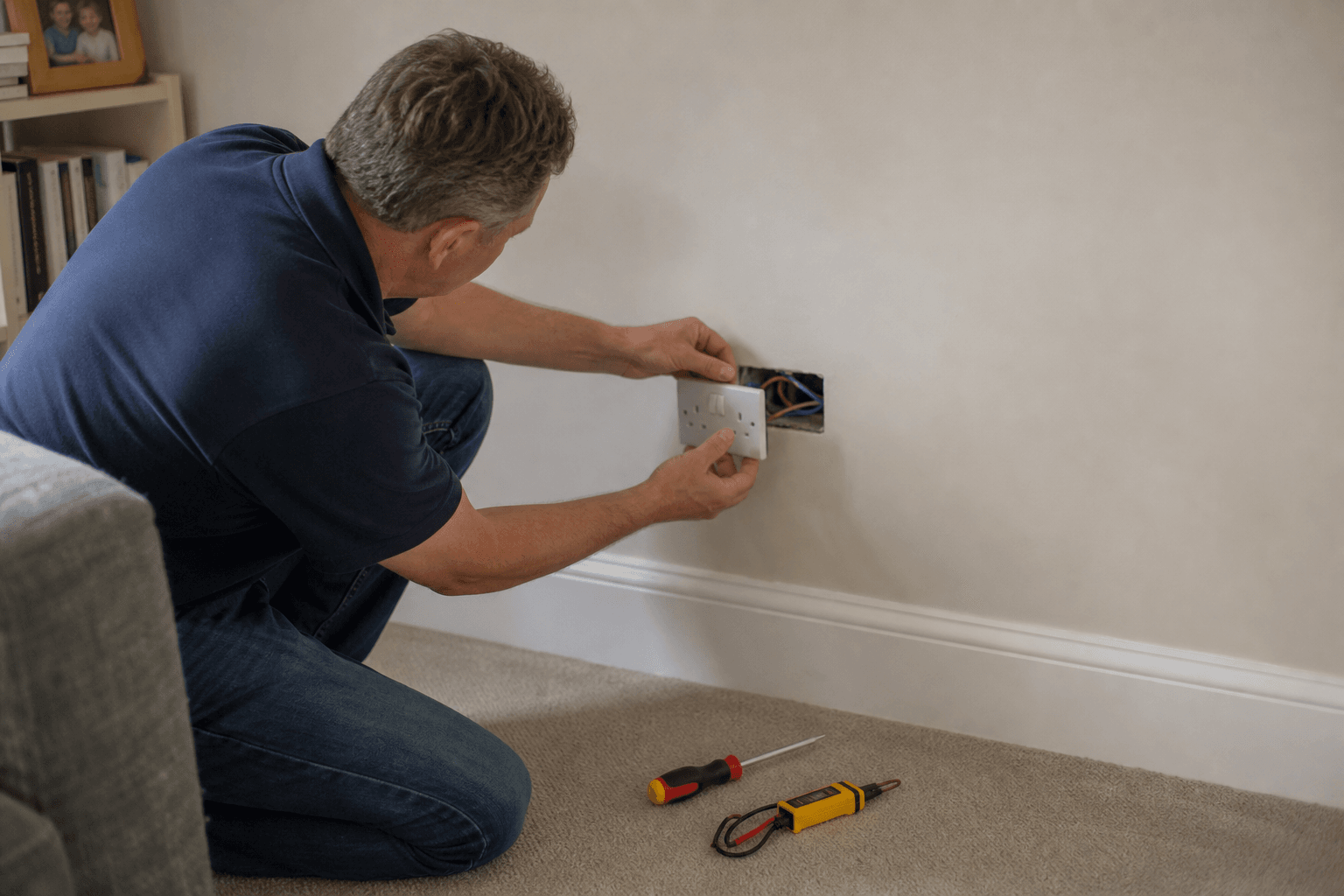
DIY makes sense for like-for-like swaps in non-special locations. According to the gov.uk competent-person scheme summary, replacing existing accessories on existing circuits outside bathrooms, kitchens, and outdoor zones is not notifiable (competentperson.co.uk, 2024). That covers most hallway switches, bedroom sockets, and living-room ceiling roses.
Scenarios where DIY genuinely saves money
Some swaps are short, cheap, and well within a careful homeowner's reach:
- Replacing a 1-gang light switch in a hallway: saves £45-£90 on a tradesperson's minimum callout.
- Swapping a single 13A socket in a bedroom: saves £45-£90 of labour.
- Replacing a pendant light fitting in a living room: saves £60-£120 versus a callout.
- Refitting an outdoor PIR floodlight on an existing fused circuit: saves £75-£120 (still check zone rules).
What's the learning worth on top of the cash saved?
The learning value often exceeds the labour saving. Understanding your own consumer unit, knowing which RCD covers which circuit, learning to safely isolate per HSE GS38, spotting old red and black wiring from pre-2006, all of that pays back at every future EICR (HSE GS38, 2015).
Which tools earn their keep?
A first-time tool kit costs roughly £100-£150 at Screwfix or Toolstation. You will reuse this kit for every job:
- Insulated VDE screwdriver set (rated 1000V), around £25-£40.
- GS38-compliant voltage tester or two-pole proving unit, around £45-£70.
- Wire strippers and side cutters, around £15-£25.
- Brown identification sleeving for any pre-2006 wiring you encounter.
For kit recommendations, see our best electrical DIY tools for safe UK home wiring jobs.
Citation capsule. Approved Document P treats like-for-like replacement of switches, sockets, and ceiling roses on existing circuits outside special locations as non-notifiable, provided the existing circuit protection (RCD where required by BS 7671) remains in place (gov.uk Approved Document P, 2013).
When does hiring a pro make sense?
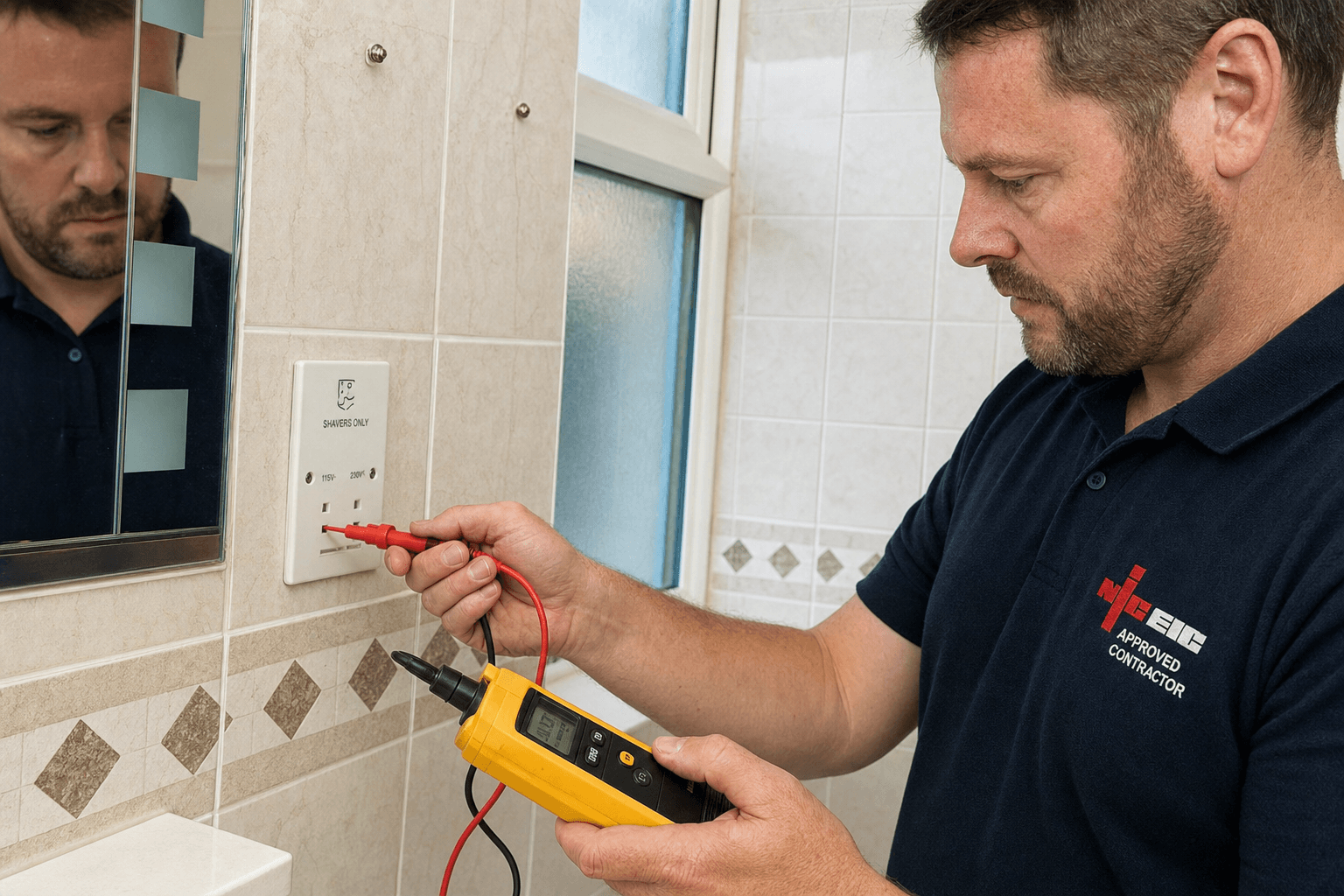
Hire a pro for anything notifiable, anything in a special location, and anything that changes circuit topology. Approximately 70 competent-person scheme members operate in the UK across NICEIC, NAPIT, ELECSA, STROMA, and Certsure, and their certificates are what your buyer's solicitor will ask for (competentperson.co.uk, 2024).
Where does DIY actually cost more in the end?
Bad DIY is expensive DIY. Three real failure modes we see at Taskino:
- A botched consumer unit install, often a self-fitted dual-RCD board with mis-allocated circuits, then requiring a full reinstatement of £4,000-£8,000.
- A failed EICR mid-sale, where a homeowner's unrecorded socket addition flags as a C2 code and stops the transaction until remediated.
- A refused insurance claim after an electrical fire, on the grounds the installation did not meet BS 7671.
Which jobs are dangerous or simply illegal?
The notifiable list targets locations and works where the consequences of a small mistake are large. Anything in Zones 0, 1, or 2 of a bathroom. Any new circuit anywhere. Any work on or in the consumer unit. Any feed to an outbuilding, shed, or EV charger.
How does electrical work affect home insurance?
Most UK home insurance policies require fixed electrical work to comply with BS 7671:2018+A2:2022 (IET, 2022). Non-compliant work routinely invalidates claims for fire, smoke, and water damage downstream of the fault. A £75 callout is cheap insurance against a four-figure claim refusal.
We had a homeowner in a 1970s Leeds semi-detached call us out after a self-installed kitchen socket tripped the whole house for three days. The fix was £95. The opportunity cost was a ruined long weekend.
Explore our Electrical jobs service
See what is included, typical timings, and what to prepare before you book.
How do DIY and hire compare side-by-side?
DIY costs £15-£50 in materials before tooling. A registered electrician typically charges £45-£90 minimum callout for a like-for-like change, including the part. The decision rarely turns on price alone. Insurance, paperwork, and resale carry just as much weight.
| Factor | DIY | Hire a NICEIC pro |
|---|---|---|
| Up-front cost | £15-£50 in materials | £45-£90 minimum callout |
| Time | 30 min - 2 hr learning curve | 30-60 min |
| Tools needed | £100-£150 first-time spend | none on you |
| Skill required | basic plus safe isolation, uk wiring colours | competent person |
| Quality of finish | variable | standard high |
| Risk if it goes wrong | shock, fire, invalid insurance | covered by their PL insurance |
| Insurance | yours, may decline | their £2m+ public liability |
| Resale impact | unrecorded work may flag at EICR | EIC or MWC issued |
| Stress | high if it does not work | low |
Callout. The single most useful skill you can take from this article is reading the colour of the cable behind your faceplate. Red and black equals pre-2006. Brown and blue equals post-2006. The two require different sleeving treatment under BS 7671 Reg 514.14.
What does the notifiable-work checklist look like room by room?
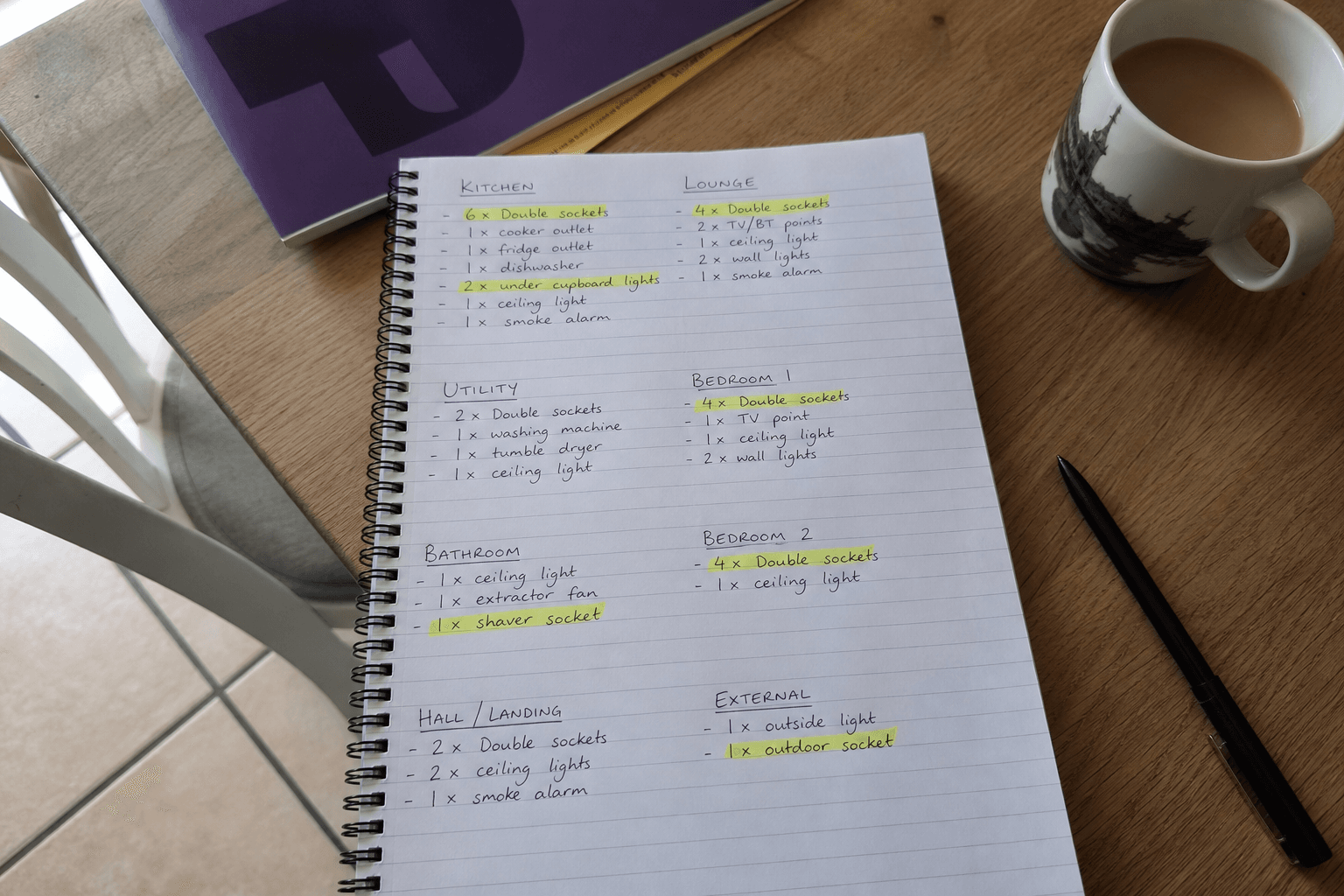
No competitor article covers this room by room. The matrix below maps Approved Document P notifiable rules to the rooms of a typical UK home, so you can scan to your project in 10 seconds.
| Room | Notifiable (hire) | Non-notifiable (DIY allowed) |
|---|---|---|
| Kitchen | new socket, new circuit, new oven circuit, fixed appliance hardwire, fused spur for hob, hood, or combi boiler electrical supply | like-for-like socket swap, like-for-like switch swap, light fitting swap |
| Bathroom or shower room | any new electrical work in Zone 0, 1, or 2 (always notifiable) | nothing safe to DIY in here |
| Bedroom, living room, hall | new socket, new circuit, consumer unit change | like-for-like socket, switch, ceiling rose, light fitting |
| Outdoor or garden | any feed to a shed, garage, garden lighting, EV charger | nothing, outdoors is a special location |
| Loft | new lighting circuit | replacement of an existing pull-cord switch like-for-like |
| Garage (integral or detached) | hardwired EV charger, new sub-circuit | like-for-like socket inside an integral garage on the house circuit |
Sticky legal flag. Notifiable Part P work without a registered electrician equals a criminal offence plus up to £5,000 fine under section 35 Building Act 1984, plus a potentially unsellable house (legislation.gov.uk, 1984).
Ready to book Electrical jobs?
Send a quick enquiry — we typically respond the same working day.
What does a real cost comparison look like?
A tired single socket in a 1980s bedroom, swapped for a BG USB-C double, is the cleanest test case. The socket at B&Q is around £18, the work takes about 30 minutes, and a first-time DIYer adds roughly £140 of one-off tools. Total first-time cost: about £160.
What does the hire route cost on the same job?
A Taskino NICEIC electrician in Leeds quoted £75 for that exact like-for-like socket change, including the socket and a Minor Works Certificate. No tools to buy, no learning curve, no paperwork to keep.
Which route wins?
Winner on cost per hour after the first 2 DIY jobs: DIY. Winner on stress, paperwork, and resale: hire. For a one-off, hire. For five sockets across a house refresh, DIY pays off, as long as none of them tip you into notifiable territory.
For typical inspection fees, see our EICR certificate cost guide.
What hidden costs of DIY does nobody mention?
The price of the socket is the easy bit. The hidden costs are where DIYers get caught:
- Storage space for £140 of tools you will use twice a year.
- Repeat-fault troubleshooting time when an RCD keeps tripping (electrical repairs near me).
- A failed EICR at the point of sale, blocking the transaction.
- Patience capital with your partner over a weekend of part-finished wiring.
- Voided home insurance for damage related to a non-compliant installation.
- The opportunity cost of the Saturday you spent under the floorboards.
- The £5,000 fine if you tip into notifiable territory without realising.
Learn more about Electrical jobs
Browse how we deliver Electrical jobs and the questions homeowners ask most often.
What hidden value of hiring does nobody mention?
The paperwork is the easy bit to see. The deeper value sits in liability transfer and resale:
- A written Electrical Installation Certificate or Minor Works Certificate, recording the change for every future EICR.
- Their £2m+ public liability insurance, which covers any consequential damage.
- LABC notification handled by them, not you, when the job is notifiable.
- Follow-up snagging, usually included for 12 months under scheme rules.
- A cross-referral pipeline, so you have a known number for the next job.
What's the decision flowchart you can use right now?
Run your job through these six questions in order. The first "yes" gives you your answer:
- Is the work in a bathroom or shower room? Yes equals hire. No, go to step 2.
- Is it a new circuit, not just replacing existing accessories? Yes equals hire. No, go to step 3.
- Is it on the consumer unit itself? Yes equals hire. No, go to step 4.
- Is it an EV charger, electric shower, or garden or outbuilding feed? Yes equals hire. No, go to step 5.
- Is the existing wiring red and black (pre-2006)? Yes, strongly consider hiring (BS 7671 Reg 514.14 sleeving plus EICR risk). No, go to step 6.
- Are you confident on safe isolation per HSE GS38? Yes equals DIY safely. No equals hire.
Thinking about Electrical jobs?
Share your postcode and job details for a no-obligation quote.
How does Taskino help when you decide to hire?
If the flowchart pointed you to hire, that is almost always the right call for notifiable work. We can match you to a Part P registered Taskino electrician who will issue the electrical installation certificate, handle Building Control notification, and leave you with the paperwork your future buyer's solicitor will ask for. One short brief, one vetted local trades person, no chasing around for callbacks. Visit Taskino electrical jobs to start.
Sources
- Building Regulations Approved Document P (England) — gov.uk/government/publications/electrical-safety-approved-document-p
- Building Act 1984, section 35 — legislation.gov.uk/ukpga/1984/55/section/35
- BS 7671:2018+A2:2022 — IET Wiring Regulations
- NICEIC and the competent person scheme register — competentperson.co.uk
- HSE GS38: Electrical test equipment for use on low-voltage electrical systems — hse.gov.uk/pubns/gs38.pdf
- LABC electrical installation guidance — labc.co.uk/professionals/electrical-installation
Frequently asked questions: Notifiable Electrical Work DIY or Hire a Pro? An Honest UK Comparison [2026]
Short answers to common questions about this topic.
Our team will answer all your questions. we ensure a quick response.
Contact UsRelated posts
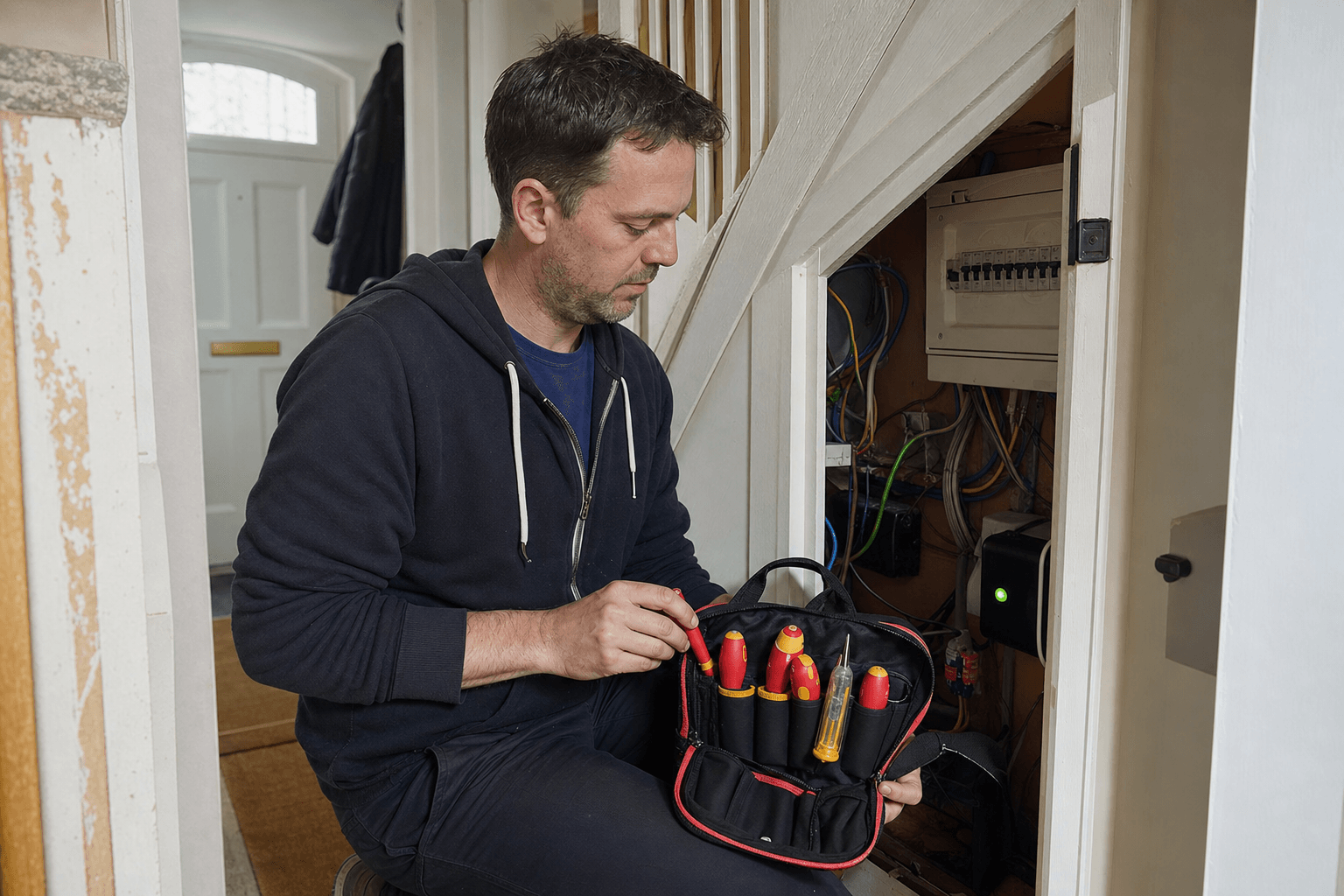
Best electrician tool bag essentials for UK homeowners in 2026: GS38 testers, VDE screwdrivers, IP66 outdoor junction boxes, sockets covers, and prices.

UK wiring colours old vs new, what DIY is legal under Part-P, current EICR & rewire costs, and how to hire a NICEIC electrician in 2026.
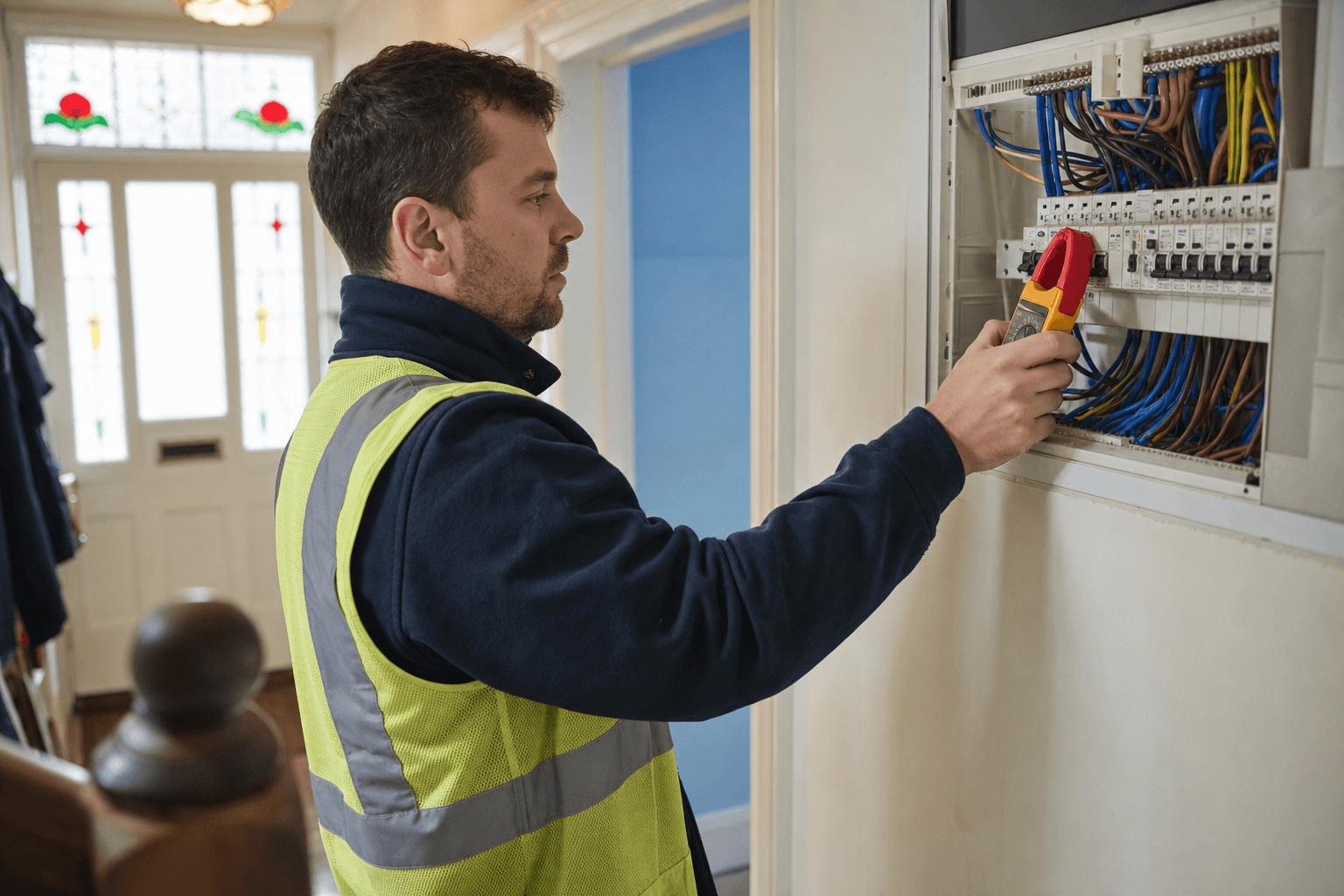
EICR certificate cost in the UK 2026: £150-£300 typical, by region, flat vs house. Plus rewire costs and electrician hourly rates explained.
Latest in Handyman
View all in this category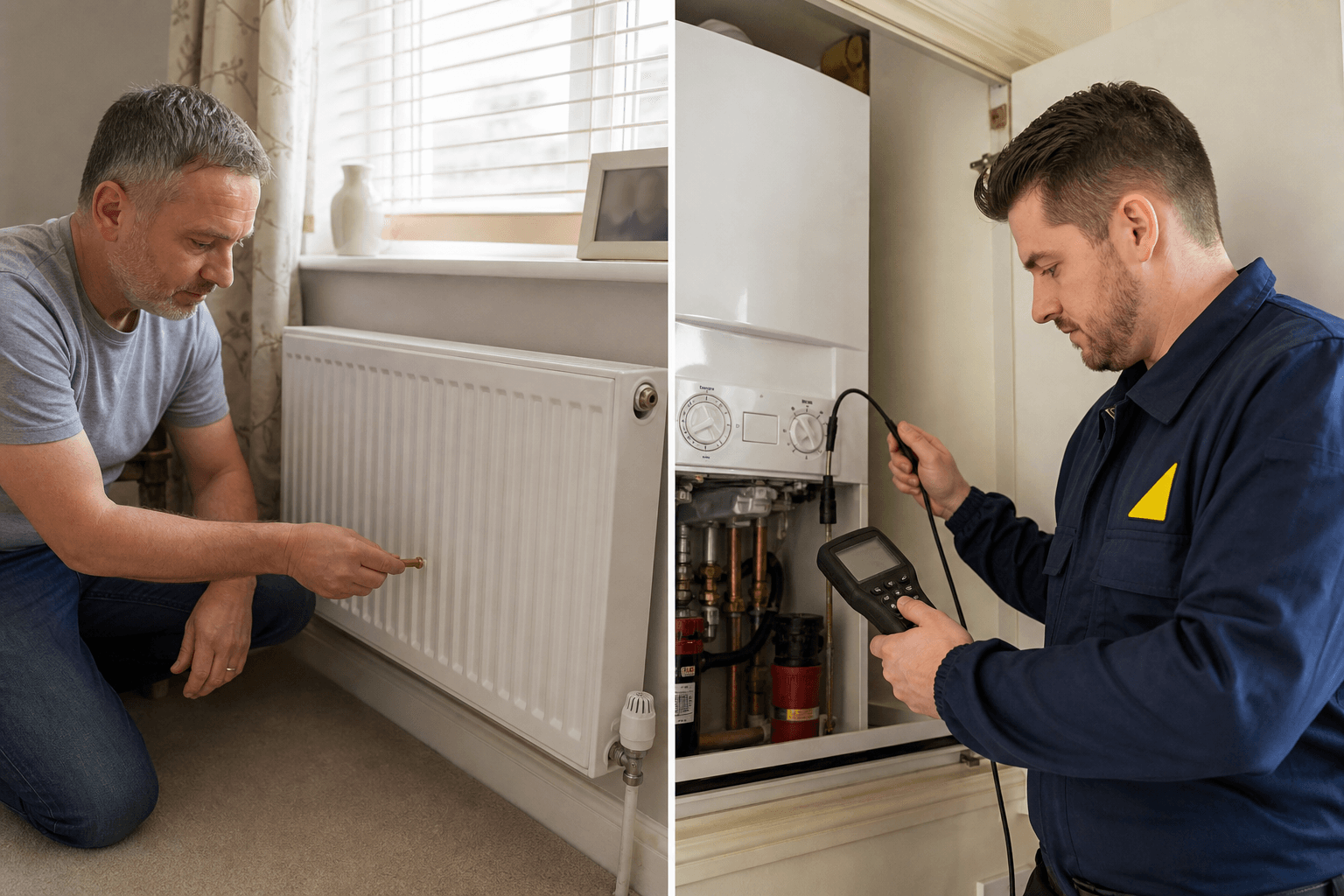
DIY gas work is a criminal offence in the UK. What's legal (bleeding, repressurising), what isn't, and when to call a Gas Safe engineer.
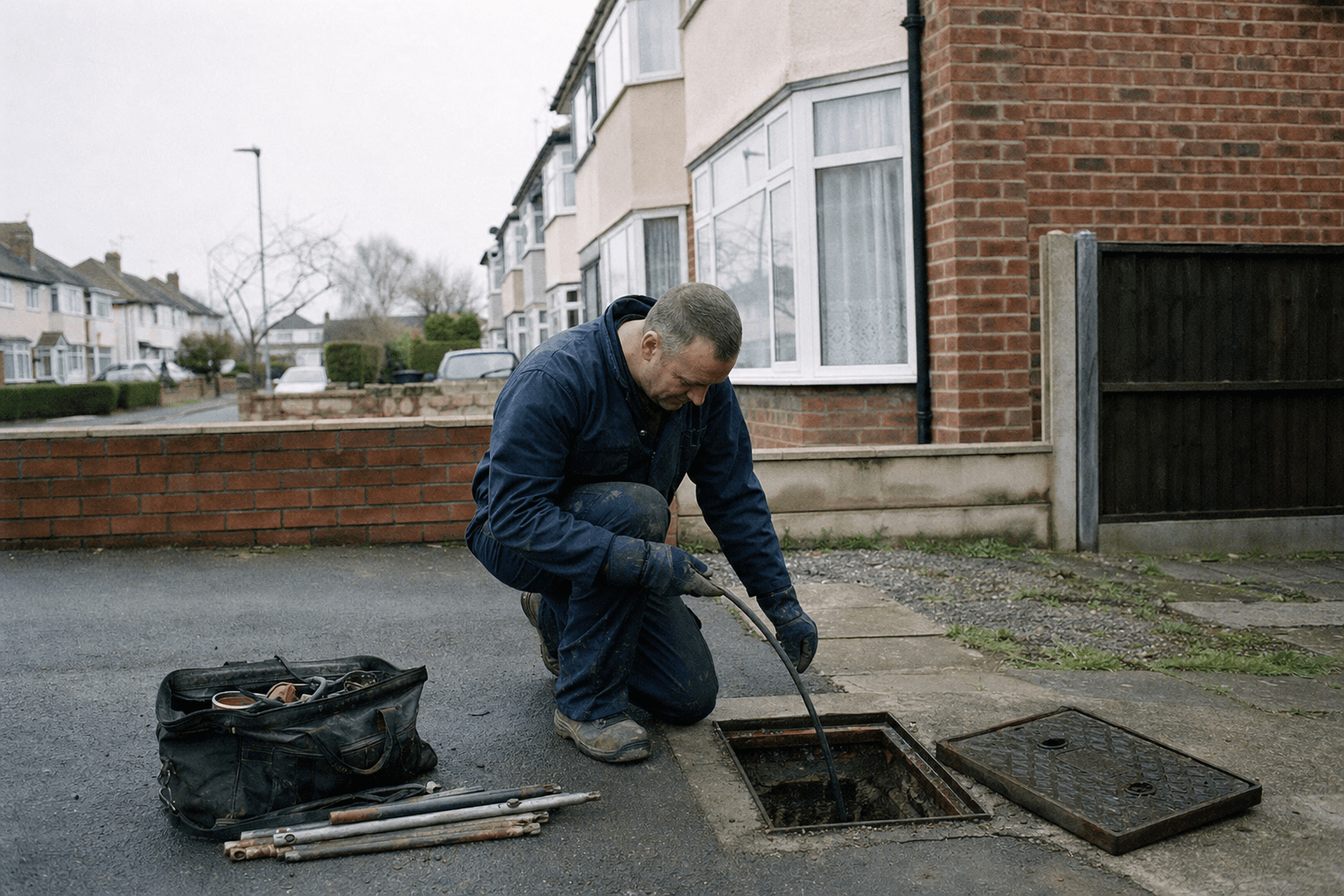
Hire a UK plumber for a blocked drain: 13 questions, who owns outside drains, and how to report a blockage to your water company. Get a fair quote.
Should you DIY a blocked drain or call a plumber? Honest UK 2026 guide: when DIY saves £200, when it costs £800, and the line you should not cross.
Related services
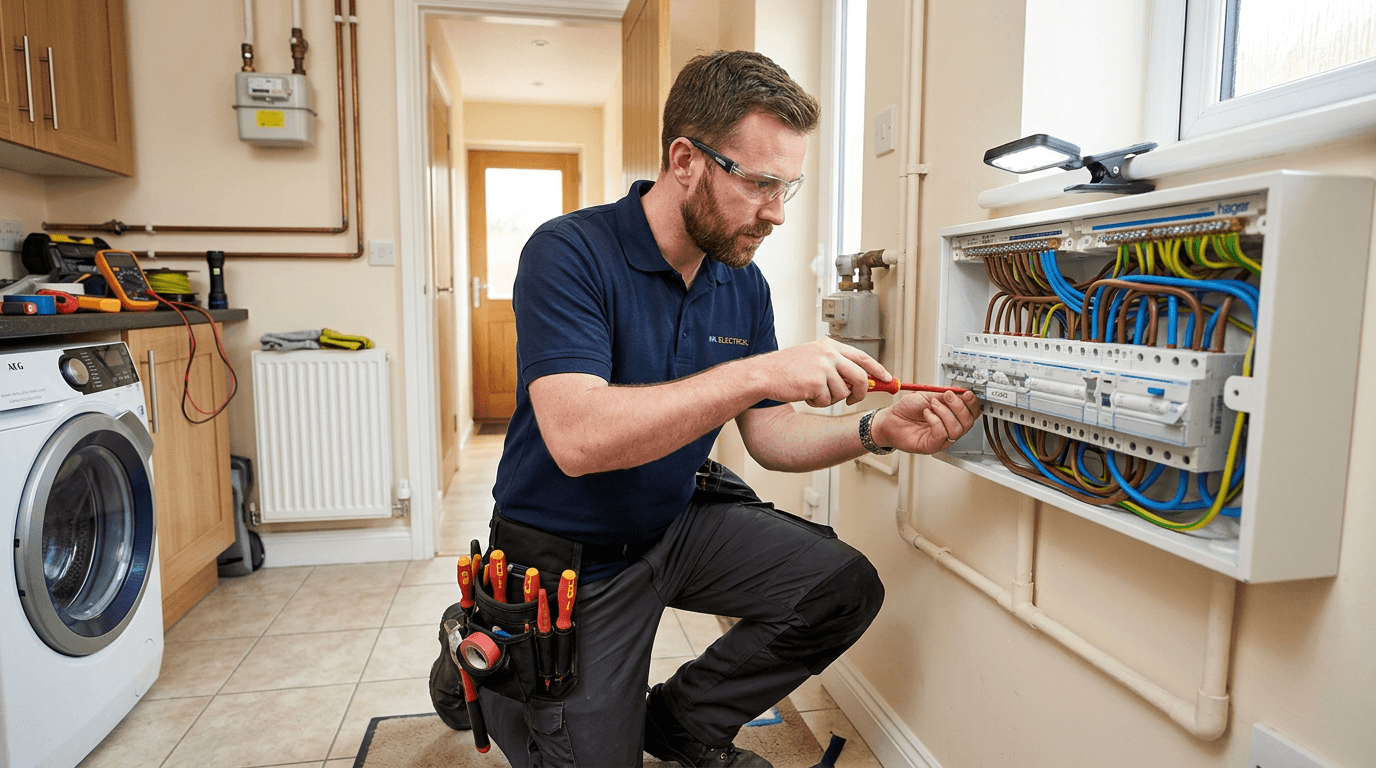
Book electrical jobs with Taskino to find qualified, insured electricians across the UK for safe repairs, installations and testing with clear quotes.
Ready to Book Your Service?
Tell us what you need and our team will help you find the right professional quickly, with clear pricing and no hidden fees.