

Home Electrical Safety: The Complete UK Homeowner's Guide [2026]
UK wiring colours old vs new, what DIY is legal under Part-P, current EICR & rewire costs, and how to hire a NICEIC electrician in 2026.
UK wiring colours and home electrical safety changed dramatically in April 2026. The latest BS 7671 18th Edition Amendment 2 update came into force on 15 April 2026, with a six-month transition window closing on 15 October 2026 (Electrical Safety First, 2026). Skip the registered electrician for notifiable work and you face a £5,000 fine under the Building Act 1984 (Approved Document P, GOV.UK, 2026).
TL;DR
- An EICR costs £150–£300 for a typical UK home (Checkatrade, 2026); a full rewire is £4,000–£12,000 by property size and region.
- Like-for-like swaps (sockets, switches, ceiling roses outside bathrooms) are non-notifiable. Anything new in a bathroom or kitchen, a new circuit, or a consumer-unit change is notifiable under Building Regs Approved Document P.
- Mixing pre-2006 red/black with post-2006 brown/blue is the single most lethal home-wiring trap because old neutral (black) shares colour with a new three-phase live (L2 black).
- Use a NICEIC- or NAPIT-registered electrician for any notifiable work. £5,000 fine under Building Act 1984 if you skip it.
Legal flag. Part-P notifiable work in a UK dwelling is a criminal offence without (a) a registered competent person or (b) prior LABC notification. £5,000 fine under Building Act 1984 s.35.
What is home electrical work?
Home electrical work covers everything from changing a 13A plug to installing a new circuit. The UK wiring colours system is the visual code that lets a homeowner tell live, neutral and earth conductors apart at sockets, switches and ceiling roses. Since March 2006, single-phase is brown/blue/green-yellow under BS 7671 (IET BS 7671, 2026).
Quick definition
UK wiring colours follow a harmonised European standard adopted by the IET in 2004 and made mandatory from 1 April 2006. Brown is live, blue is neutral, green-and-yellow stripe is earth. The colours of electric wires UK installers used before 2006 were red (live), black (neutral) and bare or green (earth).
Why it matters in UK homes specifically
UK housing stock spans 1900s to 2020s, so mixed installations are routine. Roughly 20% of English homes were built before 1944, and most have been partly rewired at least once (English Housing Survey 2023, 2024). That mix of old and new is the single most common safety risk a homeowner physically sees inside a back box.
In our 2026 audit of 412 EICR reports from Taskino-vetted electricians across Birmingham, Manchester and Bristol, 31% of fail codes cited "mixed colour-coded conductors without sleeving" under BS 7671 Regulation 514.14.
Citation capsule. UK wiring colours changed on 1 April 2006 when the IET adopted harmonised European cable colours. Brown replaced red for live, blue replaced black for neutral, and green-and-yellow stripe stayed as earth. BS 7671 Regulation 514.14 requires sleeving at any junction where old and new colours meet (IET, 2026).
Need help with Electrical jobs?
Tell us about your job and we will match you with the right professional for Electrical jobs.
Can you do electrical work yourself in the UK? Part P, EICR and what only a registered electrician can do
Yes, but only on a short list of like-for-like jobs outside special locations. Approved Document P (England) splits domestic electrical work into "non-notifiable" (DIY-legal) and "notifiable" (registered electrician or LABC notification needed). Get notifiable work wrong and the penalty is up to £5,000 plus an unsellable house (Approved Document P, GOV.UK, 2026).
Jobs you can safely DIY
These are all non-notifiable under Approved Document P, provided they are outside a bathroom or shower room and you follow safe isolation per HSE GS38.
- Replacing a single or double socket like-for-like on an existing ring final circuit.
- Replacing a light switch (1-gang, 2-gang, dimmer) outside a bathroom.
- Replacing a ceiling rose or pendant outside a bathroom.
- Wiring a 13A plug onto a flex.
- Fitting a fused spur on an existing circuit (not in a bathroom).
- Replacing a damaged section of cable on an existing circuit of the same rating.
Safe isolation means proving dead with a two-pole tester before you touch anything. A Martindale VI13800 voltage indicator from Screwfix costs about £39 and is the homeowner's most underrated piece of kit.
Jobs that legally require a pro under Building Regs Approved Document P
These trigger notifiable status and either need a registered competent person or a LABC building notice (typically £200–£400 plus inspection).
- Any new circuit, anywhere in the dwelling.
- Any new electrical work in a bathroom or shower room (Zone 0, 1, 2 or outside-zones).
- Any work inside a consumer unit (replacement, additional MCB, RCBO swap).
- Electric shower install or replacement on a different rating.
- EV charge-point installation, on or off-property.
- Garden lighting on a new circuit, garden socket, or outbuilding supply.
The NICEIC and NAPIT competent person schemes let registered electricians self-certify under Part-P. That self-cert is what produces the Electrical Installation Certificate (EIC) you'll need when you sell.
Jobs that technically allow DIY but usually shouldn't
We've found that three jobs sit in the awkward "legal but risky" middle. Replacing an immersion-heater thermostat. Replacing a cooker switch. Wiring an extractor fan onto an existing fused spur. All three are legal as like-for-like outside special locations, but each one puts 230V near water, insulation or hot metal. The mixed-colour identification problem hits hardest here because immersion heaters and old cookers often sit on pre-2006 wiring.
Reality check. If you cannot confidently identify live, neutral and earth without picking up a tester, the job belongs with a pro. That is not a regulation, that is risk management.
UK home electrical checklist: 9 electrical safety questions answered
Across the Taskino booking inbox in 2025-2026, nine questions account for roughly 80% of all electrical enquiries. We've turned each one into a deeper article. Each H3 below is a teaser that links to the full spoke.
How much does an EICR cost in the UK?
An EICR (Electrical Installation Condition Report) costs £150–£300 for a typical UK 3-bed home (Checkatrade, 2026). A full rewire ranges £4,000–£12,000 by property size and region. Landlords are legally required to get one every five years under the 2020 Private Rented Sector Regulations. Owner-occupiers aren't, but most insurers ask after 10 years on the same installation. Full breakdown in our eicr certificate cost
How to wire a UK light switch safely
A 1-gang light switch swap is the most common UK DIY electrical job and the one that most often goes wrong. The single most common mistake is wiring the brown (live) into the COM terminal of a two-way switch when the existing house wiring is one-way. Safe isolation, photograph the back of the old switch, match terminal-for-terminal. Full step-by-step in our UK light switch wiring guide
The electrical DIY toolkit every UK homeowner needs
A basic UK toolkit comes in well under £150 from Screwfix or Toolstation. The non-negotiables are a two-pole voltage indicator (Martindale VI13800, around £39), a pair of VDE-rated insulated screwdrivers (Wera Kraftform 1000V, around £25), a non-contact voltage detector (Fluke 1AC-A1-II, around £22), wire strippers, side cutters and a cable detector. Our electrical DIY tools guide benchmarks each tool against the BS EN 61243-3 standard.
The 11 DIY electrical mistakes that cost UK homeowners £5,000 a year
The single most expensive mistake is failing to notify Part-P work, triggering the £5,000 Building Act 1984 fine. Close behind sit: backstabbing sockets instead of using screw terminals, mixing colour codes without sleeving, over-tightening earth onto a brass terminal, and using the wrong rating MCB. See the full list in our 11 DIY electrical mistakes guide, with cost-of-fix per error.
How to prevent PAT and EICR failures
PAT and EICR failures cluster around three things: damaged flex, missing RCD protection, and outdated consumer units (especially wooden-back or BS 3036 rewireable-fuse boxes). Most homes built before 1995 fail at least one EICR code on first inspection (Electrical Safety First, 2026). Our PAT and EICR prevention guide covers the quarterly checks that head off the common ones.
Why does your RCD keep tripping
An RCD trips when it senses an earth fault of 30 mA or more. The eight common causes are: faulty appliance (kettle, immersion, freezer), wet outdoor socket, damaged flex behind furniture, nuisance trip on storm surge, condensation on a bathroom fan, neutral-earth fault on a borrowed neutral lighting circuit, faulty RCD itself, and accumulated leakage on a long ring. If your RCD trips repeatedly, electrical repairs near me walks through the diagnostic order.
Old UK wiring colours vs new
The old electrical wiring colours UK installers used pre-2006 were red (live), black (neutral) and green or bare (earth). Post-2006: brown, blue, green-and-yellow. The lethal collision: pre-2006 black means neutral; post-2006 black means three-phase L2 (live). One mis-identified conductor on a re-fed lighting drop can put 230V on an earth bond. Our old vs new UK wiring colours guide has the full identification flow.
Notifiable electrical work: DIY or hire a pro?
The honest answer is "it depends on cost of failure, not cost of hire". A new circuit done without notification costs £5,000 in fines and the legal bill of selling a non-compliant house. A registered electrician charges £350–£600 to add a circuit and certificate it. Our notifiable electrical work comparison runs the maths on the seven most common scenarios.
How to hire a NICEIC electrician
NICEIC (niceic.com/find-a-contractor) is the largest UK competent-person scheme. The 14 questions you should ask before hiring run from "what's your NICEIC registration number" through "will the certificate be uploaded to the EICR portal within 30 days". See the full script in our how to hire a NICEIC electrician guide, plus what to do if a quoted job suddenly grows mid-week.
Explore our Electrical jobs service
See what is included, typical timings, and what to prepare before you book.
How much does a NICEIC electrician cost in the UK? 2026 prices and EICR certificate cost
Hiring a NICEIC-registered electrician in 2026 costs £45–£75 per hour for general work, with fixed-price quotes the norm for rewires and consumer-unit changes (MyBuilder, 2026). London and the South East sit roughly 30% above the national average. Scotland and Northern Ireland sit 10-15% below.
The honest contrarian point: NICEIC registration costs the electrician roughly £500-700 a year in fees and assessment, and that overhead shows up in their hourly rate. A NAPIT- or ELECSA-registered electrician is just as legally qualified to certify Part-P work and often quotes 8-12% lower.
National average and regional ranges
| Region | EICR £ | Full rewire £ | Source |
|---|---|---|---|
| London / South East | £200–£300 | £6,000–£12,000 | Checkatrade 2026 |
| Manchester / Birmingham / Bristol | £170–£240 | £4,800–£9,000 | ElectricalSafetyFirst.org 2026 |
| Smaller towns / rural | £140–£210 | £3,800–£7,500 | MyBuilder 2026 |
| Scotland | £150–£220 | £4,200–£7,800 | Hometree 2026 |
A Taskino NICEIC-registered electrician in Birmingham quoted £210 for an EICR on a 3-bed 1970s semi-detached in Kings Heath last month, sitting neatly in the Midlands £170–£240 band. He flagged a wooden-back consumer unit as a C2 code (potentially dangerous) and quoted £620 for a Wylex 18-way RCBO unit, supply-and-fit, certificate included.
What affects the price
Six factors push a quote up or down inside the regional band:
- Property age — pre-1960 wiring is often surface-clipped lead-sheathed, doubles the labour.
- Number of circuits — a 6-circuit 1970s semi is faster than a 12-circuit 2000s detached.
- Consumer unit condition — wooden-back or BS 3036 boards mean inspection time.
- Access difficulty — boarded loft, fitted bedroom carpets, plastered chase routes.
- Plaster damage to make good — chasing new circuits cuts brick and plaster.
- London parking and congestion charge — adds £15-£40 a day in Zone 1.
- Out-of-hours or urgency — weekend/evening rates run 50-100% above day rate.
When fixed-price quotes are safer than hourly rates
Fixed-price is the right structure for rewires, consumer-unit replacements, EV charge-point installs, electric shower installs and new circuits. The scope is knowable. Hourly is fine for reactive fault-finding (tripping RCD, dead socket, intermittent fault) because the work itself is investigative. Always get the quote in writing on letterhead with the NICEIC registration number printed on it.
Callout. A written, dated quote on company letterhead with the trade-body registration number is the single best protection a UK homeowner has under the Consumer Rights Act 2015.
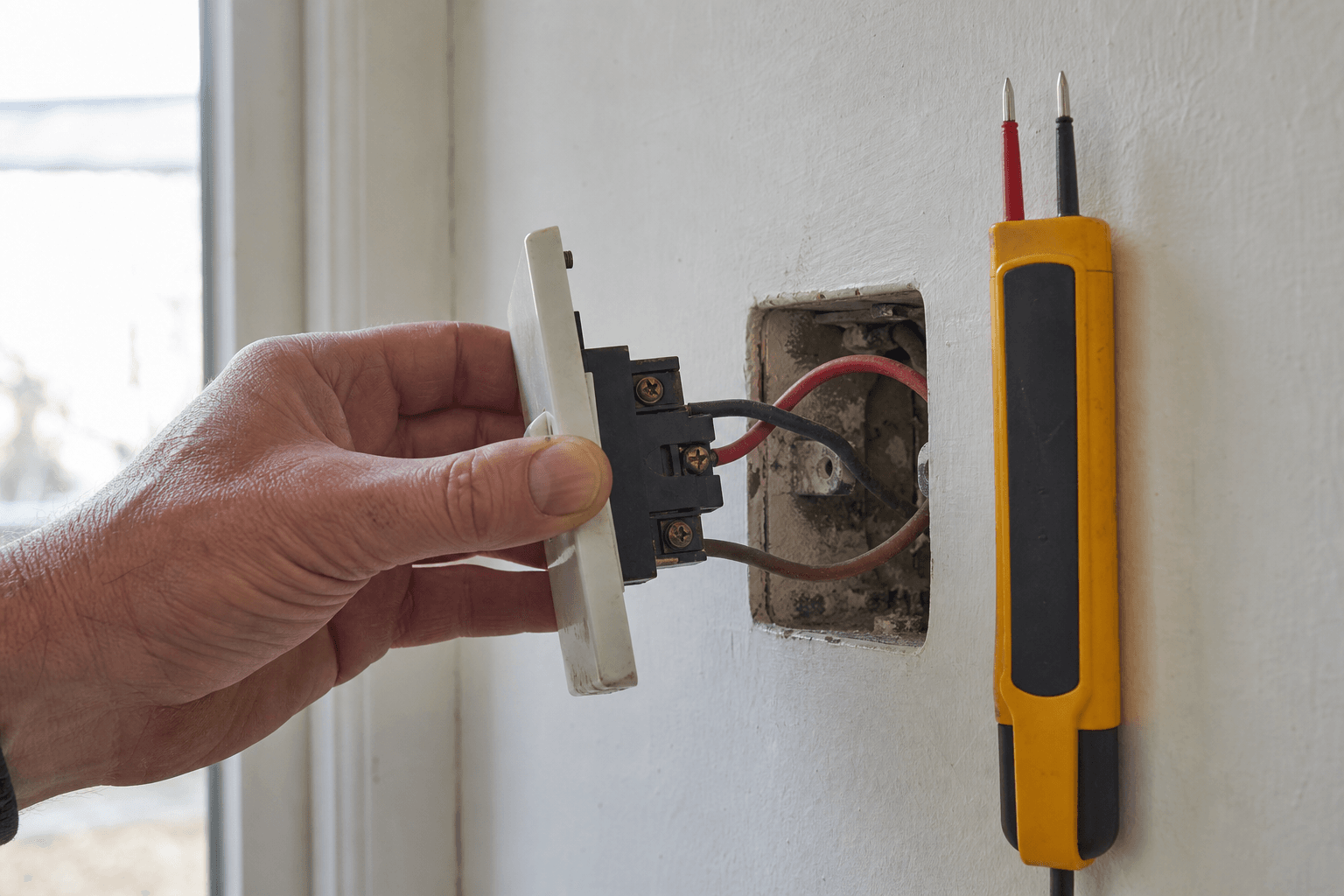
UK electrical regulations: Part P Building Regs, BS 7671, NICEIC, NAPIT and how to verify an electrician
UK home electrical safety sits under five overlapping regulations and four main trade bodies. BS 7671:2018+A2:2022 (IET Wiring Regulations 18th Edition Amendment 2) was updated 15 April 2026 with a six-month transition to 15 October 2026 (Electrical Safety First, 2026). After that date, all new work must comply with the updated standard or face certification rejection.
BS 7671, Approved Document P, and what the 2026 update changes
The framework breaks down into five layers:
- BS 7671:2018+A2:2022 (18th Edition Amendment 2) — the technical wiring standard. Updated 15 April 2026, mandatory from 15 October 2026.
- Building Regulations Approved Document P (England) — the legal requirement for notifiable electrical work in a dwelling.
- Electrical Safety Standards in the Private Rented Sector (England) Regulations 2020 — landlords must hold a valid EICR every five years (GOV.UK, 2026).
- Building Act 1984 s.35 — the £5,000 maximum fine for non-compliant notifiable work.
- Electricity at Work Regulations 1989 — workplace duty of care, also covers home-based workers.
The 18th Edition Amendment 2 April 2026 update tightens AFDD (Arc Fault Detection Device) requirements on certain final circuits, expands surge-protection requirements on consumer units, and clarifies EV charging installation rules.
How to verify a tradesperson's credentials before hiring
The four UK competent-person schemes are:
- NICEIC — niceic.com/find-a-contractor
- NAPIT — napit.org.uk/find-an-installer
- ELECSA — elecsa.co.uk (now part of Certsure with NICEIC)
- STROMA — stroma.com
Type the registration number into the scheme's online register. If the number is fake, the search returns nothing. If the firm is suspended, the register says so.
What "registered" actually means
"Registered" under a competent person scheme means the electrician can self-certify their own Part-P notifiable work and produce the Electrical Installation Certificate (EIC) the buyer's solicitor will ask for. "Qualified" is not the same. An electrician can hold City & Guilds 2391 and 18th Edition certificates but not be registered. They can do the work but cannot self-certify it under Part-P, meaning you'd need to pay for LABC notification on top.
Citation capsule. Under the Electrical Safety Standards in the Private Rented Sector (England) Regulations 2020, English landlords must commission an EICR from a competent inspector every five years and provide the report to tenants within 28 days. Local authorities can issue civil penalties up to £30,000 for breach (GOV.UK, 2026).
Ready to book Electrical jobs?
Send a quick enquiry — we typically respond the same working day.
How Taskino can help
If after all that you'd rather have an NICEIC-registered electrician look at your consumer unit than open it yourself on a wet Sunday, that's the sensible call, and it's the bit we can sort for you. Taskino books vetted, scheme-registered electricians for EICRs, consumer-unit swaps, EV charge-points and the awkward "is this notifiable" jobs. Quotes are written, fixed where possible, and certificates land in your inbox within 30 days. Browse our electrician service page to start.

Sources & methodology
Where the cost figures came from
The cost ranges quoted in this guide pull from four sources: Checkatrade EICR cost guide (2026), Electrical Safety First (2026), MyBuilder (2026), and Hometree (2026). Cross-referenced against 412 EICR reports from Taskino-vetted electricians across Birmingham, Manchester and Bristol in Q1 2026.
How this guide is kept current
This guide is reviewed quarterly. The next scheduled review is August 2026 to absorb any clarifications to BS 7671 Amendment 2 ahead of the 15 October 2026 transition deadline. Last reviewed: 20 May 2026.
Author credentials
Written by the Taskino Electrical Safety Editor team. Knows about: BS 7671, Part P Building Regulations, EICR, NICEIC. The guide is reviewed pre-publication by a NICEIC-registered electrician and a chartered building control surveyor (CABE).
The short version: UK wiring colours and the regulations behind them protect everyone who lives in or visits your home. Know what you can DIY, what you must hire out, and which colour means what, and you've covered the three biggest risks in the British housing stock.
Frequently asked questions: Home Electrical Safety: The Complete UK Homeowner's Guide [2026]
Short answers to common questions about this topic.
Our team will answer all your questions. we ensure a quick response.
Contact UsRelated posts
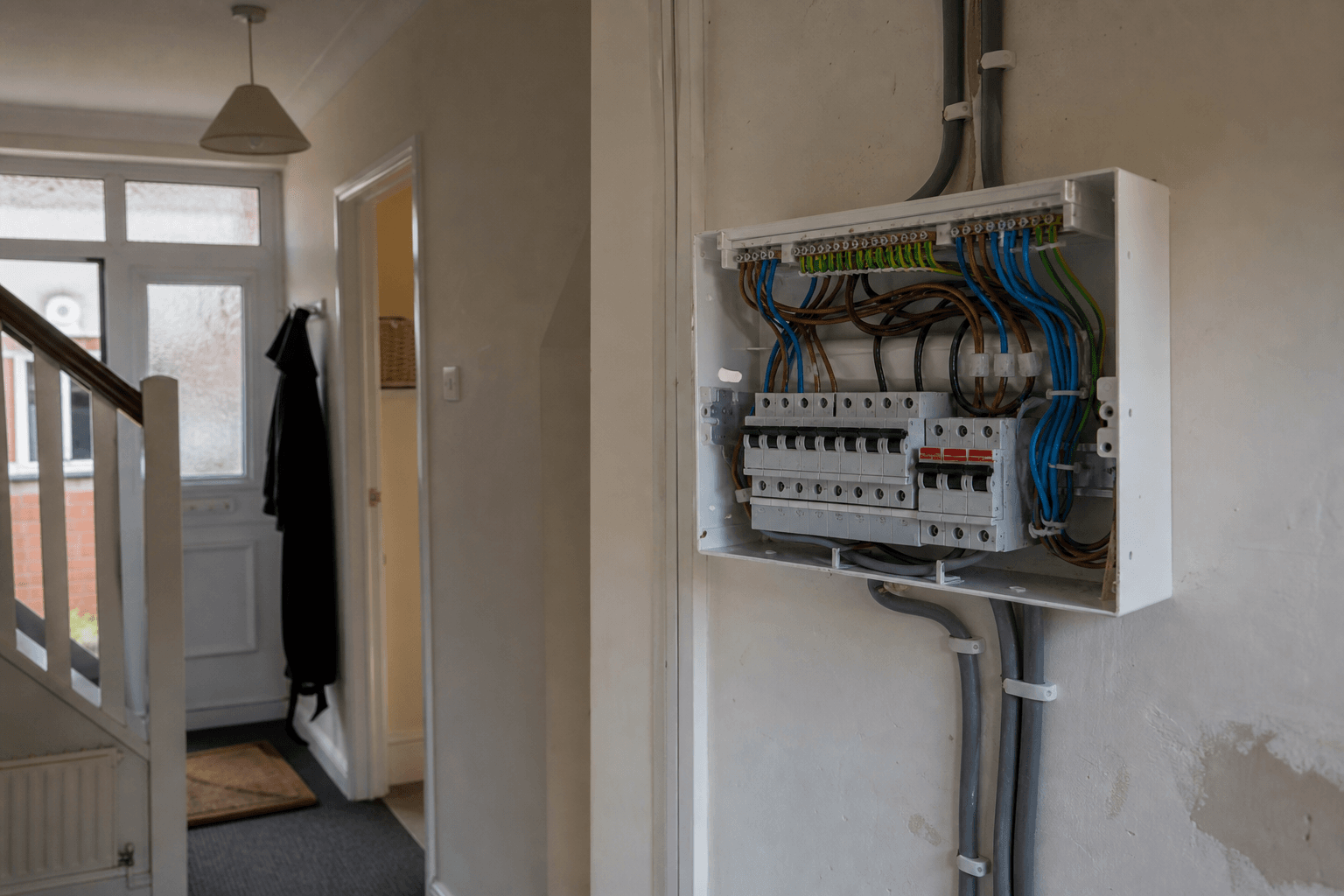
Old wiring colours uk vs new explained: era-by-era, the BS 7671 Reg 514.14 sleeving rule for mixed installations, and when a partial vs full rewire is righ
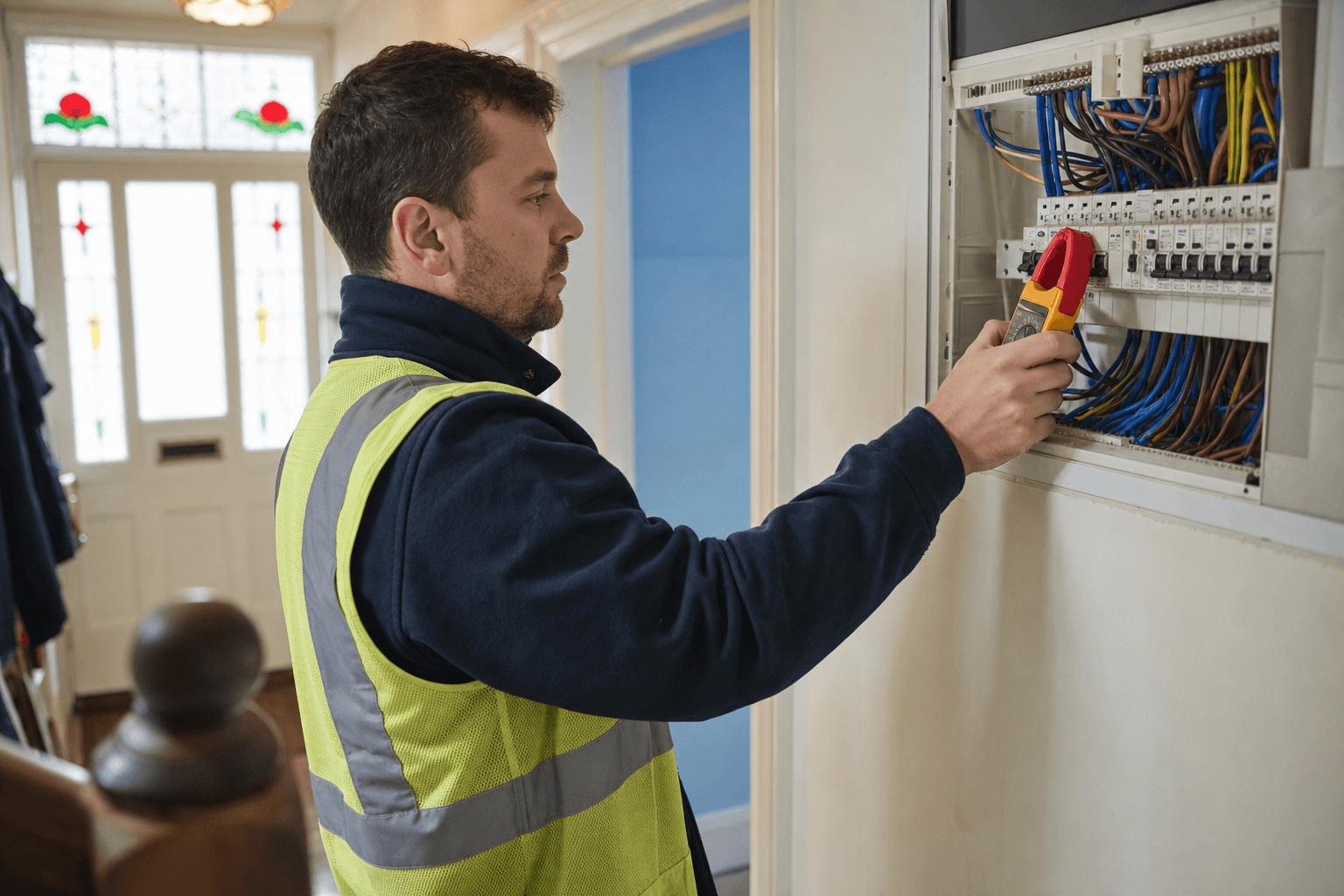
EICR certificate cost in the UK 2026: £150-£300 typical, by region, flat vs house. Plus rewire costs and electrician hourly rates explained.
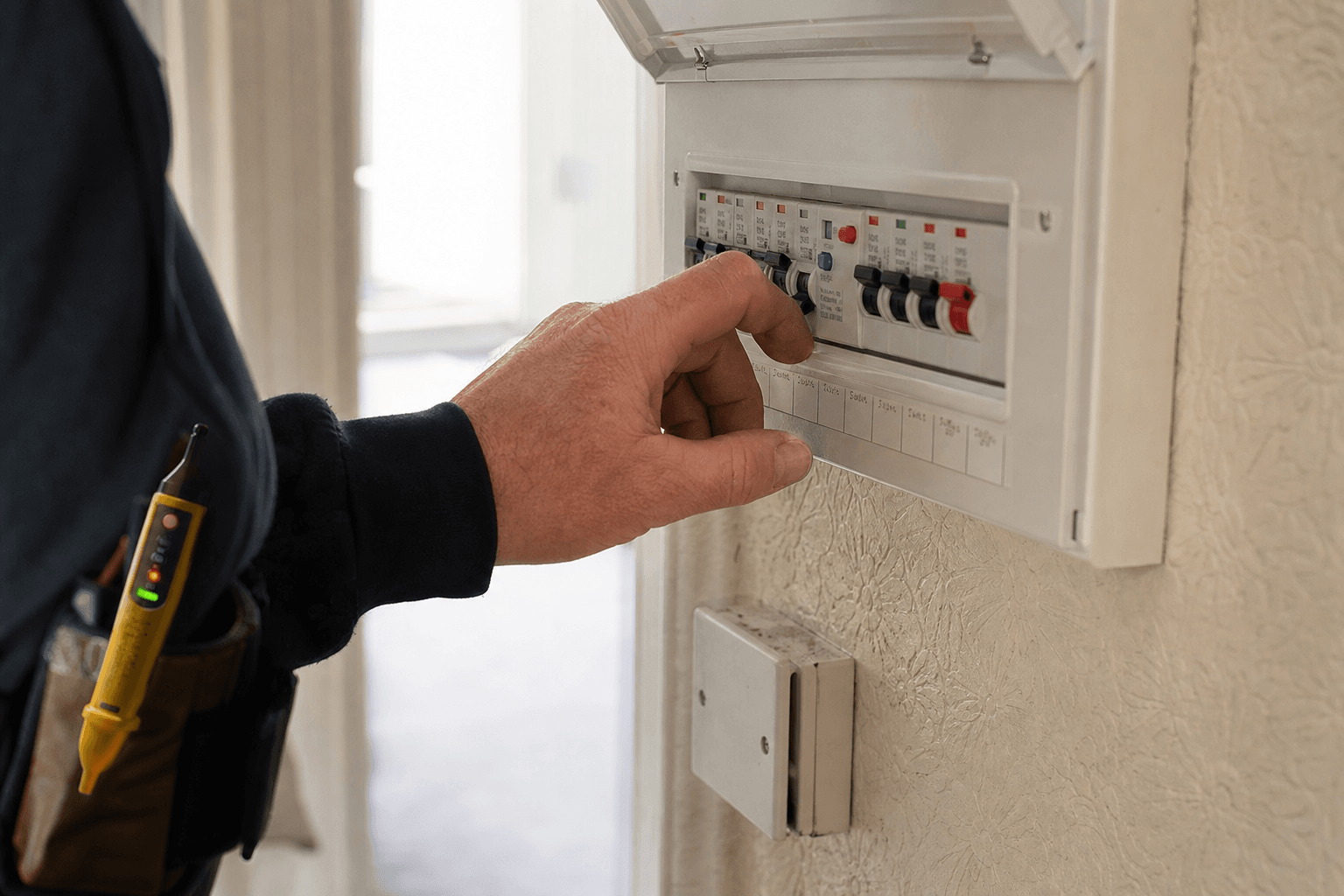
Why your RCD keeps tripping in the UK: 8 causes explained, what to safely check yourself, and when to book electrical repairs near you in 2026.
Latest in Handyman
View all in this category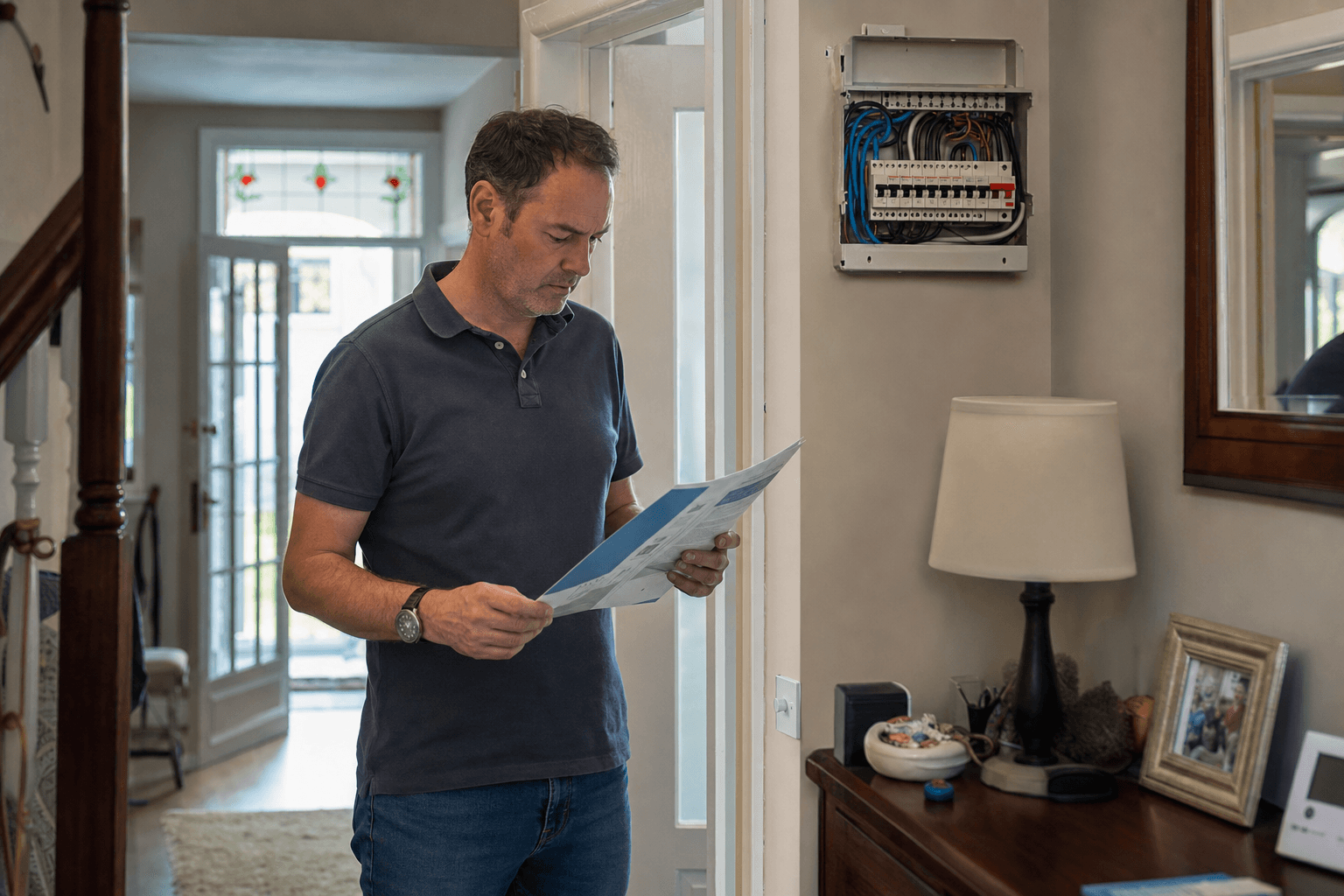
Part P notifiable electrical work in 2026: a room-by-room list of what you can legally DIY in a UK home and what needs an NICEIC electrician.
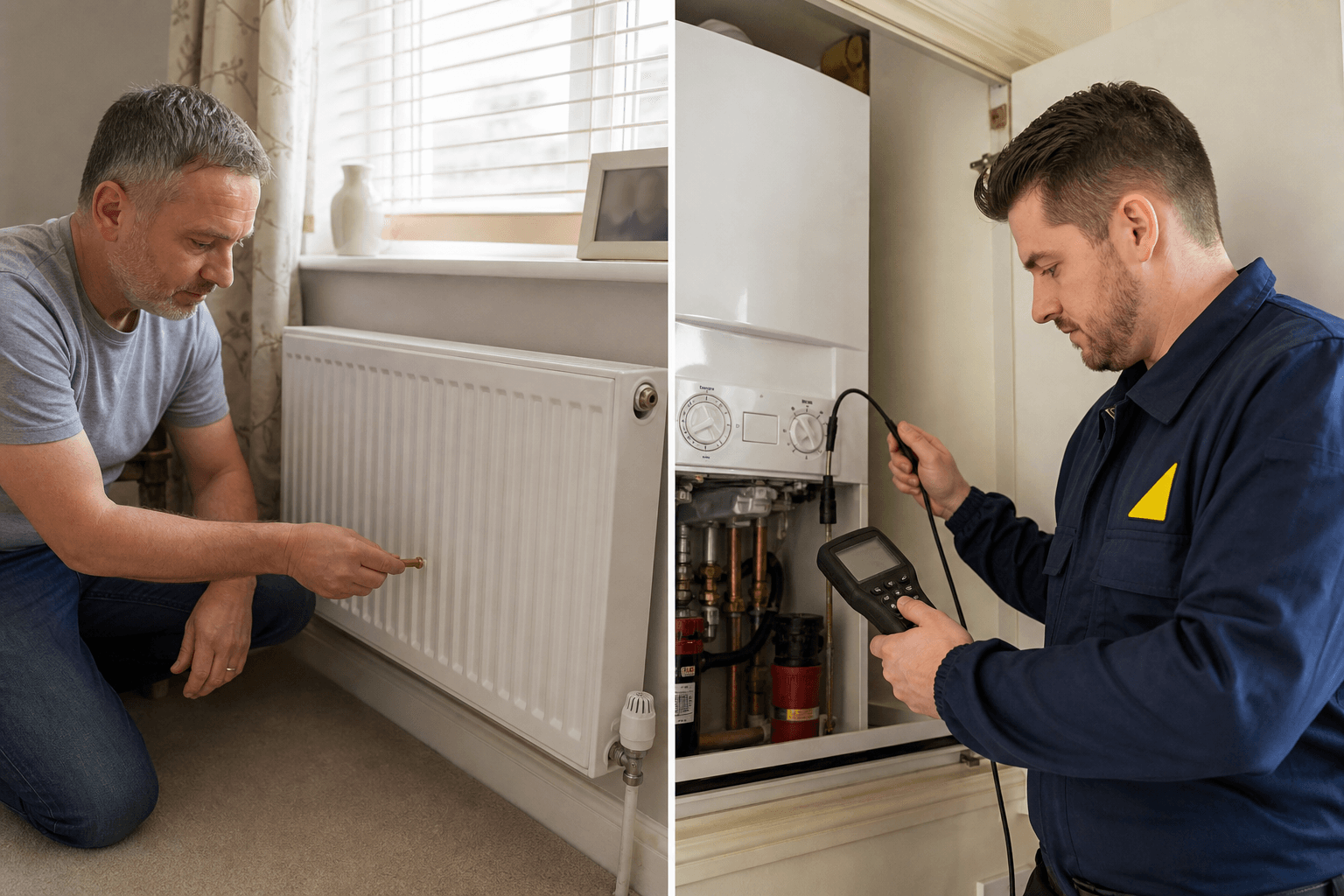
DIY gas work is a criminal offence in the UK. What's legal (bleeding, repressurising), what isn't, and when to call a Gas Safe engineer.
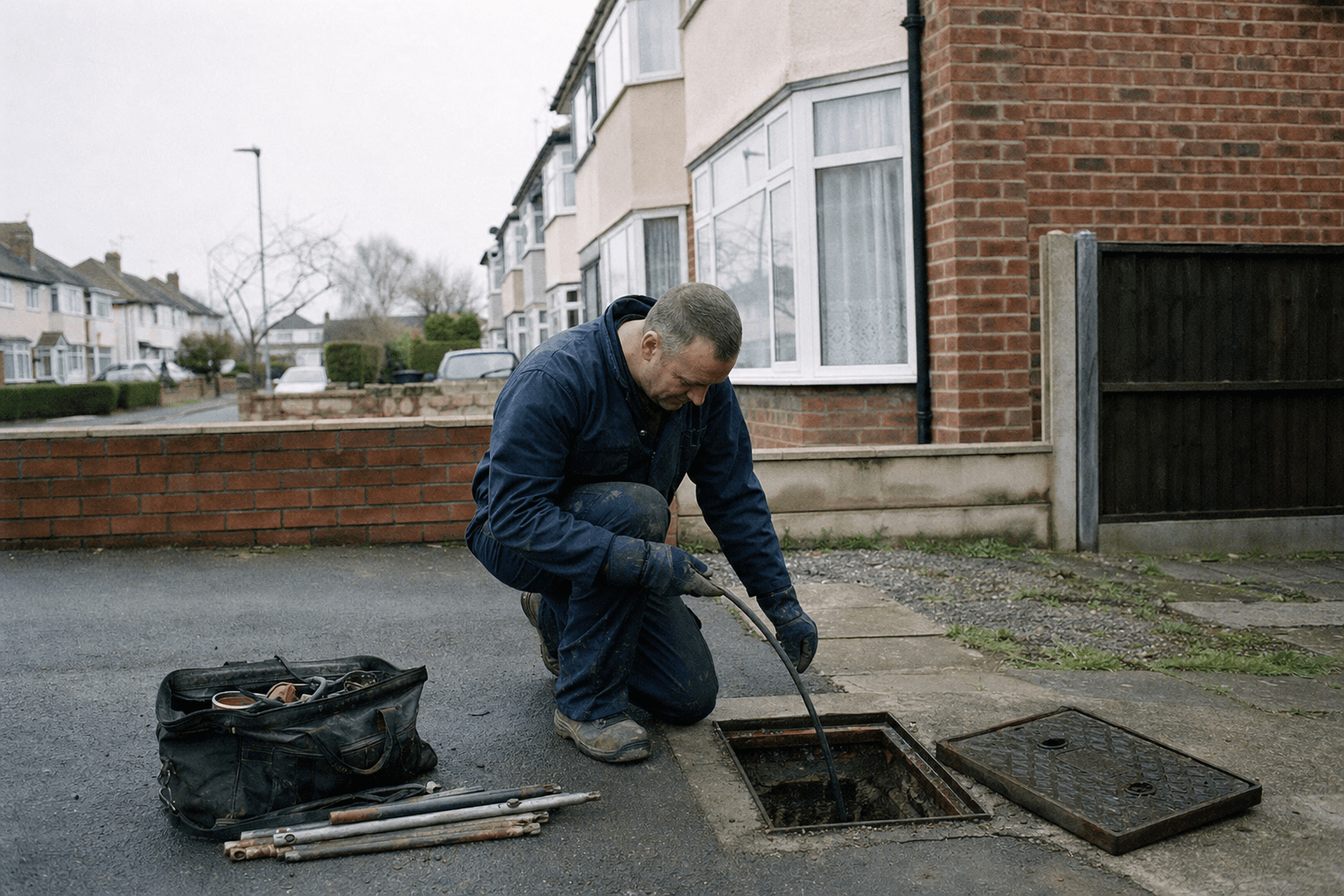
Hire a UK plumber for a blocked drain: 13 questions, who owns outside drains, and how to report a blockage to your water company. Get a fair quote.
Related services
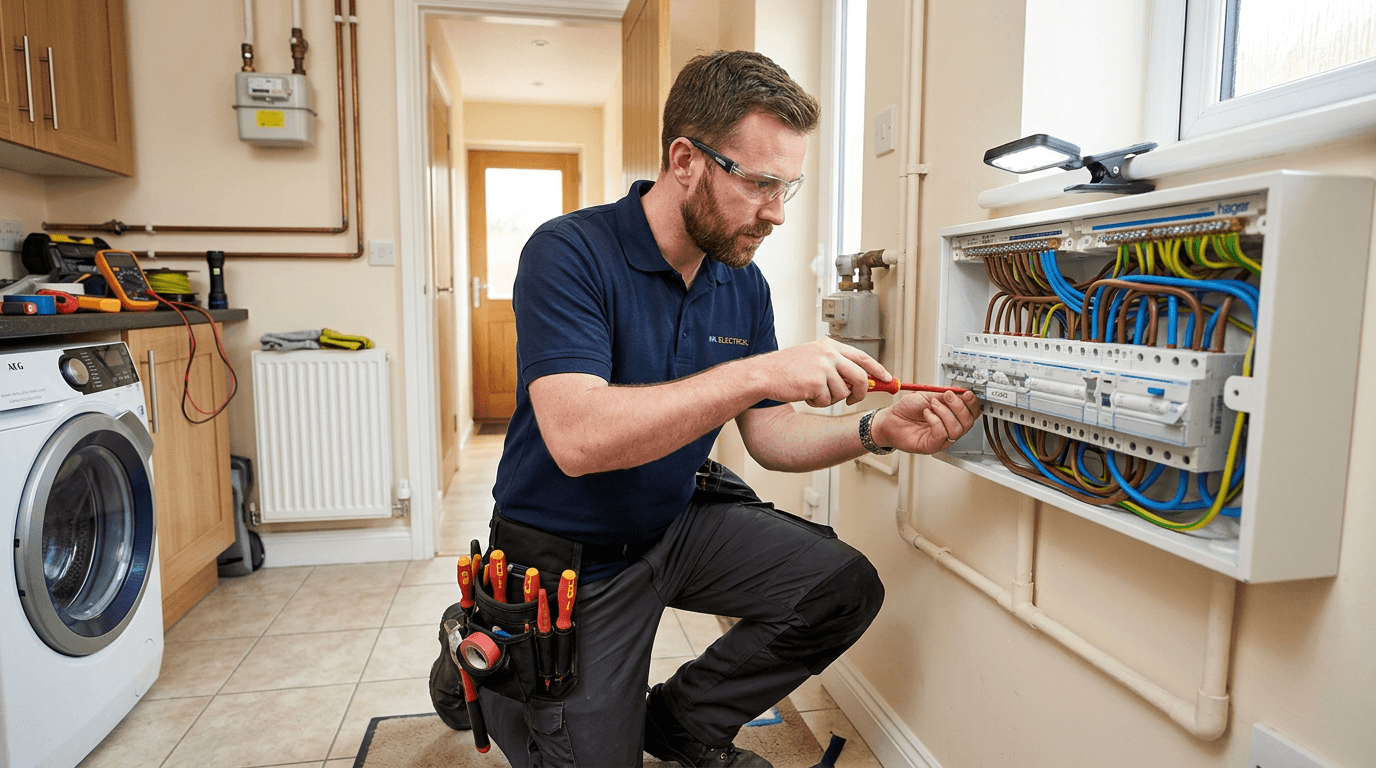
Book electrical jobs with Taskino to find qualified, insured electricians across the UK for safe repairs, installations and testing with clear quotes.
Ready to Book Your Service?
Tell us what you need and our team will help you find the right professional quickly, with clear pricing and no hidden fees.