
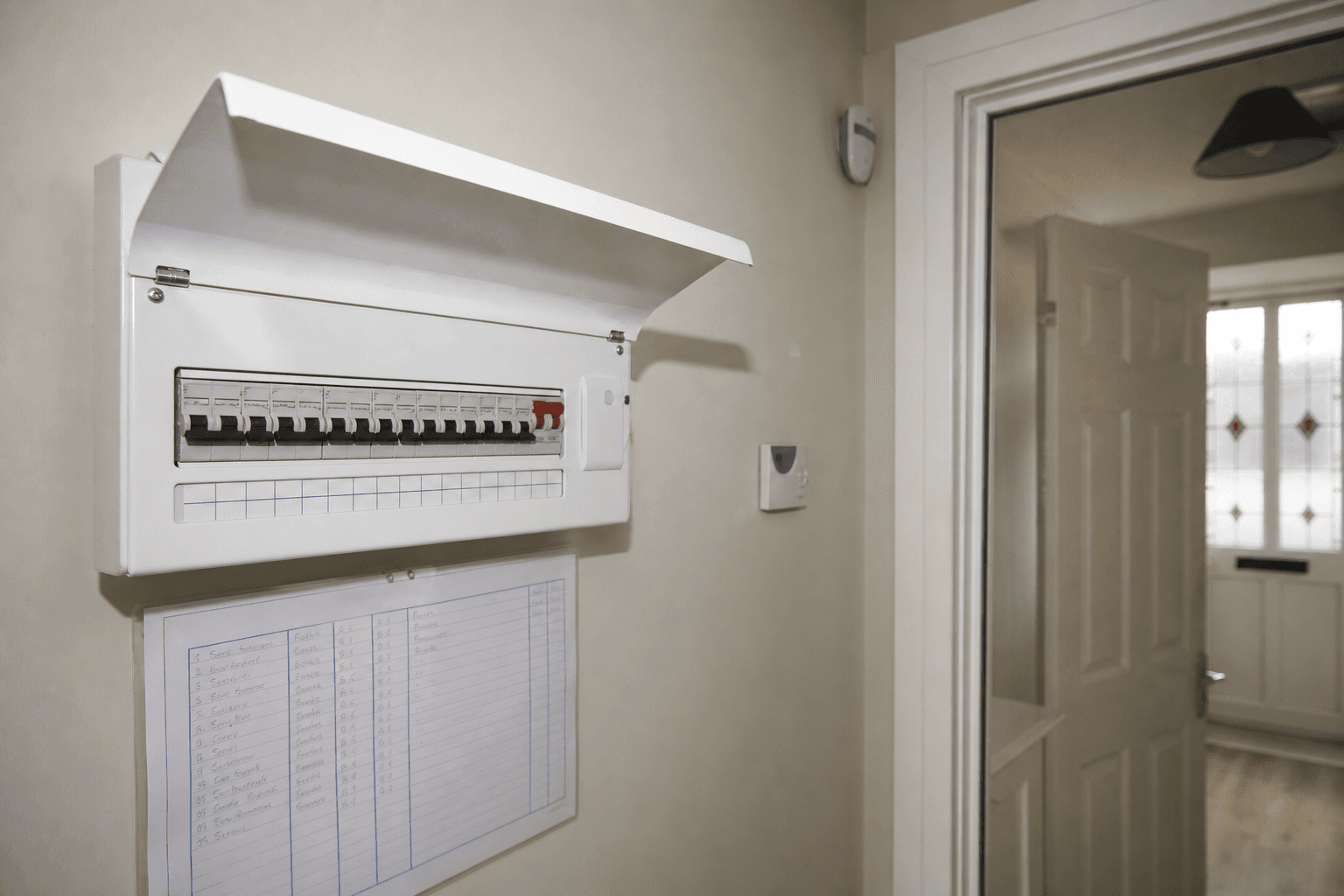
11 DIY Electrical Mistakes That Cost UK Homeowners £5,000 a Year
The 11 DIY electrical mistakes that cost UK homeowners £5,000 a year, including the old wiring colours trap and what BS 7671 says to do about it.
If your house was wired before 2006, the single most expensive DIY trap is the old wiring colours problem: joining red/black to brown/blue without sleeving fails an EICR and can void your insurance. Get it wrong on a consumer unit and you're looking at a £5,000 Building Act fine plus a partial rewire.
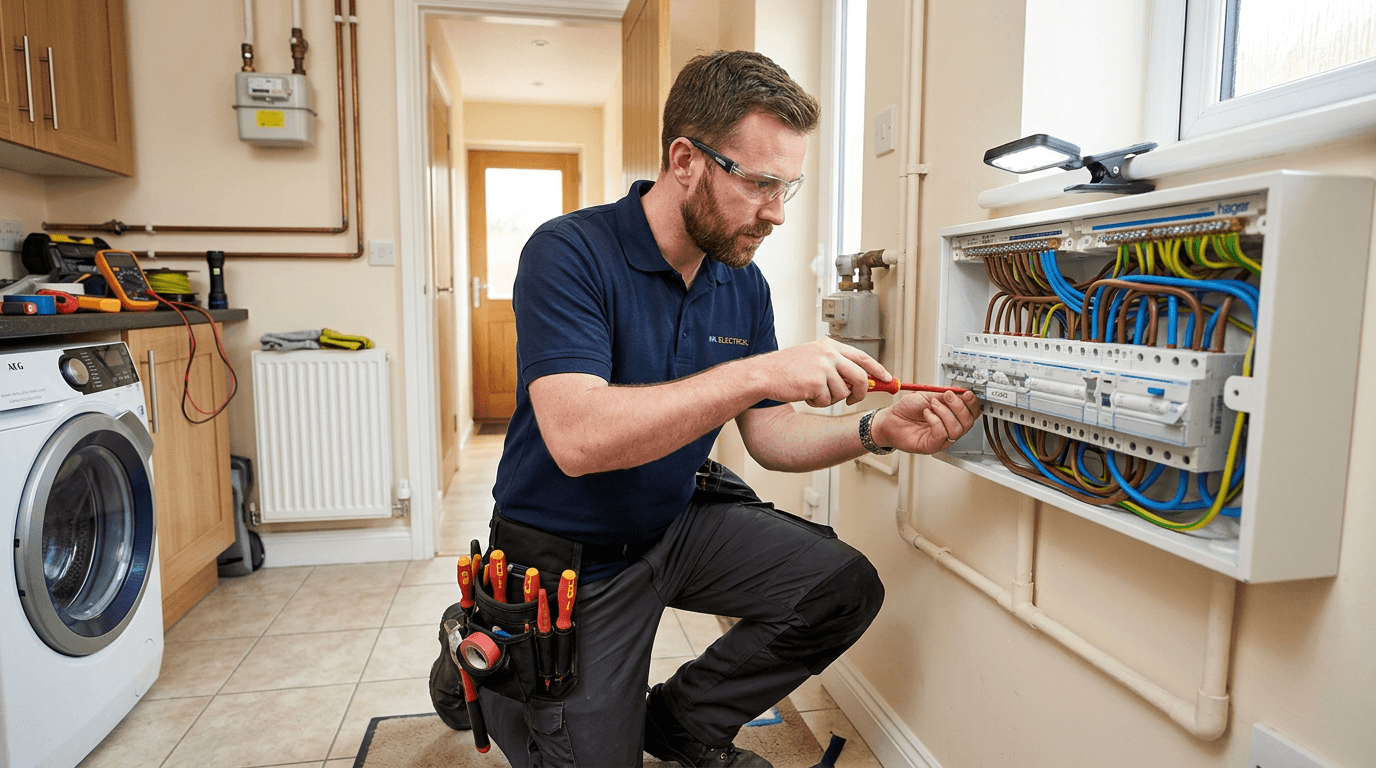
TL;DR
- Most expensive: A botched DIY consumer-unit replacement that fails the EICR forces a £4,000–£8,000 partial rewire and may invalidate home insurance.
- Most common: Mistaking pre-2006 black neutral for a post-2006 black three-phase live (L2) when extending old wiring, the single most lethal old wiring colours trap.
- Legal flag: Notifiable work without a registered electrician is a criminal offence carrying a £5,000 maximum fine.
- Quick win: Sleeve every joined conductor in the new BS 7671 colours and label the consumer-unit schedule.
Why most DIY electrical jobs go wrong
Most UK homes carry wiring from at least two eras: pre-2006 red/black plus post-2006 brown/blue. The trouble is that most YouTube tutorials assume a single-era installation, and the rules changed in BS 7671 (IET, 2022). Each mistake below carries a costed £ tag, sourced to Electrical Safety First and IET guidance.
The £5,000 figure isn't arbitrary. It stitches together the Building Act 1984 section 35 maximum fine (legislation.gov.uk), the typical Part-P remediation bill of £800–£2,500, a failed EICR at sale (delayed transaction plus remedials), and an average voided home-insurance claim for related fire damage.
Legal note. Any notifiable electrical work done without a registered electrician is a criminal offence under Approved Document P.
Need help with Electrical jobs?
Tell us about your job and we will match you with the right professional for Electrical jobs.
Mistake #1: Working live on UK domestic wiring
£500–£2,000. One in nine UK accidental electrocutions is a domestic shock injury, according to Electrical Safety First (Electrical Safety First, 2024), and the charity links roughly 70 fatal house fires a year to faulty wiring and accessories. Working live is the single most common reason a quick DIY job ends in A&E.
What it looks like
You say "I'll just be quick" and pop a faceplate off without trotting down to the consumer unit. The screw slips. The screwdriver finds the live terminal.
Why people do it
Going to the CU feels like hassle. So does relabelling the schedule. Both feel optional until they aren't.
What it actually costs
A serious shock that needs an A&E callout sits at £500–£2,000 once you factor lost work and follow-ups, and that's only if you survive. Burns from arc flash are worse.
How to avoid it
Follow HSE GS38: prove-test-prove with a GS38 two-pole tester from Screwfix or CEF. Isolate at the CU, lock off if you can, and test on a known live first.
Mistake #2: Mixing old red/black with new brown/blue without sleeving
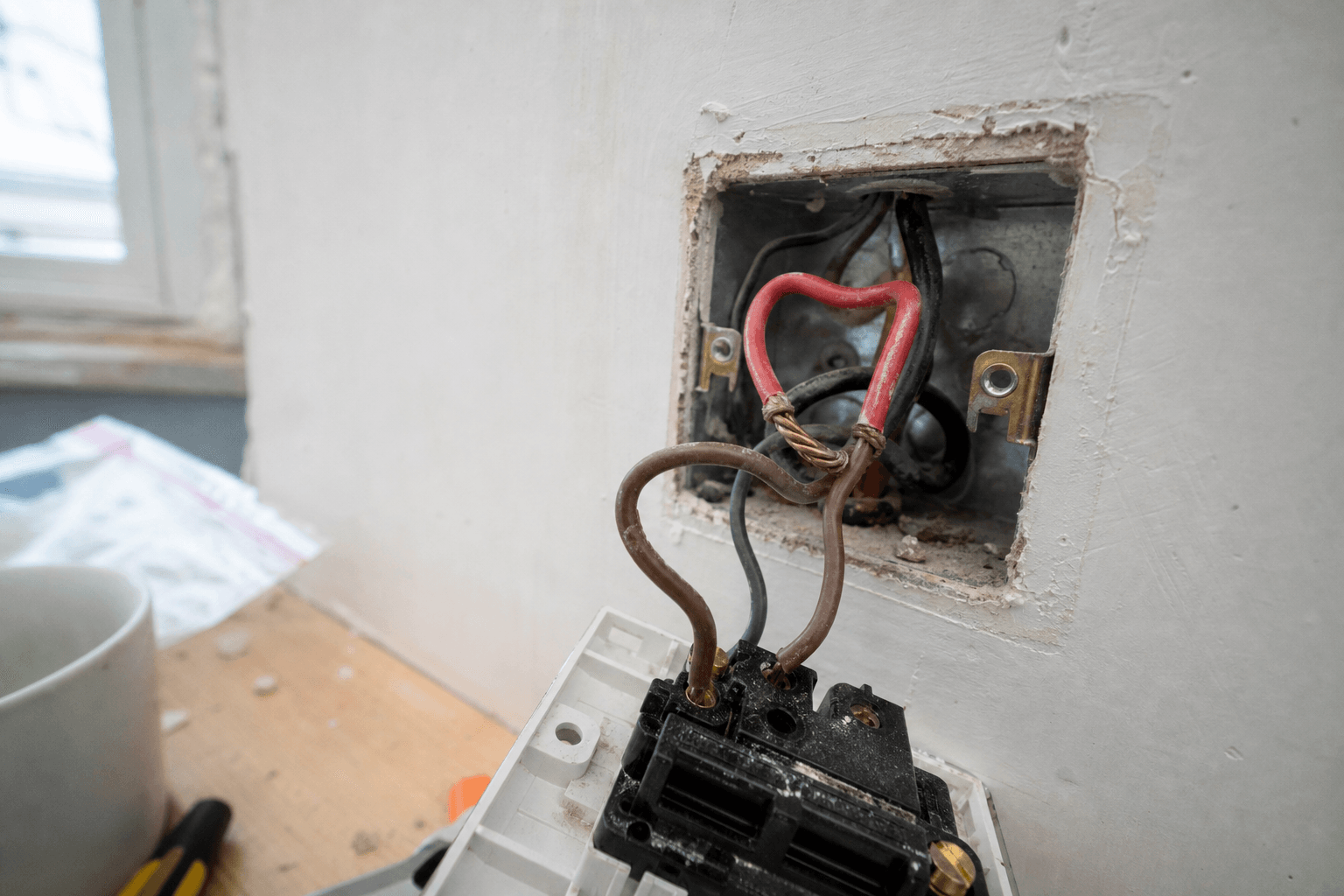
£200–£600 to fix, up to £4,000–£8,000 if it cascades. BS 7671 Regulation 514.14 is explicit: where you join old wiring colours to new at a joint, switch or accessory, the conductors must be identified by sleeving in the new colours (IET, 2022). Skip it and you've earned an EICR C2 code.
What it looks like
A switch with one red and one brown conductor both clamped under the L1 terminal. No sleeves. No labels. Nothing on the consumer unit schedule to flag the mixed install.
Why people do it
Most homeowners assume the colour change was cosmetic. It wasn't. Pre-2006, black was neutral. Post-2006, black is a three-phase live (L2). Mistake those in a junction box and you've created a fatal trap. For the bigger picture, see our guide to uk wiring colours.
What it actually costs
A standalone C2 fix is £200–£600 to re-terminate. If the mixed wiring runs through several accessories, you're looking at a partial rewire of £4,000–£8,000.
How to avoid it
Sleeve the joint in the new colours per BS 7671 Regulation 514.14. Add a label on the consumer-unit schedule that flags "mixed old wiring colours uk, sleeved at all junctions".
Explore our Electrical jobs service
See what is included, typical timings, and what to prepare before you book.
Mistake #3: Replacing the consumer unit yourself
£5,000 fine plus EICR fail. Consumer unit work is notifiable under Approved Document P (gov.uk, 2013). Doing it without an NICEIC- or NAPIT-registered electrician is a criminal offence under the Building Act 1984. The certificate matters as much as the install.
What it looks like
The homeowner buys an 18th-edition all-RCBO board from CEF and plans a Sunday swap to save £500–£900 on labour.
Why people do it
Pure cost-saving. The board itself is £180–£260. The fitting fee feels like the easy bit to skip.
What it actually costs
Building Act section 35 sets the maximum criminal fine at £5,000. Add EICR failure on sale, insurance void on any related claim, and rectification by a registered installer.
How to avoid it
Hire NICEIC- or NAPIT-registered only. Always ask for the Electrical Installation Certificate before paying the final invoice.
Mistake #4: Using undersized cable for the load
£200–£500 per circuit. A ring final circuit needs 2.5mm² twin-and-earth as a minimum per the IET On-Site Guide. Use 1.0mm² because Screwfix had it cheaper and you've created a fire risk plus a guaranteed EICR fail.
What it looks like
1.0mm² T&E pulled in for a kitchen ring final because there were two reels of it in the shed.
Why people do it
1.0mm² is roughly half the price of 2.5mm² at Screwfix and B&Q. The numbers look close enough to feel safe.
What it actually costs
£200–£500 to pull the wrong cable out and re-cable the circuit, plus accessory replacement if conductors are damaged.
How to avoid it
Consult the IET On-Site Guide tables before buying. Ring final equals 2.5mm² T&E minimum. Cookers and showers need 6mm² or 10mm².
Ready to book Electrical jobs?
Send a quick enquiry — we typically respond the same working day.
Mistake #5: No RCD or RCBO protection on socket circuits
£550–£950 for a full CU upgrade. BS 7671 Regulation 411.3.3 requires 30mA RCD or RCBO protection on socket circuits up to 32A for general use (IET, 2022). Adding a socket to an old wired-fuse board without that protection earns an EICR C2.
What it looks like
A new socket added behind the TV, spurred off a 1990s wired-fuse consumer unit with no RCD.
Why people do it
They forgot the CU was old, or didn't know post-2008 sockets need RCD protection by regulation.
What it actually costs
EICR C2 code, plus a full CU upgrade at £550–£950 from a vetted electrician to bring the house compliant.
How to avoid it
Upgrade the CU first, or fit an RCD-protected fused connection unit on the new spur as an interim measure.
Mistake #6: Forgetting earth bonding in a bathroom
£100–£250 for supplementary bonding. BS 7671 Section 701 covers bathrooms (Zones 0, 1 and 2). Supplementary bonding rules mean metal pipework, baths and structural metalwork need a 6mm² conductor back to the main earth terminal. Skip it and the EICR fails.
What it looks like
A new shower fitted, but the original copper pipework was never connected to the MET when a plumber re-routed it.
Why people do it
Most homeowners don't know supplementary bonding rules exist, and the plumber didn't flag it because pipes aren't their job.
What it actually costs
£100–£250 to add the 6mm² supplementary bonding. Cheap by itself, but bathrooms are notifiable so the trip cost stacks up.
How to avoid it
Stay out of bathrooms entirely. Anything in Zone 0/1/2 is notifiable, so hire NICEIC and let them certify the bonding too.
Learn more about Electrical jobs
Browse how we deliver Electrical jobs and the questions homeowners ask most often.
Mistake #7: Daisy-chaining extension leads
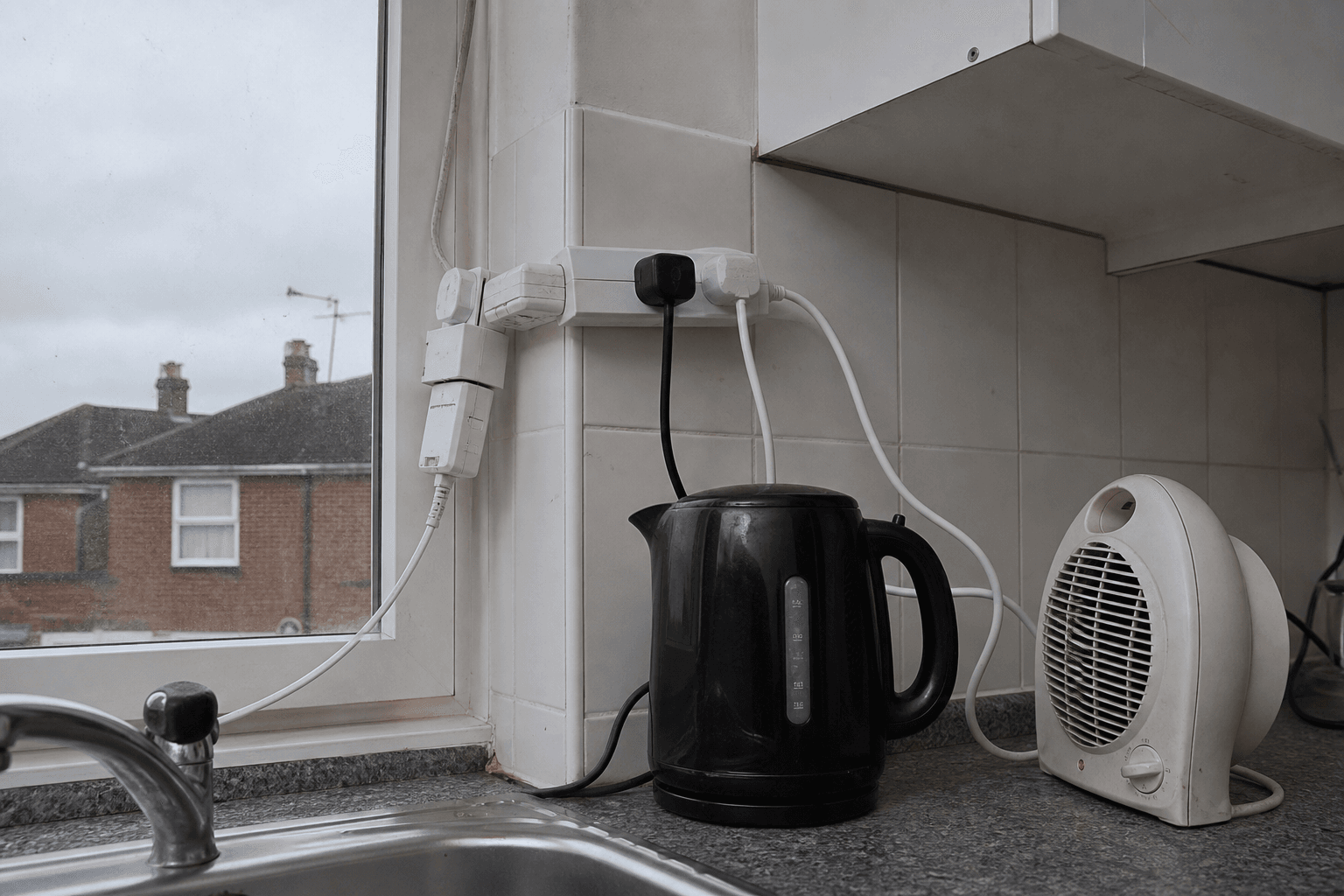
Linked to thousands of UK house fires a year. Electrical Safety First links socket overloading and chained extension leads to a significant share of UK domestic fires (Electrical Safety First, 2024). London Fire Brigade attends socket-overload fires weekly through the winter months.
What it looks like
A 4-way extension plugged into another 4-way extension, both feeding a 3kW heater and a 3kW kettle off the same 13A wall socket.
Why people do it
Not enough sockets. Adding a new spur feels harder than buying another extension at B&Q.
What it actually costs
Possibly the house. A 13A socket fed by daisy-chained extensions can pull well over its rating, melt the plug, and ignite carpet or skirting.
How to avoid it
Use one multi-way extension per socket, never two in series. Check the total wattage of every plug isn't above 3,000W. Add a fused spur where socket density is low.
Mistake #8: Forgetting to sleeve a switched live at a ceiling rose or switch
£80–£150 to remediate. Regulation 514.14 again. Where a blue conductor in T&E is used as a switched live at a 1-way switch, it must be sleeved with brown identification. A pack of brown sleeving at Screwfix is around £3.
What it looks like
A pendant light wired with the blue conductor going up to the switch, terminated bare at the switch terminal with no brown sleeve.
Why people do it
The DIYer had one reel of T&E and figured colour didn't matter as long as the lamp worked.
What it actually costs
EICR C2 code on every unsleeved switched live, then £80–£150 to re-terminate each accessory properly.
How to avoid it
Keep a pack of brown sleeving in the toolbox. Sleeve every switched live without exception, even on lighting.
Thinking about Electrical jobs?
Share your postcode and job details for a no-obligation quote.
Mistake #9: Wrong fuse rating in a 13A plug
Fire risk under-fused; nuisance trips over-fused. BS 1362 sets the standard for cartridge fuses in 13A plugs. Default to the largest fuse in the multipack and you've removed the plug's purpose. The fuse exists to protect the flex, not the appliance.
What it looks like
A 13A fuse fitted to a 3A table lamp on a thin 0.5mm² flex, or a 3A fuse on a 3kW kettle (constant nuisance trips).
Why people do it
The Wickes multipack came with mostly 13A fuses. Easier to use what's there.
What it actually costs
Under-fused: a flex fault on the lamp draws current the fuse won't break, the flex overheats, and you've got a fire. Over-fused: nuisance trips and a frustrated kitchen.
How to avoid it
3A for lighting and electronics up to 700W. 13A for heating and kettles over 700W. Match the fuse to the wattage on the appliance plate.
Mistake #10: Skipping Part-P notification on a kitchen socket
£5,000 maximum fine. Approved Document P lists kitchens, bathrooms, outdoor work, and any new circuit as notifiable (gov.uk, 2013). Adding a socket behind the fridge during a DIY kitchen refresh is notifiable. Skipping it breaches Building Regulations.
What it looks like
A new double socket cut into the kitchen wall during a DIY refit so the fridge-freezer has its own outlet.
Why people do it
The homeowner assumes a single socket doesn't count as "a circuit" and that notification only applies to a full new ring.
What it actually costs
£5,000 maximum criminal fine, plus a sale-blocking issue at conveyancing when the buyer's solicitor asks for the certificate.
How to avoid it
Any new socket in a kitchen is notifiable. Hire NICEIC-registered, get the Electrical Installation Certificate, and file the work with Building Control.
Check scope and pricing for Electrical jobs
Compare options, add-ons, and what affects the final price before you commit.
Mistake #11: Overloading the ring final circuit
£400–£800 to add a dedicated circuit. Stack an electric oven, dishwasher, washing machine, kettle and microwave on a single 32A kitchen ring final and the MCB will trip recurrently. Cable overheats inside the wall. For a deeper look at why circuits trip, see our piece on electrical repairs near me.
What it looks like
Five major kitchen appliances all on the same ring final, MCB tripping every other evening when the oven and kettle run together.
Why people do it
They didn't realise an electric oven needs its own dedicated circuit.
What it actually costs
£400–£800 to add a dedicated cooker circuit on 6mm² T&E with its own MCB. Faster than a partial rewire, cheaper than a house fire.
How to avoid it
Any appliance at 3kW or above belongs on its own circuit. Book an electrician to assess load before adding more kit.
If you've already made one of these mistakes
Around 19,300 accidental dwelling fires were attended by fire and rescue services in England in 2022/23, with electrical sources a leading cause (Home Office fire statistics, 2023). If you've spotted yourself in the list above, the first move is to isolate, then book an EICR. Don't try to "fix it back" before the inspection.
How to limit the damage right now
Isolate the circuit at the consumer unit. Don't switch it back on. Book an EICR via an NICEIC- or NAPIT-registered electrician this week. For typical pricing, see our guide on eicr certificate cost.
When to call a pro to undo it
Always for the consumer unit, anything in a bathroom, kitchen, or outdoor work. These are non-negotiable under Approved Document P.
What insurance might or might not cover
Most UK home policies require BS 7671 compliance. Non-compliant DIY electrical work voids claims for related fire or shock damage. Ask your insurer in writing if you're unsure.
Need help with Electrical jobs?
Tell us about your job and we will match you with the right professional for Electrical jobs.
The one mistake even pros make
A Taskino NICEIC-registered electrician in Glasgow recounted the most common pro-level slip when we sat down with him last autumn. The story: a 1980s-era CU on a Victorian terraced house, extended twice by previous owners. He'd assumed a single earth point at the main bonding bar.
The catch was a downstairs lighting circuit with metal ceiling roses that ran through a 1980s rear extension. A plumber had re-routed the copper supply during a kitchen refit and left an unbonded section of pipework sitting under a metal accessory. The continuity test from the rose back to the MET failed. The fix was £180 in supplementary bonding plus another visit.
His takeaway, useful for anyone tempted by DIY: even with twelve hours of YouTube under your belt, the test you don't know to run is the one that fails the EICR. Heating contractors hit similar issues too, see our boiler problems guide for the cross-pillar version.
Pro tip. Test continuity from every metal accessory back to the MET, not just a sample. A 1 in 20 hit rate on 1980s extensions is too common to skip.
A simple checklist to avoid all of these
The ten habits that prevent every mistake on this list:
- Always isolate at the consumer unit and prove-test-prove with a GS38 tester
- Sleeve every joined conductor in the new BS 7671 old wiring colours
- Never touch the consumer unit yourself
- Use 2.5mm² T&E minimum for socket circuits
- Confirm RCD or RCBO protection on every new socket
- Stay out of bathrooms (Zone 0/1/2 work is always notifiable)
- One extension lead per socket, never daisy-chain
- Brown sleeving on every switched live
- Match the fuse to the appliance wattage (3A or 13A)
- Any new socket or circuit in a kitchen is notifiable
Pricing snapshot
| Mistake | Typical fix £ | Worst-case £ | Regulation |
|---|---|---|---|
| Mixed old wiring colours unsleeved | £200–£600 | £4,000–£8,000 | BS 7671 Reg 514.14 |
| DIY consumer unit swap | £550–£950 | £5,000 fine | Approved Doc P |
| Undersized ring final cable | £200–£500 | £600+ | IET On-Site Guide |
| Missing RCD on sockets | £550–£950 | EICR C2 | BS 7671 Reg 411.3.3 |
| Daisy-chained extensions | £0 fix | House fire | ESF guidance |
| Unsleeved switched live | £80–£150 | EICR C2 | BS 7671 Reg 514.14 |
| New kitchen socket unnotified | £150–£350 | £5,000 fine | Approved Doc P |
Explore our Electrical jobs service
See what is included, typical timings, and what to prepare before you book.
How Taskino's vetted electricians catch these before they happen
If two or more of these eleven mistakes feel uncomfortably familiar from your last DIY job, the right next step is an EICR. We'll match you to a Taskino NICEIC-registered electrician who'll walk the property, write the certificate, and tell you exactly which fixes are urgent and which can wait. Book one Taskino electrician visit and you'll know where you stand on insurance, sale-readiness, and safety in under two hours.

Sources
- BS 7671:2018+A2:2022 (and 2026 update) — IET
- Building Regulations Approved Document P — gov.uk
- Building Act 1984 section 35 — legislation.gov.uk
- Electrical Safety First fire and shock statistics — Electrical Safety First
- BS 1362 13A plug fuse standard — BSI
- HSE GS38 electrical test equipment guidance — HSE
- Home Office fire statistics, England 2022/23 — gov.uk
Frequently asked questions: 11 DIY Electrical Mistakes That Cost UK Homeowners £5,000 a Year
Short answers to common questions about this topic.
Our team will answer all your questions. we ensure a quick response.
Contact UsRelated posts

UK wiring colours old vs new, what DIY is legal under Part-P, current EICR & rewire costs, and how to hire a NICEIC electrician in 2026.
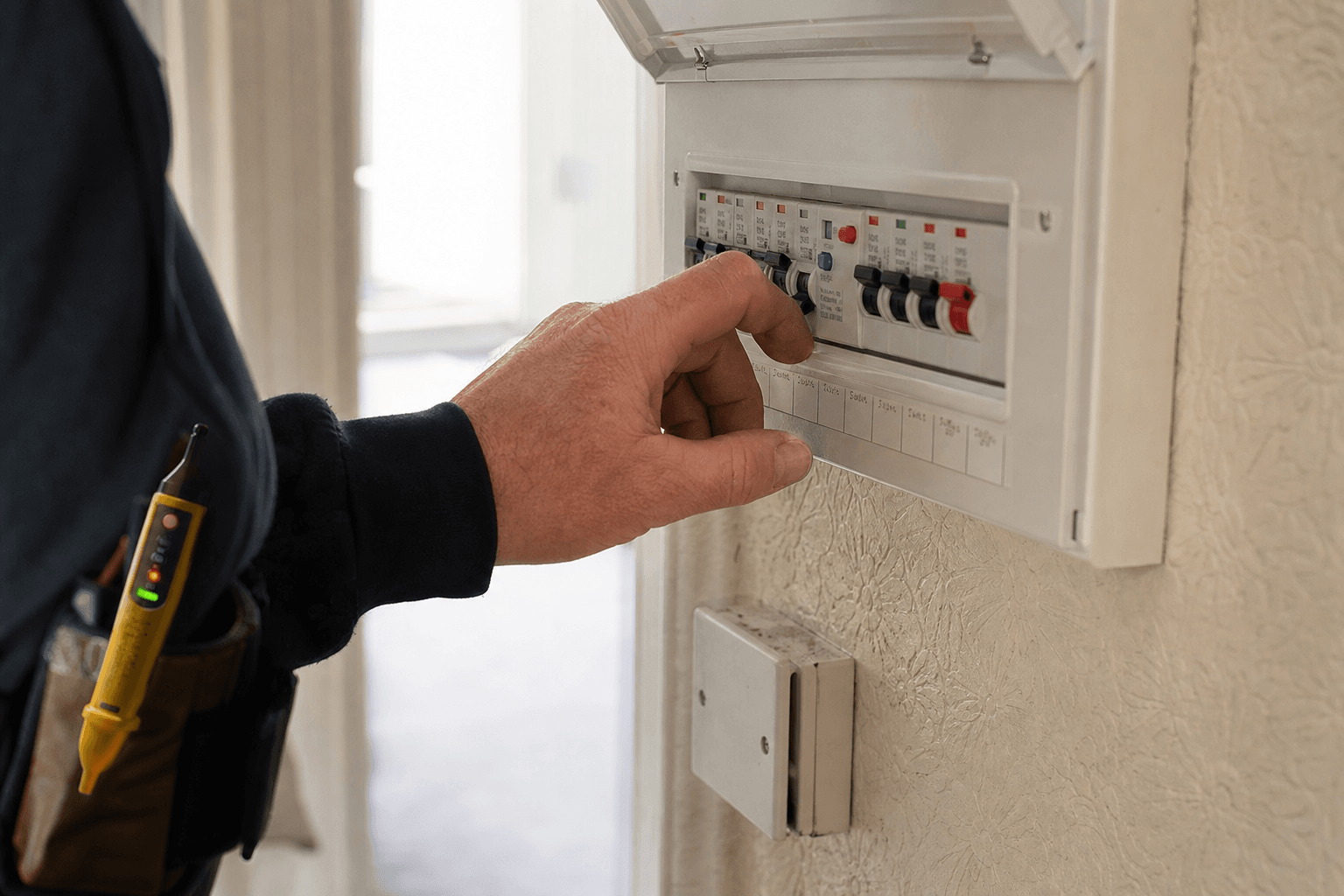
Why your RCD keeps tripping in the UK: 8 causes explained, what to safely check yourself, and when to book electrical repairs near you in 2026.
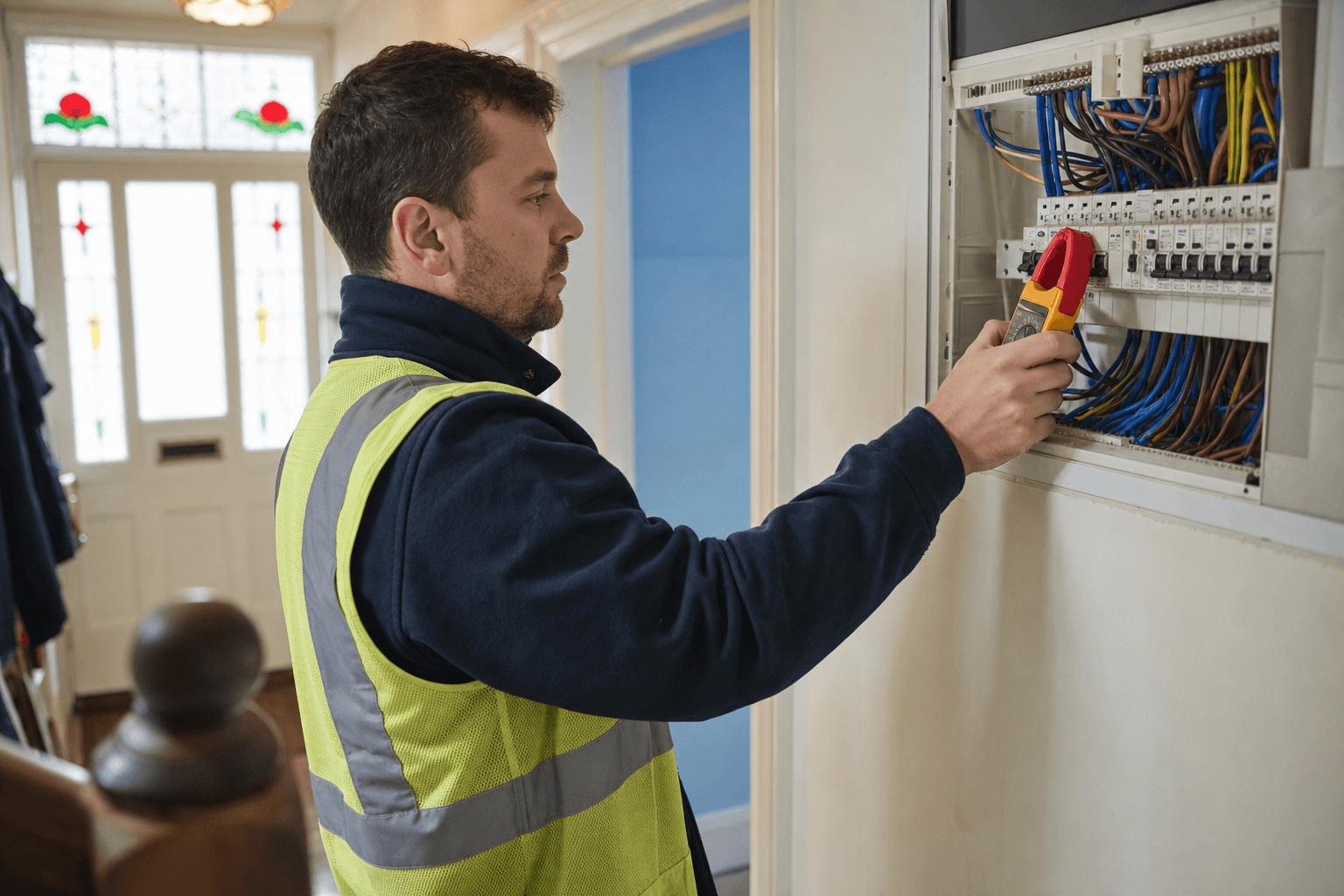
EICR certificate cost in the UK 2026: £150-£300 typical, by region, flat vs house. Plus rewire costs and electrician hourly rates explained.
Latest in Handyman
View all in this category
Part P notifiable electrical work in 2026: a room-by-room list of what you can legally DIY in a UK home and what needs an NICEIC electrician.
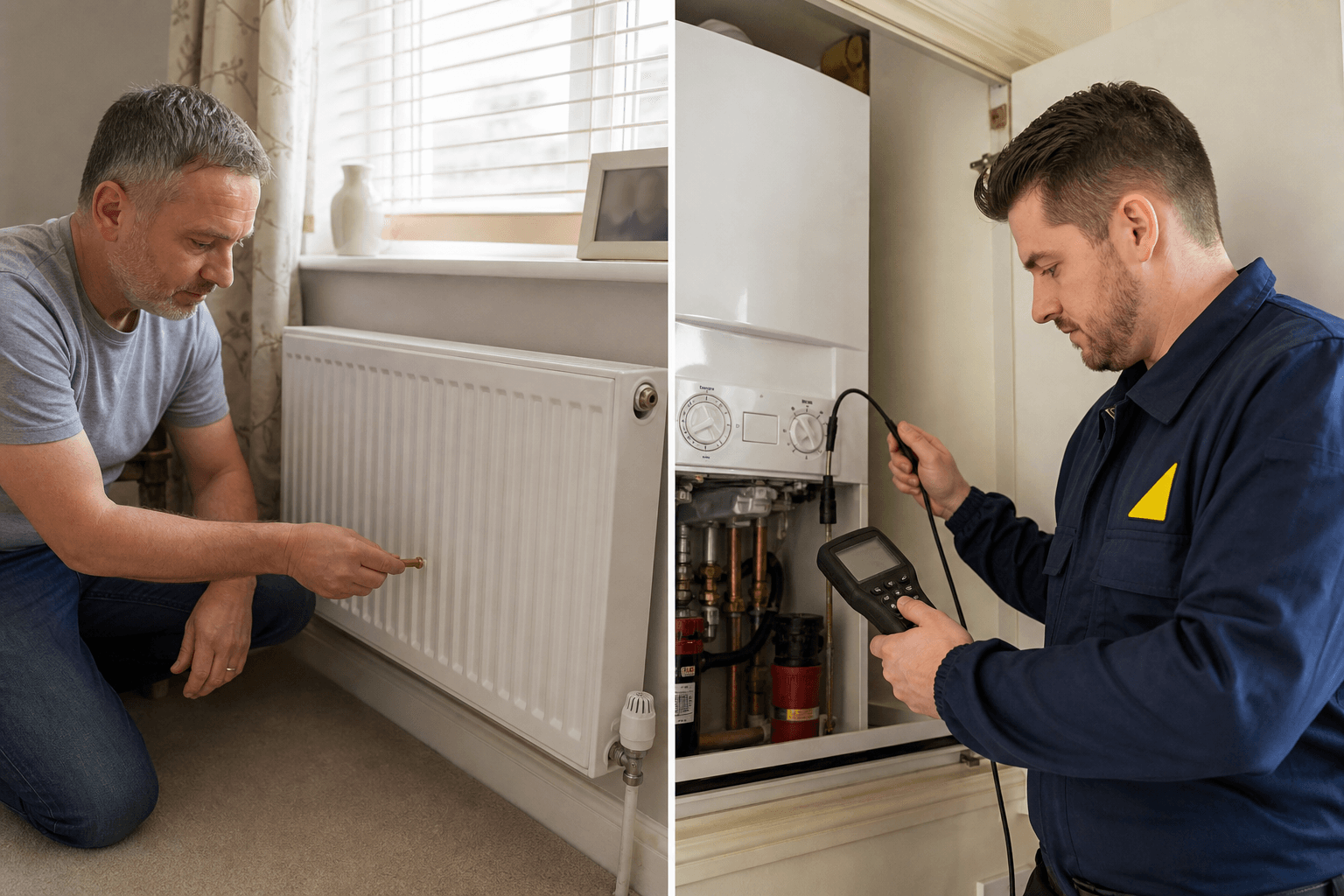
DIY gas work is a criminal offence in the UK. What's legal (bleeding, repressurising), what isn't, and when to call a Gas Safe engineer.
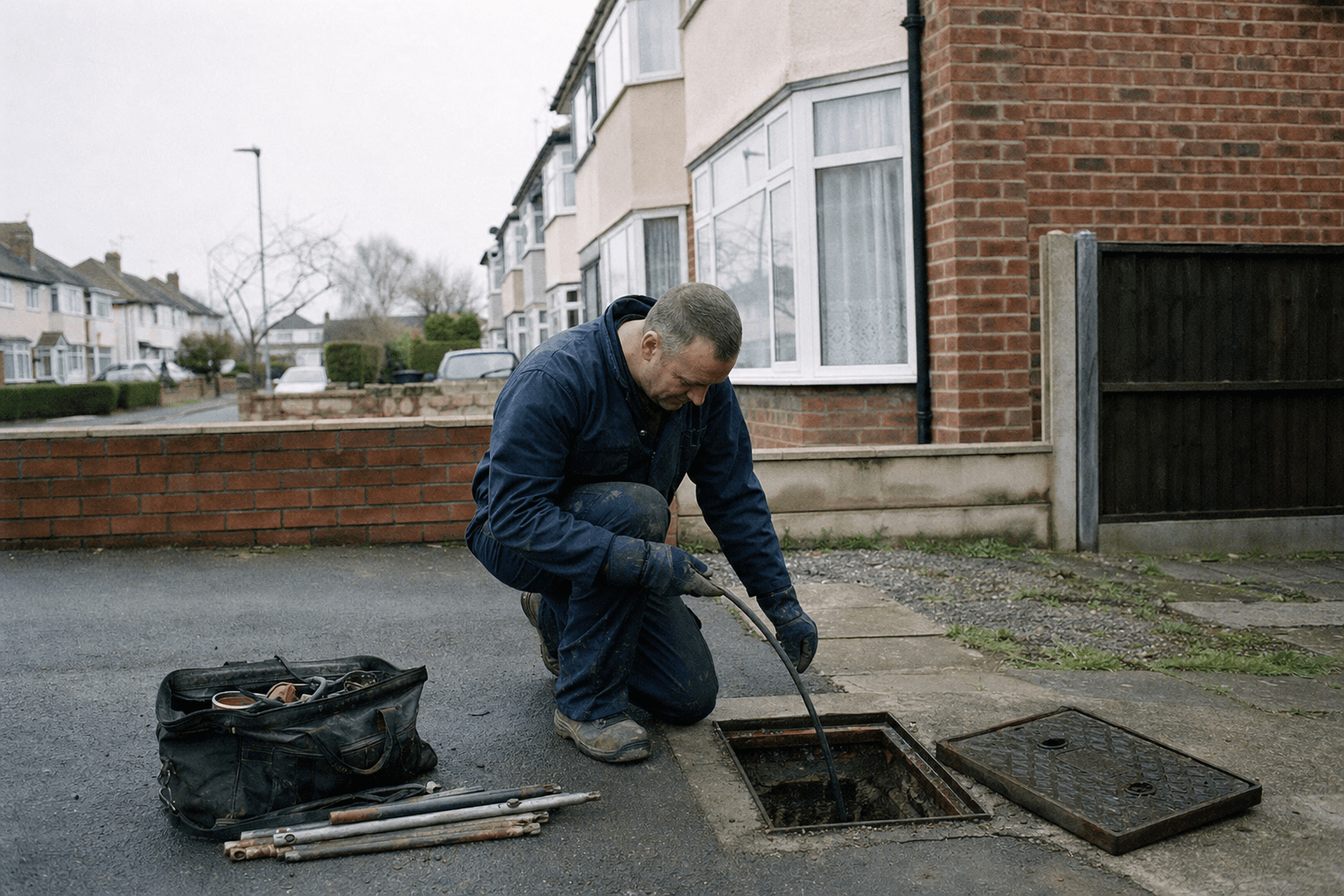
Hire a UK plumber for a blocked drain: 13 questions, who owns outside drains, and how to report a blockage to your water company. Get a fair quote.
Related services
Book electrical jobs with Taskino to find qualified, insured electricians across the UK for safe repairs, installations and testing with clear quotes.
Ready to Book Your Service?
Tell us what you need and our team will help you find the right professional quickly, with clear pricing and no hidden fees.