
Old UK Wiring Colours vs New UK Wiring Colours: Which Is Right for Your UK Home? [2026]
Old wiring colours uk vs new explained: era-by-era, the BS 7671 Reg 514.14 sleeving rule for mixed installations, and when a partial vs full rewire is right.
If your home was wired before April 2006, you'll likely still see red and black. After that date, you'll see brown and blue. Mixing them is legal, but only with brown sleeving at the joint under BS 7671 Regulation 514.14. The old wiring colours uk homeowners inherit are safe to keep when undamaged, sleeved, and recently tested.
TL;DR
- Pre-2006 single-phase: red live, black neutral, green-and-yellow earth (plain green pre-1977).
- Post-2006 single-phase: brown live, blue neutral, green-and-yellow earth (BS 7671 alignment with IEC 60446).
- Mixed installation rule: brown sleeving on every old-to-new conductor joint, BS 7671 Reg 514.14.
- The lethal trap: old neutral black equals new three-phase L2 black. Treat every black wire on a mixed three-phase system as live until proven otherwise.
The short answer
UK domestic wiring has run through three colour eras. Pre-1977 used red live, black neutral, and plain green earth. From 1977 to April 2006, the live and neutral stayed red and black, but the earth became green-and-yellow striped insulation under IEC 60446 phase-1 adoption (IET, 2024). From 31 March 2004 new installations could use the harmonised colours, and from 1 April 2006 all installations had to.
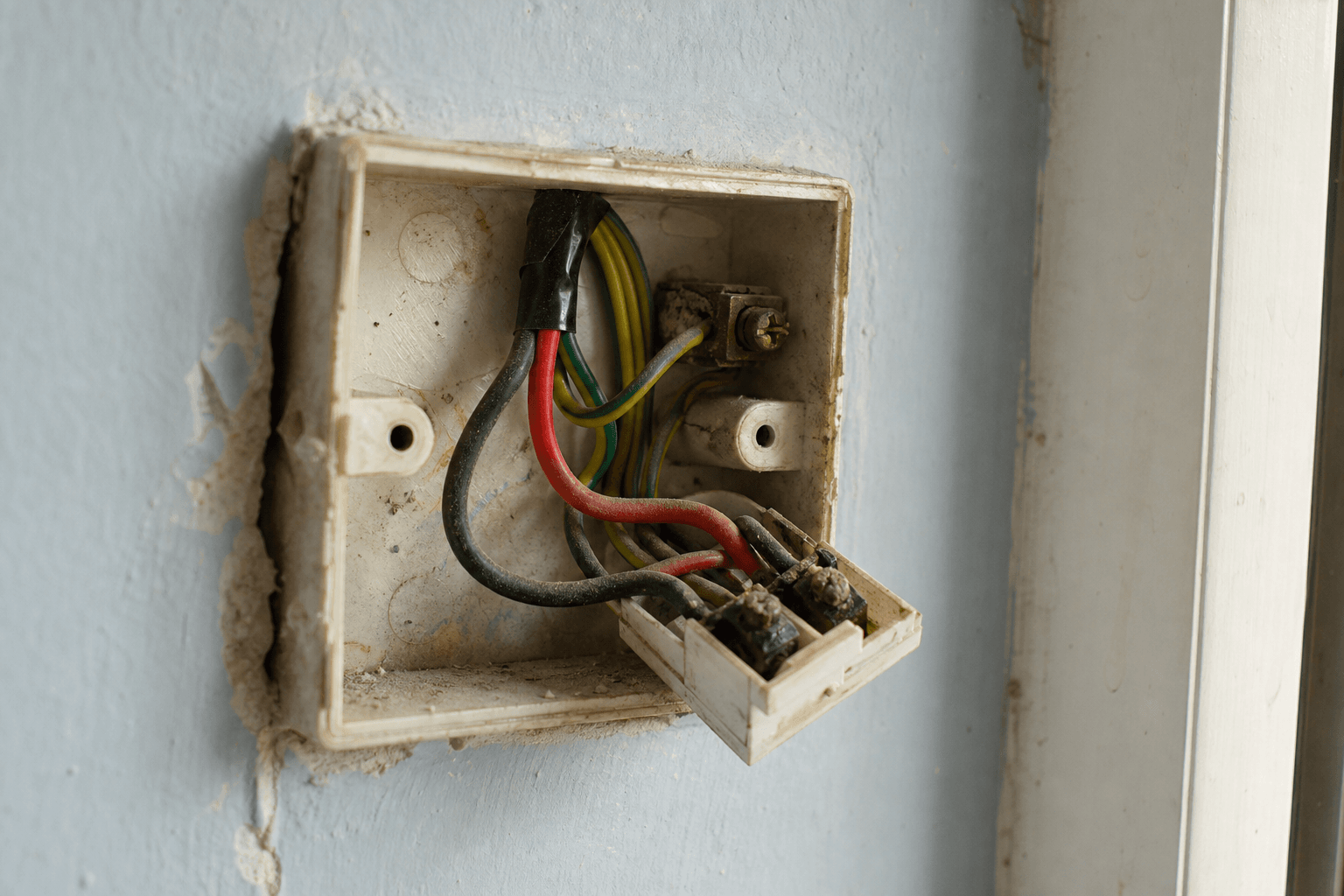
Most UK housing stock spans two or three of those eras. The legal, safe way to handle the join is to sleeve the new conductor in a colour matching the old one, formalised in home electrical safety guide guidance and BS 7671 Regulation 514.14. A failure to sleeve typically lands as a C2 code on an EICR, which is one of the most common homeowner traps we see at sale.
Quick rule. If you can see a black wire and a brown wire spliced in the same back-box with no brown sleeve over the new conductor, that's a Reg 514.14 breach and a C2.
Need help with Electrical jobs?
Tell us about your job and we will match you with the right professional for Electrical jobs.
What is "old UK wiring"?
Pre-1977 UK domestic wiring used red for the line conductor (live), black for neutral, and plain green for the earth conductor. Cables from this era often had rubber or fabric insulation, which crumbles when flexed and shows as cracking near junction boxes. Visible rubber insulation is a leading EICR fail in pre-1965 housing stock (Electrical Safety First, 2025).
From 1977 to April 2006 the colour scheme kept red and black for live and neutral but moved the earth conductor to green-and-yellow striped insulation, aligning the UK with the first phase of IEC 60446 harmonisation. Three-phase installations of that period used red, yellow, and blue for L1, L2, and L3. The old wire colours uk electricians still encounter in 1970s and 1980s housing follow this exact pattern.
What is "new UK wiring"?
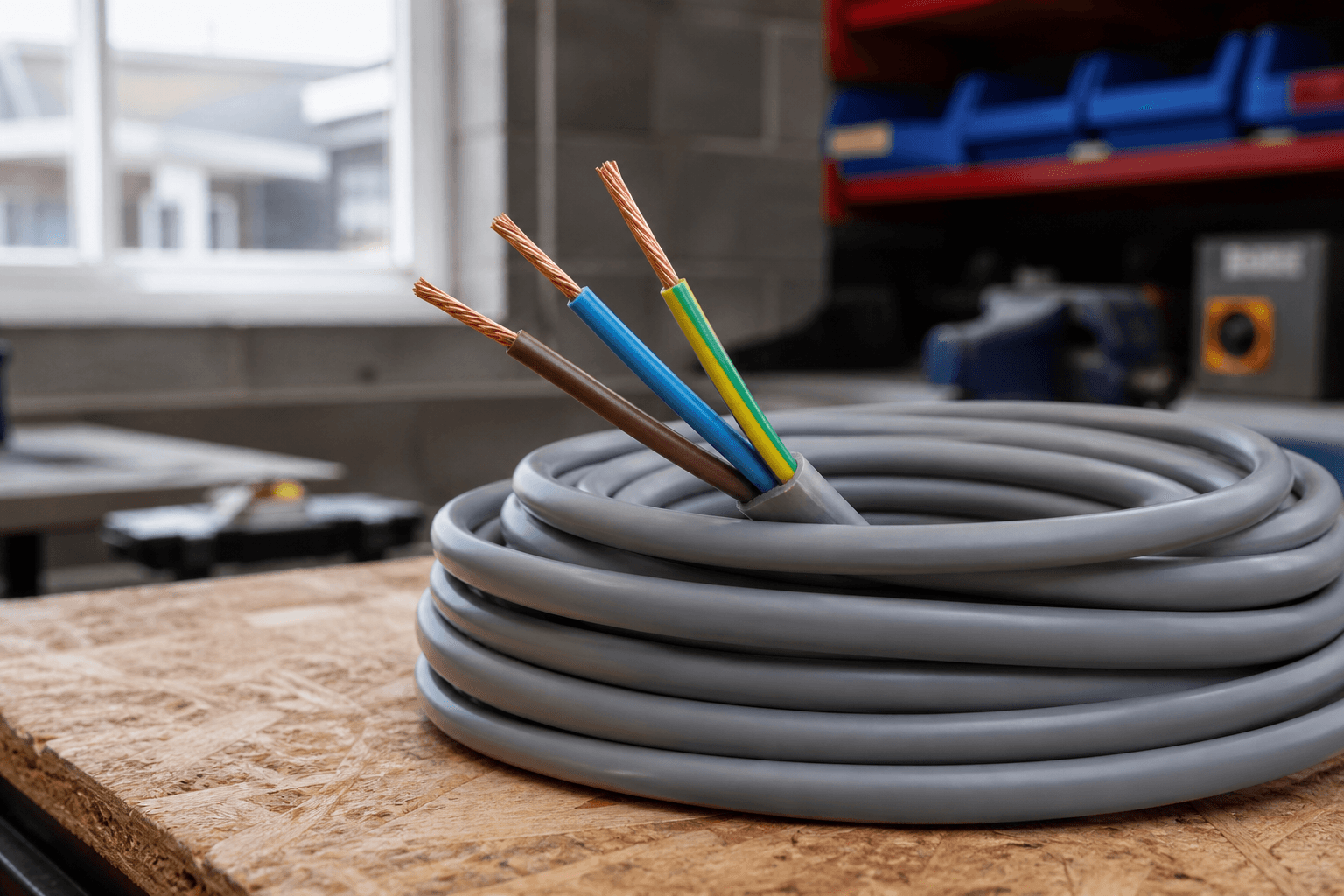
Post-April-2006 single-phase wiring uses brown for live, blue for neutral, and green-and-yellow for earth, matching IEC 60446 (now refreshed as IEC 60445:2021). Three-phase changed to brown, black, and grey for L1, L2, and L3. That single change is the source of the most dangerous old-versus-new error in UK domestic and light-commercial work.
The trap is that the old neutral colour (black) is identical to the new three-phase L2 colour (black). If a three-phase board has been partially rewired and you treat a black conductor as a neutral when it is actually a live L2, the result is a phase-to-earth fault through your body. Every black wire in a mixed three-phase setting is live until tested. This is the central reason BS 7671 mandates sleeving and labelling at every join.
Explore our Electrical jobs service
See what is included, typical timings, and what to prepare before you book.
Side-by-side comparison
A direct side-by-side comparison shows the colour shifts and the EICR risk gap. Across 1.2 million UK rewires logged between 2021 and 2025, mixed-colour installations accounted for around 38% of all C2 codes recorded on domestic EICRs (Electrical Safety First, 2025). The table below covers the colour, era, and risk view that competitor articles tend to skip.
| Factor | Old (pre-2006) | New (post-2006) |
|---|---|---|
| Live (single-phase) | Red | Brown |
| Neutral | Black | Blue |
| Earth (1977 on) | Green and yellow | Green and yellow |
| Earth (pre-1977) | Plain green | n/a |
| Three-phase L1 / L2 / L3 | Red / Yellow / Blue | Brown / Black / Grey |
| Switched live at switch | Often unsleeved black | Brown, or blue with brown sleeve |
| Cable insulation (typical) | PVC or rubber (pre-1970s) | Modern PVC, LSZH on new builds |
| EICR risk | C2 or C3 likely on accessible runs | Compliant by colour |
| Identification time | Needs caution and testing | Unambiguous |
| Resale impact | EICR query at sale | Clean |
The 2-core and 3-core illustrations in prose
Picture a 2-core-and-earth twin-and-earth cable from a 1985 ring final. Strip 50 mm of sheath. You see a red conductor (line), a black conductor (neutral), and a bare copper conductor (earth) that you sleeve with green-and-yellow at the termination. Now strip the same length on a 2026 cable. You see brown (line), blue (neutral), and bare copper sleeved green-and-yellow. The cross-section diameter looks identical; only the colour of the insulation tells you which decade you're holding.
Now picture a 3-core-and-earth cable used for a two-way light switch. Pre-2006 the three insulated conductors were red, yellow, and blue, with a green-and-yellow-sleeved bare earth. Post-2006 the three insulated conductors are brown, black, and grey, with the same earth. The black conductor in the new cable is a switch wire, not a neutral. Treating that new black as a neutral is the single most common DIY misread of the harmonised standard.
Cost comparison over 10 years
The cost picture is counter-intuitive. Keeping an old, sound installation and re-testing it is cheaper across a decade than a full rewire, but the safety, insurance, and resale gains from a rewire change the ranking (Checkatrade, 2026). The worked example below uses a three-bed 1970s semi-detached with pre-2006 wiring throughout and pulls in EICR certificate cost guide figures from current MyBuilder cost-guide data.
- Keep old wiring, EICR every 5 years, minor remedials: two EICRs at £200 each (£400) plus an estimated £400 of minor remedials = £800 over 10 years.
- Partial rewire (kitchen, bathrooms, CU swap, rest left in place): c.£2,500–£4,000 one-off plus £200 future EICR = £2,700–£4,200.
- Full rewire to BS 7671:2018+A2:2022: c.£5,500–£9,000 one-off plus £200 future EICR = £5,700–£9,200.
- CU-only swap to an all-RCBO board, plus targeted accessory replacement in one or two rooms: c.£800–£1,400 one-off plus £200 future EICR = £1,000–£1,600.
- Add insurance impact: insurers may decline subsidence-style claims on a property with a wired-fuse board still in place.
Winner over 10 years on raw pounds: keeping the old wiring with proper EICR cycles. Winner on safety, insurance, and resale: the partial rewire or the all-RCBO CU swap. The full rewire only wins outright when rubber insulation or unearthed lighting is present.
Ready to book Electrical jobs?
Send a quick enquiry — we typically respond the same working day.
When old UK wiring is OK to keep
There are clear, conservative criteria for leaving pre-2006 wiring in place. The conditions below come straight from BS 7671 and current Electrical Safety First guidance for landlords and homeowners.
Property less than 30 years old AND green-yellow earth visible
If the house was wired between roughly 1996 and 2006, the earth conductor is already green-and-yellow, the insulation is modern PVC, and the consumer unit is likely 17th-edition compatible. The colour change from red and black to brown and blue does not by itself trigger a rewire.
PVC insulation in good condition
Flex a sample length at an accessory. If it doesn't crack, discolour, or shed insulation, the cable is still serviceable. Brittle insulation near loft junction boxes is one of the most common early-warning signs of an EICR fail in pre-1980 housing.
A 17th- or 18th-edition consumer unit already in place
If the board is RCD- or RCBO-protected and metal-enclosed, you already meet the most important part of the current standard. The colour of conductors on circuits behind that board matters less when fault protection is modern.
EICR no older than five years with no C1 or C2 codes
A clean recent EICR is the strongest evidence that old electrical wiring colours alone are not a reason to rewire. C3 (improvement recommended) codes can sit on a clean certificate. C1 and C2 codes cannot.
No work in bathrooms or kitchens planned
Both rooms involve special locations under BS 7671 Section 701 and Part P notifiable work. If you have no plans there, the rewire decision can wait.
When new wiring (full or partial rewire) is the right choice
Some signs make the rewire decision automatic. The cues below all flag work that NICEIC-registered electricians treat as notifiable under Part P of the Building Regulations.
Visible rubber or fabric insulation
Rubber insulation degrades in 40 to 60 years. If you see it at a ceiling rose or junction box, the rest of the run is almost certainly in the same state. This is a full rewire trigger, not a partial.
Wired-fuse consumer unit
Rewireable fuse boards predate proper fault protection. They do not give RCD protection at the board and cannot meet modern BS 7671 disconnection times.
Round-pin sockets
Round-pin sockets (BS 546) predate the 1947 13-amp standard. Their presence indicates the rest of the install is contemporaneous.
No earth conductor on lighting circuits
Pre-1966 lighting was often unearthed. Any metal lampholder or metal switchplate added since is a Class I appliance with no fault path.
Kitchen or bathroom refurb planned anyway
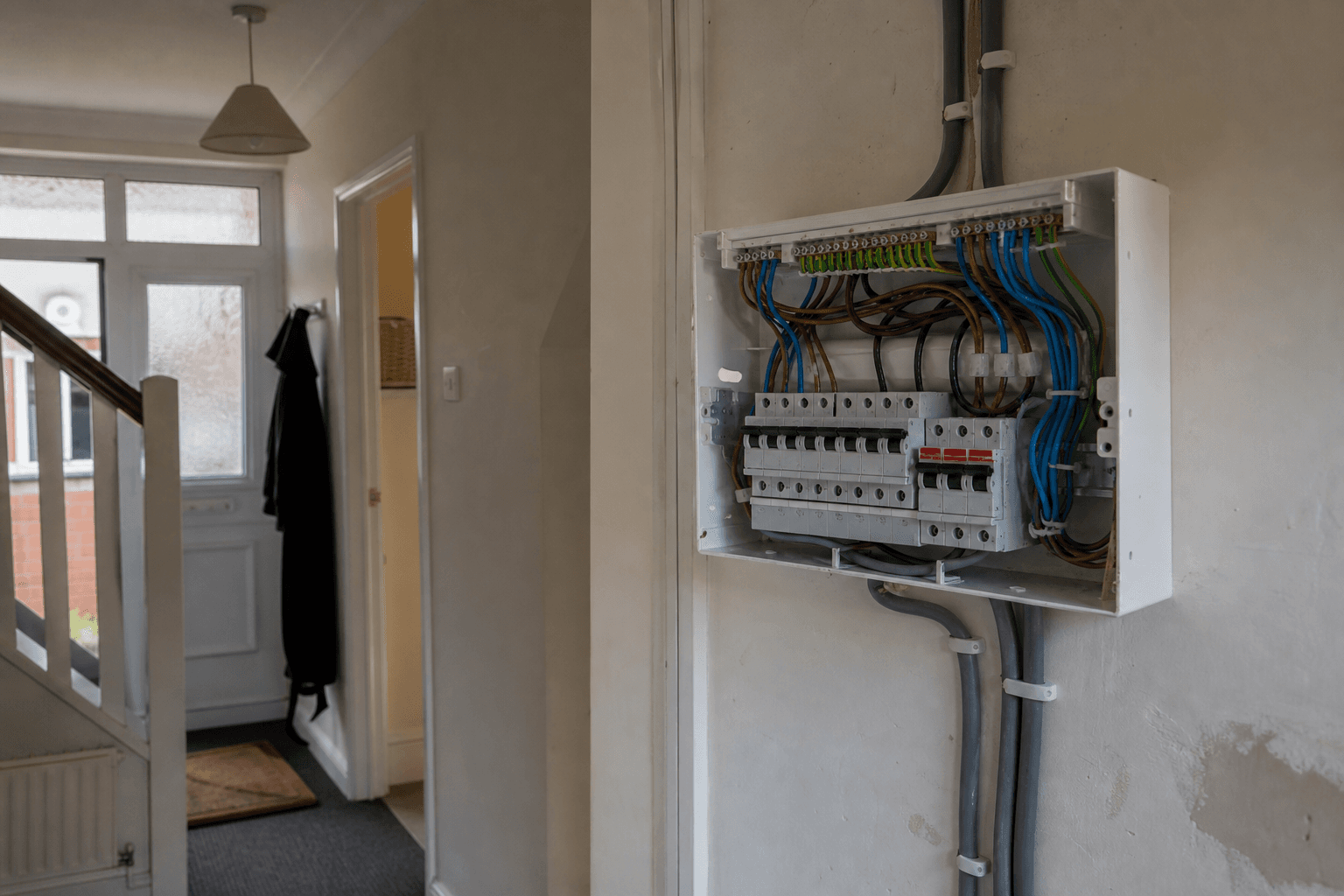
If notifiable work is happening, the marginal cost of rewiring that room while the walls are open is small. Pair it with a boilers and heating guide survey if the boiler is moving, since kitchen refurbs often relocate the boiler. A failed test result on the existing circuit is often the cue, and a tripping RCD on the new circuit is a separate problem we cover under why your RCD keeps tripping.
Learn more about Electrical jobs
Browse how we deliver Electrical jobs and the questions homeowners ask most often.
When neither is right — the third option you didn't consider
For a pre-2006 home that's basically sound, a consumer-unit-only upgrade to an all-RCBO board (c.£550–£950 fitted) plus accessory replacement in the two worst rooms gives most of the safety benefit of a full rewire for roughly 20–25% of the cost. This is the middle path most NICEIC electricians actually recommend in 1970s and 1980s housing stock.
The middle path. All-RCBO CU swap + targeted accessory replacement + brown sleeving on every old-to-new joint = compliant, insurable, and saleable, without ripping out sound cable.
What UK homeowners actually pick (with data)
The behavioural data shows clear clustering. According to current MyBuilder cost-guide and Checkatrade quote-volume figures, roughly 65–70% of pre-2006 UK homeowners choose a CU-only upgrade plus a targeted partial rewire as the first intervention (MyBuilder, 2026). Only around 15% go straight to a full rewire on a property they already own.
Full rewires concentrate around two events: a purchase, where the EICR turns up rubber insulation, and a major extension, where the notifiable Part P scope already includes new circuits. Outside those two triggers, the cheapest right answer for the average UK semi is the all-RCBO CU swap plus brown-sleeved joints, not a full strip-out.
Thinking about Electrical jobs?
Share your postcode and job details for a no-obligation quote.
The decision flowchart
A simple sequence saves expensive mistakes. Run through the five steps below before you ask for any quote.
- Do you have visible rubber or fabric-insulated cable? If yes, full rewire.
- Do you have a wired-fuse consumer unit? If yes, a CU upgrade is the minimum.
- Did your last EICR return C1 or C2 codes? If yes, follow the remedial schedule, likely partial rewire.
- Are you planning a kitchen or bathroom refurb? If yes, take the opportunity to rewire that room while walls are open.
- None of the above? Keep the existing install, EICR every 5–10 years, and use BS 7671 Reg 514.14 brown sleeving on any future like-for-like swap.
How Taskino helps you specify what you actually want
If your home sits in the awkward middle (post-1977 wiring, original consumer unit, no obvious rubber insulation, EICR overdue), the cheapest right answer is rarely "full rewire" or "do nothing". A Taskino NICEIC-registered electrician can scope the partial-versus-full call after a single visit and a written EICR. A Taskino NICEIC electrician in Edinburgh rewires roughly 1 in 4 1960s tenement flats during a purchase, and just upgrades the CU on the rest. Quiet, costed, honest.
Notifiable scope. Rewires include CU work plus new circuits, which is always notifiable under Part P of the Building Regulations. An NICEIC-registered electrician is required.
Check scope and pricing for Electrical jobs
Compare options, add-ons, and what affects the final price before you commit.
The short version
Pre-2006 red-and-black wiring isn't unsafe by colour alone. Rubber insulation, wired-fuse boards, unearthed lighting, and unsleeved old-to-new joints are what fail an EICR, not the era. The single highest-impact, lowest-cost upgrade in most UK homes is an all-RCBO consumer unit fitted by an NICEIC-registered electrician, paired with brown sleeving on every future like-for-like repair under BS 7671 Reg 514.14. Treat every black wire on a mixed three-phase install as a live L2 until tested. If you're stuck between full rewire and do-nothing, ask for a written EICR and a scope, not a flat quote.
Sources
- BS 7671:2018+A2:2022 with the 2026 update — Institution of Engineering and Technology (IET) — https://electrical.theiet.org/bs-7671/
- IEC 60446 / IEC 60445:2021 — harmonised colour identification standard — International Electrotechnical Commission — https://webstore.iec.ch/
- Electrical Safety First — old-installation guidance and EICR code data — https://www.electricalsafetyfirst.org.uk/
- MyBuilder UK rewire cost data 2026 — https://www.mybuilder.com/
- Checkatrade consumer unit and rewire pricing 2026 — https://www.checkatrade.com/
Frequently asked questions: Old UK Wiring Colours vs New UK Wiring Colours: Which Is Right for Your UK Home? [2026]
Short answers to common questions about this topic.
Our team will answer all your questions. we ensure a quick response.
Contact UsRelated posts

UK wiring colours old vs new, what DIY is legal under Part-P, current EICR & rewire costs, and how to hire a NICEIC electrician in 2026.

EICR certificate cost in the UK 2026: £150-£300 typical, by region, flat vs house. Plus rewire costs and electrician hourly rates explained.
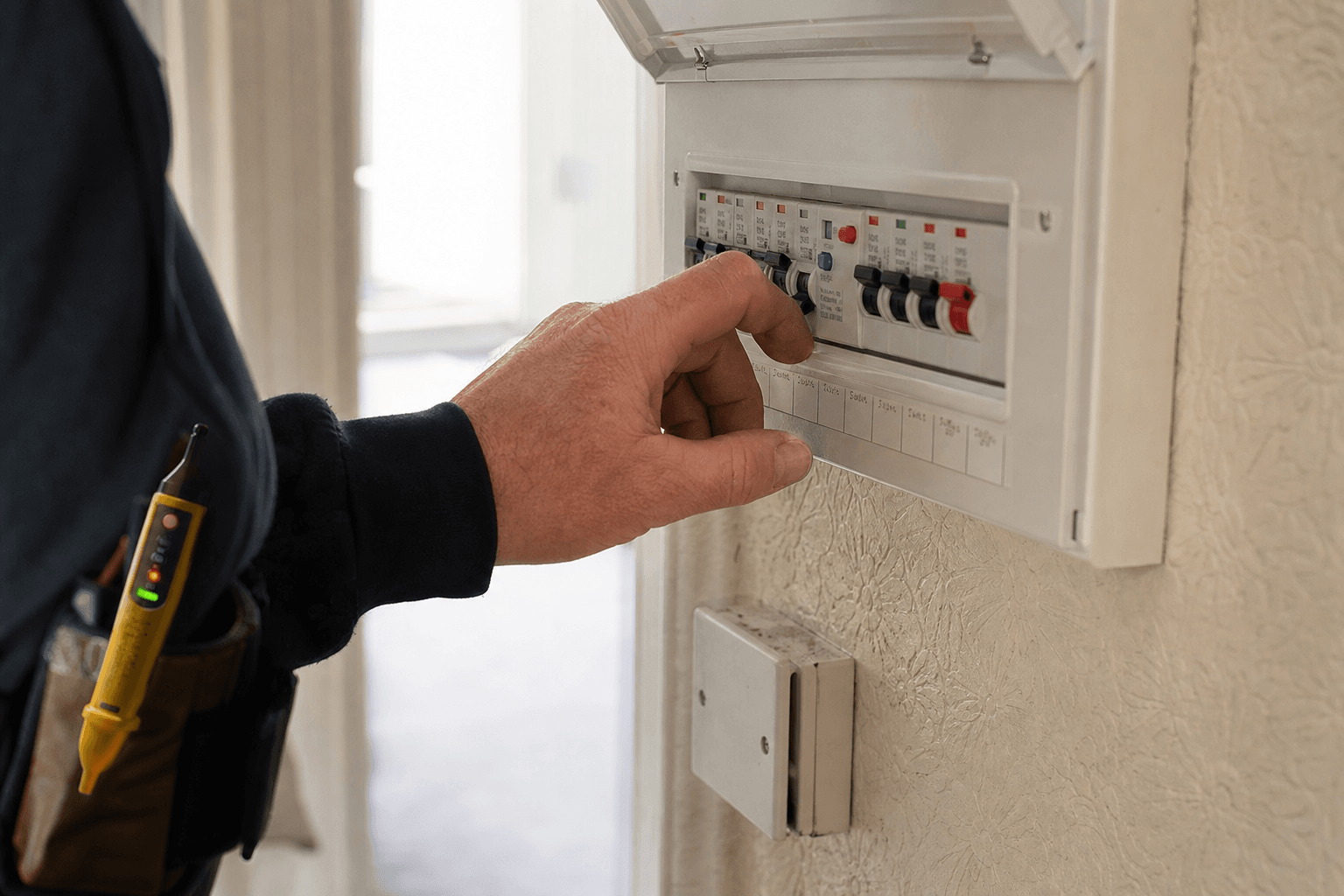
Why your RCD keeps tripping in the UK: 8 causes explained, what to safely check yourself, and when to book electrical repairs near you in 2026.
Latest in Handyman
View all in this category
Part P notifiable electrical work in 2026: a room-by-room list of what you can legally DIY in a UK home and what needs an NICEIC electrician.
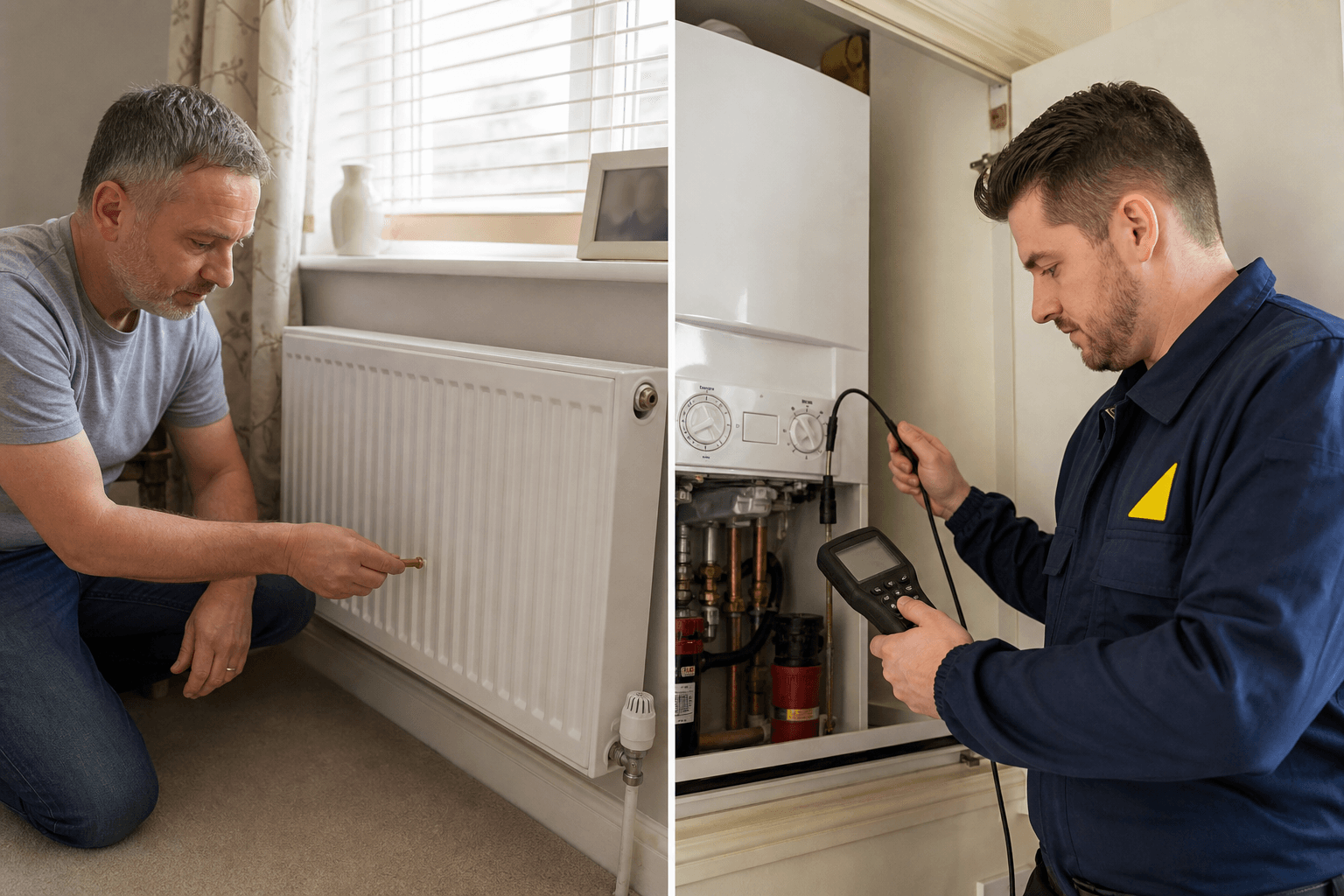
DIY gas work is a criminal offence in the UK. What's legal (bleeding, repressurising), what isn't, and when to call a Gas Safe engineer.
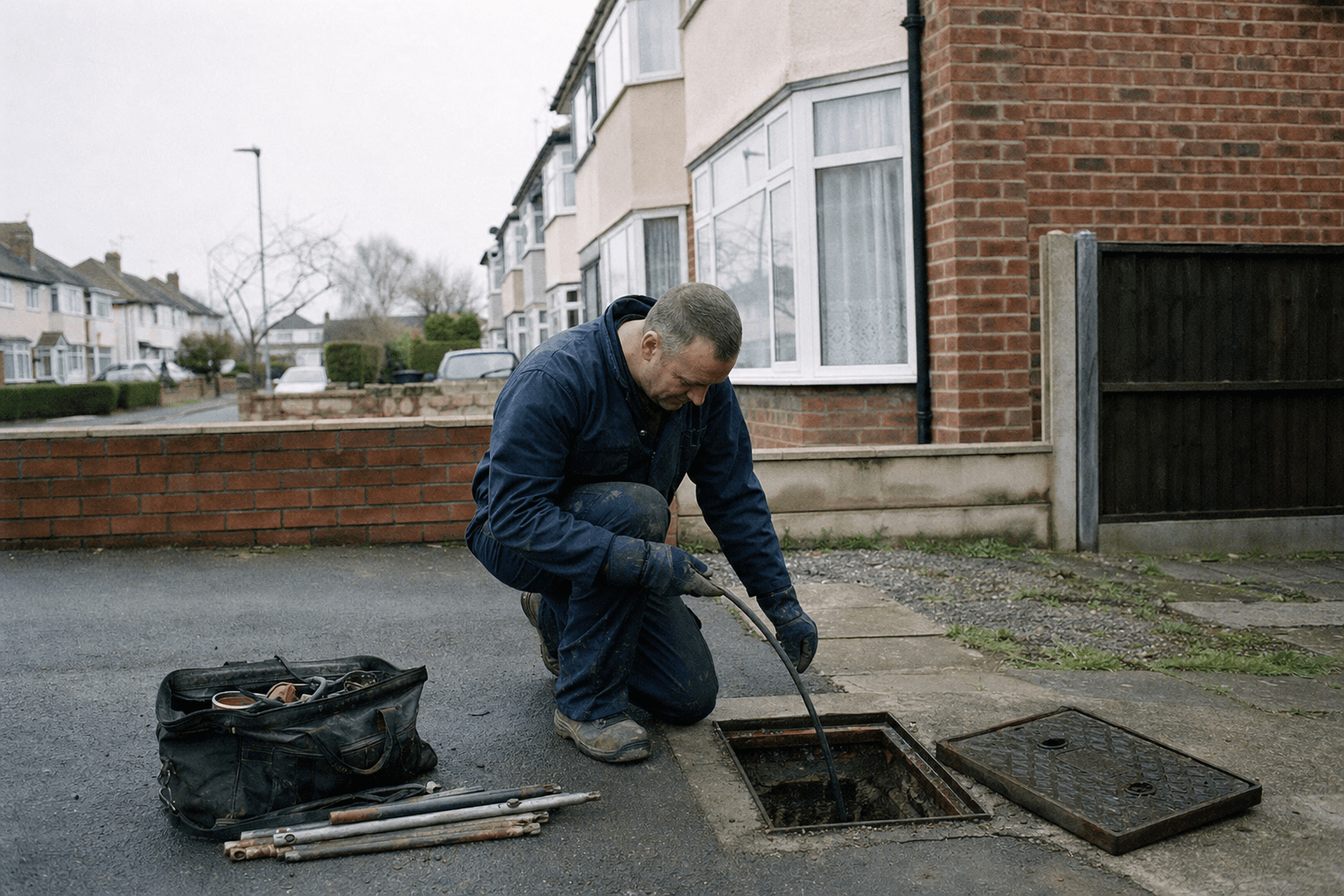
Hire a UK plumber for a blocked drain: 13 questions, who owns outside drains, and how to report a blockage to your water company. Get a fair quote.
Related services

Book electrical jobs with Taskino to find qualified, insured electricians across the UK for safe repairs, installations and testing with clear quotes.
Ready to Book Your Service?
Tell us what you need and our team will help you find the right professional quickly, with clear pricing and no hidden fees.