
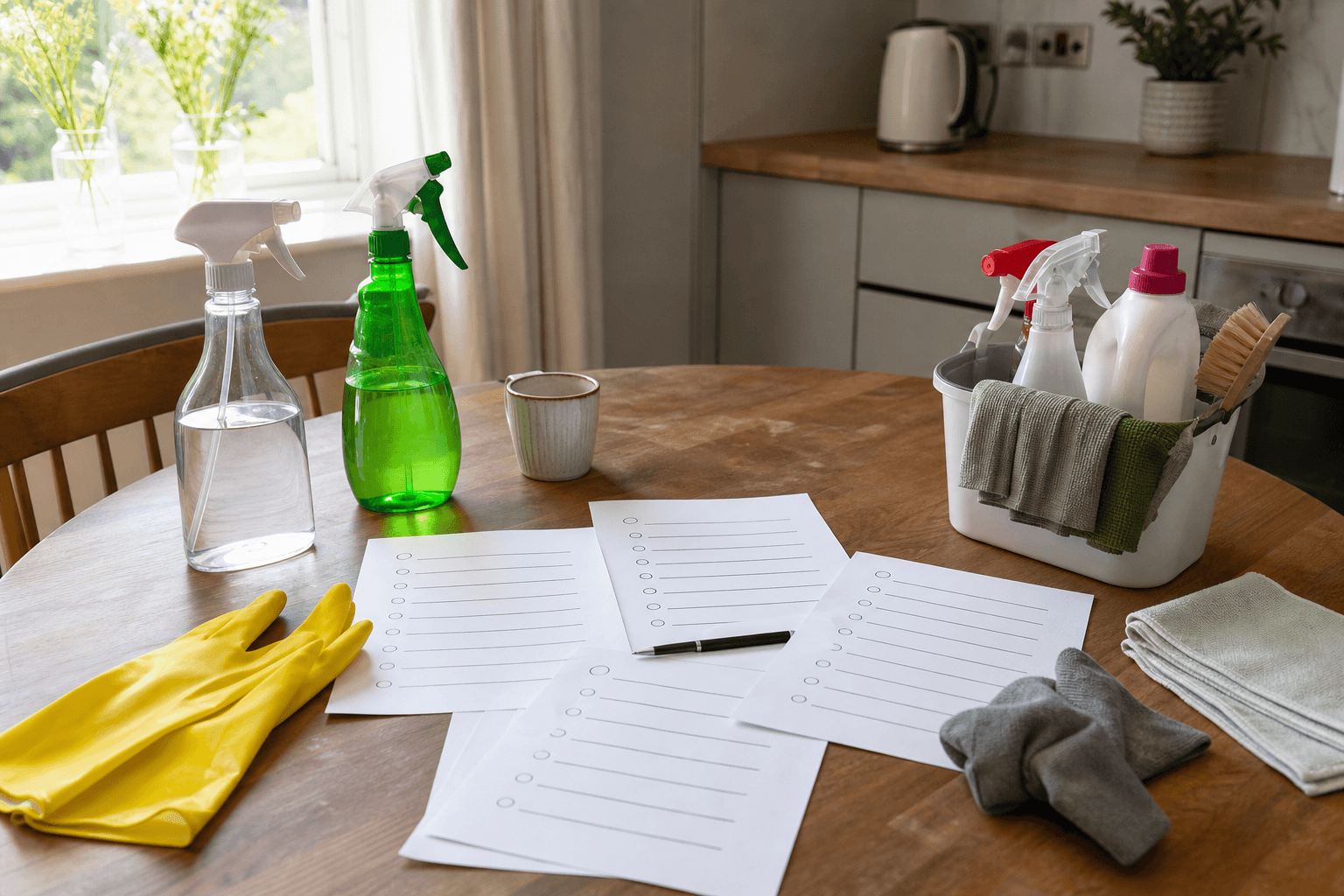
Deep Cleaning DIY or Hire a Pro? An Honest UK Comparison [2026]
Searching for deep cleaning services near me but unsure? Compare DIY cost, time and finish vs a UK pro - with a real worked example.
If you've been searching for deep cleaning services near me and stalling at the quotes, here's the honest answer: for most UK homes under three bedrooms with no deposit at stake, DIY wins on cost the first time. After that, hiring a pro wins on almost every other measure. A proper deep cleaning sits somewhere between a tidy weekend and a forensic restoration, and the right call depends on scope, surfaces and how much your Saturday is worth. This guide compares both sides, using a real Manchester worked example and live 2025 trade prices, so you can stop second-guessing and just decide.
TL;DR — For most UK homes under three bedrooms with no chemical-restricted surfaces, DIY wins on £-per-hour for the first deep cleaning, and a pro wins for the second.
- DIY wins: smaller homes, no time pressure, you've already got the kit
- Pro wins: end of tenancy with deposit at stake, post-builder dust, four-bed-plus, oven you'd rather not touch
- Break-even point for most three-bed UK semis: about six hours of your Saturday at minimum wage equals £69, vs £200–£400 quoted (Checkatrade, 2025) — hidden costs flip it
The honest answer
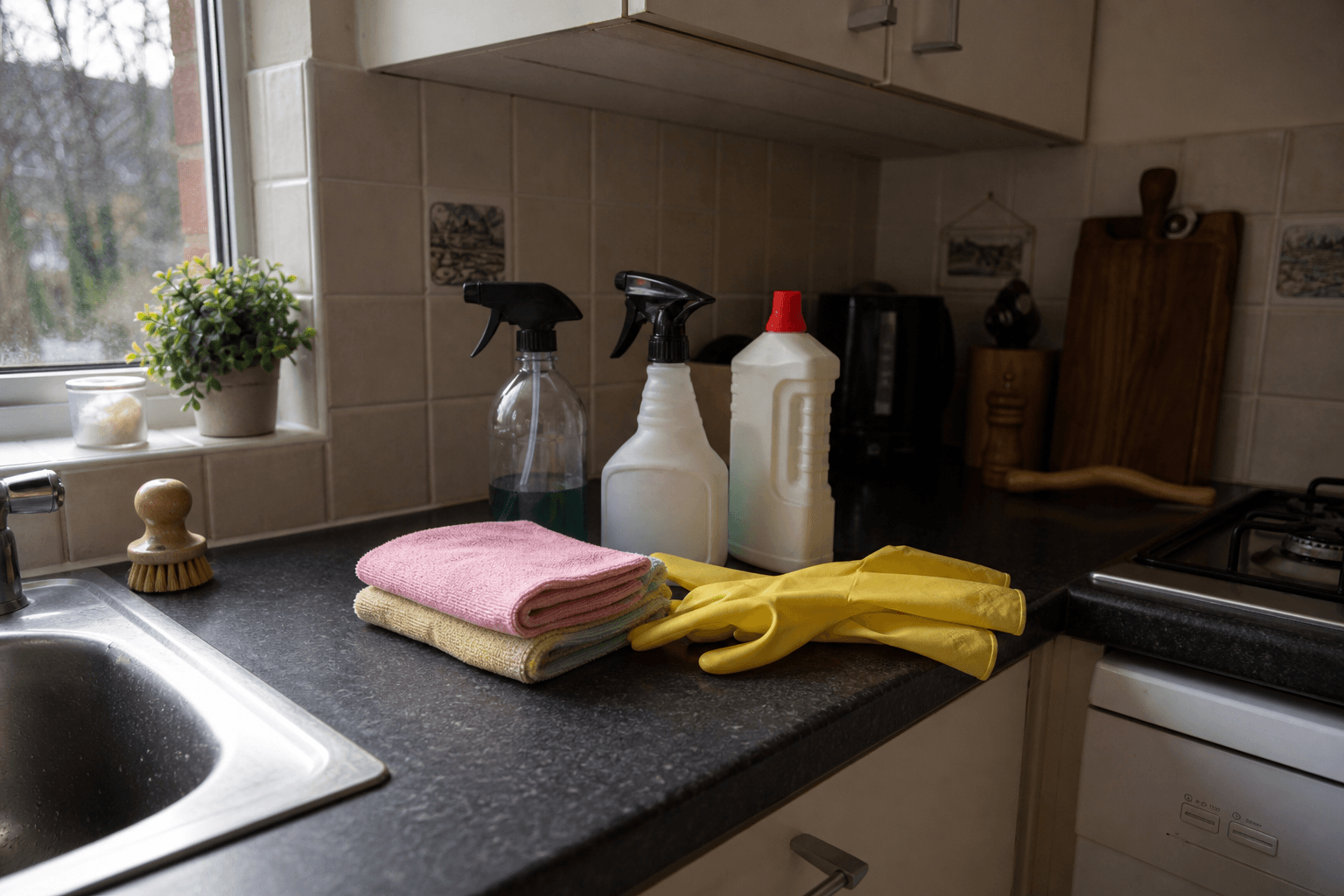
The right choice depends on scope, not preference. A two-bed flat with three months of normal life dust is genuinely a DIY job, costing around £20 in materials versus £150 quoted (Bark, 2025). A four-bed family home after building work, with grease in the extractor and grout going green, is a pro job. The middle ground is where most people make expensive mistakes.
The realistic UK picture is that most homeowners DIY once, then hire forever after. Browse any Mumsnet "Am I Being Unreasonable" cleaning thread and the pattern repeats: the poster tried it, lost a weekend, ruined a worktop, and now pays £180 every quarter without flinching. We've seen it dozens of times in booking notes.
Reality check. The first DIY deep clean teaches you the value of your Saturday. The second one teaches you the value of someone else's experience.
Need help with Deep cleaning?
Tell us about your job and we will match you with the right professional for Deep cleaning.
When DIY makes sense
DIY genuinely beats hiring when the property is small, the surfaces are forgiving, and your time has low opportunity cost that weekend. The 2026 National Living Wage of £11.44 per hour (gov.uk, 2026) is the benchmark to use. Below that hourly value of your Saturday, DIY is rational. Above it, the maths tilts fast.
Scenarios where DIY genuinely saves money
A studio flat or one-bed in reasonable condition is the textbook DIY job. You can do the lot in six hours with about £20 of products. The same scope quoted by a pro on Bark comes in at £130–£170, so you're banking roughly £130 for an afternoon. That maths only holds for small footprints with no oven horror and no mould patches.
Scenarios where the learning is worth more than the money saved
First-time buyers benefit from doing one deep clean themselves before moving furniture in. You learn where the radiators trap dust, which window catches need a screwdriver, and exactly how filthy the previous owner's extractor really was. That knowledge survives long after the savings are spent.
Tools you'll get reuse out of
A starter kit pays for itself if you keep using it:
- Microfibre cloth pack of 10 — about £8 at Lakeland, lasts two years on a hot wash
- Soda crystals 1kg — £1.50 at Wilko or B&Q, handles drains, ovens and grout
- Decent upright hoover — £80–£150 at Argos, replaces three pro visits a year
- Astonish Mould & Mildew spray — £2 at B&Q, the cheapest legal mould killer that actually works
When hiring a pro makes sense
Hiring beats DIY whenever the cost of a mistake exceeds the cost of the quote. A ruined granite worktop from the wrong cleaner runs £400–£900 to refinish, while the pro quote was £250. The Domestic Cleaning Alliance reports that member firms carry a minimum £2 million Public Liability cover as standard (Domestic Cleaning Alliance, 2025), which means their mistakes are insured. Yours aren't.
Scenarios where DIY costs MORE in the end
The classic stories repeat across our booking notes. Someone uses Bar Keeper's Friend on a polished granite worktop and etches a permanent patch. Another lets a soaked mop sit on laminate and the joints swell within 48 hours. A third bleaches a grout line and lifts the silicone seal, then has water behind the bath tiles by Christmas. Each of those mistakes costs more than five deep cleans.
Scenarios where DIY is dangerous or illegal
Some jobs cross into territory you legally shouldn't touch. The HSE guidance on damp and mould remediation flags anything over one square metre as needing professional handling with proper PPE (HSE, 2024). Textured ceilings in homes built before 2000 may contain asbestos. Don't scrape, sand or wet-vac them. Pay a UKAS-accredited surveyor for a £200 sample test first, then a licensed remover if it's positive.
Insurance and liability implications
Your contents insurance probably won't cover damage you cause yourself during DIY cleaning. Standard policies treat self-inflicted damage as wear and tear. A vetted cleaner's £2 million PL cover, by contrast, pays for the worktop you'd otherwise be replacing. That's the strongest financial case for hiring house cleaners near me on anything valuable.
Explore our End of Tenancy Cleaning service
See what is included, typical timings, and what to prepare before you book.
Side-by-side comparison table
No competitor SERP currently shows all nine factors together, which is why most price guides feel one-sided. Here's the full picture.
| Factor | DIY deep cleaning | Pro deep cleaning |
|---|---|---|
| Up-front cost | £20–£30 in products | £150–£700 quoted |
| Time | 8–16 hours | 4–12 hours (out of the house) |
| Tools needed | Buy or borrow yourself | Included in quote |
| Skill required | Patience and YouTube | BICSc-trained ideal |
| Quality of finish | Variable, you set the bar | Consistent, contract standard |
| Risk if it goes wrong | You eat the cost | PL insurance pays |
| Insurance | Contents may exclude DIY damage | £2m+ PL norm |
| Resale impact | Subjective | Photo-ready for estate agents |
| Stress | High, your whole weekend | Low, you go to the pub |
Real-world cost comparison
To make the deep cleaning maths concrete, let's price an actual three-bed semi-detached in Manchester, October 2025. The DIY shopping list runs: Astonish multi-surface £2, HG Grout cleaner £6, soda crystals £1.50, microfibre 10-pack £8, degreaser £4, hoover bags £3, bin bags £2. Total materials about £27. Then 12 hours of your weekend at £11.44 National Living Wage equals £137 in opportunity cost. Combined DIY cost: £164.
The pro quote for the same property, sourced from Checkatrade's 2025 Manchester average, comes to two cleaners working six hours at £25 per hour each, products included, totalling £300 (Checkatrade, 2025). See our full breakdown in our end of tenancy cleaning prices guide for regional variations.
The real gap is £300 minus £137 opportunity cost, so £163. The pro also delivers in one afternoon while you're at the park, versus your Saturday and Sunday. Worth it? That's £14 per hour of your free weekend back. Most people who've done it once say yes.
Worked-example takeaway. The cash gap on this deep clean looks like £273 (£300 vs £27). The honest gap, with your time priced in, is £163. The unpriced gap, your Saturday, is whatever it's worth to you.
Ready to book One-Off Cleaning?
Send a quick enquiry — we typically respond the same working day.
The hidden costs of DIY nobody mentions
The headline £27 is never the real number. Seven things creep in:
- Skip hire if you also declutter, £80–£200 for a midi from any local hire company
- Mistakes from the wrong product on the wrong surface, easily £100–£400 to put right
- Tool storage and chemical disposal because half-used COSHH-rated cleaners can't legally go in the bin
- Time off work if you take a Monday to finish, easily £100+ in lost wages
- Partner's patience, the unmeasured but real cost of a weekend lost to grout
- Back and knee strain from prolonged kneeling, with NHS occupational guidance recommending no more than 30-minute kneeling stints without a break
- Repeat-cycle costs because most DIY-ers re-deep-clean every four to six months, having skipped the hardest bits the first time
Add even two of those and your £27 DIY is suddenly £200+.
The hidden value of hiring nobody mentions
Quotes don't show the full upside either. Five extras you actually get:
- Snagging follow-up — most reputable cleaners return free for missed bits within 48 hours
- Commercial-grade products — COSHH-rated kit you can't buy in B&Q, including enzyme-based degreasers and proper grout sealers
- Trade-body recourse — if it goes wrong, BICSc and the Domestic Cleaning Alliance both run formal complaints processes
- Photo evidence for deposit disputes — TDS-compliant before/after photos that have settled thousands of tenancy claims under the Tenancy Deposit Schemes framework
- Future referrals — a good cleaner refers a good handyman, a good window cleaner, and saves you weeks of vetting
Learn more about Deep cleaning
Browse how we deliver Deep cleaning and the questions homeowners ask most often.
A decision flowchart you can use right now
Run the property through these six questions in order. Stop at the first match.
- End of tenancy with deposit at stake? Hire. The Tenancy Deposit Schemes evidence trail alone justifies it.
- Property over three beds, or post-builder dust? Hire. The scope outruns a single weekend.
- Health condition limiting kneeling, lifting or chemical exposure? Hire. Don't gamble with backs or lungs.
- Mould patch over one square metre, or suspected asbestos ceiling? Hire a specialist. See our how to remove mould guide for the legal thresholds.
- Budget genuinely under £100 and property under two beds? DIY, with reasonable expectations.
- None of the above? Try DIY once. If it takes more than 10 hours, book house cleaners near me next time and don't look back.
How Taskino helps when you decide to hire
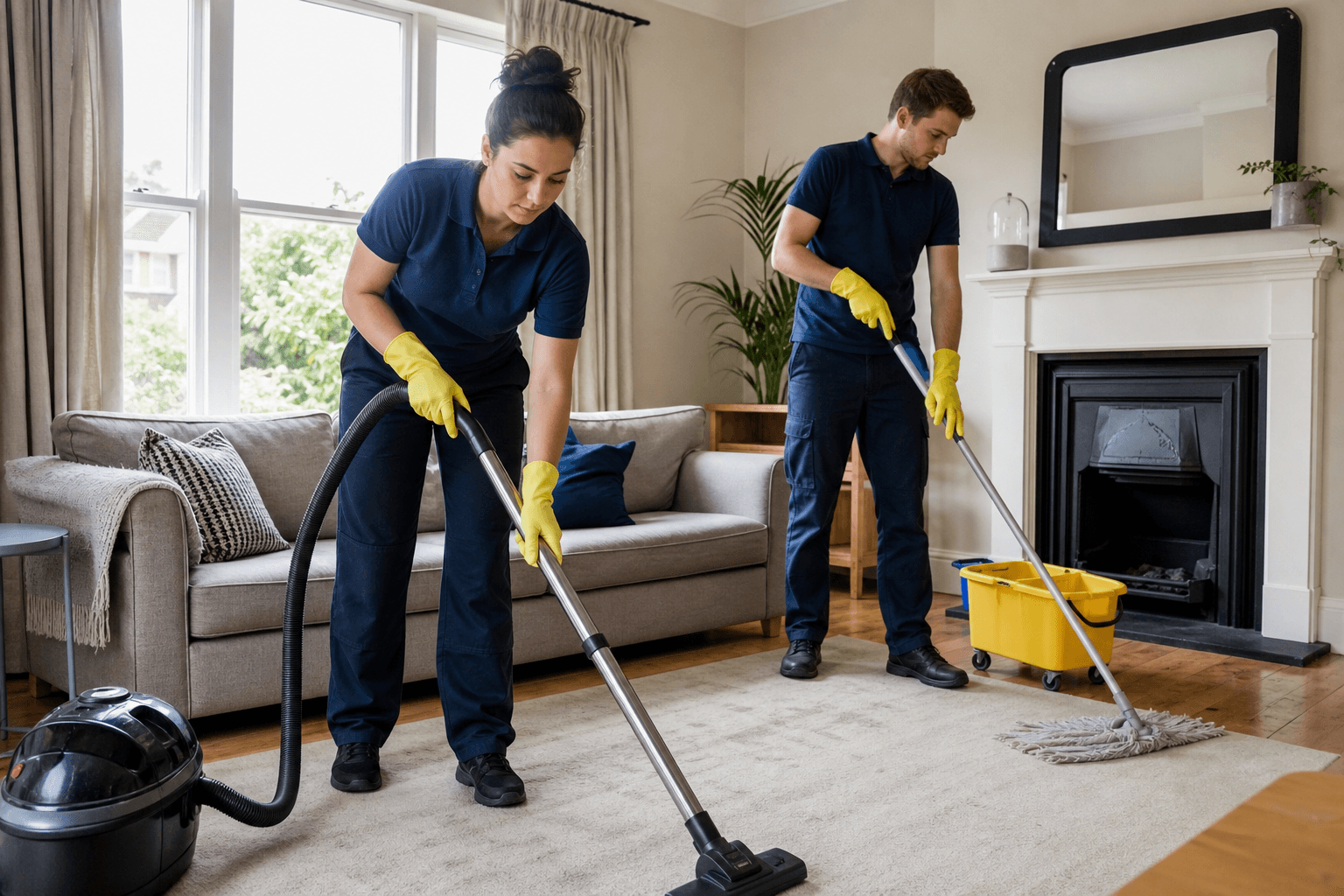
If your worked example tipped towards "pay someone" but you don't fancy ringing eight strangers, we've already vetted local cleaners for insurance, BICSc training and references, so you book one Saturday morning and the rest is theirs. Browse availability on our cleaning services page, pick a slot that suits, and we'll match the right team to your property and post code. No subscriptions, no callout fees, no chasing.
Thinking about End of Tenancy Cleaning?
Share your postcode and job details for a no-obligation quote.
Sources
- Bark.com deep cleaning price guide 2025
- Checkatrade house cleaning cost guide 2025
- MyBuilder domestic cleaning rates 2025
- NHS occupational health kneeling guidance
- BICSc (British Institute of Cleaning Science) training standards
- Domestic Cleaning Alliance member benefits and insurance norms
- HSE COSHH 2002 regulations and damp/mould remediation guidance
- gov.uk National Living Wage rates 2026
- Tenancy Deposit Schemes (TDS) evidence framework
Frequently asked questions: Deep Cleaning DIY or Hire a Pro? An Honest UK Comparison [2026]
Short answers to common questions about this topic.
Our team will answer all your questions. we ensure a quick response.
Contact UsRelated posts
UK deep cleaning prices for 2026, including end of tenancy cleaning prices, hourly rates and what affects the cost. Compare regional rates.
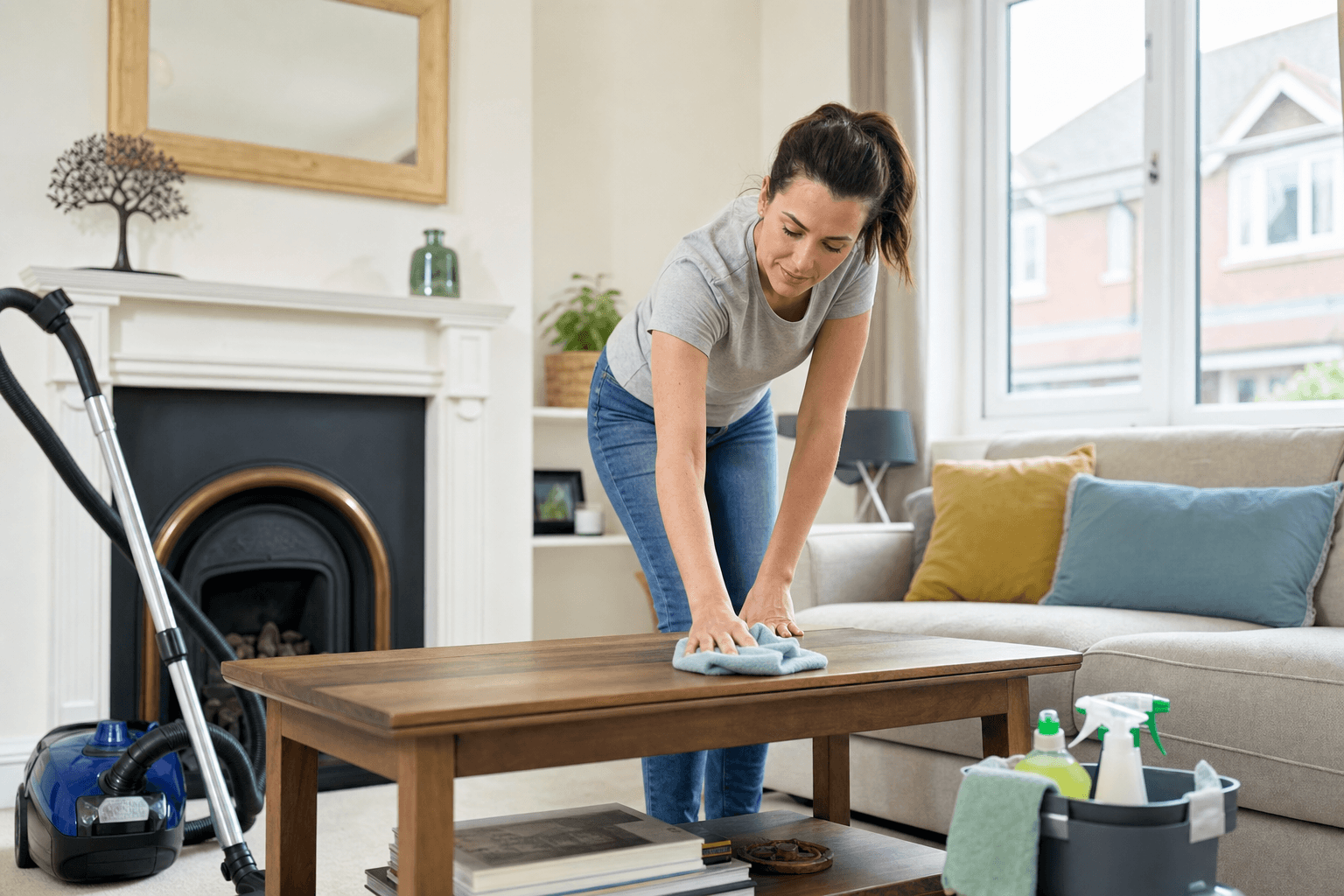
Plan a UK deep clean: real per-room costs, DIY vs hire, COSHH safety on bleach + vinegar, and how to hire a vetted cleaner in 2026.
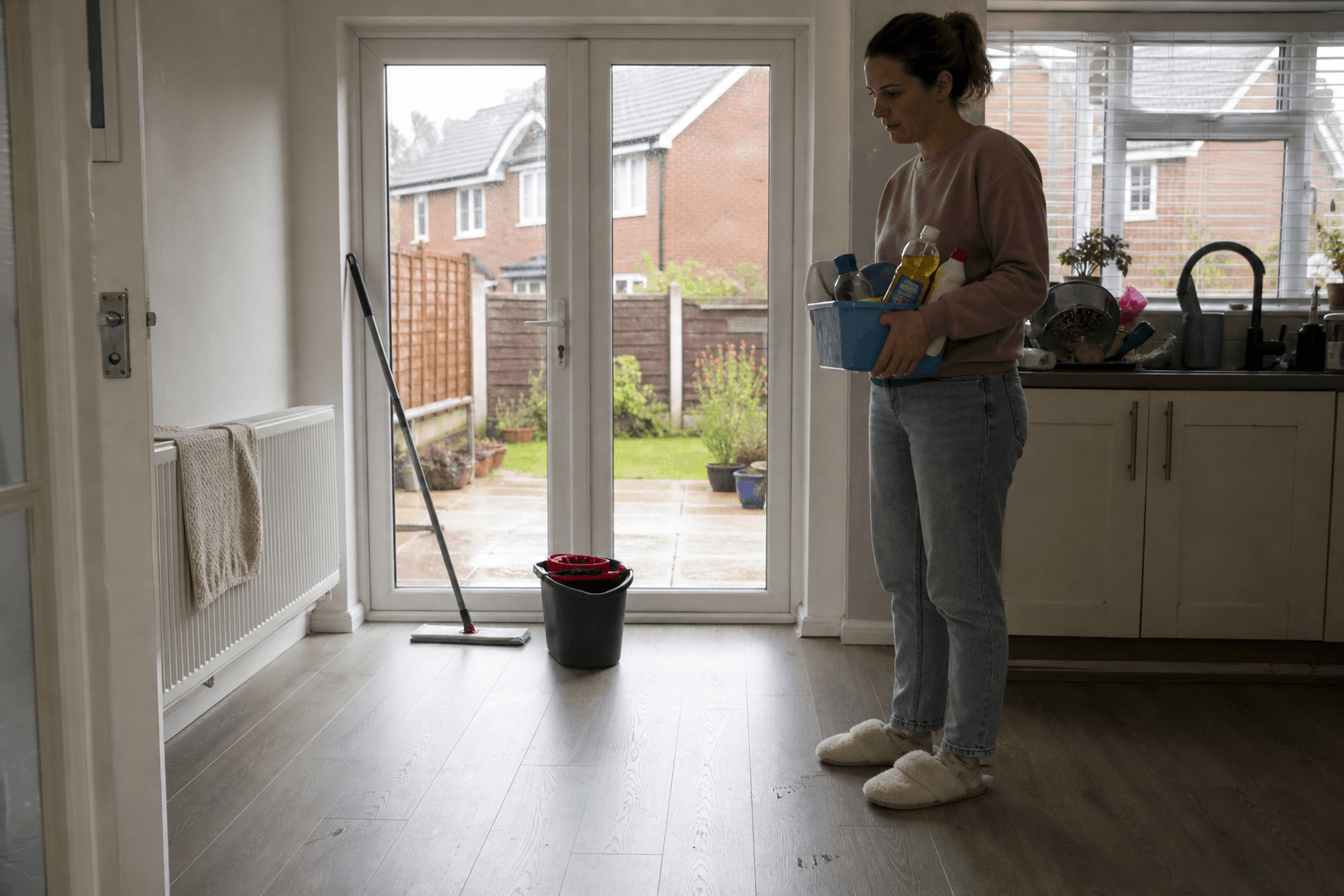
How to clean away black mold (and 11 other deep-clean mistakes) costing UK homeowners up to £1,200 a year, including the bleach+vinegar trap.
Latest in Cleaning Services
View all in this category
Five reasons professional office cleaning is essential for your business, from productivity and image to hygiene, smart spending and specialist support.
How to hire an NCCA-registered carpet cleaner or oven cleaning pro in the UK: 12 questions, red flags, contract rules and how to verify credentials.
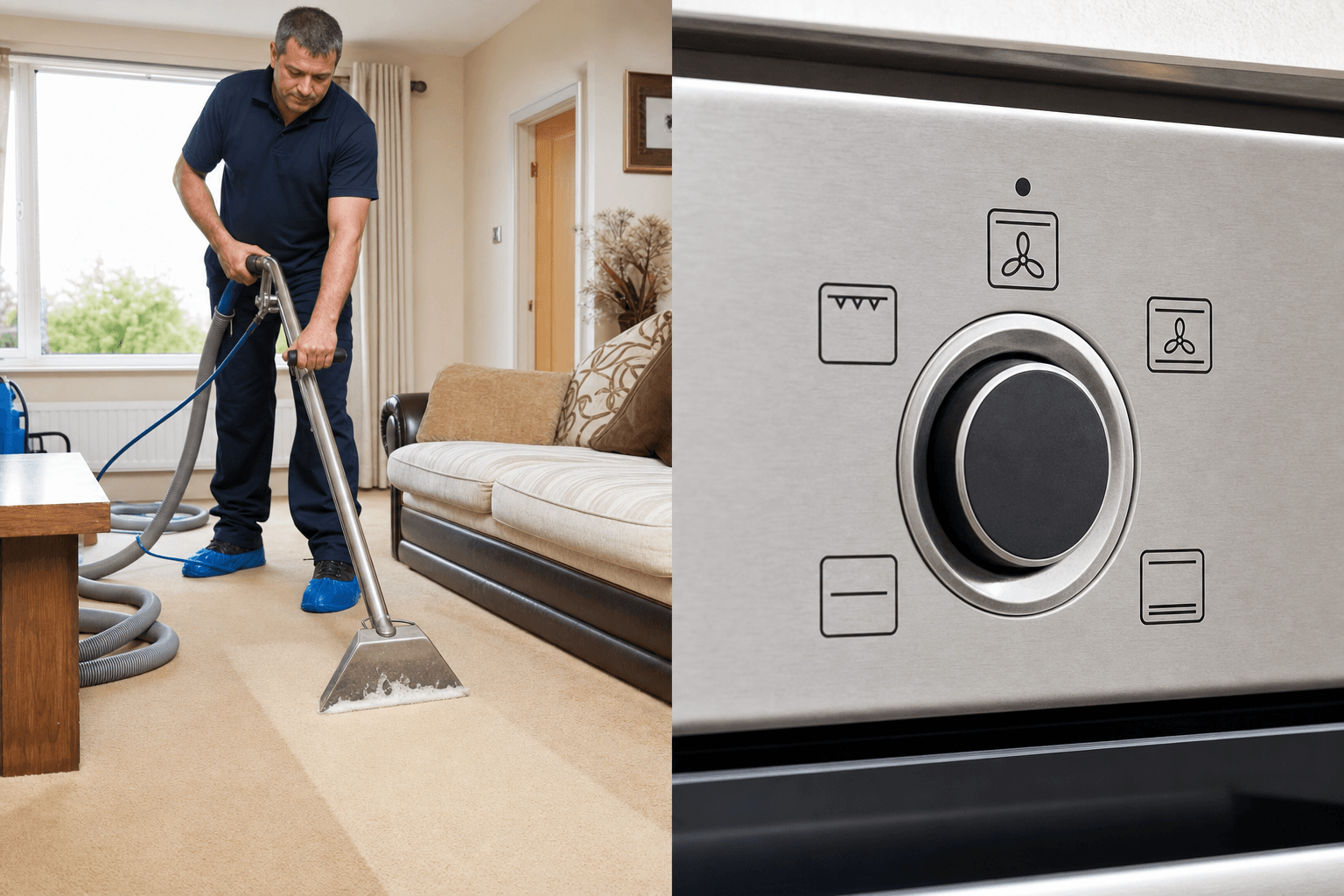
Steam vs dry vs hot-water carpet cleaning compared, plus every UK oven symbol decoded (fan, grill, broiling, pyrolytic) and which is right for your home.
Related services
Professional deep cleaning for homes and flats across the UK. Taskino connects you with insured cleaners who tackle built-up dirt, grime and neglected areas for a fresher finish.
Professional End of Tenancy Cleaning across the UK for tenants, landlords and letting agents. Taskino connects you with insured cleaners for a thorough, checklist-led clean and a smooth handover.
One-off cleaning for homes and flats by vetted, insured professionals. Fast bookings, clear quotes and a thorough clean tailored to your needs. Ideal for end-of-tenancy, pre-event or seasonal deep tidy.
Ready to Book Your Service?
Tell us what you need and our team will help you find the right professional quickly, with clear pricing and no hidden fees.