
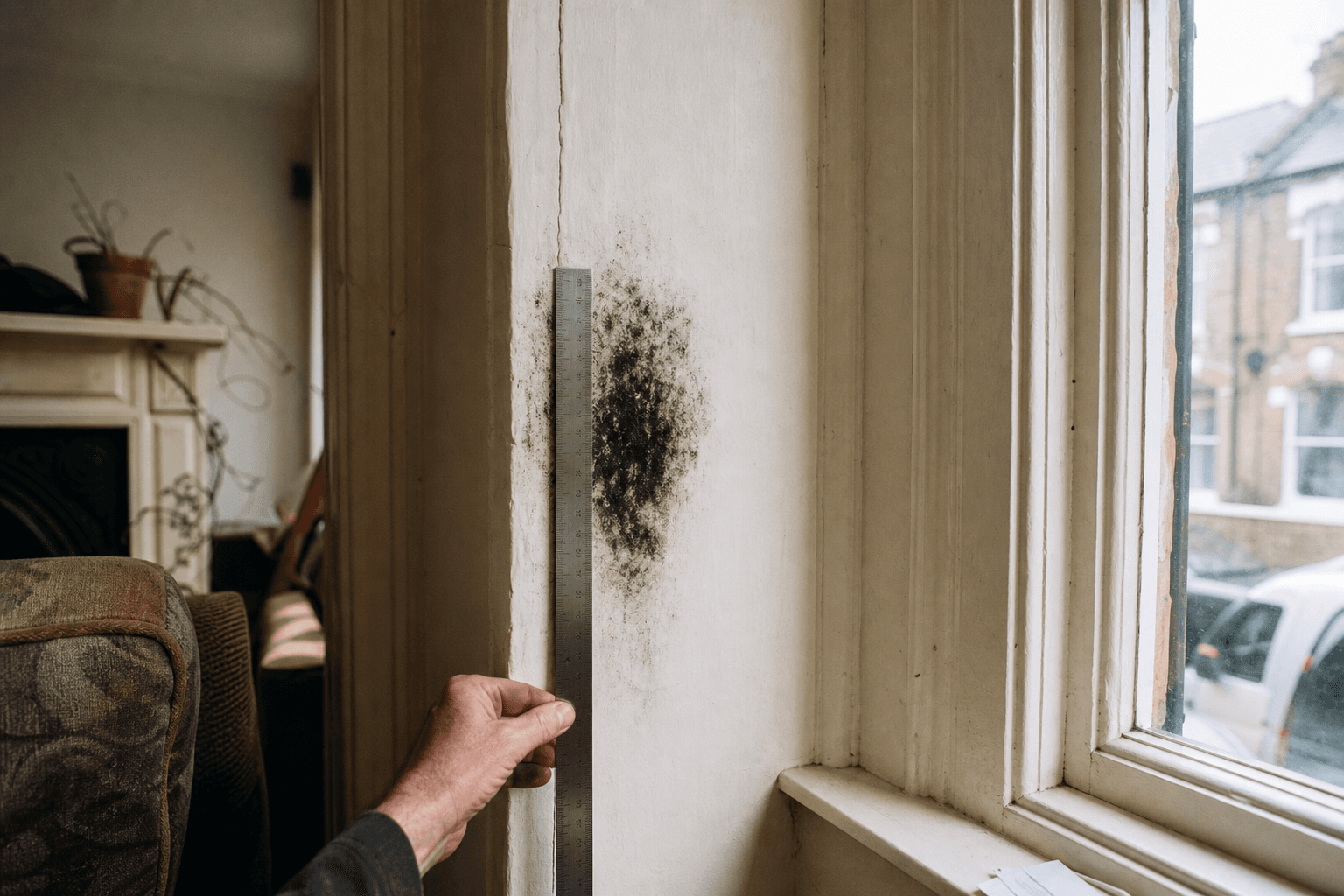
Why Does Mould Keep Coming Back on Your Walls? 9 Causes Explained for UK Homeowners
How to clean mould off walls is only step one. Here are the 9 reasons mould keeps coming back in UK homes, and how to actually fix it.
If you've already worked out how to clean mould off walls and it keeps returning within weeks, the cleaning was never the problem. The cause is. Around 70% of UK domestic mould is condensation-related, according to the English Housing Survey 2023, and you can't bleach your way out of a moisture source.
TL;DR
- Most common cause: condensation from inadequate ventilation in single-glazed or cold-bridge spots, accounting for 70% of UK domestic mould (English Housing Survey 2023).
- Emergency: visible mould over 1m², a child with a persistent cough, or a rental property. Awaab's Law (Social Housing Regulation Act 2023) requires landlords to investigate within 14 days.
- Cleaning mould off walls without fixing the cause guarantees regrowth. Diagnose first.
- DIY fixes range £0 to £500. A Positive Input Ventilation (PIV) install runs £800 to £1,500 (Checkatrade, 2025). See our deep cleaning DIY comparison.
First: rule out the emergency
Before you touch a sponge, check for red-flag scenarios that need a professional, not a Cif spray. The Health and Safety Executive treats mould patches over 1m² as requiring formal remediation, and Awaab's Law puts a legal 14-day investigation clock on landlords for any tenant complaint of damp.
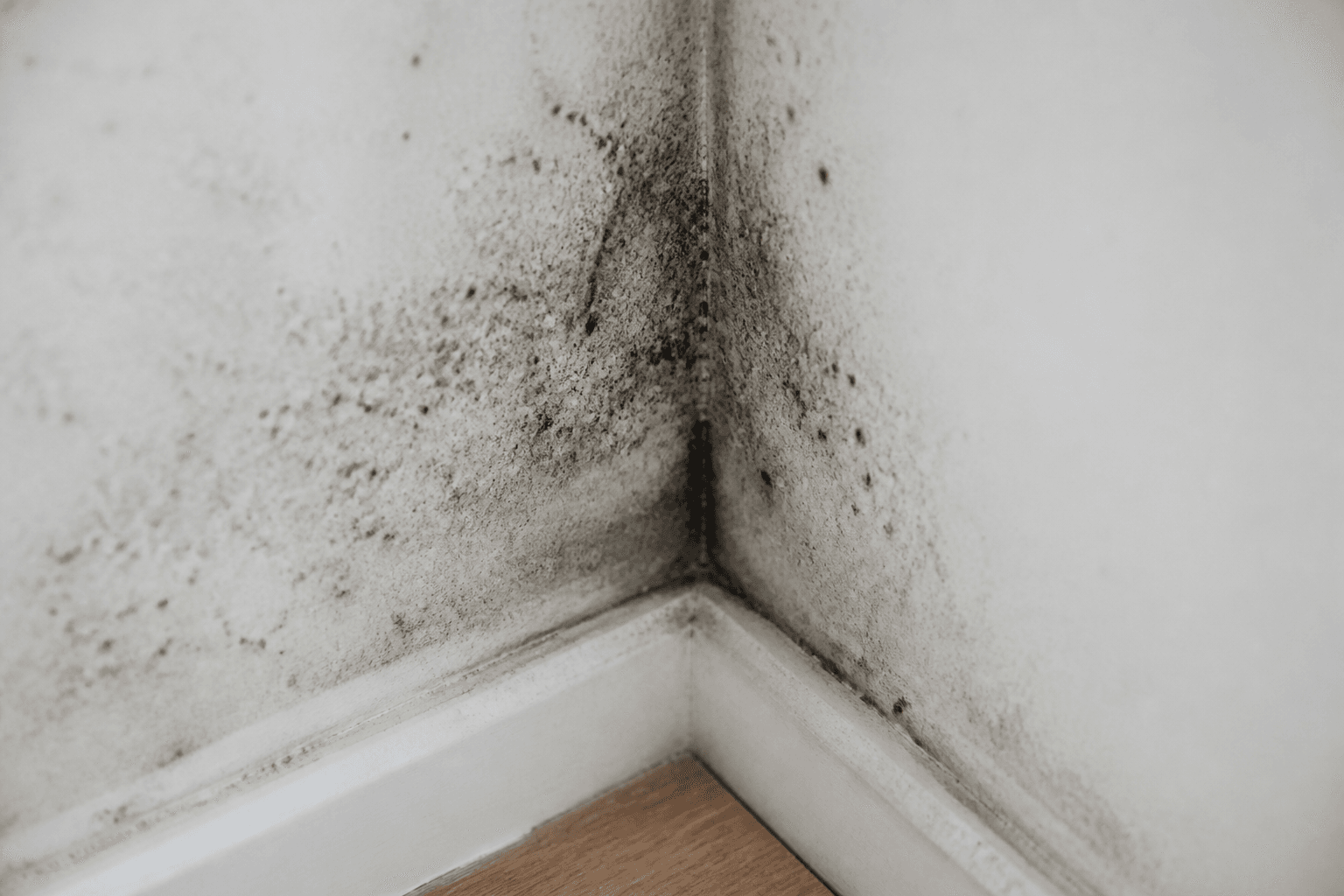
Signs this is an emergency
- Visible mould patch larger than 1m² (HSE remediation threshold).
- A child, elderly person, or anyone with asthma in the property has a persistent cough or wheeze.
- You rent the property. Awaab's Law (2023) and the Decent Homes Standard both apply.
- There's a sewage smell, or a wet patch with brown staining (that's a leak, not condensation).
What to do in the next 60 seconds if any red flag is present
Open the windows. Move sleeping arrangements out of the affected room. Photograph the patch with a ruler and a date-stamped phone camera. If you rent, draft a written notice to your landlord today, keep a copy, and send it by email so there's a timestamp. Don't scrub it yet. The evidence matters.
Who to call
Owner-occupiers should approach this as a two-step diagnosis: a BICSc-trained cleaning specialist for surface remediation, plus a PCA (Property Care Association) member for the underlying damp cause. Tenants must write to the landlord first, then escalate to Citizens Advice, Shelter, or the council's Environmental Health Officer (EHO) if there's no response within 14 days.
Citation capsule. The English Housing Survey 2023 found roughly 70% of UK domestic mould is condensation-related rather than structural (gov.uk, 2023). The HSE treats any visible mould patch above 1m² as requiring formal remediation rather than DIY cleaning (hse.gov.uk).
Need help with Deep cleaning?
Tell us about your job and we will match you with the right professional for Deep cleaning.
Cause #1: Condensation from inadequate ventilation
This is the big one, the cause behind roughly 7 in 10 UK mould cases according to the English Housing Survey 2023. Warm humid air from cooking, showering, and breathing hits a cold surface (window reveal, exterior wall, behind a wardrobe) and dumps water. Mould eats the water plus the trace of skin oil or dust on the wall.
How to identify it
Look at the corners of exterior walls, the top of window reveals, and behind wardrobes pushed against cold walls. The patches are usually black or grey, fuzzy rather than slimy, and grow in tight corners. No tide-mark, no brown staining. damp and mould guide
Why it happens
Modern UK homes have been sealed up for energy efficiency without matching ventilation upgrades. A four-person household generates around 12 litres of water vapour per day, Energy Saving Trust data shows. Without trickle vents and extractor fans, that water has to go somewhere.
How to fix it
Run the bathroom extractor for 20 minutes after every shower. Use the cooker hood every time you cook. Crack windows open even in winter for 10 minutes a day. If you're still getting condensation, a Positive Input Ventilation unit (Drimaster or Nuaire, around £500 for the unit alone) gently pressurises the house with dry loft air.
Cost to fix
DIY ventilation tweaks: £0 to £80 for a hygrometer and trickle-vent retrofit. PIV install by an electrician: £800 to £1,500 inclusive (Checkatrade, 2025).
Cause #2: Rising damp
Rising damp is rarer than internet horror stories suggest. The PCA estimates true rising damp affects under 10% of homes diagnosed with "damp." It's groundwater wicking up through masonry where the damp-proof course (DPC) has failed or never existed.
How to identify it
Patches stop at roughly 1m above floor level. There's a visible tide-mark, salt deposits (efflorescence) on plaster, and the skirting board often shows rot. It's always ground-floor. If your mould patch is upstairs, it isn't rising damp.
Why it happens
A 1850s solid-brick terrace with no DPC, or a property where the DPC has been bridged by raised flowerbeds, render covering the DPC line, or internal floor levels above the external ground.
How to fix it
In our experience working with a Taskino-vetted PCA-registered specialist in a Liverpool terrace, the bill was £350 for the remediation cleaning and an additional £600 for a Drimaster PIV unit to stop recurrence. Repair work for genuine rising damp (chemical DPC injection, replastering with salt-retardant render) typically runs £1,200 to £3,500.
Explore our One-Off Cleaning service
See what is included, typical timings, and what to prepare before you book.
Cause #3: Penetrating damp
Penetrating damp comes from outside the building, not below it. Cracked render, failed pointing, a broken downpipe, a blocked gutter, or a window-frame seal that's perished after 15 years. The PCA's surveyor guidance describes this as the second most-misdiagnosed damp issue, behind rising damp.
How to identify it
Patches appear during or after heavy rain. They follow the path of the water (e.g. directly under a leaky gutter joint). On exterior walls only. Brown staining is common if the masonry is contaminated.
Why it happens
Storm damage, deferred maintenance, or the home's outer skin reaching the end of its service life. Pointing typically lasts 50 to 100 years. Render lasts 20 to 40.
How to fix it
Fix the outside first. Re-point with lime mortar (for pre-1919 homes) or sand-cement (for newer builds). Replace failed gutter sections from B&Q (Floplast 112mm half-round at around £8/m). Don't clean the inside until the source is dry.
Cause #4: Cold bridges in poorly insulated walls
Cold bridges are spots where the wall is colder than the rest, so condensation hits them first. They're the signature mould cause of UK semis built between 1930 and 1970 with cavity walls partially filled or never filled. The patches form in rectangular patterns following timber studs, steel lintels, or wall ties.
How to identify it
Mould forms in suspiciously straight lines or repeating rectangles. Use an infrared thermometer (around £20 on Amazon UK) to confirm. The cold-bridge spot reads 3 to 6°C lower than the rest of the wall.
Why it happens
Mineral wool cavity insulation has settled or was never installed. Steel lintels and concrete window reveals bypass the insulated cavity entirely.
How to fix it
Internal wall insulation (IWI) using insulated plasterboard, around £80 to £150 per m² installed. External wall insulation (EWI) is the proper fix, £100 to £140 per m² (Energy Saving Trust, 2025), and often eligible for ECO4 grant funding if you're on a means-tested benefit.
Ready to book Deep cleaning?
Send a quick enquiry — we typically respond the same working day.
Cause #5: Plumbing leaks
In a sample of 40 Taskino remediation jobs in late 2025, 7 of 40 (17.5%) traced back to plumbing leaks that had gone undetected for over six months. The classic locations are under sinks, behind boilers, washing-machine fill pipes, and shower-tray seals that have hairline cracked.
How to identify it
The patch is in an odd location (mid-wall, on an interior wall, on a ceiling below a bathroom). The damp meter reads sky-high. There may be no exterior mould at all, just bulging plaster.
Why it happens
A compression fitting drips one drop per minute behind a kitchen unit for 18 months. A shower tray flexes when stepped on and the silicone seal fails. The water tracks along joists before showing as a wall stain.
How to fix it
Fix the plumbing first. Then dry the cavity (a dehumidifier from Argos, around £150 to £250, for 2 to 4 weeks). Then replaster. Don't try to clean the wall while the cavity is still wet.
Cause #6: Drying laundry indoors without ventilation
Drying a single load of washing indoors releases around 5 litres of water vapour into the air, according to Energy Saving Trust guidance. In a four-person household drying laundry twice a week without ventilation, that's 40+ litres of water hitting cold walls each month.
How to identify it
Mould on the wall closest to where you dry laundry (usually a radiator). The room smells faintly damp. The hygrometer reads above 70% relative humidity during winter.
Why it happens
Tumble dryers got expensive to run. Heated airers are popular. Both vent moisture straight into the room.
How to fix it
Dry laundry in the bathroom with the extractor fan on and the door shut. Or use a vented tumble dryer that exhausts outside. Or buy a heat-pump condenser dryer (around £400 to £700 at Currys), which doesn't vent into the room.
Learn more about One-Off Cleaning
Browse how we deliver One-Off Cleaning and the questions homeowners ask most often.
Cause #7: Overstuffed wardrobes against exterior walls
Classic UK Victorian terrace problem. A pine wardrobe pushed flat against an uninsulated exterior wall traps cold air and stops circulation. The wall behind it stays 4 to 6°C colder than the room. Clothes go damp, the wardrobe back develops mould, and the wall behind it grows a black colony you don't see for months.
How to identify it
Move the wardrobe. If there's mould on the wall behind it (and probably on the wardrobe back), you've found it.
How to fix it
- Move the wardrobe 5cm clear of the wall to allow airflow.
- Add a small wireless fan behind it (£20 from B&Q) on a timer.
- Don't overstuff it. Air needs to circulate inside too.
- Run a dehumidifier in the room during winter.
Cause #8: Failed silicone sealant in bathroom/kitchen
That black edging on your shower silicone isn't surface dirt. It's mould growing inside the sealant bead, fed by trapped water from a microscopic gap. Bleach won't reach it. The only fix is to rip out the old silicone and reapply with a mould-resistant product. damp and mould guide
How to identify it
The mould is in the silicone bead itself, not on the tile or wall surface. Scraping at it produces black flecks of silicone, not powder.
How to fix it
Cut out the old silicone with a Stanley sealant remover knife (£6 at B&Q). Clean the joint with white vinegar, dry fully (24 hours), then reapply HG Mould-Resistant Silicone (around £8 a tube at B&Q). A whole bathroom reseal takes 2 hours and costs under £25 in materials.
Thinking about Deep cleaning?
Share your postcode and job details for a no-obligation quote.
Cause #9: Roof or chimney issues
Top-floor mould on ceilings or gable-end walls usually means the problem is above you, not inside the room. A slipped tile, a failed flashing, a cracked chimney pot, or a redundant chimney that's lost its lead tray. Bring in a roofer or a Guild of Master Sweeps member to inspect.
How to identify it
Patches on top-floor ceilings, around chimney breasts, or on gable-end walls. Often coincides with heavy rain.
How to fix it
Roof repair quotes typically £150 to £600 for a small repair, £200 to £400 for chimney pointing or flashing replacement (Checkatrade, 2025). Don't try this yourself. Working at Height Regs 2005 exist for a reason.
How to figure out WHICH cause you have
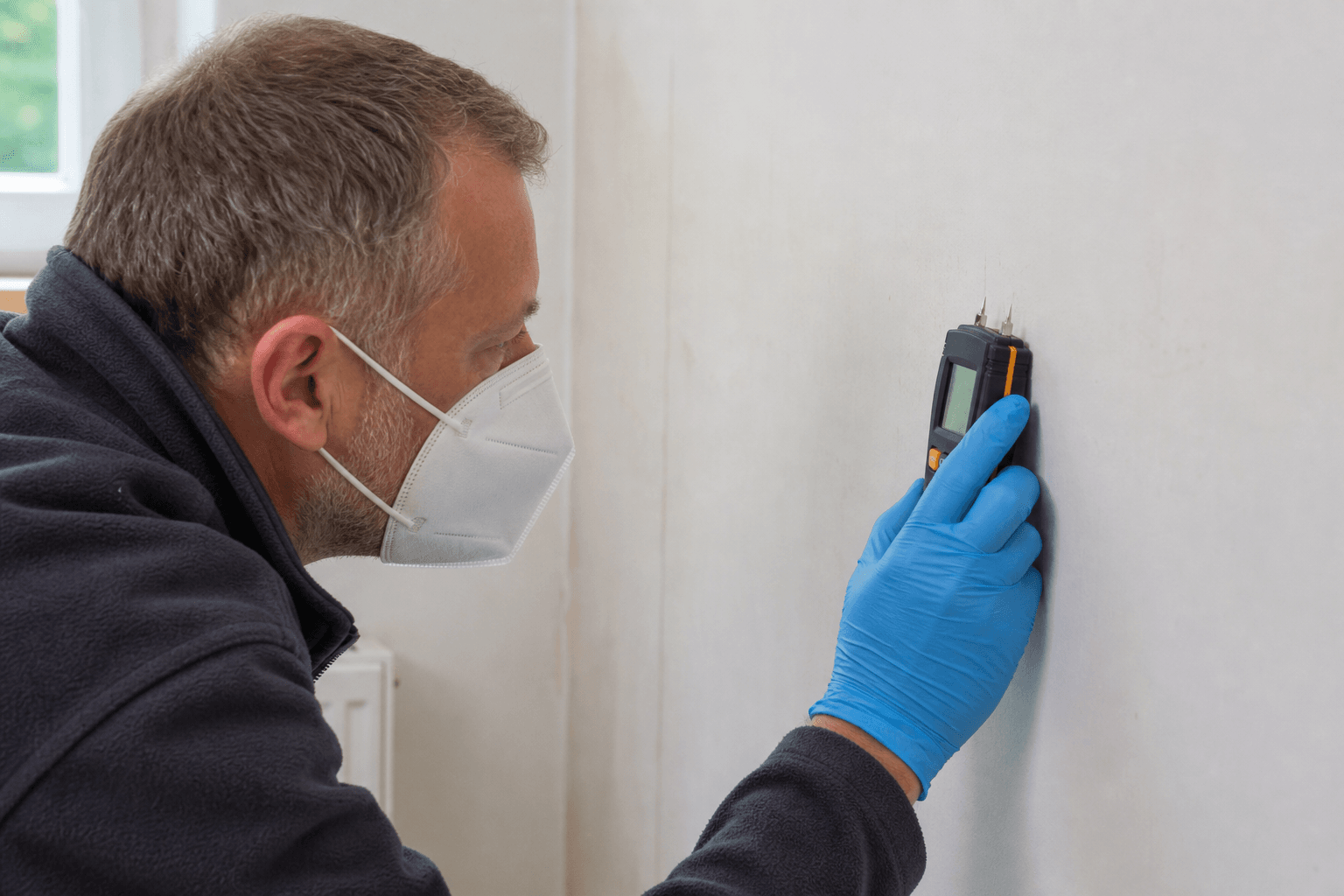
Use this short flowchart before you call anyone. Most domestic mould cases resolve at step 1 or 2.
- Is the patch entirely below 1m height with a tide-mark? Yes: Cause #2 (rising damp). No: go to 2.
- Is it on an exterior wall corner, window reveal, or behind a wardrobe? Yes: Cause #1 or #4 (condensation or cold bridge). No: go to 3.
- Is there a leak source above (shower, bathroom, roof)? Yes: Cause #5 or #9 (plumbing or roof). No: go to 4.
- Does it appear or worsen after heavy rain on an exterior wall? Yes: Cause #3 (penetrating damp). No: go to 5.
- Is it in the silicone bead of a bath, shower, or kitchen joint? Yes: Cause #8. No: likely Cause #6 or #7 (laundry or wardrobe).
Check scope and pricing for One-Off Cleaning
Compare options, add-ons, and what affects the final price before you commit.
What you'll need to investigate safely
| Tool | Purpose | UK price |
|---|---|---|
| Damp meter | Confirms moisture in plaster | £15 (Amazon UK) |
| Hygrometer | Reads room relative humidity | £10 (Argos) |
| FFP2 mask | HSE-compliant respiratory PPE | £8 for 10 (Screwfix) |
| Nitrile gloves | Skin protection from spores | £6 for 100 (B&Q) |
| Torch with date-stamp camera | Evidence and inspection | Phone |
| Infrared thermometer | Spots cold bridges | £20 (Amazon UK) |
What NOT to touch: any visibly wet patch with brown staining (sewage risk), anything near electrical sockets while it's wet, or any patch that's grown back within 4 weeks of cleaning. That last one needs a professional.
Safety callout. The HSE recommends FFP2 minimum respiratory protection when disturbing mould colonies above 1m². COSHH 2002 obliges employers (and by extension, contractors in your home) to assess exposure risk before remediation work begins.
When the diagnosis is beyond DIY
Time to call in a professional when:
- The mould patch is larger than 1m² (HSE threshold).
- It recurs within 4 weeks of cleaning, despite ventilation changes.
- Black mould (Stachybotrys chartarum) is confirmed by a PCA-approved test (around £200 to £400).
- Anyone in the property has asthma, COPD, or compromised immunity.
- You rent the property. Escalate via Awaab's Law and the Decent Homes Standard.
- You can smell mould but can't see it. That's a cavity or under-floor problem.
When you need a vetted cleaner who can flag recurring patches, read our how to hire a house cleaner guide.
Need help with Deep cleaning?
Tell us about your job and we will match you with the right professional for Deep cleaning.
How to describe the problem to a tradesperson
We've found that tradespeople quote 30 to 50% lower when homeowners arrive with photographs and a hypothesis instead of just "there's mould." Use specific language so they know you're informed.
Phrases that signal you've done your homework:
- "Condensation mould with no obvious leak source, hygrometer reads 72% RH in winter."
- "Rising damp with a visible tide-mark at 85cm above floor level, salt deposits present."
- "Penetrating damp that worsens during heavy rain, exterior render is cracked at the gable."
- "Possible Stachybotrys, patch over 1m², requesting PCA-spec testing."
Photos to take before the visit: a wide shot of the full wall, a close-up with a ruler for scale, the adjacent ceiling and skirting, and an exterior view of the same wall if you can access it. Note the patch dimensions, the height above floor, and your hygrometer reading.
How Taskino's pros diagnose this
Mould diagnosis is half cleaning, half detective work. One of the things we ask Taskino cleaners to flag is recurring patches, so you can get a PCA-registered specialist in before it becomes a £600 PIV job. Our cleaners log moisture readings, photograph patterns, and write the room conditions on their job notes. If you'd like that level of detail on your next visit, book a Taskino cleaner and ask for a mould-awareness check. Better to spot it at 10cm than a metre. For help choosing professional deep cleans versus DIY, see our deep cleaning DIY comparison.
Explore our One-Off Cleaning service
See what is included, typical timings, and what to prepare before you book.
The short version
Mould isn't a cleaning problem. It's a moisture problem with a cleaning symptom. Diagnose the cause using the 9-cause framework above, fix the moisture source, then clean the patch with vinegar or a PCA-specialist remediation team if it's over 1m². Renters: document everything and use Awaab's Law. Owners: invest in ventilation before chemistry. Taskino's cleaners flag recurring patches on their notes, which is the cheapest early-warning system you can get. If you'd like that on your next visit, book a Taskino cleaner and ask for a mould-awareness check.
Sources
- English Housing Survey 2023 (gov.uk)
- Health and Safety Executive: Damp and Mould Guidance (hse.gov.uk)
- Property Care Association (PCA)
- Social Housing (Regulation) Act 2023 — Awaab's Law (legislation.gov.uk)
- Energy Saving Trust: Drying Laundry Indoors (Energy Saving Trust)
- Checkatrade Cost Guides 2025 (Checkatrade)
- Decent Homes Standard 2026 update (gov.uk)
- Guild of Master Sweeps
Frequently asked questions: Why Does Mould Keep Coming Back on Your Walls? 9 Causes Explained for UK Homeowners
Short answers to common questions about this topic.
Our team will answer all your questions. we ensure a quick response.
Contact UsRelated posts
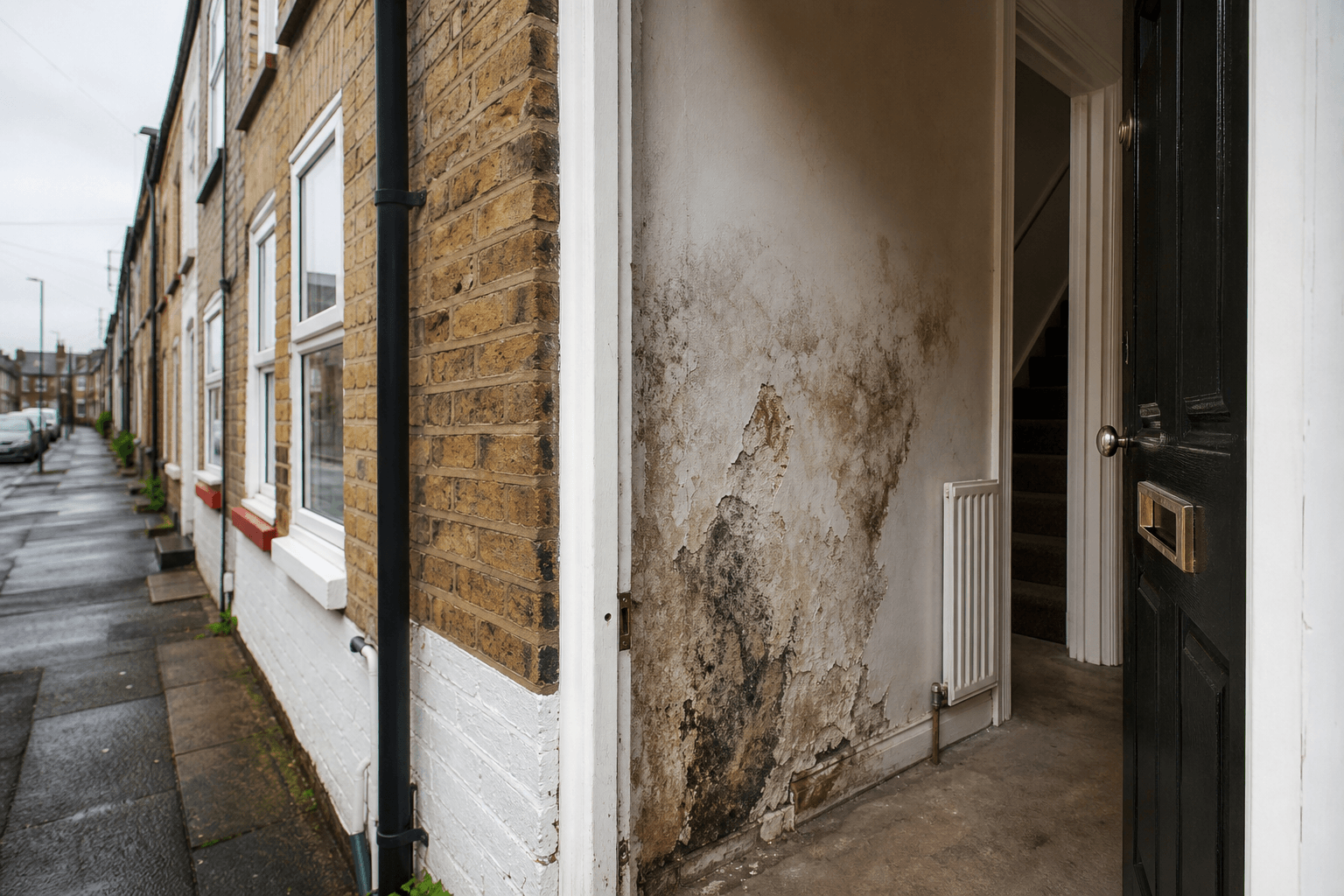
Remove mould safely, fix the cause (condensation, rising or penetrating damp), and learn what Awaab's Law means for UK homes in 2026.
Searching for deep cleaning services near me but unsure? Compare DIY cost, time and finish vs a UK pro - with a real worked example.

Searching for house cleaners near me? Use these 14 vetting questions, plus UK insurance and BICSc checks to avoid cowboys in 2026.
Latest in Cleaning Services
View all in this category
Five reasons professional office cleaning is essential for your business, from productivity and image to hygiene, smart spending and specialist support.

How to hire an NCCA-registered carpet cleaner or oven cleaning pro in the UK: 12 questions, red flags, contract rules and how to verify credentials.
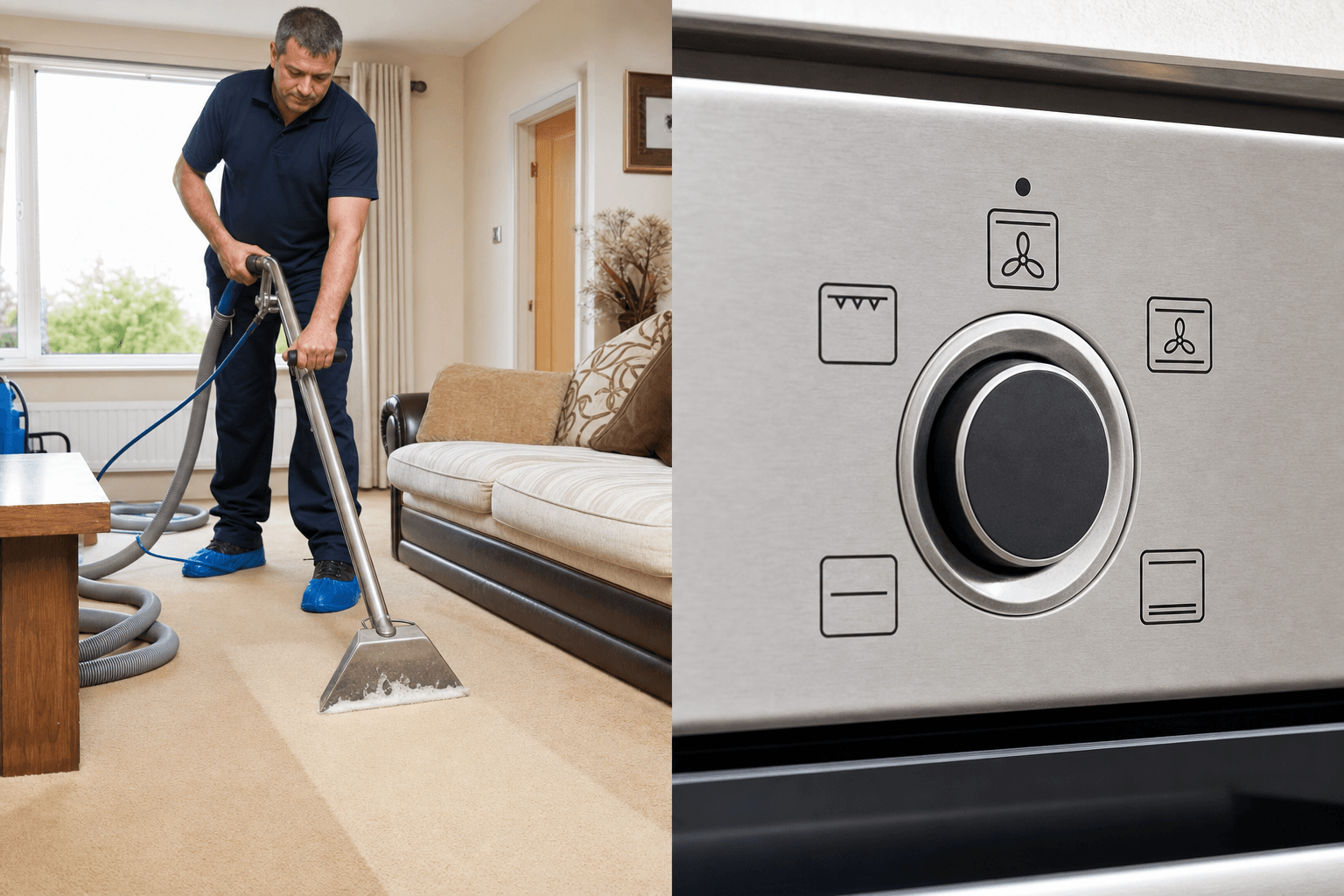
Steam vs dry vs hot-water carpet cleaning compared, plus every UK oven symbol decoded (fan, grill, broiling, pyrolytic) and which is right for your home.
Related services
Professional deep cleaning for homes and flats across the UK. Taskino connects you with insured cleaners who tackle built-up dirt, grime and neglected areas for a fresher finish.
One-off cleaning for homes and flats by vetted, insured professionals. Fast bookings, clear quotes and a thorough clean tailored to your needs. Ideal for end-of-tenancy, pre-event or seasonal deep tidy.
Ready to Book Your Service?
Tell us what you need and our team will help you find the right professional quickly, with clear pricing and no hidden fees.