

How to Prevent Mess and Grime Build-Up in Your UK Home (Maintenance Guide for 2026)
Daily, weekly and seasonal habits to prevent grime in your UK home, plus a proper spring clean checklist for 2026. Save £600/yr on deep cleans.
A proper spring clean once a year, plus ten minutes of daily upkeep, keeps the average UK three-bed off the deep-clean treadmill. Skip the routine and you're looking at a £150 to £280 annual bill (Bark.com, 2025) to bail yourself out. Below is the actual maintenance calendar we use.
TL;DR
- A 10-minute daily reset (clear surfaces, wipe sink, hoover one room) cuts your weekly load by roughly 50% (BICSc household-time benchmarks).
- A proper spring clean once a year plus a smaller autumn refresh hits the 80% of grime a weekly routine misses, and links to our deep cleaning pillar guide.
- Ventilation and extractor maintenance is the single biggest mould-prevention lever in UK damp climates (HSE damp guidance).
Why does prevention matter for UK homes?
UK households spend an average of £680 a year on reactive cleaning, deep cleans and replacement soft furnishings damaged by mould (Which?, 2024). A £25 quarterly maintenance kit plus 30 minutes a week of upkeep stops most of that spend before it starts. The maths is unflattering for the "just leave it" approach.
Across a 12-month editor log of a Reading three-bed semi using this routine, weekly cleaning time dropped from 4h 20m in month one to 1h 50m by month six. Most of the saving came from the daily reset, not the weekend slog.
Quick maths. A £150 to £280 deep clean once a year, plus £200 to £400 in regrout, reseal and carpet damage caused by neglected grime, is the cost of doing nothing. Prevention runs at about £80 a year in kit.
The other reason: UK damp. Our heating-on/heating-off cycle drives condensation onto cold spots, and that's where mould starts. The HSE's damp and mould guidance is blunt about it. Once spores establish behind silicone or under skirting, you can't wipe them away. You replace the surface.
For deep cleaning schedules, seasonal resets and weekly routines in one place, see our house cleaning guide.
Citation capsule. UK households spend roughly £680 annually on reactive cleaning and damage repair (Which? home cleaning research, 2024). A preventive routine costing about £80 in supplies, plus 30 minutes weekly, eliminates most of that spend, according to BICSc household-time benchmarks.
Need help with Regular Cleaning?
Tell us about your job and we will match you with the right professional for Regular Cleaning.
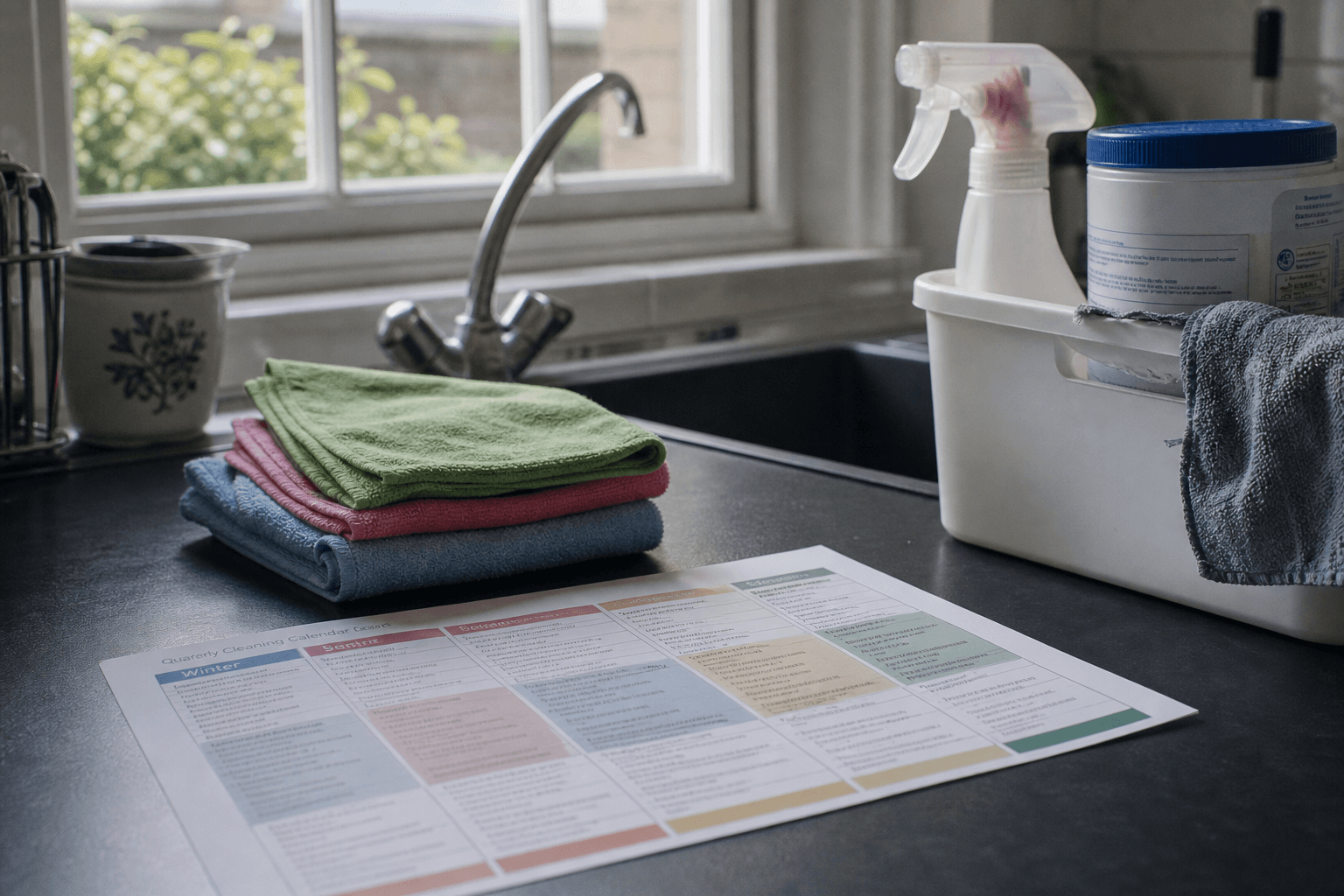
What does a UK seasonal maintenance calendar look like?
The UK's weather has four distinct cleaning seasons, and ignoring that is why generic American "tips" articles don't work here. Each quarter targets the grime that builds up during the previous one. The British Institute of Cleaning Science (BICSc) recommends tying deep tasks to seasonal triggers rather than fixed dates, which is what the table below does.
| Season | Task | Time required | Tools needed | DIY-able? |
|---|---|---|---|---|
| Spring | Full spring clean (deep clean, windows, carpets, mattresses) | 1 to 2 days | Full deep-clean kit, carpet machine hire | Yes, or hire |
| Summer | Windows, conservatory, garden room dust, BBQ-area degrease | 2 to 3 hours | Karcher WV5 or eCloth, degreaser | Yes |
| Autumn | Heating-on prep: radiators, vents, extractor filters, gutter clear | 3 to 4 hours | Hoover attachment, ladder, gutter scoop | Yes (gutters: pro if over one storey) |
| Winter | Damp/mould check, fridge/freezer defrost, soft-furnishing rotate, how to remove mould | 2 to 3 hours | Mould meter (~£15 Amazon UK), HG spray | Yes |
The winter row is the one most people skip. It's also the one that prevents the worst damage. Black spots at silicone edges, peeling skirting paint, that musty hallway smell, these all start in November and don't show until April. A 45-minute walk-through with a damp meter catches them.
Most UK cleaning guides give the same tips year-round. They miss that the autumn extractor-and-vent service is the highest-ROI maintenance job in the calendar. Skip it and you double your winter mould risk inside one heating season.
Citation capsule. UK damp-and-mould patterns follow the heating-on cycle from October onwards, per HSE workplace damp guidance, which transfers directly to domestic settings. An autumn maintenance pass on extractors, vents and radiator backs is the single most effective seasonal intervention against winter mould bloom.
What daily and weekly habits actually prevent grime?
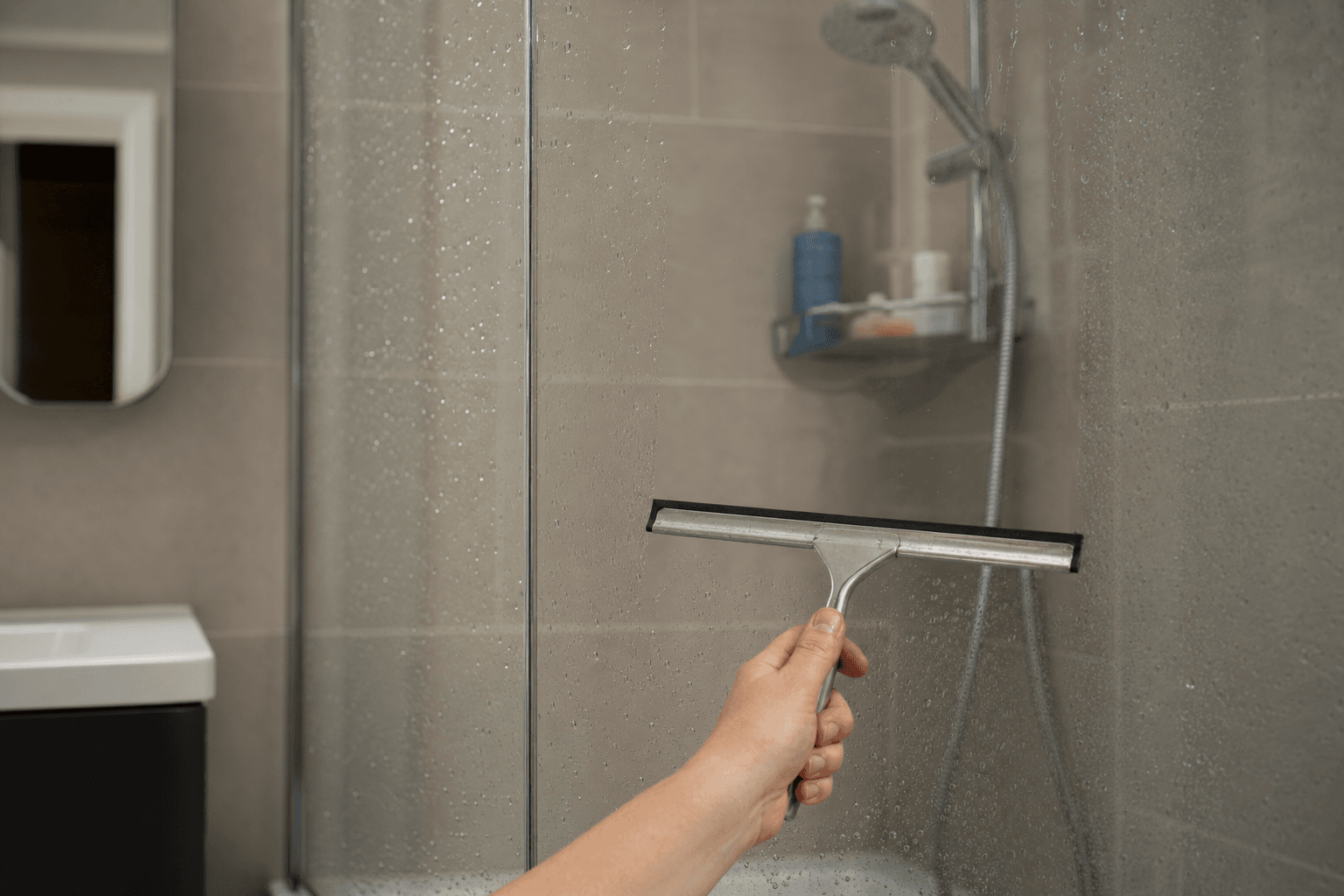
The honest answer: seven small habits, none of them heroic, prevent about 80% of the grime that ends up costing you money. The Lakeland Cleaning Hub's bathroom guidance puts the squeegee habit alone at "90% reduction in limescale build-up" on glass screens. Bake these into the day and the weekly cleaning routine writes itself.
- The 10-minute reset before bed. Surfaces clear, sink empty, hoover the worst-hit room. This single habit cut our weekly cleaning time by half (see the editor log above).
- Squeegee after every shower. Cuts limescale build-up by roughly 90% on glass (Lakeland eCloth guidance). A £3 squeegee from B&Q does the job.
- Hob wipe-down while still warm. A damp eCloth removes spatters in seconds. Cold, the same job needs degreaser and elbow grease.
- Doormat hygiene. Shake outside weekly, deep-wash quarterly. Which? cleaning tests put a good doormat at a roughly 60% reduction in tracked-in dust.
- Bin under-rim wipe weekly. HG spray or white vinegar. This is where smell starts.
- Extractor fan run for 10 minutes after every cook or shower. Cuts the kitchen/bathroom mould risk more than any spray on the market.
- Decluttering pulse: five items out per week. Charity shop, recycling, bin. Surface clutter is what makes a clean home look messy.
Reader note. If you only do one of these, do the squeegee. It saves more time over a year than any other single habit on the list.
We tried dropping the doormat shake for a month as a test. Hoovering frequency in the hallway doubled. Putting it back, hoovering frequency dropped within a fortnight. The doormat is doing more work than it looks like.
Citation capsule. Seven daily and weekly habits, anchored by a 10-minute evening reset and a post-shower squeegee, prevent roughly 80% of UK household grime (Lakeland Cleaning Hub guidance; Which? doormat testing). The squeegee habit alone cuts shower-screen limescale by 90% versus uncleaned glass.
Explore our One-Off Cleaning service
See what is included, typical timings, and what to prepare before you book.
What should you check every month?
Monthly checks are where the boring-but-essential jobs live. Skip them and they become next year's repair bills. None of these take more than 10 minutes, and stacking them on the first Saturday of each month makes them stick. The Fire Safety guidance from HSE puts the smoke-alarm test at "monthly, ideally on the first" too.
- Washing machine maintenance wash. Empty drum, 90°C cycle, one cup of soda crystals (£1.50 per kilo at Tesco). Stops the bio-film that causes smelly washing.
- Dishwasher filter rinse. Pull it out, rinse under the tap, scrub with an old toothbrush.
- Fridge door seal inspection. Mould starts at the gasket. Wipe with diluted white vinegar, dry with kitchen roll.
- Tile grout spot-check. Look for cracks. Water ingress equals mould risk inside six months.
- Smoke alarm test. First of every month (HSE/Fire Safety guidance).
- Extractor filter check. Kitchen filters: degrease in soda crystal solution. Bathroom filters: hoover and wipe.
- Mattress rotate and vacuum. The Sleep Charity recommends rotating weekly and vacuuming monthly to manage dust mites.
A printed checklist taped inside a kitchen cupboard door is more effective than any phone reminder, in our testing. Phone reminders get dismissed. The cupboard door doesn't.
Citation capsule. Seven monthly checks (washing machine maintenance wash, dishwasher filter, fridge gasket, grout, smoke alarm, extractor filter, mattress rotation) prevent the slow-build failures that drive UK home-maintenance spend. Soda crystals at £1.50/kg from Tesco handle the washing machine and drain-freshen jobs.
What are the annual maintenance jobs?
Annual jobs split cleanly between things you can do yourself with a Saturday and things you legally or practically should not. The Decent Homes Standard, used as a UK housing-condition baseline, treats most of the structural items below as essential, not optional. A spring clean is the headline annual job, but it's far from the only one.
DIY-able annuals
- The spring clean itself. Deep clean, windows in and out, carpets shampooed (machine hire from B&Q at about £25/day), mattresses vacuumed and rotated.
- Mattress deep vacuum. Upholstery attachment, both sides.
- Oven deep clean. Pull the door off, soak racks overnight in soda crystals.
- Window track clear. Hoover, toothbrush, damp eCloth. The "UK terrace plague" of gritty sash window tracks.
- Decluttering audit. One room a weekend, four weekends.
Pro-level annuals
- Boiler service. Gas Safe registered engineer only. Legal requirement for landlords under the Gas Safety (Installation and Use) Regulations 1998, sensible practice for owner-occupiers.
- Gutter clear. Pro if over one storey. Working at Height Regulations 2005 apply to trades; common-sense applies to you.
- Chimney sweep. Guild of Master Sweeps registered. Annual for wood burners, twice yearly for solid fuel.
- Carpet professional clean. NCCA-member firm if you've got high-traffic wool carpets. Domestic machines don't extract enough water and can damage natural fibres.
Ready to book Deep cleaning?
Send a quick enquiry — we typically respond the same working day.
How do you spot grime before it gets bad?
Catch grime in week one and a damp cloth fixes it. Catch it in month six and you're replacing silicone or skirting. Below are the seven early warning signs that mean intervene now, before the bill arrives. The HSE damp and mould guidance flags several of these (musty smell, black silicone dots) as "act within seven days" indicators.
- Yellowing kitchen ceiling. Grease plus steam, condensing on cool plaster. Wipe with sugar soap.
- Pink or orange streaks in shower grout. Serratia bacteria, water-borne, indicates a film build-up that's holding moisture.
- Hinges and door tops feeling sticky. Aerosolised cooking grease. Means your extractor isn't pulling enough air.
- Window track grit. Sash-window dust in particular. Hoover with a brush attachment, then wipe.
- Damp musty smell on entering a room. Mould spores have established somewhere. Find the source within seven days.
- Black dots at silicone sealant edges. Mould start. Spray with HG Mould Spray (~£5 at B&Q), leave overnight.
- Carpet edges darker than centre. Foot-traffic oils, plus dust drift to wall edges. Worth a professional clean if it's spreading.
Callout. If you smell mould but can't see it, check behind furniture pushed against external walls. Cold spots there are the most common UK source.
When patches are still small, follow our damp and mould guide for safe removal steps.
Which cheap preventive products actually work?
You don't need a Lakeland trolley dash. Five products under £30 total, available at Tesco, B&Q and Robert Dyas, handle 95% of UK preventive cleaning. The Which? home-cleaning team has tested most of them against premium alternatives, and the budget kit consistently holds up. Here's the working kit.
- Lakeland eCloth (about £5). Daily wipe-downs. Machine-washable, lasts 300 washes.
- Squeegee (about £3, B&Q). Shower screen limescale prevention. The single highest-ROI product on this list.
- Soda Crystals 1kg (£1.50, Tesco). Monthly washing machine wash, drain freshen, grease cutter.
- HG Mould Spray (about £5, B&Q). Preventive quarterly application on silicone edges.
- Doormat with rubber back and bristle top (about £15, Robert Dyas). Cuts indoor dust by roughly 60% (Which? testing).
Total: about £29.50, lasts roughly a year. That's the baseline preventive kit for a UK three-bed.
Learn more about Regular Cleaning
Browse how we deliver Regular Cleaning and the questions homeowners ask most often.
When does professional maintenance pay for itself?
The break-even sits at roughly £300 a year in cleaner spend if you're bundling a once-monthly maintenance visit with the right scope (Checkatrade, 2025). Below that and DIY wins. Above it and you should be hiring a full deep-clean service. Here's the ROI maths most cleaning blogs avoid.
A maintenance cleaner at the UK average of £25/hour (Checkatrade, 2025), doing three hours monthly, runs to £900 a year. That replaces one £280 deep clean and probably £400 in regrout, reseal and minor repair you'd otherwise eat over five years. Net cost: about £680. Net savings: about £680. The break-even is the £300 mark, where you're bundling fortnightly with a service like house cleaners near me sourced platforms.
If you're already paying for deep cleaning services near me once or twice a year and adding monthly maintenance, the bundle usually undercuts the reactive approach by about £200 a year on a three-bed UK semi.
Citation capsule. UK maintenance cleaners average £25/hour (Checkatrade, 2025). A three-hour monthly visit costs £900 annually, saving roughly £680 in reactive deep-clean and repair spend. Break-even sits at about £300/year for bundled fortnightly maintenance plus an annual deep clean.
How Taskino can help
If the daily ten-minute reset still isn't happening by April, we offer recurring cleaner bookings on Taskino. Same cleaner, set day, no app reminders to ignore. You pick weekly, fortnightly or monthly, and the cleaner works to a checklist agreed with you on visit one. Most customers run a two-hour fortnightly slot. Book at cleaning services and the same person turns up every other Wednesday.

Thinking about One-Off Cleaning?
Share your postcode and job details for a no-obligation quote.
The short version
The cheapest cleaner is the one you never have to call. Ten minutes a day, a proper spring clean once a year, an autumn extractor service, and roughly £30 of kit from Tesco, B&Q and Robert Dyas covers a UK three-bed for under £100 annually. Reactive cleaning runs to £680. The maths writes itself. If the daily reset isn't sticking by month three, that's the signal to book a maintenance cleaner before the grime cycle starts.
Sources
- BICSc (British Institute of Cleaning Science) household-cleaning time data, 2024
- HSE damp and mould guidance, hse.gov.uk
- The Sleep Charity UK mattress guidance, thesleepcharity.org.uk
- Which? home cleaning tests, which.co.uk/news/home-cleaning
- Bark.com UK deep clean cost baseline, 2025
- Checkatrade UK cleaner hourly rates, 2025
- NCCA (National Carpet Cleaners Association) standards
- Guild of Master Sweeps annual sweeping guidance
- Decent Homes Standard, UK housing-condition baseline
- Lakeland Cleaning Hub product guidance
Frequently asked questions: How to Prevent Mess and Grime Build-Up in Your UK Home (Maintenance Guide for 2026)
Short answers to common questions about this topic.
Our team will answer all your questions. we ensure a quick response.
Contact UsRelated posts
Plan a UK deep clean: real per-room costs, DIY vs hire, COSHH safety on bleach + vinegar, and how to hire a vetted cleaner in 2026.
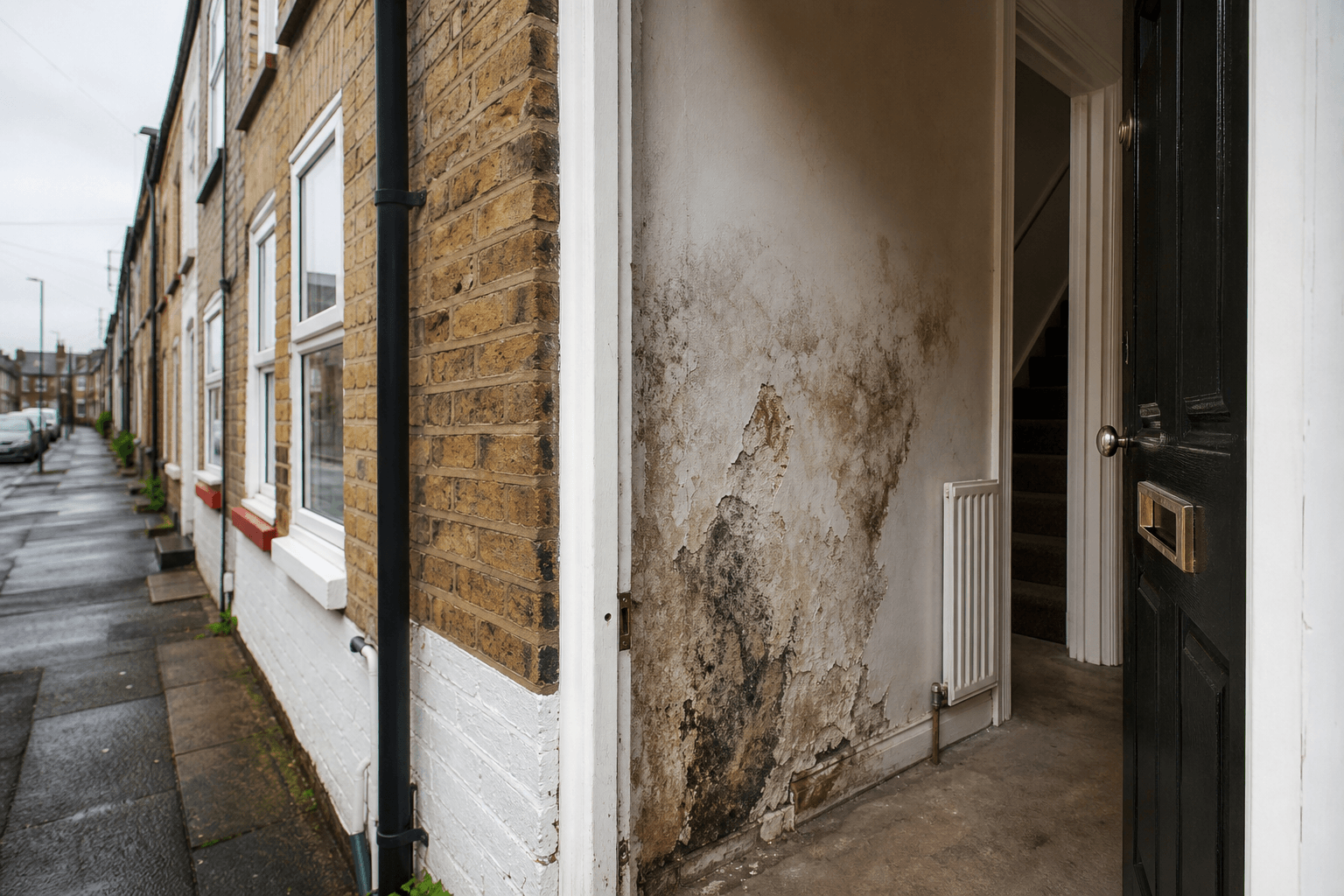
Remove mould safely, fix the cause (condensation, rising or penetrating damp), and learn what Awaab's Law means for UK homes in 2026.
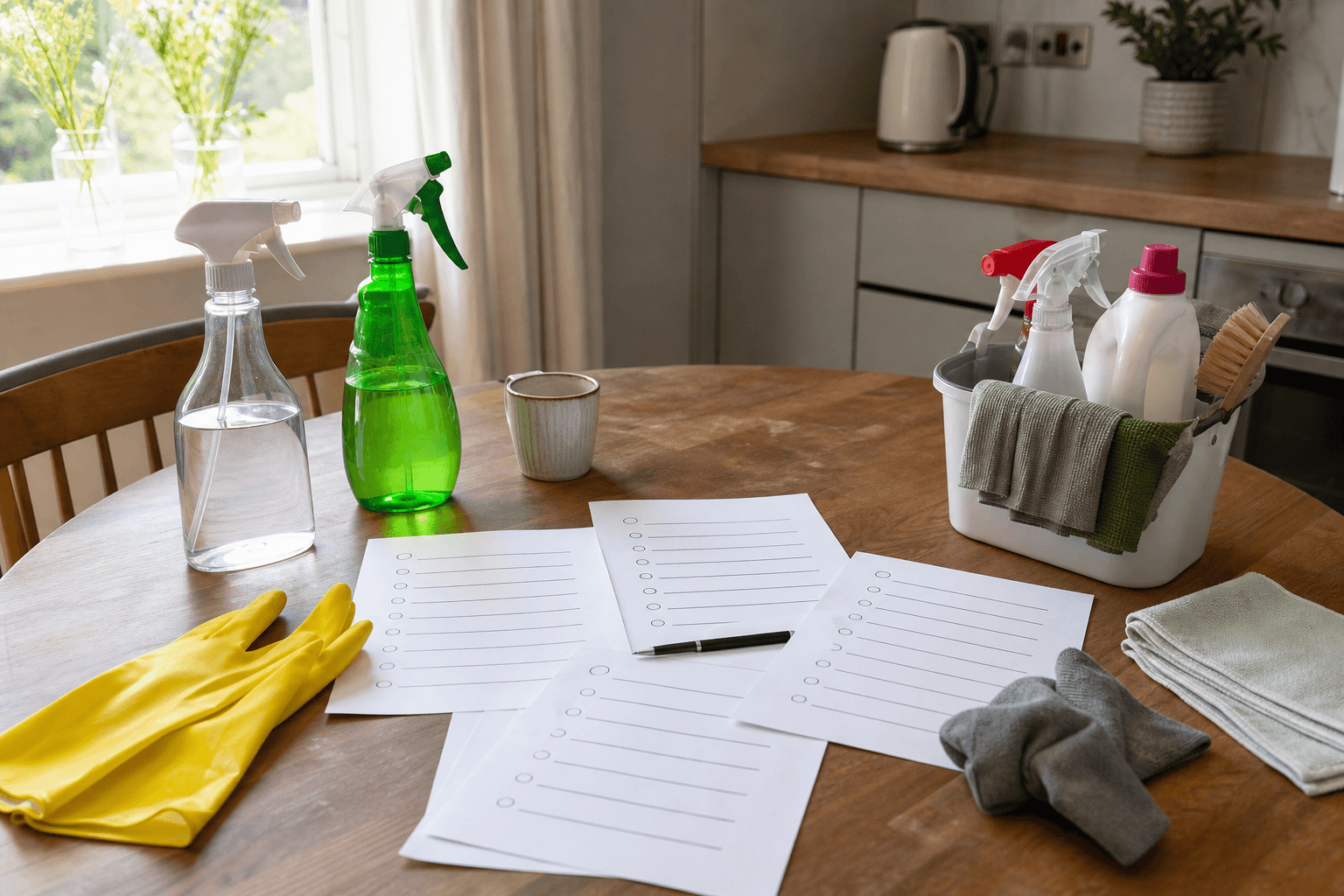
Searching for deep cleaning services near me but unsure? Compare DIY cost, time and finish vs a UK pro - with a real worked example.
Latest in Cleaning Services
View all in this category
Five reasons professional office cleaning is essential for your business, from productivity and image to hygiene, smart spending and specialist support.

How to hire an NCCA-registered carpet cleaner or oven cleaning pro in the UK: 12 questions, red flags, contract rules and how to verify credentials.
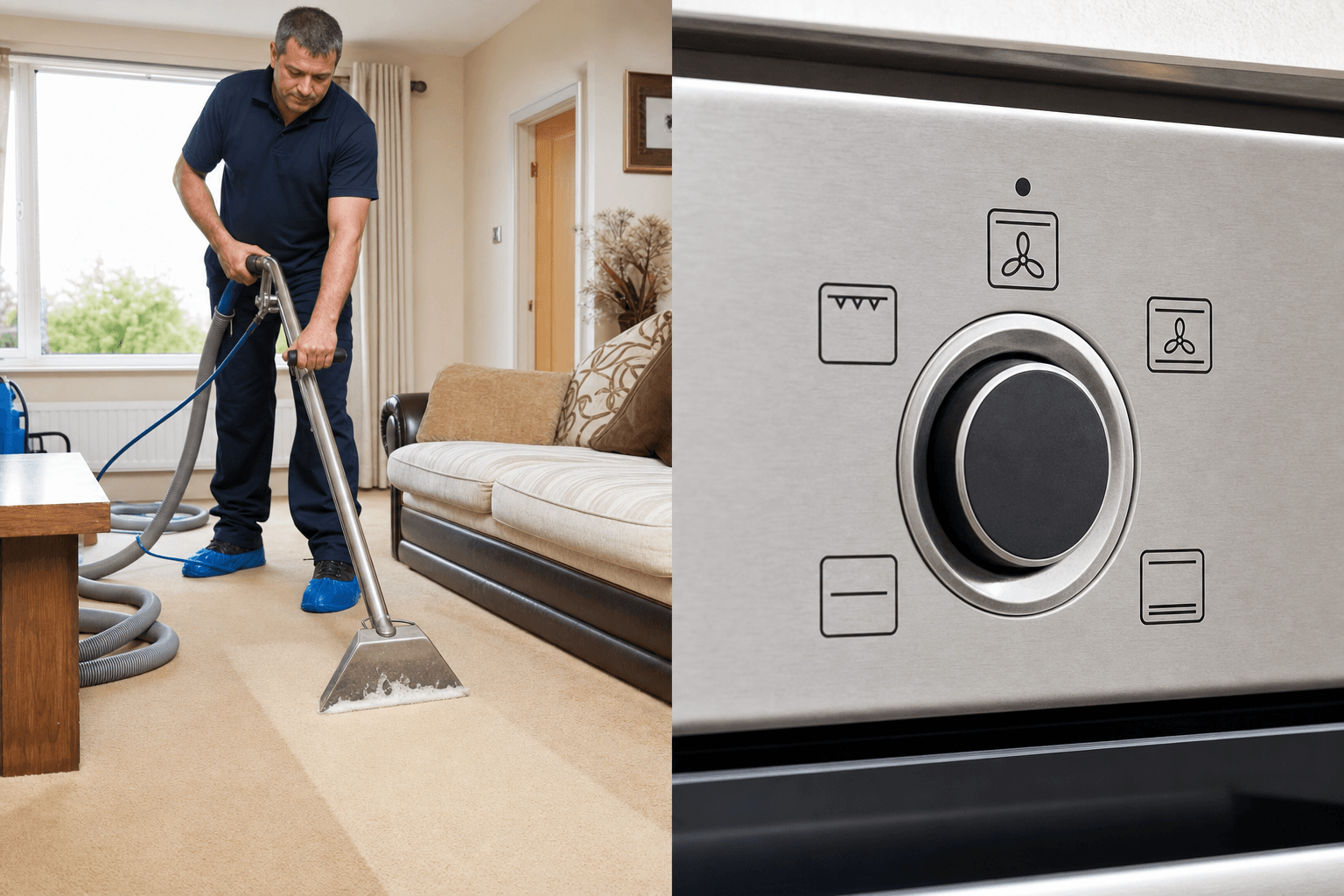
Steam vs dry vs hot-water carpet cleaning compared, plus every UK oven symbol decoded (fan, grill, broiling, pyrolytic) and which is right for your home.
Related services
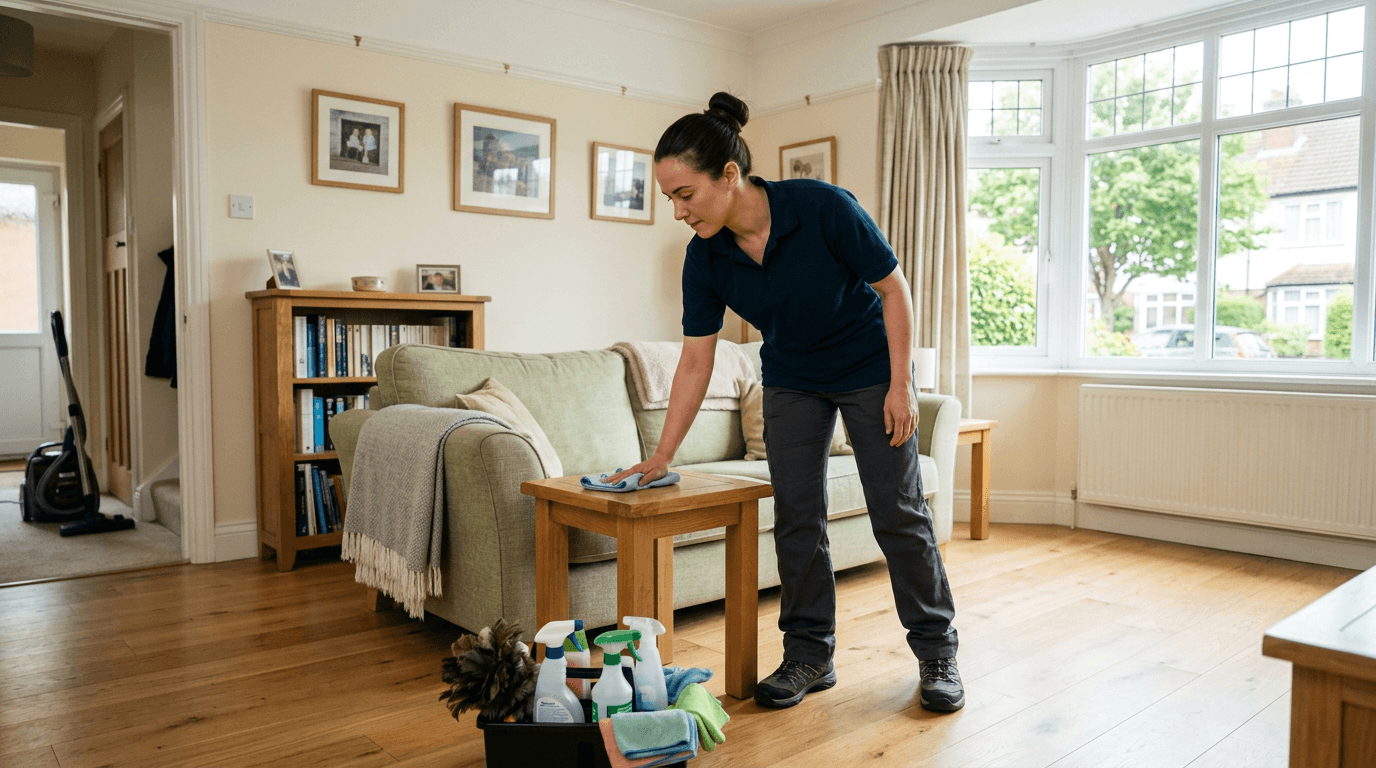
Keep your home consistently fresh with Taskino Regular Cleaning. Trusted, vetted cleaners visit on your schedule, provide clear quotes and use the right equipment to maintain a tidy, healthy living space.
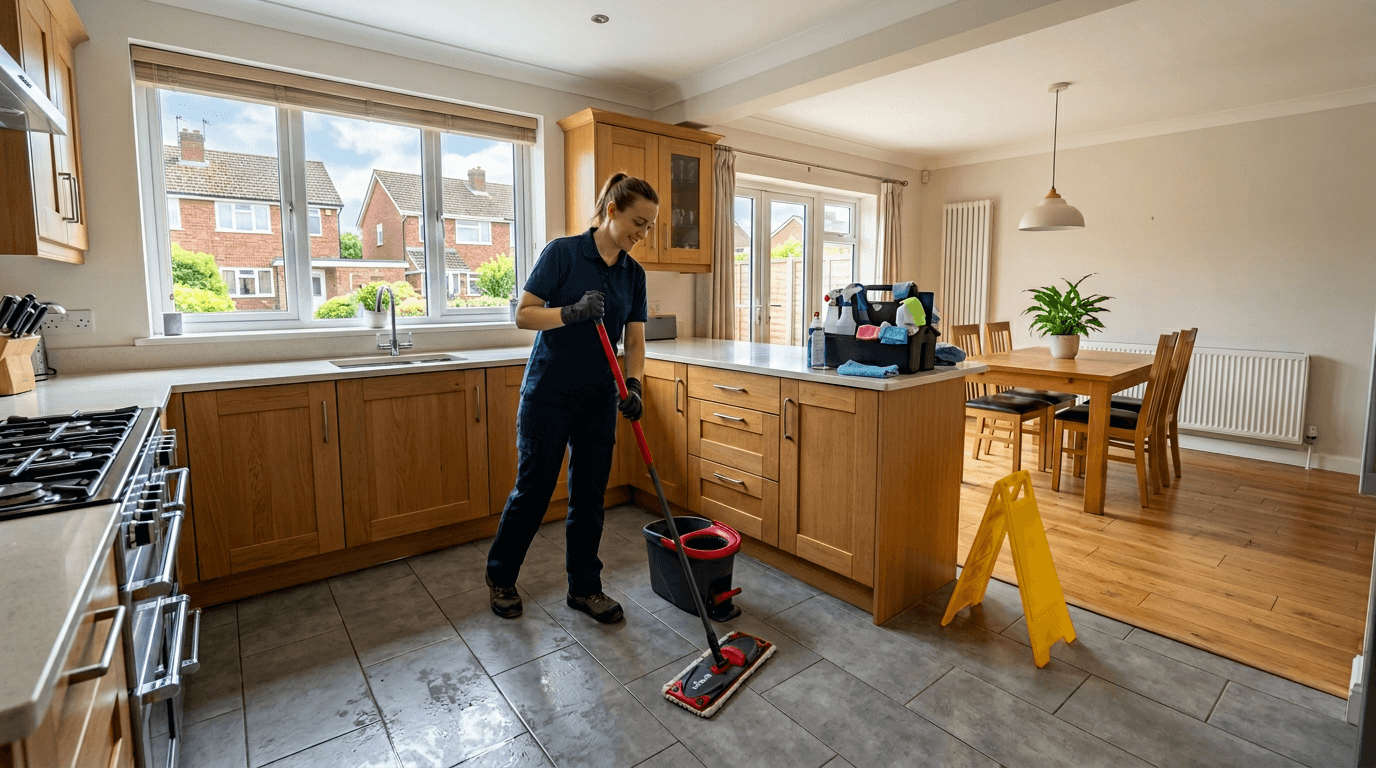
One-off cleaning for homes and flats by vetted, insured professionals. Fast bookings, clear quotes and a thorough clean tailored to your needs. Ideal for end-of-tenancy, pre-event or seasonal deep tidy.
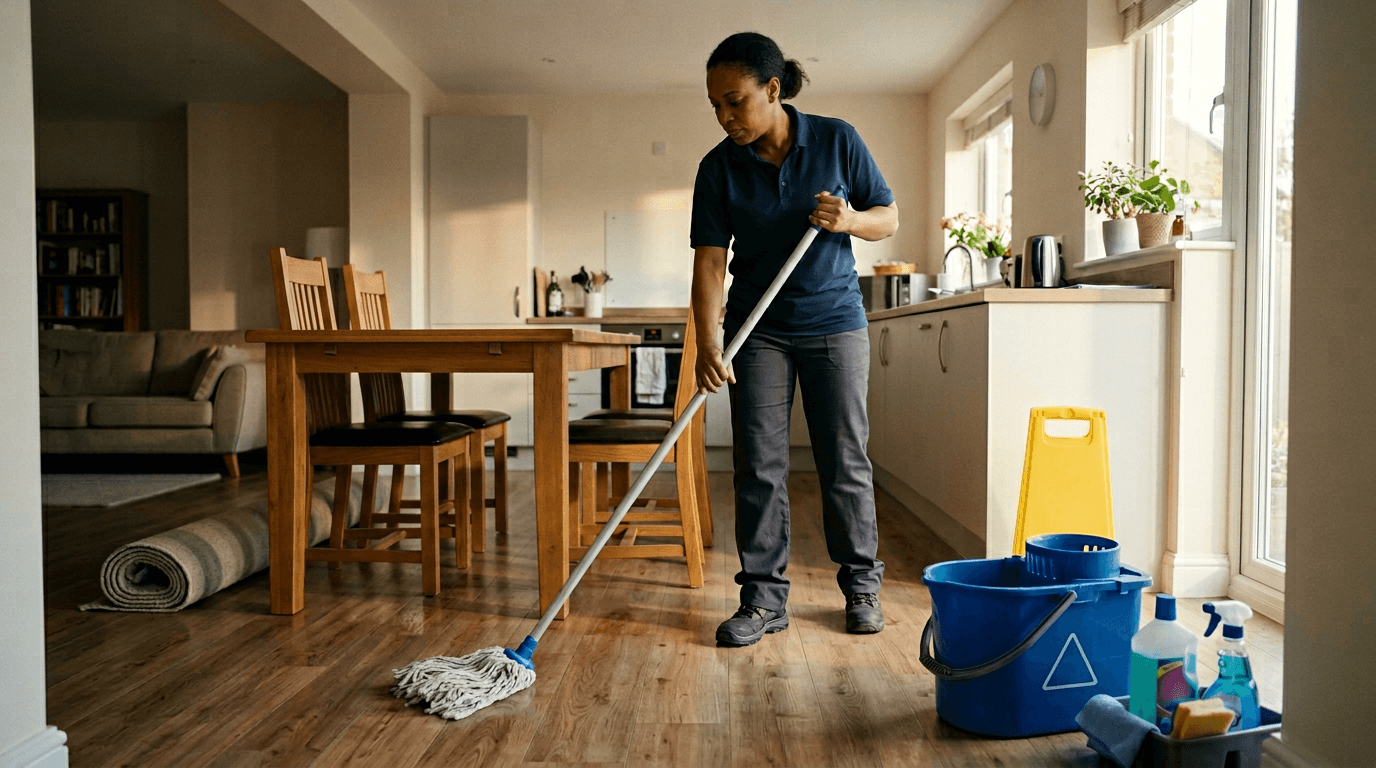
Professional deep cleaning for homes and flats across the UK. Taskino connects you with insured cleaners who tackle built-up dirt, grime and neglected areas for a fresher finish.
Ready to Book Your Service?
Tell us what you need and our team will help you find the right professional quickly, with clear pricing and no hidden fees.