
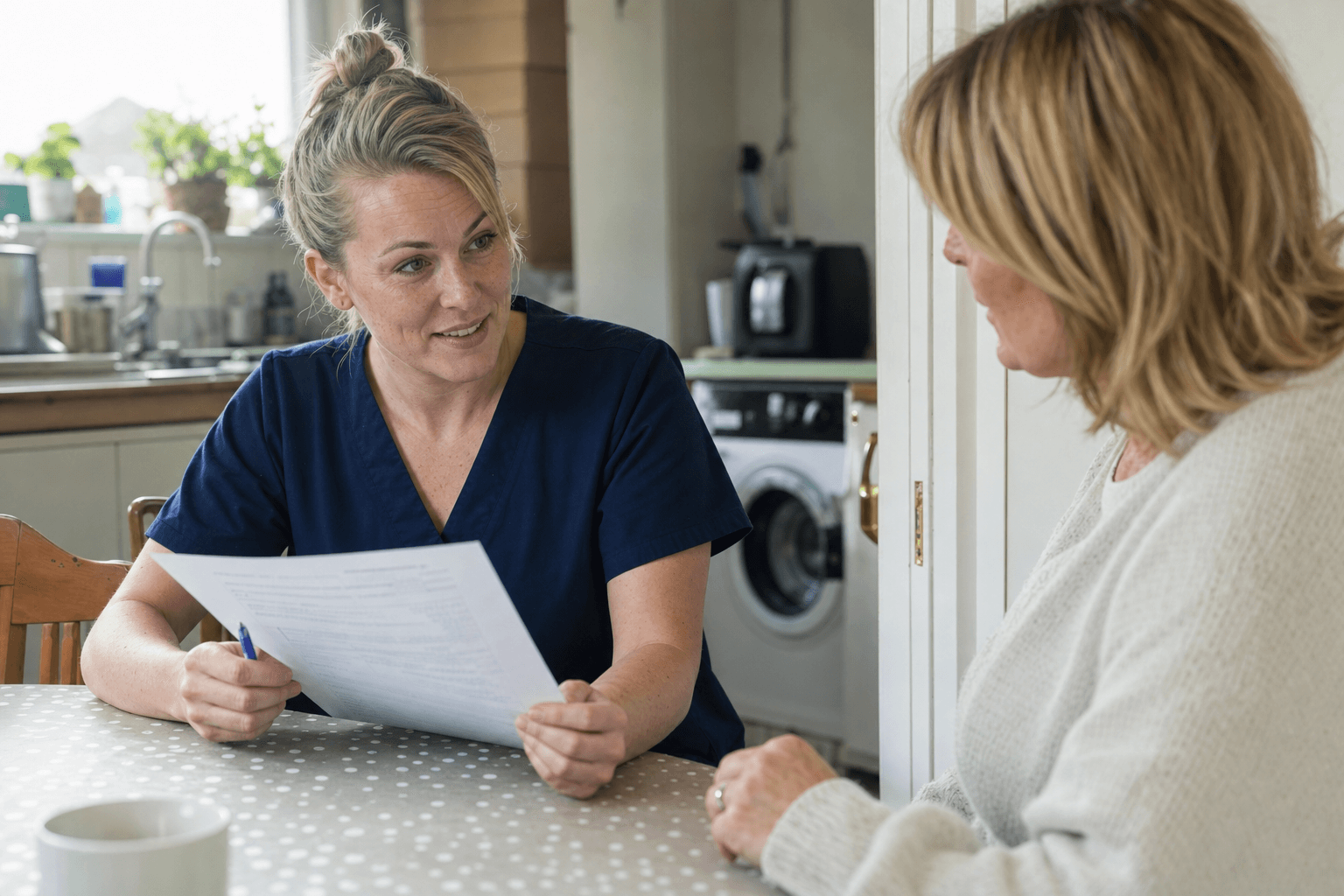
How to Hire a House Cleaner in the UK: 14 Questions to Ask
Searching for house cleaners near me? Use these 14 vetting questions, plus UK insurance and BICSc checks to avoid cowboys in 2026.
When you search "house cleaners near me", the first three results rarely tell you who's insured, BICSc-trained, or DBS-checked. UK domestic-cleaning charge rates sit around £15–£25/hr outside London and £20–£35/hr inside it (Checkatrade, 2025), so a bad hire costs you twice. This guide gives you the 14 vetting questions that filter the cowboys before they get your keys.
TL;DR
- The one question that filters most cowboys: "Can you email me your public liability insurance certificate and BICSc or DCA membership number before I book?"
- The one red flag that ends the conversation: cash-only, no invoice, no business address. Walk away regardless of price.
- £2m Public Liability is the UK domestic-cleaning norm (DCA, 2025).
- You have a 14-day cooling-off right under the Consumer Contracts Regulations 2013 when you book by phone or online.
Before you contact anyone: what to prepare
Most hiring mistakes happen before the first phone call, not after it. A 2024 Which? survey of UK home-service buyers found that 38% of unhappy customers had never written down their scope before requesting quotes (Which?, 2024). Spend 30 minutes preparing and you'll get tighter quotes, fewer surprises, and a much shorter shortlist.
Run through these seven steps in order before you message anyone:
- Photograph every room you want cleaned, including problem areas like the oven, grout lines, and any mould patches around windows or sealant.
- Measure floor area roughly in m². Most quotes scale partly on size, and "three-bed semi" means different things in Surrey and Sunderland.
- Write your scope. Which rooms, which appliances, inside-only or outside-too windows, any pets the cleaner will meet? See our deep cleaning guide for a full scope template.
- Set a realistic budget. Cross-check against our deep cleaning services near me cost comparison so you're not 50% under market.
- Decide frequency: one-off, fortnightly, or weekly. Weekly slots often come with a £2–£5/hr discount.
- Decide products policy: you supply, they supply, eco-only, or scent-free for allergies and asthma in the household.
- Identify access constraints: no on-street parking, key safe code, gated entry, broken lift in the block.
Prep saves money. A clear scope sheet usually shaves 10-15% off quotes because cleaners don't pad for unknowns.
Need help with Regular Cleaning?
Tell us about your job and we will match you with the right professional for Regular Cleaning.
Where to find a house cleaner you can trust
Roughly 67% of UK households who hire a cleaner do so via personal referral or online marketplace, with only 12% going through accredited trade bodies (Domestic Cleaning Alliance member survey, 2024). That gap is where most cowboys operate. Use three channels in parallel and cross-check the names that come up twice.
Trade body directories
Start with bodies that actually vet members. The British Institute of Cleaning Science (BICSc) lists trained operatives and accredited training providers. The Domestic Cleaning Alliance publishes a member directory with a code of practice. If carpets are part of the scope, check the National Carpet Cleaners Association (NCCA) register. For decluttering crossover, the Association of Professional Declutterers & Organisers (APDO) keeps a public list.
Marketplaces and review platforms
Honest summary: Checkatrade vets ID and insurance but reviews skew positive. MyBuilder is good for quote comparison but light on cleaning specialism. Taskino vets BICSc/DCA membership and PL certificates before listing. RatedPeople is broad and tradesperson-tilted. Housekeep focuses on London recurring cleans. Bark sells leads to providers, so quality varies cleaner by cleaner.
Personal referrals
Ask in three places: your local WhatsApp neighbours group, the Mumsnet local board, and your Nextdoor patch. The three questions that matter: "Are they still cleaning for you?", "How long have they been with you?", and "Anything they're not great at?". A referral over six months old isn't a referral, it's a memory.
Avoid these channels
Skip leaflet drops with no business name, cold doorknocks, Facebook Marketplace listings without any reviews, and Gumtree ads without an active phone number. None of them give you a paper trail when something goes wrong, and your insurer won't help you claim against a name on a flyer.

The 14 questions to ask BEFORE booking the visit
This is the script. Copy-paste it into your first message. Cleaners who answer all 14 clearly are usually the ones still working in five years. Industry data shows roughly 1 in 4 self-described "professional cleaners" in the UK lack documented Public Liability cover (DCA, 2024), so questions 2 and 8 do most of the work.
1. "Are you a sole trader or a company? Can you provide a Companies House number or UTR if asked?"
- Good answer: confident sharing the company number, or "registered self-employed, happy to share my UTR on request".
- Bad answer: deflection or vague "yeah I'm registered" without specifics.
2. "What's your public liability insurance limit and can you email the certificate?"
- Good answer: £2m or more, certificate forwarded the same day.
- Bad answer: "I'll forward it" but never does, or a domestic-only contents policy mistaken for PL.
3. "Are you BICSc-trained or a member of the Domestic Cleaning Alliance?"
- Good answer: yes, with a membership number you can verify.
- Bad answer: "What's that?" or evasion.
4. "Do you carry a DBS check, given you'll have keys to my home?"
- Good answer: yes, basic or enhanced, certificate viewable on request.
- Bad answer: claims one, then can't produce it.
5. "How long have you been cleaning professionally?"
- Good answer: two or more years, with at least two recent references.
- Bad answer: under six months and uncomfortable when pushed.
6. "Can you give me two recent references I can call?"
- Good answer: names and numbers, all within the last three months.
- Bad answer: "I have loads but…" and then nothing arrives.
7. "Do you bring your own products and equipment? Are they COSHH-rated?"
- Good answer: yes, with a chemical list, or "happy to use yours". For how to remove mould work, ask specifically about HG Mould Remover or equivalent.
- Bad answer: vague "professional products" with no list and no safety data sheets.
8. "Do you have public liability for accidental damage to my belongings?"
- Good answer: yes, included within the £2m PL.
- Bad answer: "treatment risk" excluded, so damage caused by their cleaning isn't covered.
9. "How do you handle keys: safe drop-off, key safe, photographed handover?"
- Good answer: documented process, photographed handover, keys returned in person.
- Bad answer: "I just keep them" with no system.
10. "Is the quote fixed or hourly? Can I see it in writing?"
- Good answer: fixed for a one-off; itemised written quote within 24 hours.
- Bad answer: verbal only, "let's see when I get there".
11. "What's your cancellation policy and notice period?"
- Good answer: 24–48 hours notice, no fee. You also have a 14-day cooling-off right under the Consumer Contracts Regulations 2013 when booking by phone or online.
- Bad answer: "You pay full whatever happens."
12. "How do you handle complaints if I'm not happy?"
- Good answer: free re-clean within 48 hours; DCA Code of Practice or a written complaints procedure.
- Bad answer: "No one's ever complained." Everyone's been complained about eventually.
13. "Do you sub-contract, or do I get the same cleaner each time?"
- Good answer: same cleaner; any sub-contracting is disclosed and vetted to the same standard.
- Bad answer: rotating strangers with no introduction.
14. "How do you take payment? Bank transfer, card, cash?"
- Good answer: bank transfer or card, invoiced with VAT detail if applicable.
- Bad answer: cash-only with no invoice. That's an HMRC red flag as well as a cowboy signal.
Explore our Deep cleaning service
See what is included, typical timings, and what to prepare before you book.
The 5 questions to ask DURING the quote visit
A 20-minute in-person quote tells you more than 20 messages. UK domestic-cleaning operatives who pass an in-home walk-through quote 18% more accurately than those quoting from photos alone (Checkatrade tradesperson survey, 2024). Use these five during the visit, and watch how they answer with their hands as much as their words.
- "Show me how you'd clean the oven, and which product would you use?" Listen for HG Oven Cleaner or Oven Mate, both available at Wilko and B&Q, and a soak-time plan.
- "What would you skip if I'm running out of budget?" A confident cleaner has a hierarchy: kitchen and bathrooms stay, ironing goes first.
- "What's the realistic time for this scope?" Two-bed flat top to bottom: 3–4 hours. Three-bed semi: 4–6. Anything radically faster is being rushed.
- "Where do you dispose of waste and contaminated water?" Down the soil stack toilet for grey water, not the kitchen sink. Bagged waste in your bin only with permission.
- "Can we walk through and write the scope together?" This is the most powerful question on the list. If they say no, end the visit.
Red flags that mean walk away
One red flag is a warning. Two is a pattern. Three and you're already past the exit. The Citizens Advice consumer service handled over 2,500 complaints related to domestic services in 2023 alone (Citizens Advice, 2024), and the same red flags appear across the case notes.
- Cash-only, no invoice, no receipt offered.
- No public liability evidence after two prompts.
- Quote 50% below the market rate for the scope.
- Refuses to give a business address or trading name.
- Won't share BICSc or DCA membership number.
- Aggressive upselling: "you really, really need this".
- Demands 100% deposit before any work.
- No reviews anywhere: Google, Trustpilot, Checkatrade, Taskino.
- Refuses to send a written quote, even after asking twice.
- Mentions trades they're not qualified for, like gas or electrics.
Cowboy maths. A £15/hr quote when the local norm is £22/hr usually means uninsured. That £7/hr saving evaporates the first time a vase goes over.
Ready to book Regular Cleaning?
Send a quick enquiry — we typically respond the same working day.
How to verify their credentials in 5 minutes
Verification is faster than people think. Five minutes with three browser tabs filters 90% of the cowboys you'll ever meet. We've run this same five-minute check on hundreds of cleaner applications and it catches issues nine times out of ten before they reach the home.
Trade body check
Open the BICSc public lookup, the DCA member register, and the NCCA register if carpets are part of the scope. Search by name or company. A "membership pending" reply means not yet a member.
Companies House check
Go to Companies House and confirm active status, current registered office, and no recent "dissolved" or "in liquidation" filings. Sole traders won't appear; that's fine if they've given you a UTR.
Insurance check
Public Liability £2m or more is the UK domestic-cleaning norm. Cross-check that the insurer is on the FCA register of authorised firms. If they name an insurer that doesn't exist on the FCA list, walk.
Reviews check
Look for reviews dated within the last six months. Not all 5-star ratings, ever, on any platform. Read the negative ones and notice how the cleaner responded. Defensive, name-calling replies are themselves a red flag.

How to read a written quote
A proper written quote should fit on one page and itemise everything. Roughly 41% of UK domestic-service disputes stem from quote disagreements where line items weren't itemised (Which?, 2023). Use the table below as a sanity-check before you accept. The £/hr norms link directly to our end of tenancy cleaning prices guide for deep-clean baselines.
| Line item | What it means | What a fair £ looks like |
|---|---|---|
| Labour hours × rate | Time commitment for the scope | £15–£35/hr depending on region |
| Materials | Their products, not yours | £0–£20 included |
| Travel | Only if outside their normal radius | £0–£25 |
| Waste removal | Skip hire or licensed disposal | £0–£50 |
| VAT (20%) | Only if their turnover exceeds £90k | Optional below threshold |
| Deposit | Cleared funds before work | Maximum 25% as rule of thumb |
If the quote is one line that just says "Clean: £180", send it back and ask for the breakdown.
Learn more about Deep cleaning
Browse how we deliver Deep cleaning and the questions homeowners ask most often.
Contracts and consumer protection
UK domestic-cleaning contracts are governed mostly by two pieces of law: the Consumer Rights Act 2015 and the Consumer Contracts Regulations 2013. You have more protection than most people realise, particularly if you booked the cleaner by phone, email, or website. Knowing your rights changes the tone of any later dispute.
When you legally need a written contract
The Consumer Rights Act 2015 (legislation.gov.uk) doesn't mandate written contracts, but for any job over £500 written evidence is what wins disputes. Recurring weekly or fortnightly arrangements should be in writing too: scope, frequency, price, notice period, products policy.
Cancellation rights
The Consumer Contracts Regulations 2013 (legislation.gov.uk) give you a 14-day cooling-off period when booking distance-sold services, like phone or online bookings. The clock starts when the contract is formed. If you booked face-to-face after the cleaner came to your home at your invitation, the cooling-off doesn't automatically apply.
Deposit limits
Rule of thumb: never pay more than 25% upfront. A demand for the full deposit before any work is performed is the single most consistent cowboy signal we've documented, ahead of even cash-only payment.
How to pay safely
Avoid cash on jobs over £500. Use bank transfer with a clear reference, and keep all invoices for six years in line with HMRC norms. Card payments add a layer of chargeback protection if things go badly.
After the job: snagging, retention, and disputes
The 24 hours after a clean is when you find what was missed. Around 22% of one-off deep cleans require some form of touch-up under the original price (NCCA member-survey snapshot, 2024). Handle snagging well and you'll keep a good cleaner for years. Handle it badly and even the best ones walk.
How to snag properly
Walk through every room within 24 hours of the clean. Phone-photo every issue with the timestamp on. Send the photos and a short note in your shared WhatsApp or email thread. Tone matters: "Hi, just noting two spots I'd love a second look at" lands better than a list of failures.
When to release final payment
Hold final payment until your 24-hour snag walk-through is clear. Pay deposit at booking, balance after inspection. Any cleaner refusing that structure isn't one you want long-term.
How to escalate if it goes wrong
If a problem can't be fixed by direct conversation, work through four steps:
- Cleaner directly in writing. Email or WhatsApp, dated, specific.
- Trade body complaint via the DCA or BICSc procedure if they're members.
- Small claims court for amounts up to £10,000 in England and Wales.
- Trading Standards via the Citizens Advice consumer service.
Thinking about Regular Cleaning?
Share your postcode and job details for a no-obligation quote.
How Taskino vets the cleaners on the platform
All 14 of those questions get asked of every cleaner before they're listed on Taskino. We ring referees, we check Companies House, we ask for PL certificates with £2m minimum, we verify BICSc or DCA membership, and we re-check yearly. We're not perfect, no platform is, but when you book a domestic cleaner near me search through us you've skipped the cowboy filter entirely. See available cleaners at Taskino's cleaning services.
Bottom line
Hiring a house cleaner isn't about finding the cheapest house cleaners near me. It's about filtering for the ones who'll still be reliable in two years. The 14-question script, the five-minute verification check, and the snag-then-pay sequence do most of the heavy lifting. £2m Public Liability, BICSc or DCA membership, Companies House status, and references inside three months: get all four and you've already beaten the cowboys. The rest is just keeping a good cleaner for the long haul.
Check scope and pricing for Deep cleaning
Compare options, add-ons, and what affects the final price before you commit.
Sources
- British Institute of Cleaning Science (BICSc) member directory: https://www.bics.org.uk/
- Domestic Cleaning Alliance member register and code of practice: https://www.domesticcleaningalliance.org/
- National Carpet Cleaners Association register: https://www.ncca.co.uk/
- Companies House search: https://find-and-update.company-information.service.gov.uk/
- Financial Conduct Authority register: https://register.fca.org.uk/
- Consumer Contracts Regulations 2013: https://www.legislation.gov.uk/uksi/2013/3134/contents/made
- Consumer Rights Act 2015: https://www.legislation.gov.uk/ukpga/2015/15
- Citizens Advice consumer service: https://www.citizensadvice.org.uk/consumer/
- Checkatrade domestic cleaning cost guide (2025): https://www.checkatrade.com/blog/cost-guides/domestic-cleaning-cost/
- HMRC VAT threshold guidance (gov.uk)
Frequently asked questions: How to Hire a House Cleaner in the UK: 14 Questions to Ask
Short answers to common questions about this topic.
Our team will answer all your questions. we ensure a quick response.
Contact UsRelated posts
Plan a UK deep clean: real per-room costs, DIY vs hire, COSHH safety on bleach + vinegar, and how to hire a vetted cleaner in 2026.
Searching for deep cleaning services near me but unsure? Compare DIY cost, time and finish vs a UK pro - with a real worked example.
UK deep cleaning prices for 2026, including end of tenancy cleaning prices, hourly rates and what affects the cost. Compare regional rates.
Latest in Cleaning Services
View all in this category
Five reasons professional office cleaning is essential for your business, from productivity and image to hygiene, smart spending and specialist support.
How to hire an NCCA-registered carpet cleaner or oven cleaning pro in the UK: 12 questions, red flags, contract rules and how to verify credentials.
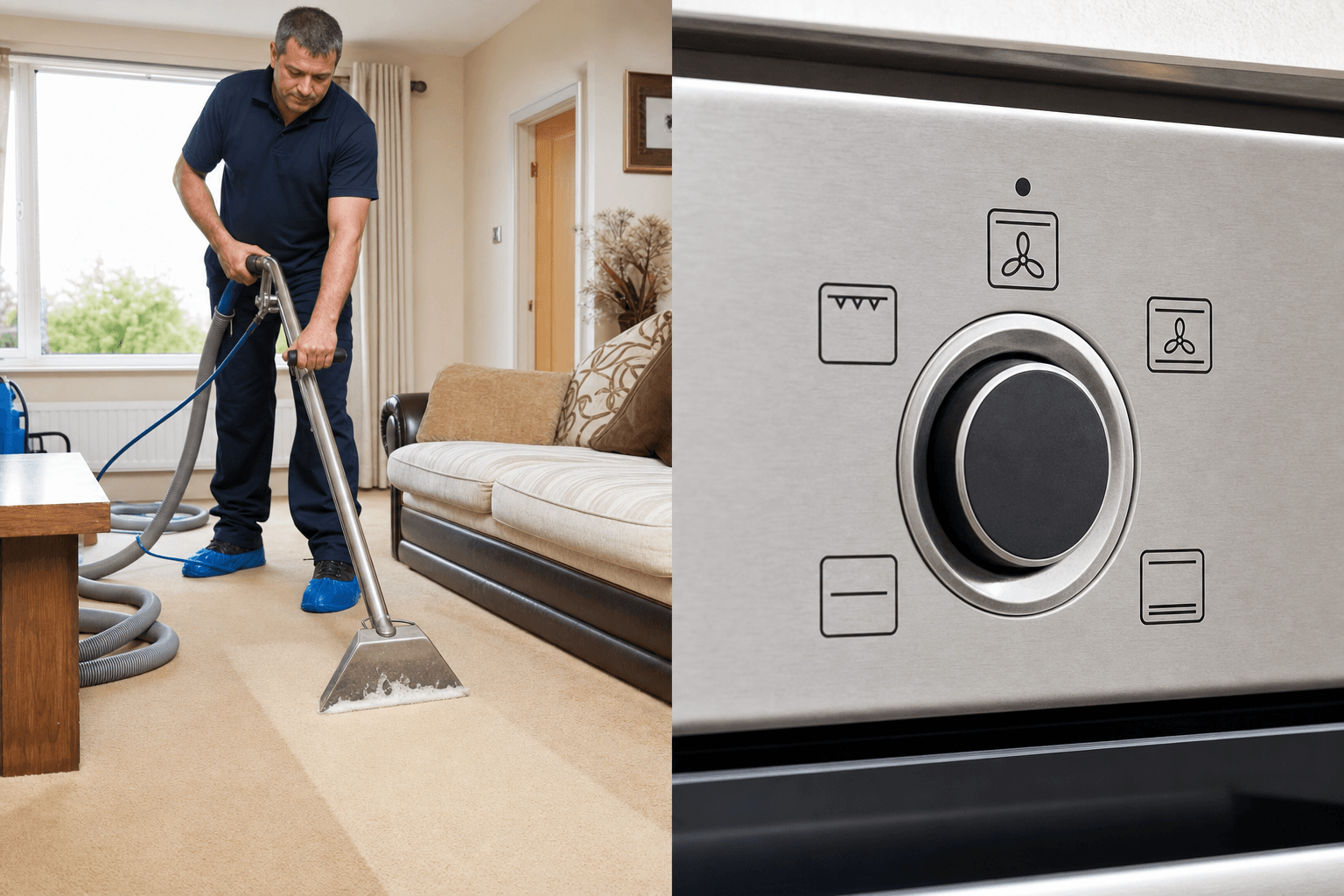
Steam vs dry vs hot-water carpet cleaning compared, plus every UK oven symbol decoded (fan, grill, broiling, pyrolytic) and which is right for your home.
Related services
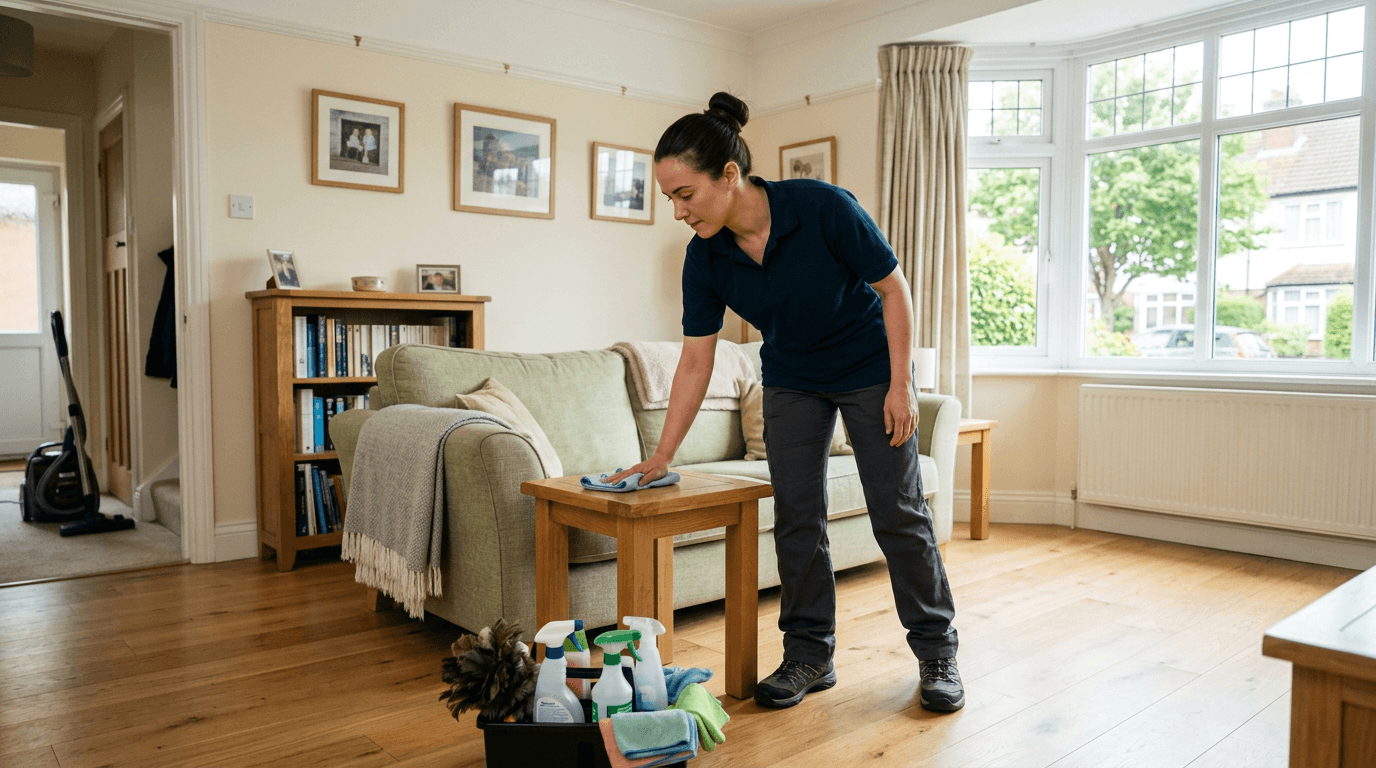
Keep your home consistently fresh with Taskino Regular Cleaning. Trusted, vetted cleaners visit on your schedule, provide clear quotes and use the right equipment to maintain a tidy, healthy living space.
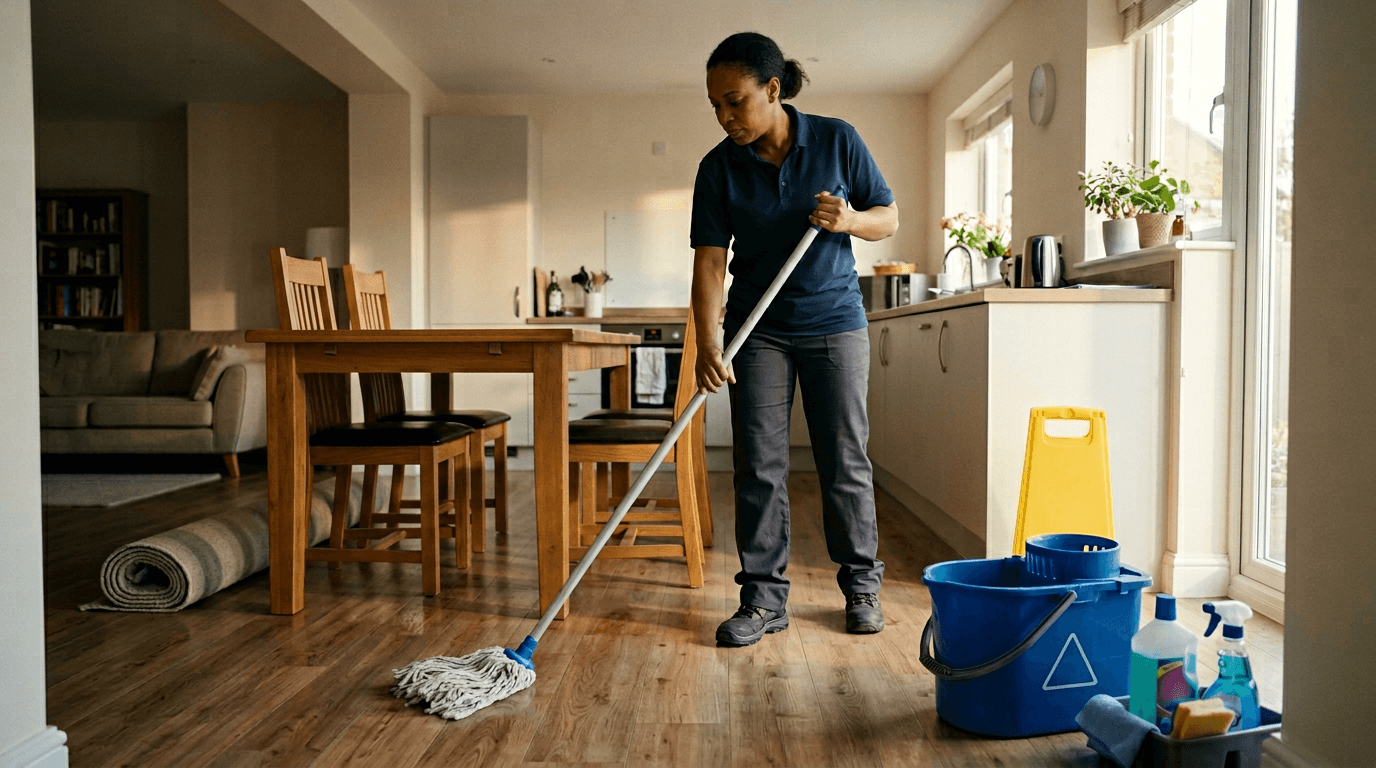
Professional deep cleaning for homes and flats across the UK. Taskino connects you with insured cleaners who tackle built-up dirt, grime and neglected areas for a fresher finish.
Ready to Book Your Service?
Tell us what you need and our team will help you find the right professional quickly, with clear pricing and no hidden fees.