

House Extensions & Building Work: The Complete UK Homeowner's Guide [2026]
Real UK 2026 house extension costs per m², planning permission rules, party wall steps, RSJs, hidden costs, and how to hire a vetted FMB builder.
The average UK house extension cost in 2026 sits at £1,800–£3,000 per m² for a single-storey rear build, according to RICS BCIS and MyJobQuote data. A typical 20m² kitchen-diner therefore lands between £35,000 and £60,000 fully fitted. Get the Permitted Development route, party wall notice and structural calcs right early, and you save weeks at the wall and thousands at the till.
TL;DR
- Cost. A typical single-storey rear extension costs £1,800–£3,000 per m² in 2026 (RICS BCIS / MyJobQuote), so a 20m² build lands £35,000–£60,000 fitted out.
- DIY scope. You can manage your own architect brief and Planning Portal application. Foundations, RSJs, gas, electrics and roof tie-ins are not DIY work in 2026.
- Top risk. Skipping the Party Wall etc. Act 1996 notice is the single biggest legal trap and can stop your build for months at the wall.
- Who to call. An FMB or TrustMark-registered builder for the build, a chartered structural engineer (IStructE) for steels, and a RICS party wall surveyor if a neighbour disputes.
What is a house extension?
A house extension is any new addition to an existing dwelling that increases its internal floor area. Most UK extensions in 2026 sit under Permitted Development rights or require a householder planning application. The English Housing Survey reports the median UK home at 94m² (ONS / EHS 2023, 2024), small by EU standards, which is why house extension cost queries dominate UK home-improvement search.
Quick definition
A house extension covers rear, side, wrap-around, double-storey, loft and garage conversions. Each adds usable space to an existing footprint. Under the Town & Country Planning (General Permitted Development) (England) Order 2015 Schedule 2 Part 1 Class A, many qualify as Permitted Development. Where you exceed those limits, you need full householder planning permission from your local authority.
Why it matters in UK homes specifically
UK homes are tight. The English Housing Survey puts our median dwelling around 94m², well below the 110m² European average. PD rules under GPDO 2015 Class A are unusually generous by international standards: 3m semi or terrace, 4m detached, 4m height, 50% garden coverage cap. Building Regulations Part L 2022 also pushes new fabric to U-values of 0.18 W/m²K walls and 0.13 W/m²K roofs, which raises spec but cuts long-term bills.
Citation capsule. UK single-storey rear extensions cost £1,800–£3,000 per m² in 2026 across the bulk of England and Wales, with London uplift pushing prices to £4,500/m² at the top end (RICS BCIS 2026; MyJobQuote 2026). A typical 20m² rear build lands £35,000–£60,000 fully fitted.
Need help with House extensions?
Tell us about your job and we will match you with the right professional for House extensions.
Can you build an extension yourself? When DIY is legal in the UK and when you need an architect, builder or RSJ engineer
You can DIY parts of a house extension, but not the structural, gas, electrical or roofing work. Construction Industry Training Board figures show domestic-client builds with split trades run 18% over budget on average (CITB 2024, 2024). The honest answer for 2026: own the brief and the paperwork, hire the trades for everything that touches structure or services.
Jobs you can safely DIY
In our experience advising homeowners on house extension cost planning, the parts you can confidently self-manage are administrative and decorative, not structural.
- Writing the architect's brief (rooms, light, budget cap, must-haves)
- Sketching initial concept plans to share with a designer
- Submitting the Planning Portal householder application (£258 fee in England, 2025-26)
- Sourcing kitchen and bathroom fittings from Howdens, B&Q or Wickes
- Final snagging, decorating and second-fix painting
- Furniture, blinds and soft finishes
Jobs that legally require a pro
Some work is not optional to hire out. The legal framework in England and Wales 2026 makes these notifiable or chartered-only:
- Gas Safe-registered installer. Any boiler or flue relocation under Building Regs Part J requires a Gas Safe engineer (Gas Safe Register, 2026).
- NICEIC or NAPIT electrician. Notifiable electrical work under Part P (new circuits, consumer unit changes) must be self-certified by a Part P scheme member.
- Chartered structural engineer. rsj calculations need an IStructE-chartered engineer's sealed drawing.
- CDM 2015 principal contractor. When more than one contractor is on site, CDM 2015 duties apply (HSE CDM 2015).
- Approved Inspector or LABC. Building control sign-off at foundations, damp-proof course, structural and completion stages.
Jobs that technically allow DIY but usually shouldn't
Acting as your own main contractor sounds like a saving. It rarely is. Under CDM 2015 the domestic-client duty transfers to whoever takes the principal-contractor role. Mediating a party wall dispute without a RICS party wall surveyor exposes you to a building notice or a county court injunction. A reasonable rule: if a sentence in your build contains "structural", "gas", "electric" or "boundary", pay a registered specialist.
Callout. Cost-plus arrangements with no scope cap are the single most expensive way to build a house extension in 2026. Get a JCT Minor Works contract drafted before site start.
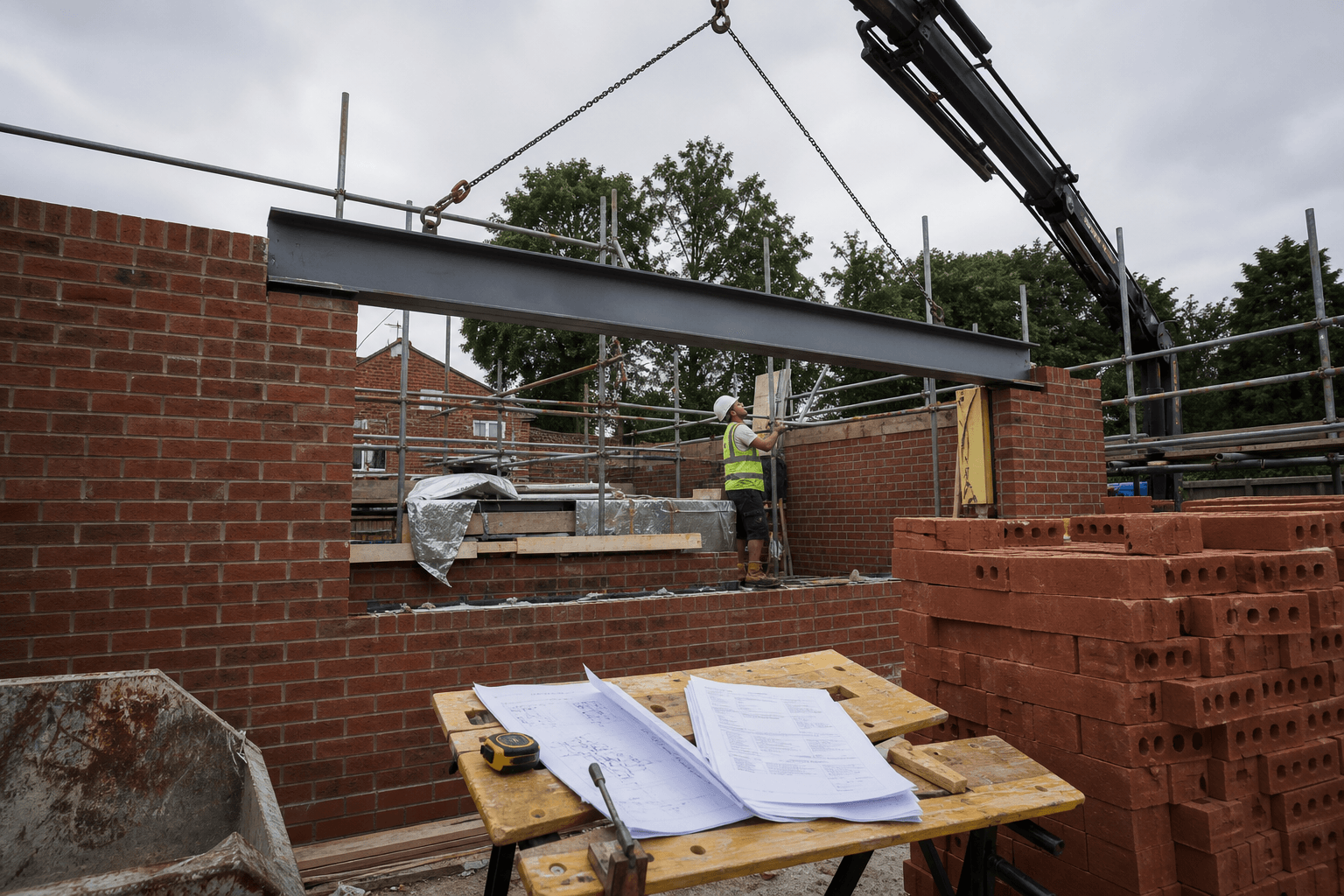
UK house extension checklist: 9 building and extension questions answered
Nine questions account for roughly 70% of the queries we see on house extension cost, planning and process. The Royal Institute of British Architects' 2024 client survey put planning permission and party wall risk at the top of homeowner anxiety, with budget overruns close behind (RIBA Client Survey, 2024). Here's the short answer to each, plus where to go deep.
How much does a loft conversion cost?
A UK loft conversion costs £25,000–£75,000 in 2026, with dormer conversions clustered at £40,000–£75,000 and mansards higher. Type drives cost more than postcode: rooflight is cheapest, hip-to-gable and dormer mid, full-mansard most expensive due to roof reconstruction. Read the full loft conversion cost breakdown for the four loft types.
How to apply for planning permission for a house extension
You apply via the Planning Portal with a £258 householder fee in England (2025-26). Bundle: location plan 1:1250, block plan 1:500, existing and proposed elevations 1:100, design and access statement if in a conservation area. Determination takes eight weeks. Read the full step-by-step house extension planning permission guide.
Architect vs builder for your extension
For a Permitted Development single-storey rear under £60,000, a builder with an in-house technician often suffices. For anything double-storey, in a conservation area, or with structural opening over 4m, you want a house extension architect (ARB-registered, RIBA-chartered). Fees run 8–12% of build cost; over 60m² it usually pays back.
Timber frame vs brick vs modular extension materials
Brick-and-block is the UK default for a reason: lender comfort, NHBC familiarity, low U-value walls. Timber frame extension builds 30% faster but costs 8–12% more upfront. Modular SIPs hit Part L easily but need crane access. Match material to plot access, planning officer preference, and your lender's warranty appetite.
14 extension mistakes that cost UK homeowners
The most expensive blunders cluster around four areas: undersized RSJs, missed party wall notices, fixed-fee contracts without spec lock, and forgetting build-over agreements with the water authority. Each can add £5,000–£25,000 of remedial work. The full extension on house mistakes article walks through all fourteen with real £ figures.
Party wall and planning disputes
The Party Wall etc. Act 1996 requires two months' written notice for excavation or party-structure work and one month for excavation within three metres of a neighbour's structure. Skip it and your neighbour can secure a court injunction. The party wall agreement guide explains the s.1, s.2 and s.6 notice routes in plain English.
RSJs, pad foundations and why extensions need them
Any opening wider than 1.2m in a load-bearing wall needs a steel beam, typically an RSJ or UC section, sized by an IStructE engineer. Pad foundations support steel columns; strip foundations support continuous walls. For deep clay (London, Berkshire, Essex), pads at 1m+ depth handle heave. The rsj guide details Building Regs Part A loading calcs.
Loft vs garage vs single-storey vs double-storey
A single-storey rear adds 20m² for £35,000–£60,000. A loft conversion adds a similar footprint for £40,000–£75,000 but no garden loss. A garage conversion is cheapest at £8,000–£20,000 but adds less value. Double-storey rears cost only 60% more than single-storey per m², the best £/m² of any extension type.
How to hire an extension builder
Verify three things before signing: FMB or TrustMark membership, £2m public liability insurance, and three reference jobs you can physically visit. Ask for a JCT Minor Works contract, not a one-page quote. The extension builders near me hiring guide gives the full 15-question checklist.
Explore our Loft conversions service
See what is included, typical timings, and what to prepare before you book.
How much does a house extension cost in the UK? 2026 loft conversion cost, garage conversion and side return prices
UK house extension cost averages £1,800–£3,000 per m² fitted in 2026, with London at £2,500–£4,500/m² and Scotland at £1,400–£2,000/m² (RICS BCIS 2026; MyJobQuote, 2026). A typical 20m² rear build lands £35,000–£60,000 fully finished. The biggest single price variable is glazing percentage, not square metreage.
National average and regional ranges
Aggregating RICS BCIS, MyJobQuote, Architecture for London and Houzz UK 2026 figures, the regional cost picture for a standard single-storey rear is:
| Region | Typical £/m² | Low | High | Source |
|---|---|---|---|---|
| London / South East | £2,500–£3,500/m² | £2,200 | £4,500 | RICS BCIS 2026 / Architecture for London |
| Manchester / Birmingham / Bristol | £1,800–£2,500/m² | £1,600 | £3,200 | MyJobQuote 2026 |
| Smaller towns and rural (Midlands/North) | £1,500–£2,200/m² | £1,300 | £2,800 | RICS BCIS / MyBuilder 2026 |
| Scotland | £1,400–£2,000/m² | £1,200 | £2,500 | Houzz UK 2026 |
These figures are turn-key: foundations, structure, services, second-fix, kitchen fit (mid-spec Howdens), painted and ready. Strip out the kitchen and bathroom and prices drop roughly 12–18% per m². A premium specification (Schueco bifolds, Corian worktops, oak engineered floor) adds 25–35% on top.
What affects the price
Seven factors swing house extension cost by 30–50%:
- Access. Rear-only access via a 900mm side passage adds 8–12% in labour.
- Ground conditions. London clay or made-ground needs deeper pads, often £3,000–£8,000 extra.
- Planning route. PD is fastest; conservation areas or Article 4 directions add design work and time.
- Finish spec. Schueco/Aluprof bifolds run 3x the cost of standard PVCu.
- Glazing percentage. Over 25% of wall as glass usually triggers SAP/Part L compensation.
- Services relocation. Moving a boiler flue or soil stack adds £1,200–£3,000.
- London uplift. Inside the M25, expect a 30–45% premium over Midlands rates.
When fixed-price quotes are safer than hourly
We've found that fixed-price JCT Minor Works contracts beat cost-plus on 9 in 10 domestic extensions. Cost-plus exposes you to suppliers' margin opacity and unscheduled "extras". A JCT contract under £150,000 names the scope, the contingency, the payment schedule, and the practical-completion trigger. Consumer Rights Act 2015 section 49 also requires services to be performed with reasonable care and skill, but a written contract is what you actually rely on at the tribunal stage.
Pricing quote. "A Taskino FMB-registered builder in Reading quoted £58,000 for a 22m² single-storey rear with Origin bifolds in spring 2026, mid-range Howdens kitchen included" (, within Checkatrade's £35k-£60k band for that scope and region).
UK building regulations: Planning Portal, Permitted Development, FMB and how to verify a builder
Six pieces of legislation govern UK house extensions in 2026. Knowing what they actually say saves weeks of avoidable delay. The Federation of Master Builders' 2024 member survey found 41% of homeowner disputes stem from misunderstood Building Regulations, not bad workmanship (FMB Annual Industry Survey, 2024). Get the regulatory map right before the first JCB arrives on site.
Town & Country Planning, Building Regs, Party Wall, CDM and VAT
The five frameworks every extension touches:
- GPDO 2015 Schedule 2 Part 1 Class A. Permitted Development rights for householders. Single-storey rear up to 3m (semi/terraced) or 4m (detached); Larger Home Extension scheme allows 6m or 8m with prior approval; max 4m height; no more than half the curtilage built on (Planning Portal, 2026).
- Building Regulations 2010 Parts A–Q. Structural safety (Part A), fire (B), site prep and moisture (C), ventilation (F), combustion appliances (J), conservation of fuel and power (L), access (M).
- Party Wall etc. Act 1996. Two months' notice for party-structure or excavation work (s.1, s.2); one month for excavation within 3m and below neighbour's foundations (s.6) (gov.uk, 2026).
- CDM Regulations 2015. Health and safety duties on construction sites; domestic-client duties pass to the contractor by default.
- HMRC VAT Notice 708. Most extensions attract 20% VAT. The 5% reduced rate applies to renovations of properties empty 2+ years, plus certain conversions (HMRC VAT Notice 708, 2026). Worth £3,000+ on a £60,000 build if you qualify.
If your extension crosses a public sewer (typically 3m of a main sewer line), you'll also need a build-over agreement with the water authority. The blocked drain guide covers when Thames Water or Severn Trent gets involved.
How to verify a tradesperson's credentials before hiring
Four registers do most of the verification work in 2026:
- FMB Find-a-Builder (fmb.org.uk, 2026): vetted membership, references checked.
- TrustMark scheme (gov-endorsed): trading standards verified.
- IStructE chartered engineer register for structural calcs.
- ARB register for legitimate "architect" use of title (protected under Architects Act 1997).
- Companies House check: filing history, last accounts, persons of significant control.
- £2m public liability insurance minimum, plus £10m employers' liability if they have staff.
What "registered" actually means
The four terms are not interchangeable. FMB membership is industry-vetted. TrustMark is a UK government-endorsed quality scheme. ARB registration is a statutory legal title for "architect" under the Architects Act 1997, and using the title without ARB registration is a criminal offence. NHBC is not a membership body, it's a 10-year structural warranty product (Buildmark). Always ask which one your builder holds, in writing, and verify the certificate number on the public register.

Ready to book House extensions?
Send a quick enquiry — we typically respond the same working day.
How Taskino can help
If you've read this far and worked out that the only thing standing between you and a bigger kitchen is finding a builder who answers their phone, that's fair, and that's the bit we can take off your plate. Taskino matches you to FMB or TrustMark-registered extension builders in your area, with insurance verified and reviews you can read in full. Browse vetted builders at house extensions on Taskino.
Sources
- RICS BCIS Building Cost Information Service 2026 — https://www.rics.org/uk/products/data-products/bcis/
- MyJobQuote House Extension Cost Guide 2026 — https://www.myjobquote.co.uk/costs/house-extension
- Planning Portal Common Projects: Extensions — https://www.planningportal.co.uk/permission/common-projects/extensions
- gov.uk Party Walls and Building Works — https://www.gov.uk/party-walls-building-works
- HMRC VAT Notice 708 Buildings and Construction — https://www.gov.uk/guidance/buildings-and-construction-vat-notice-708
- Federation of Master Builders Find-a-Builder — https://www.fmb.org.uk/find-a-builder/
- HSE Construction Design and Management Regulations 2015 — https://www.hse.gov.uk/construction/cdm/2015/index.htm
- Gas Safe Register — https://www.gassaferegister.co.uk
- English Housing Survey 2023–2024 Headline Report — https://www.gov.uk/government/statistics/english-housing-survey-2023-to-2024-headline-report
- Nationwide House Price Index — https://www.nationwide.co.uk
Frequently asked questions: House Extensions & Building Work: The Complete UK Homeowner's Guide [2026]
Short answers to common questions about this topic.
Our team will answer all your questions. we ensure a quick response.
Contact UsRelated posts

Apply for house extension planning permission in 8 steps. UK 2026 rules, PD limits, Larger Home Extension prior approval, fees and timelines.
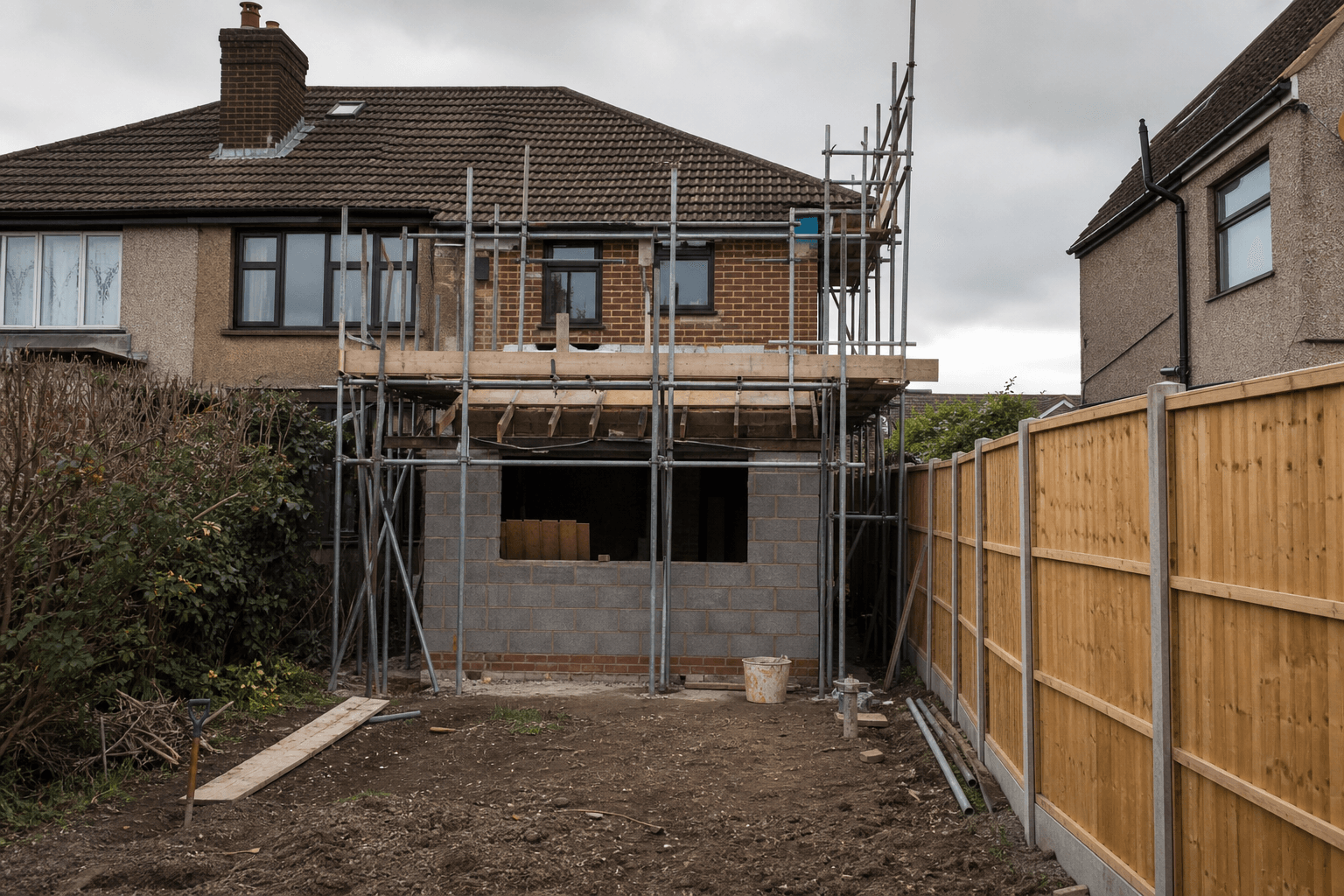
The 14 most expensive house extension mistakes UK homeowners make in 2026, with real £ costs, party wall traps, VAT confusion and how to avoid each.
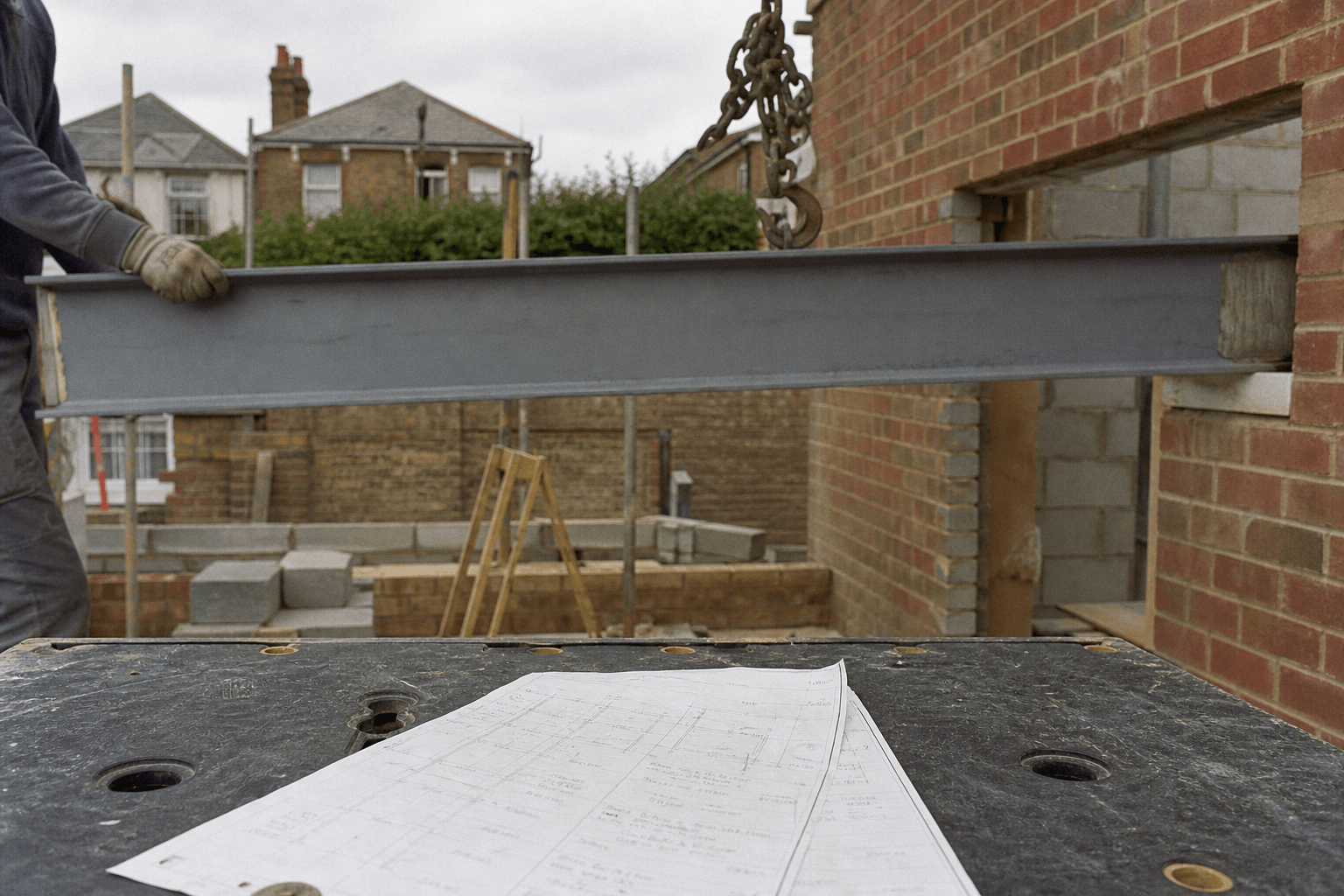
What an RSJ is, why UK 2026 extensions need pad foundations, IStructE engineer costs, Building Regs Part A, and when DIY won't fly. Honest UK guide.
Latest in Construction
View all in this category
Architect, design-and-build or DIY for your UK extension? Honest 2026 cost-benefit, ARB rules, when each wins, and the decision flowchart.
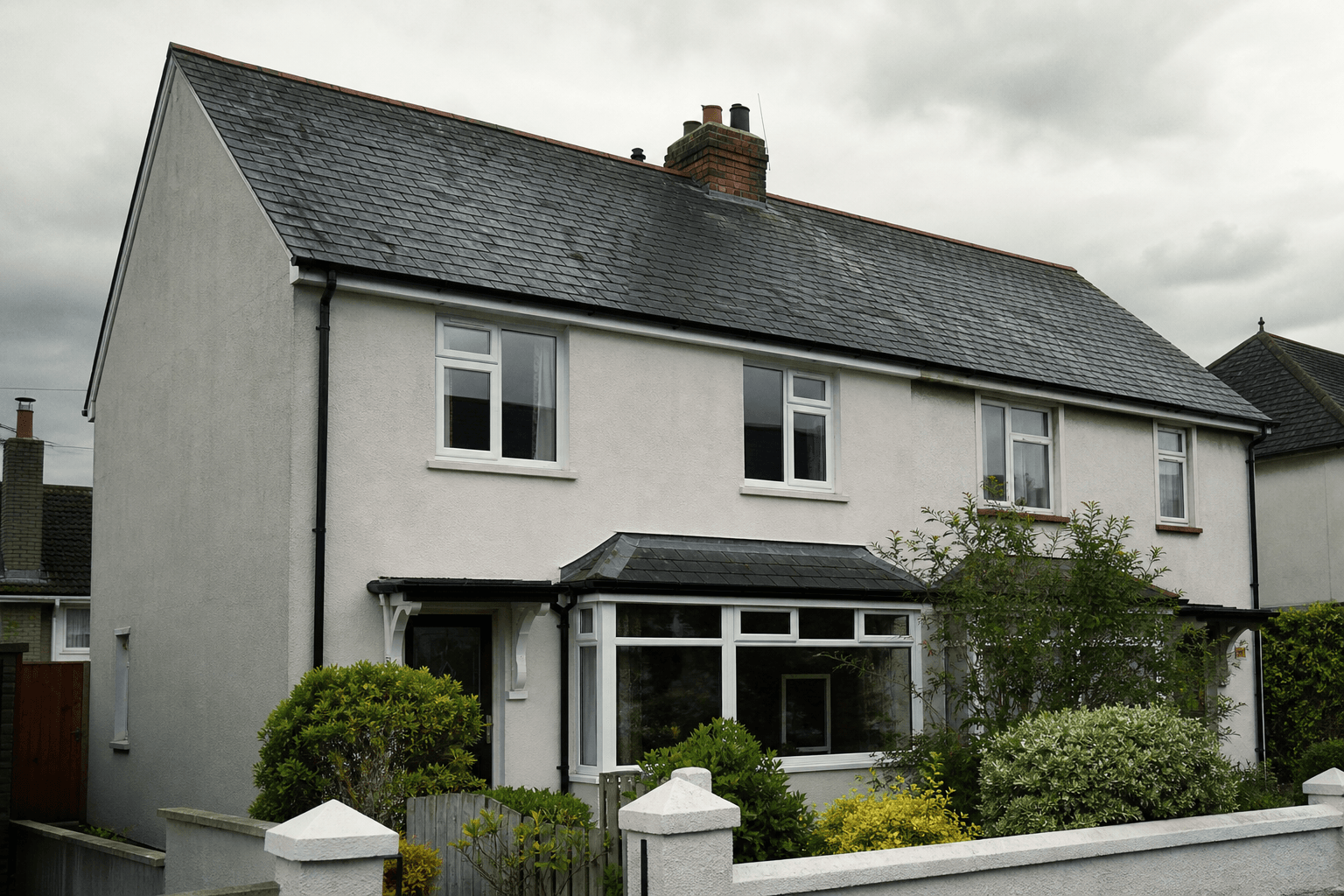
UK roofing mistakes that void insurance, damage slate or invite scams. Jet washing, cash payments, missing flashings, what they cost and how to avoid them.
Apply for house extension planning permission in 8 steps. UK 2026 rules, PD limits, Larger Home Extension prior approval, fees and timelines.
Related services
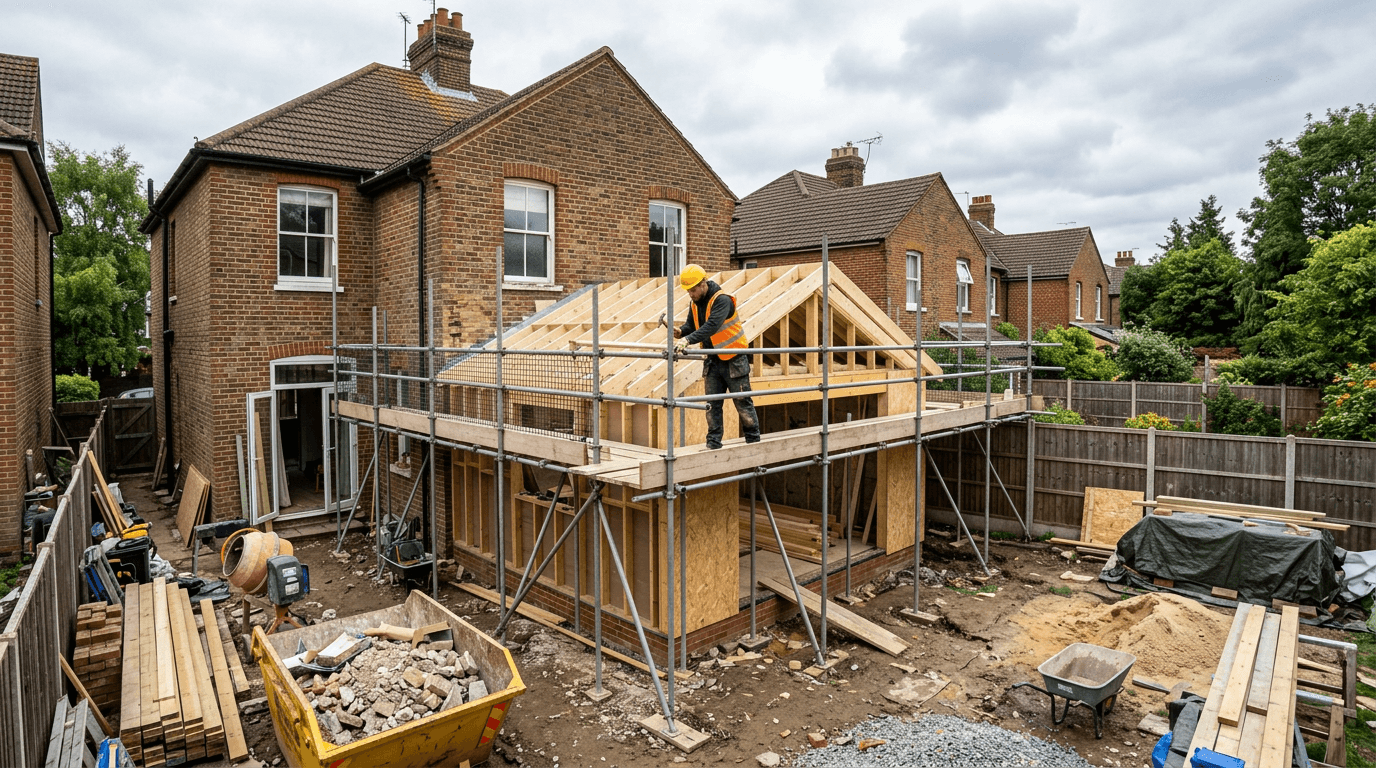
Add valuable living space with trusted house extensions across the UK. Taskino connects you with insured builders for clear quotes, practical planning and reliable project delivery.
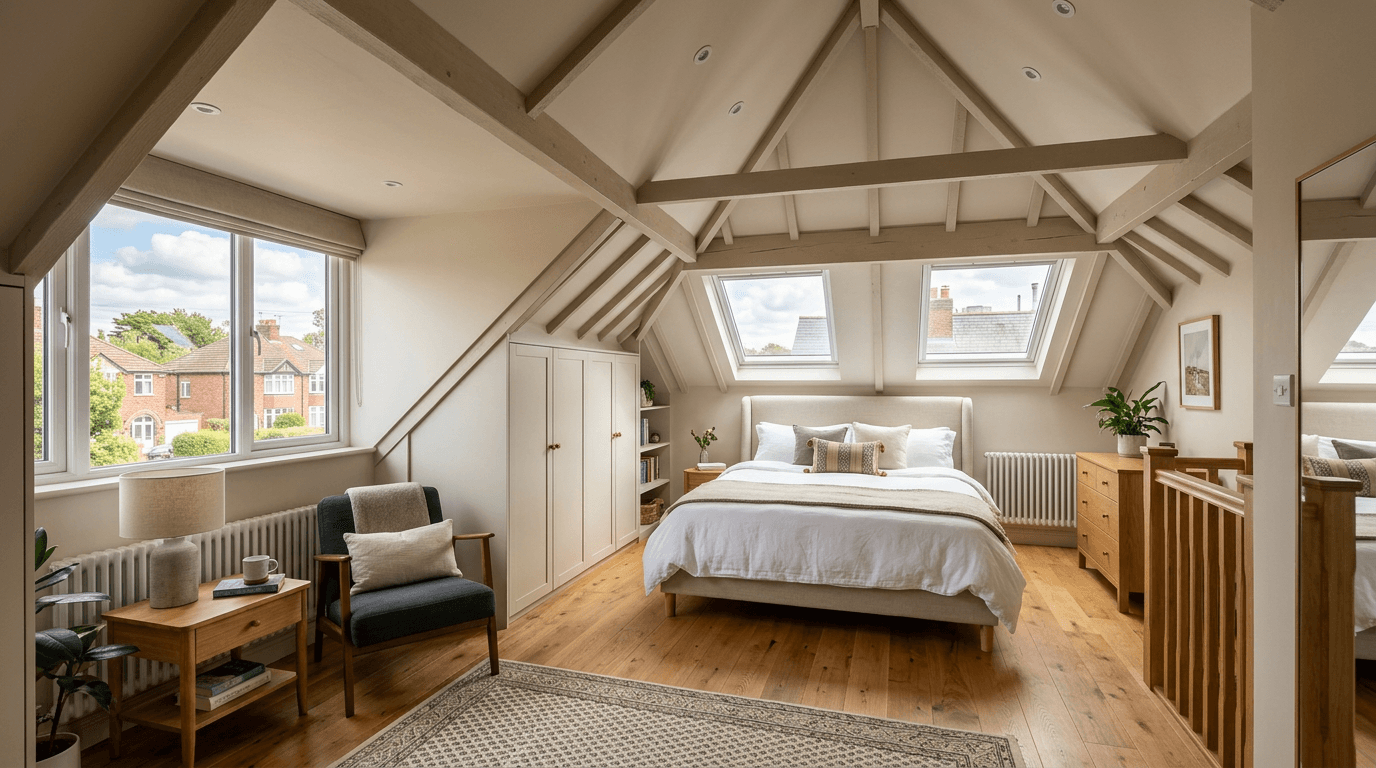
Create extra living space with professional loft conversions. Taskino matches you with insured specialists who handle surveys, planning checks, structural work, insulation and finishing with clear quotes and reliable workmanship.
Ready to Book Your Service?
Tell us what you need and our team will help you find the right professional quickly, with clear pricing and no hidden fees.