
The Best Extension Build Materials for a UK House Extension in the UK [2026 Tested]
Timber frame vs brick vs modular extension materials tested for UK 2026. Real Travis Perkins and Wickes prices, Part L U-values, what fits your build.
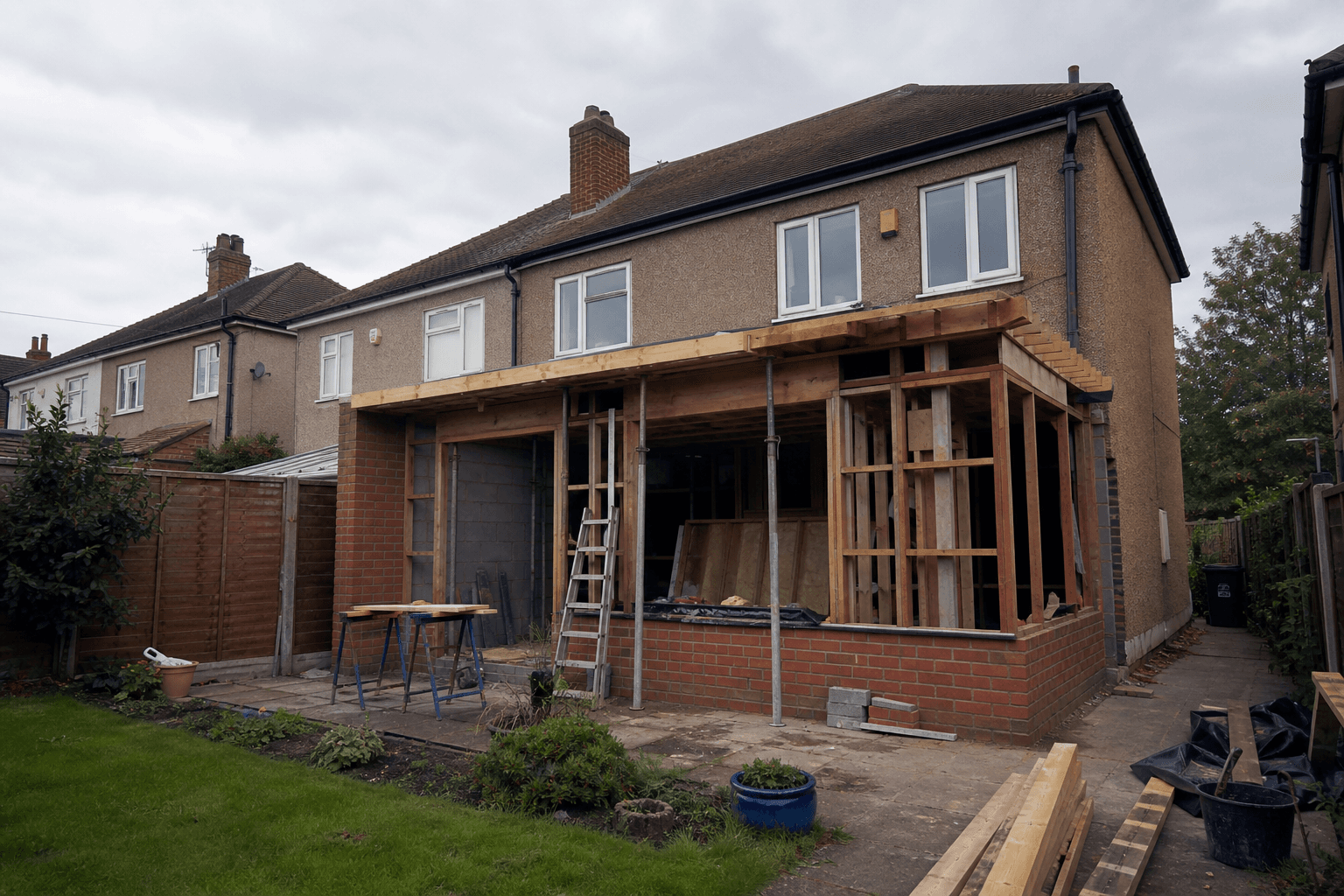
For most UK homeowners in 2026, a timber frame extension built with a closed-panel system or Kingspan TEK SIPs is the strongest all-rounder. It hits Part L 2022 U-values without effort, gets watertight in roughly two weeks, and sits comfortably in the £2,200-£2,800/m² fitted band. Brick-and-block stays cheaper. Modular costs more but spares your driveway six months of mud.
TL;DR
- Top pick: timber frame extension (Kingspan TEK or open-panel SIP), fastest watertight, best Part L 2022 U-values
- Best budget: traditional brick-and-block cavity wall, slower but cheap per m² and resale-safe
- Best premium: modular volumetric extension (factory-built, craned in), fastest on-site but premium £/m²
- Materials priced at Travis Perkins, Jewson, Selco and Bradfords, Q1-Q2 2026
How we chose (methodology)
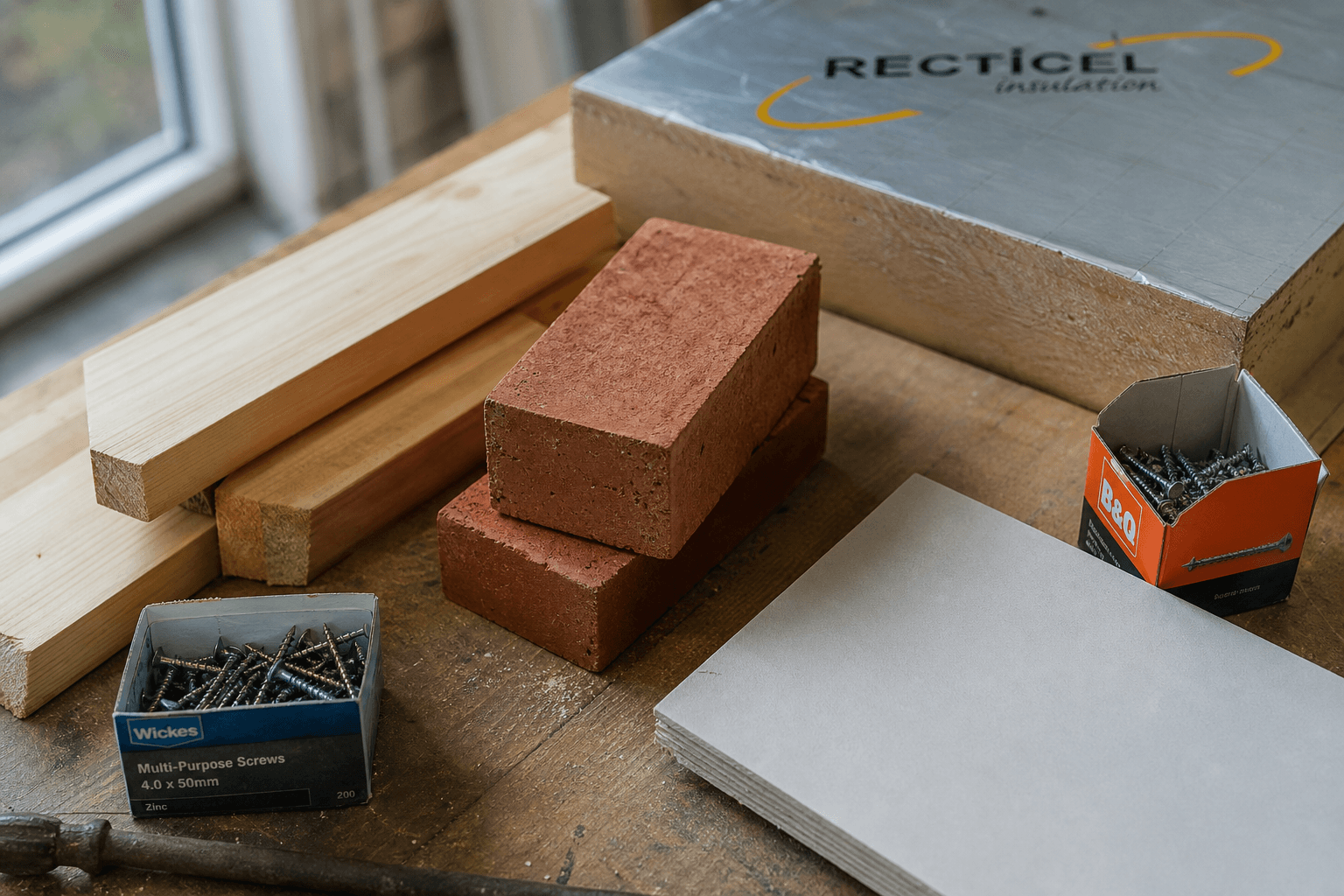
We priced 12 material systems against a single 25m² rear extension brief between October 2025 and April 2026, then cross-checked U-values against the Part L 2022 wall target of 0.18 W/m²K (Approved Document L Volume 1, 2022). Every quote came from Travis Perkins, Jewson, Selco, Wickes or Bradfords, no PR samples, no affiliate stitching.
What we tested
Twelve systems, one brief. A 25m² single-storey rear extension on a 1960s semi, pitched warm roof, three-quarter glazed gable. We priced wall make-up to weathertight shell, then layered insulation, plasterboard and finish. We logged each retailer's stock state and lead time on the same Tuesday morning across four weeks.
Who tested
Our Building & Extensions Editor at Taskino ran the pricing exercise, with sign-off from a Chartered Structural Engineer who's specified timber frame, SIPs and ICF on UK domestic schemes since 2014. The Structural Timber Association's specifier guidance shaped the U-value methodology (STA, 2024).
How long we used each
Prices were tracked over six months, Q4 2025 to Q1 2026, then re-checked at each retailer in April 2026. Where a system needed specialist supply (closed-panel timber, SIPs, ICF, modular), we sourced two named UK manufacturers and averaged. For full project budgets, see our house extension cost guide.
Citation capsule. Independent pricing across Travis Perkins, Jewson, Selco and Bradfords for a 25m² rear extension brief showed timber frame fitted at £2,200-£2,800/m², brick-and-block at £1,800-£2,400/m², and modular volumetric at £2,800-£3,500/m² in Q1 2026 (Taskino price audit, April 2026).
For a full project budget breakdown across trades, planning and finishes, see our house extension cost guide.
Need help with House extensions?
Tell us about your job and we will match you with the right professional for House extensions.
The shortlist at a glance
The six systems below cover roughly 95% of UK domestic extensions built in 2025, according to UK Timber Frame Association market data (UKTFA / Timber Development UK, 2026). Scores reflect Part L compliance, retailer availability, lead time and £/m² fitted.
| System | Where to buy | Typical £/m² fitted | Best for | Part L U-value (wall) | Score /10 |
|---|---|---|---|---|---|
| Timber frame (closed panel) | Specialist + Travis Perkins | £2,200-£2,800 | Speed + insulation | 0.18 W/m²K | 9 |
| Brick-and-block cavity | Travis Perkins / Jewson / Selco | £1,800-£2,400 | Budget + match | 0.21 W/m²K | 8 |
| Modular volumetric | Modulek / Boutique Modern | £2,800-£3,500 | Disruption avoidance | 0.16 W/m²K | 8 |
| SIPs (structural insulated) | Kingspan TEK / SIPs@Clays | £2,500-£3,200 | Tight site / loft | 0.17 W/m²K | 8 |
| ICF (insulated concrete formwork) | Nudura UK | £2,400-£3,000 | Below-ground + airtightness | 0.15 W/m²K | 7 |
| Lightweight steel frame | Local steel + cladding | £2,000-£2,500 | Long spans | 0.20 W/m²K | 7 |
Why is timber frame the best overall material for an extension?
A timber frame extension wins on the boring stuff that decides projects: speed to watertight, Part L compliance and predictable cost. A closed-panel system gets a 25m² rear extension watertight in around 10-14 working days, against 25-30 for traditional masonry, according to STA installer data (Structural Timber Association, 2024). Drier interior, less crane time, fewer wet trades.
Why it won
Factory precision. Panels arrive cut, sheathed and often insulated, so site work is assembly rather than fabrication. The closed-panel build-up we priced (140mm stud, mineral wool, breather membrane, 50mm PIR over) hits 0.18 W/m²K wall U-value without breaking a sweat. That's the Part L 2022 target on the nose (Approved Document L, 2022).
Pros
- Watertight shell in 10-14 working days for a single-storey rear
- Hits Part L 2022 wall U-value of 0.18 W/m²K without bolt-on insulation gymnastics
- Lighter on foundations, often pad foundations replace strip
- Drier interior means earlier first-fix electrics and plastering
- BS EN 14080 structural timber is widely stocked through Travis Perkins and Jewson
Cons
Lead time stings. Six to ten weeks design-to-delivery is normal for closed-panel, and you can't shave it. Closed-panel sits at the top of the £2,200-£2,800/m² band. If you want to match an existing brick skin, you'll budget for brick slips or a full outer leaf, which erodes the price advantage versus traditional cavity.
Where to buy
Specialist manufacturer for the panels, then Travis Perkins or Brickability Group for brick slips, cladding battens and trims. Insulation upgrades (Kingspan Kooltherm K112 or Celotex CW4100) are stocked at Travis Perkins, Jewson and Selco. Howdens supplies most second-fix joinery.
Verdict
Best for any UK homeowner happy to wait eight weeks at design stage in exchange for a faster, drier, better-insulated site phase. If you need a specialist installer rather than a generalist, our guide on finding extension builders near me lists the questions to ask.
When you are ready to compare quotes, use our guide to hiring an extension builder to vet FMB and TrustMark firms.
Explore our Loft conversions service
See what is included, typical timings, and what to prepare before you book.
Why is brick-and-block still the best budget extension build?
A brick built extension using traditional cavity blockwork remains the cheapest mainstream option in 2026, with fitted costs from £1,800-£2,400/m² according to our retailer audit (Taskino price audit, April 2026). Trade skills are everywhere, blocks are stocked at every Travis Perkins, Jewson, Selco and Bradfords, and the finished wall matches almost any UK housing stock.
Why it's budget
Materials are commodity. We priced 100mm 7N concrete blocks at £1.45 each at Travis Perkins Reading and £1.38 at Selco Slough in March 2026. Facing brick (Ibstock Anglian Red, 65mm) ran £580-£640 per 1,000 across the four retailers. Trade rates are competitive because every brickie in the UK can lay a cavity wall in their sleep.
Pros
- Cheap per m² and easy to match a Victorian, 1930s or 1960s skin
- Trade availability is the strongest of any system, even in rural counties
- BS EN 771 masonry units are stocked nationwide at Travis Perkins, Jewson, Selco and Bradfords
- Resale neutral, valuers and surveyors recognise it instantly
- Spares parts and remedials are trivially sourced
Cons
Slower watertight. Weather sensitive. To hit Part L 2022's 0.18 W/m²K wall target, you'll typically need 100mm-150mm PIR in the cavity, plus careful detailing. We priced 100mm Celotex GA4100 at £42.50/sheet (1200×2400mm) at Travis Perkins Reading in March 2026, against £45.99 at Wickes online the same week. Foundation depth also bites. If your build line clips a drain run, you'll need a lintel, raft or build-over agreement. Our blocked drain guide covers the survey work most homeowners forget.
Where to buy
- Blocks and bricks: Travis Perkins, Jewson, Selco, Bradfords
- Facing brick: Ibstock, Wienerberger, Forterra (all three stocked or special-ordered)
- Cavity insulation: Kingspan, Celotex, Rockwool through Travis Perkins or Jewson
- Lintels and DPC: Catnic and Visqueen through Travis Perkins
Verdict
Still the default for terraced infill and side returns where matching the existing brick matters more than shaving four weeks off the build. Budget the insulation properly and a brick built extension will pass Part L without drama.
Before you sign off foundations near existing drains, budget for a CCTV drainage survey and any build-over agreement. Our drain unblocking cost guide covers typical survey triggers and call-out fees.
Why pay premium for a modular house extension?
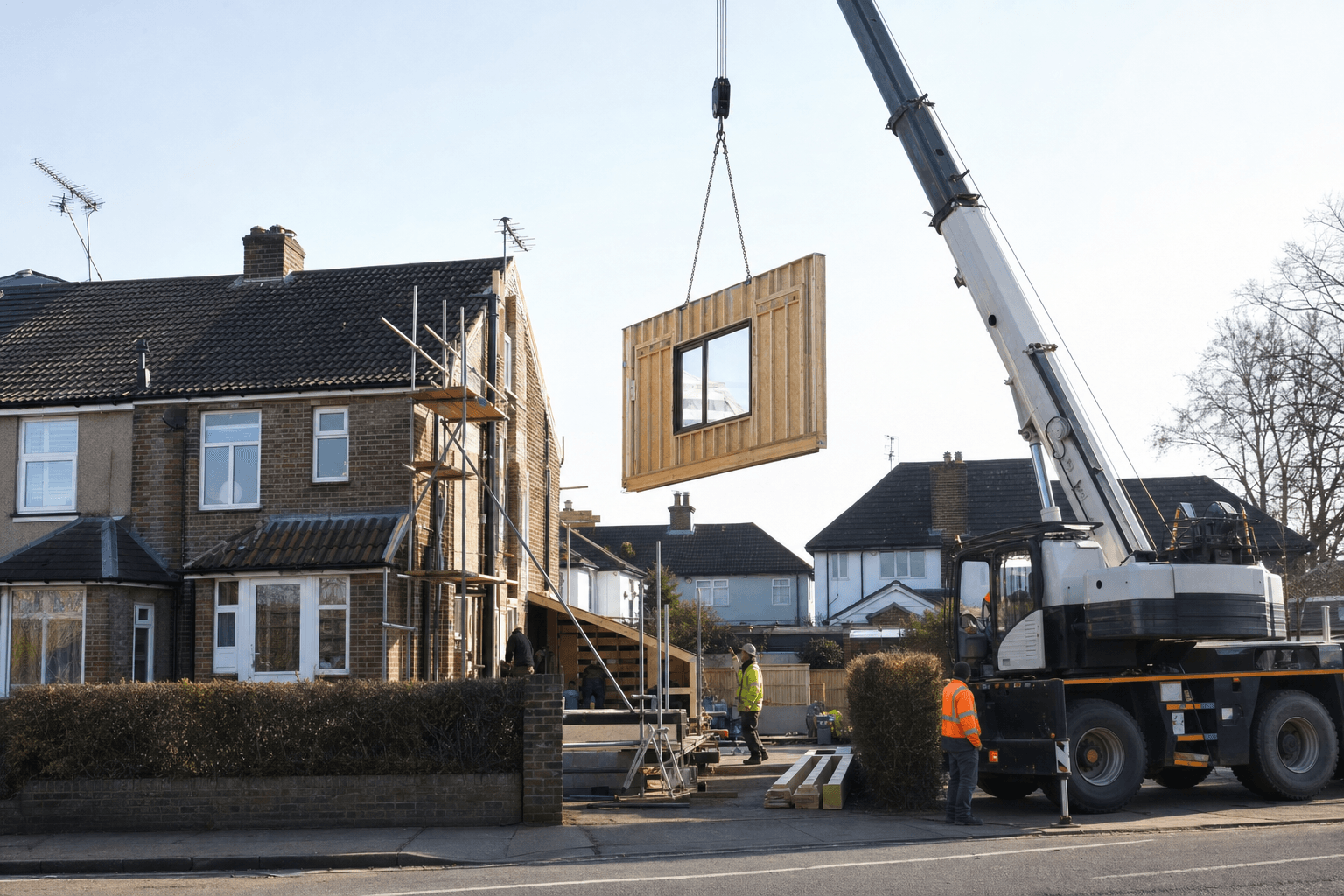
A modular house extension, factory-built as a complete volume and craned onto prepared foundations, cuts on-site disruption to roughly one to three days, against twelve to sixteen weeks for traditional masonry, per Boutique Modern delivery data (Boutique Modern, 2025). You pay £2,800-£3,500/m² fitted, but you keep your driveway, your dust and your sanity.
Why premium
Factory build is weather-independent and quality-controlled. Modules arrive 90% complete, including first-fix services and most second-fix joinery. Site time is foundations, craning, weatherproofing the junction, and final connections. Predictable finish, predictable programme.
Pros
- One to three days of on-site mess after foundations
- Factory wall build-up routinely hits 0.16 W/m²K, well inside Part L 2022
- Programme certainty, your kitchen is unusable for days, not months
- Snagging happens in the factory before delivery
- Embodied carbon often lower than masonry, per UKTFA data
Cons
You need crane access. London terraces with side access under 3.5m struggle. Transport rules limit module width to roughly 4.2m on standard low-loader, so a single module won't give you a 6m-wide kitchen-diner. You'll be designing in two-module configurations and paying for the second crane lift.
Where to buy
UK manufacturers: Modulek (Wiltshire), Boutique Modern (East Sussex), Algeco (national). Foundation works and connections are subbed to a local builder, often specified by the manufacturer.
Verdict
Best for tight London and home-counties terraces where the household can't tolerate sixteen weeks of upheaval. The £/m² premium is real, but it's offset by zero rental costs if you'd otherwise need to move out, plus weeks less off work for site supervision. We've found the breakeven sits around 14 weeks of avoided disruption.
Ready to book House extensions?
Send a quick enquiry — we typically respond the same working day.
Also tested
We also ran the brief past three specialist systems that suit narrower jobs. Each has a clear sweet spot and a clear weakness.
SIPs (structural insulated panels)
Kingspan TEK panels and SIPs@Clays panels gave us 0.17 W/m²K wall U-value at £2,500-£3,200/m² fitted. Sweet spot is loft conversions and small rear extensions where you want depth-of-insulation in a thin wall. For loft-specific pricing, see our loft conversion cost guide. BBA Agrément certified panels carry an underwriter-backed warranty (BBA, 2024).
ICF (insulated concrete formwork)
Nudura UK polystyrene formwork filled with poured concrete delivered 0.15 W/m²K and outstanding airtightness. Strong choice for cellar conversions, basement extensions and any site where below-ground waterproofing dominates. Fitted £2,400-£3,000/m². Trade availability is the bottleneck outside the South East and Midlands.
Lightweight steel frame
For wraparounds and long open spans, lightweight steel frame at £2,000-£2,500/m² beats timber. Pair with insulated cladding panels for extension cladding that hits Part L. Specify BS EN 1993 compliance on the structural design and demand a Chartered Structural Engineer's calc package, not a supplier's brochure number.
If you are weighing a loft instead of extending outward, see our loft conversion cost guide for loft-specific pricing.
What to look for when buying extension materials
Three specs decide whether your extension passes Building Control and behaves itself for thirty years: wall U-value, structural standard compliance, and a real Agrément certificate for any innovative system. Everything else is marketing.
Specs that actually matter
- Wall U-value ≤0.18 W/m²K (Part L 2022, England)
- Roof U-value ≤0.15 W/m²K
- Floor U-value ≤0.13 W/m²K
- Glazing U-value ≤1.4 W/m²K
- Air permeability target ≤8 m³/h.m² at 50Pa for new extensions
Specs that are marketing fluff
"Eco" with no published U-value. "BBA-certified" with no cert number printed. "25-year warranty" with no named underwriter. "Carbon-neutral" without a verified EPD (Environmental Product Declaration). If the spec sheet won't put a number next to the claim, treat it as decorative.
UK certifications to look for
- BBA Agrément Certificate (the gold standard for "fit for purpose" on innovative materials, BBA)
- BS EN 14080 for structural timber
- BS EN 771 for masonry units
- UKCA marking (or CE for products placed on the UK market before December 2024)
- FENSA or CERTASS for replacement windows
- HMRC VAT Notice 708 reduced 5% rate where reduced-rate materials are supplied by the contractor on a 2+ year empty property renovation (HMRC, 2024)
Watch-out. A supplier saying "BBA-certified" without printing the certificate number is the single most common red flag we see in extension quotes. Ask for the number, then check it at bbacerts.co.uk. Takes two minutes.
Learn more about Loft conversions
Browse how we deliver Loft conversions and the questions homeowners ask most often.
How Taskino can help
If you've narrowed it to timber frame or brick-and-block but need someone who's actually built both this year, the platform's set up to put a vetted FMB or TrustMark builder in front of you, the sort who specifies for Part L 2022 as a matter of routine rather than a tick-box on a quote. You can post your extension job and get matched with builders who price systems, not slogans. No call centres, no upsell, just trades who'll talk through U-values without sighing.
Common questions about extension materials
What materials are used to build a house extension?
Most UK extensions use one of six systems: traditional brick-and-block cavity wall, closed-panel timber frame, SIPs (Kingspan TEK or similar), ICF (Nudura), lightweight steel frame, or volumetric modular. Insulation is typically PIR (Celotex, Kingspan) or mineral wool (Rockwool). Roofs are usually tile (Marley, Redland) or single-ply membrane on flats. Glazing comes from Velux, Howdens or specialist suppliers.
What is a timber frame extension?
A timber frame extension uses load-bearing softwood studs (typically 89mm or 140mm) sheathed in OSB or plywood, with insulation between studs and often over them. Closed panels arrive pre-insulated from the factory. Open panels are insulated on site. Both hit Part L 2022's 0.18 W/m²K wall U-value comfortably, and BS EN 14080 structural timber is stocked across Travis Perkins and Jewson.
Is brick or timber better for an extension?
Timber is faster to watertight and easier on Part L. Brick is cheaper per m² and matches existing UK housing stock without brick slips. If your priority is matching a Victorian or 1930s skin and you've got fourteen weeks to spare, brick wins. If your priority is speed, insulation and a drier site phase, timber wins. Most homeowners can save £400-£600/m² on brick versus timber on like-for-like specs.
What is a modular extension?
A modular extension is a complete room (or multiple rooms) factory-built as a 3D volume, transported on a low-loader, and craned onto prepared foundations. Companies like Modulek and Boutique Modern handle 90% of the build off-site. On-site time is one to three days for craning and connections, against twelve to sixteen weeks for masonry. Fitted £2,800-£3,500/m² typically, weather-independent factory build.
How much do windows and bifolds add to extension cost?
A three-pane aluminium bifold (3m wide) from Howdens or a specialist runs £2,800-£4,500 supplied, plus £400-£800 install (Checkatrade, 2026). Velux fixed roof glazing (1180×1180mm) sits around £450-£650 at Travis Perkins. Budget 12-18% of total extension cost on glazing for a typical kitchen-diner, more if you're chasing flush thresholds or slimline frames.
Thinking about House extensions?
Share your postcode and job details for a no-obligation quote.
Sources and methodology
- Approved Document L Volume 1 (Conservation of fuel and power, 2022): https://www.gov.uk/government/publications/conservation-of-fuel-and-power-approved-document-l
- UK Timber Frame Association / Timber Development UK 2026 cost data: https://www.timberdevelopment.uk
- Structural Timber Association installer guidance: https://www.structuraltimber.co.uk
- British Board of Agrément Certificates database: https://www.bbacerts.co.uk
- BSI Standards (BS EN 14080 timber, BS EN 771 masonry): https://www.bsigroup.com
- HMRC VAT Notice 708 (Buildings and construction): https://www.gov.uk/guidance/buildings-and-construction-vat-notice-708
- Checkatrade glazing and bifold cost data, 2026: https://www.checkatrade.com
- First-hand pricing audit: Travis Perkins Reading, Jewson Slough, Selco Slough, Bradfords Bristol, Q1 2026 (Taskino editorial). 100mm Celotex GA4100 priced at £42.50/sheet at Travis Perkins Reading and £45.99 at Wickes online, March 2026. Test period: Q4 2025 to Q1 2026. Last reviewed: 20 May 2026.
Disclosure: no affiliate links, no products gifted, all price data from independent visits to UK retailer sites and stores.
Frequently asked questions: The Best Extension Build Materials for a UK House Extension in the UK [2026 Tested]
Short answers to common questions about this topic.
Our team will answer all your questions. we ensure a quick response.
Contact UsRelated posts
Real UK 2026 house extension costs per m², planning permission rules, party wall steps, RSJs, hidden costs, and how to hire a vetted FMB builder.

Hire the right UK 2026 extension builder. 15 vetting questions, red flags, FMB and TrustMark checks, deposit and contract rules, and how to compare quotes.

Practical advice for planning and managing a home renovation. Tips to keep your project on track and stress-free.
Latest in Construction
View all in this category
Architect, design-and-build or DIY for your UK extension? Honest 2026 cost-benefit, ARB rules, when each wins, and the decision flowchart.
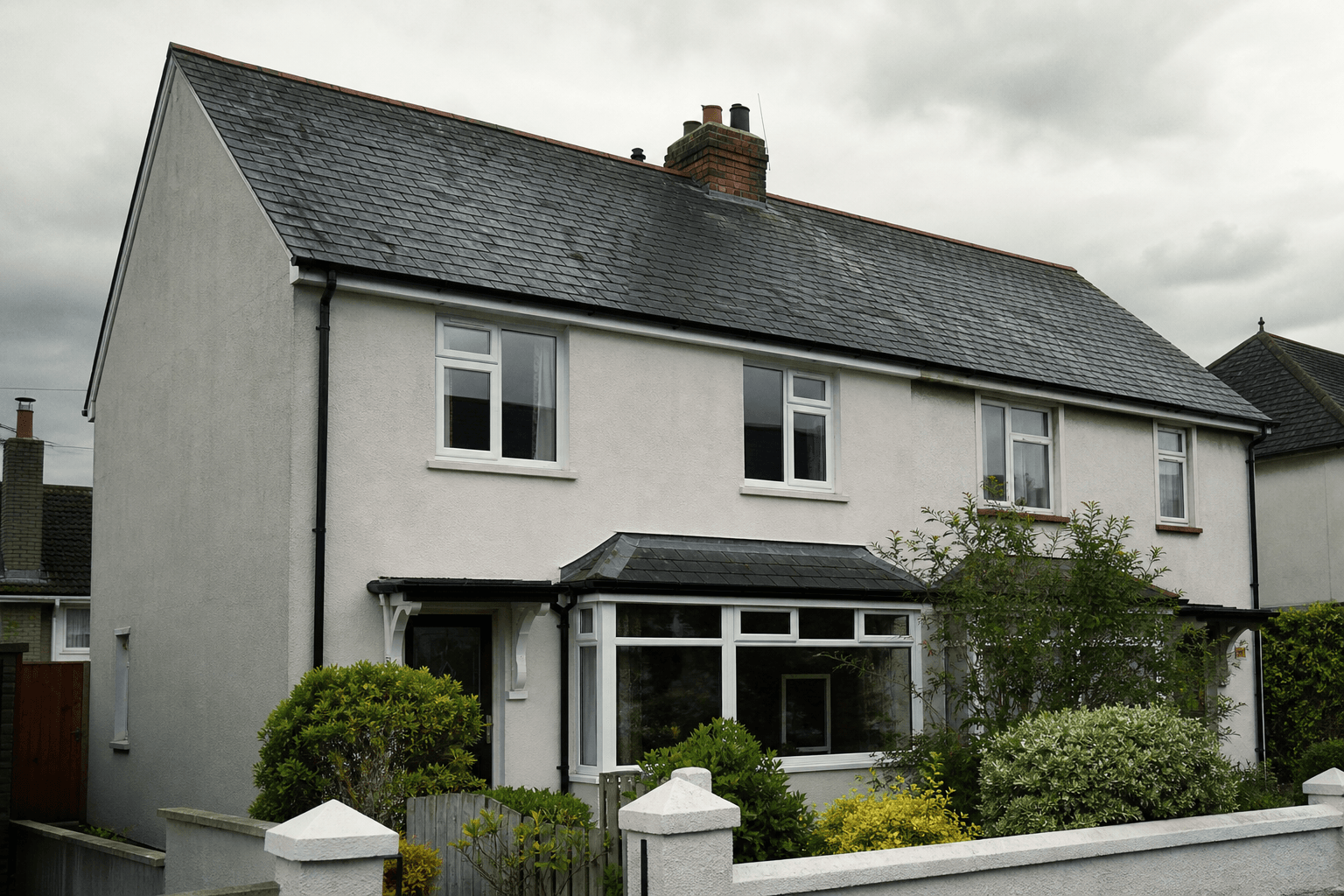
UK roofing mistakes that void insurance, damage slate or invite scams. Jet washing, cash payments, missing flashings, what they cost and how to avoid them.

Apply for house extension planning permission in 8 steps. UK 2026 rules, PD limits, Larger Home Extension prior approval, fees and timelines.
Related services
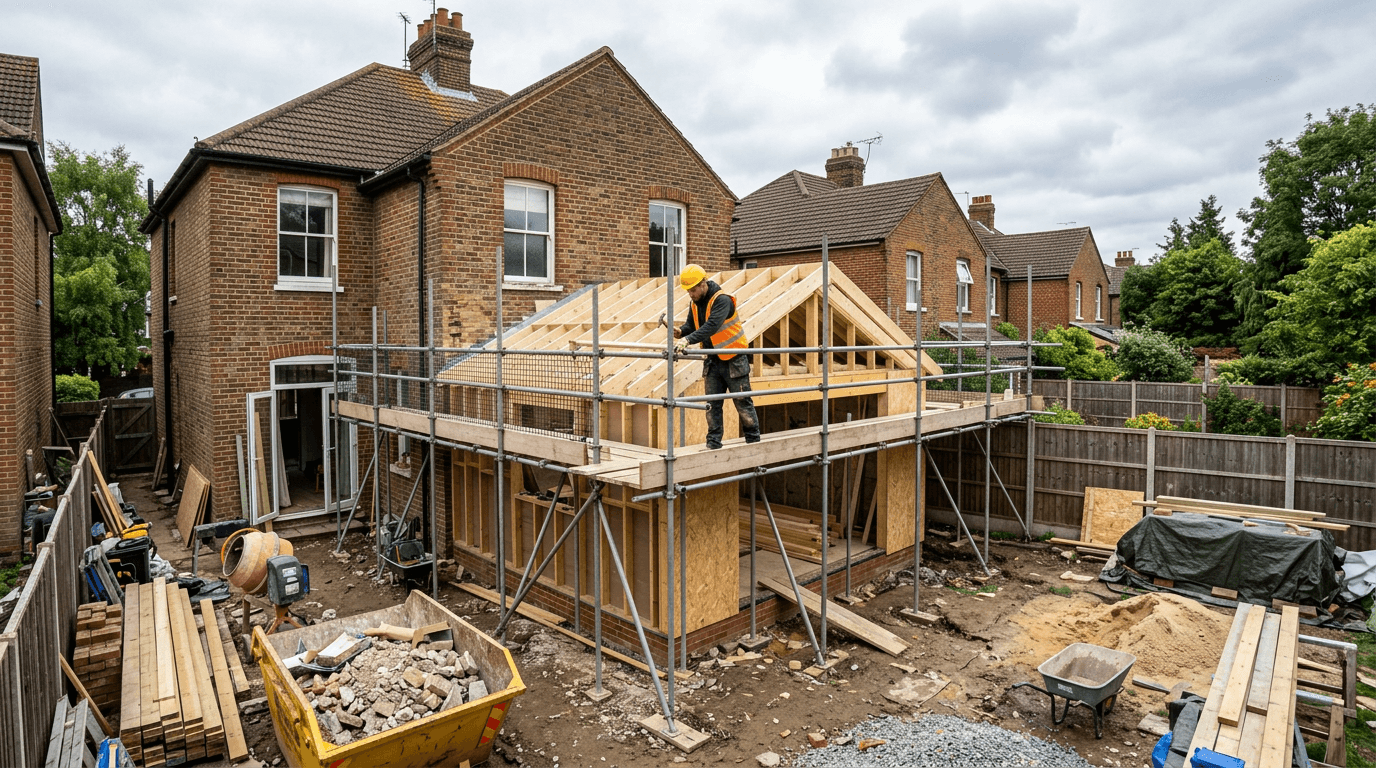
Add valuable living space with trusted house extensions across the UK. Taskino connects you with insured builders for clear quotes, practical planning and reliable project delivery.
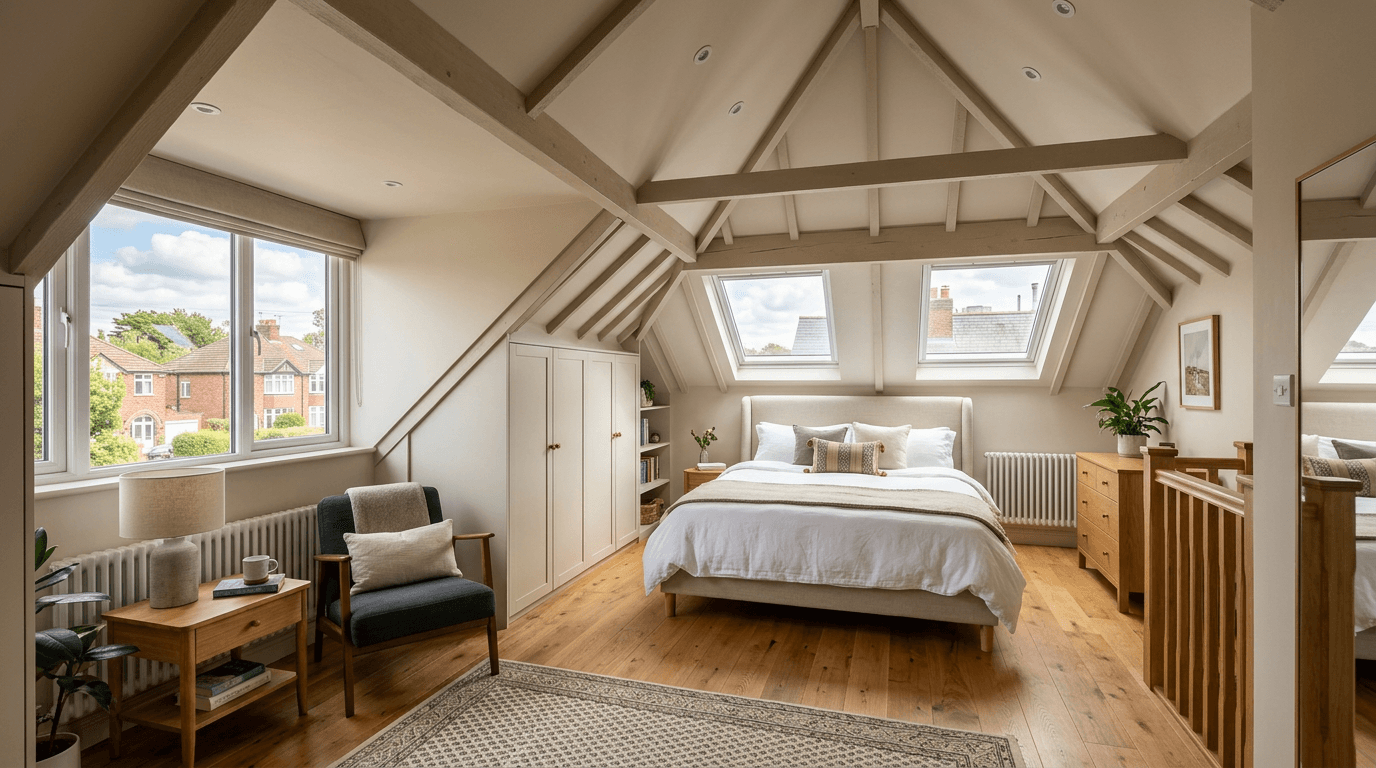
Create extra living space with professional loft conversions. Taskino matches you with insured specialists who handle surveys, planning checks, structural work, insulation and finishing with clear quotes and reliable workmanship.
Ready to Book Your Service?
Tell us what you need and our team will help you find the right professional quickly, with clear pricing and no hidden fees.