
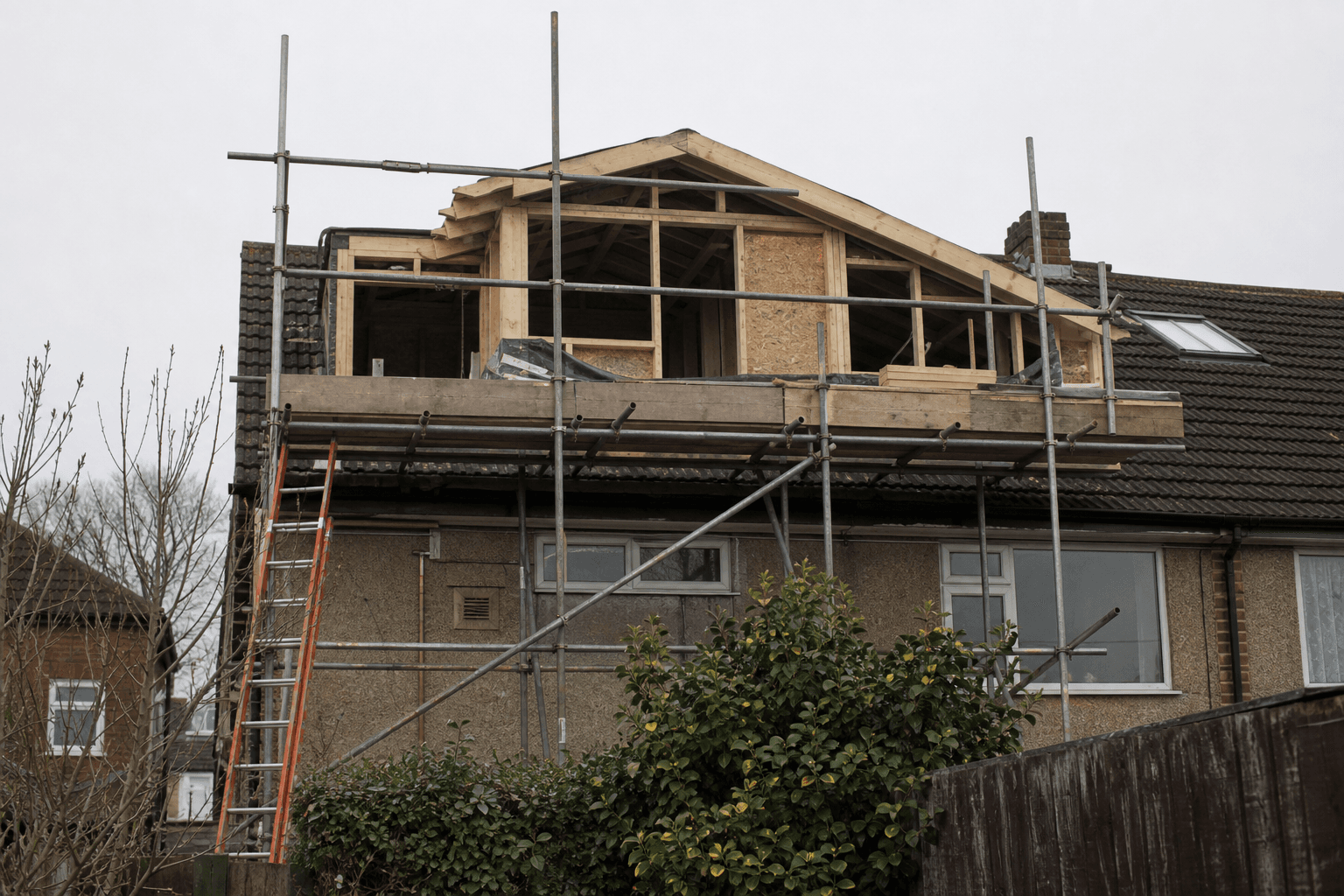
How Much Does a Loft Conversion Cost in the UK? [2026 Price Guide]
Real 2026 loft conversion costs by type, with build timelines, planning rules, structural fees and the hidden line items most quotes miss.
A typical UK loft conversion cost in 2026 sits between £40,000 and £75,000 fitted for a standard rear dormer, according to RICS BCIS benchmarking and MyJobQuote 2026 banding. Velux-only schemes start near £20,000. Inner-London mansards regularly clear £100,000. The number you actually pay depends on type, head height, en-suite, region and how cleanly your steels and staircase land.
TL;DR
- UK average: a 2026 loft conversion typically costs £40,000–£75,000 fitted (RICS BCIS / MyJobQuote 2026 band)
- Range: £20,000 (Velux/rooflight only) to £100,000+ (mansard in inner London)
- Drivers: type (dormer, mansard, hip-to-gable, Velux), head height, staircase, en-suite, region
- VAT: 20% standard; 5% reduced rate if the dwelling has been empty 2+ years (HMRC VAT Notice 708)
Loft conversion cost at a glance
The 2026 UK midpoint for a standard rear dormer loft conversion cost is around £55,000 fitted, based on Checkatrade and MyJobQuote tracker data published in early 2026. That figure assumes a 24–28m² floor area, one bedroom plus a compact en-suite, mid-spec finish, and no roof-raise. Strip out the en-suite and you save £5,000–£12,000.
National average price
Across England, Scotland and Wales, the typical 2026 dormer comes in at £55,000 (MyJobQuote, 2026). RICS Building Cost Information Service (BCIS) benchmarks for residential roof-space conversion track within roughly 8% of that number for mid-spec schemes outside the M25. It's a useful sanity check when three builder quotes spread by £20,000.
Typical price range
The honest 2026 window is £40,000 at the low end and £75,000 at the high end for a dormer (Checkatrade, 2026; Houzz UK, 2026). Velux-only conversions slot under that. Mansards and L-shapes sit above. For broader scope, our house extension cost guide compares loft pricing against single-storey rear extensions on a £/m² basis.
What "average" actually means here
Averages hide the spec. Throughout this guide, the sample is a rear dormer, around 25m² of new usable floor, one double bedroom plus a 3-piece en-suite, engineered oak landing, painted MDF skirting, two Velux windows in the front pitch and a stock-size dormer to the rear. Push any of those up and the number moves.
Citation capsule. A 2026 mid-spec UK loft conversion typically costs £40,000–£75,000 fitted for a rear dormer, with a national midpoint near £55,000 (MyJobQuote 2026; Checkatrade 2026). Mansards and L-shapes routinely exceed £80,000, and inner-London mansards reach £120,000 (Architecture for London 2026 cost report).

Need help with Loft conversions?
Tell us about your job and we will match you with the right professional for Loft conversions.
What does a loft conversion cost by region?
Regional spread on UK loft conversion cost is wider than most homeowners expect. London and the South East run 25–40% above Midlands and Northern pricing, driven by labour rates, scaffolding hire, parking suspensions and party wall density (Architecture for London, 2026). Outside the M25 the gap narrows, but city-centre access still adds a premium over rural sites.
London and South East (premium tier)
A standard rear dormer in Zones 2–4 lands at £55,000–£90,000 in 2026 (Architecture for London, 2026). Mansards on Victorian terraces, particularly in conservation areas, clear £100,000 with ease once planning conditions, slate tiles and lead detailing are priced properly. Scaffolding licences and parking dispensations add £1,500–£4,000 alone.
Major cities (Manchester, Birmingham, Bristol, Leeds, Glasgow)
In the regional cities the same rear dormer typically runs £40,000–£65,000 (MyJobQuote, 2026). A Taskino-vetted loft specialist in Bristol quoted £62,000 for a 24m² rear dormer with en-suite in March 2026, including IStructE calcs and Building Control fees. Hip-to-gable on a Manchester semi sat at £58,000 the same month.
Smaller towns and rural
In market towns and rural settings, dormers sit at £35,000–£55,000 in 2026 (Checkatrade, 2026). Labour is cheaper but specialist trades, particularly steelwork and lead-detail roofers, often travel from a regional hub and add a day rate plus mileage.
| Region | Velux/rooflight | Dormer | Hip-to-gable | Mansard | Source |
|---|---|---|---|---|---|
| London / South East | £30k–£45k | £55k–£90k | £65k–£100k | £75k–£120k | Architecture for London 2026 |
| Manchester / Birmingham / Bristol | £22k–£35k | £40k–£65k | £50k–£75k | £60k–£90k | MyJobQuote 2026 |
| Smaller towns / rural | £20k–£32k | £35k–£55k | £45k–£65k | £55k–£80k | Checkatrade 2026 |
Citation capsule. Regional UK pricing for a 2026 rear dormer ranges from £35,000 in rural areas (Checkatrade 2026) to £55,000–£90,000 in London and the South East (Architecture for London 2026), with major city averages near £40,000–£65,000 (MyJobQuote 2026). Mansards add 30–60% over dormer pricing in the same region.
How do loft conversion prices compare by type?
The conversion type is the single biggest lever on UK loft conversion cost, often acting as a 2–3x multiplier between Velux and mansard for the same property (MyJobQuote, 2026). Type is dictated by your existing roof, the head height under the ridge, planning permitted development limits, and how much volume you genuinely need.
What you get for the money
| Type | What's included | Typical UK price (2026) | Typical build time |
|---|---|---|---|
| Velux/rooflight | No dormer, in-pitch windows, no structural roof change | £20k–£45k | 4–6 weeks |
| Dormer | Box dormer to rear, flat or pitched roof, en-suite optional | £40k–£75k | 6–8 weeks |
| Hip-to-gable (semi/end-terrace) | Hip end rebuilt vertical, often with rear dormer | £50k–£90k | 8–10 weeks |
| Mansard (typically London terraces) | Rear or full mansard, near-vertical walls, planning needed | £60k–£120k | 10–12 weeks |
| L-shaped (rear + side dormer) | Two dormer volumes, typical on Victorian terraces | £70k–£120k | 10–14 weeks |
Dormer loft conversion cost in detail
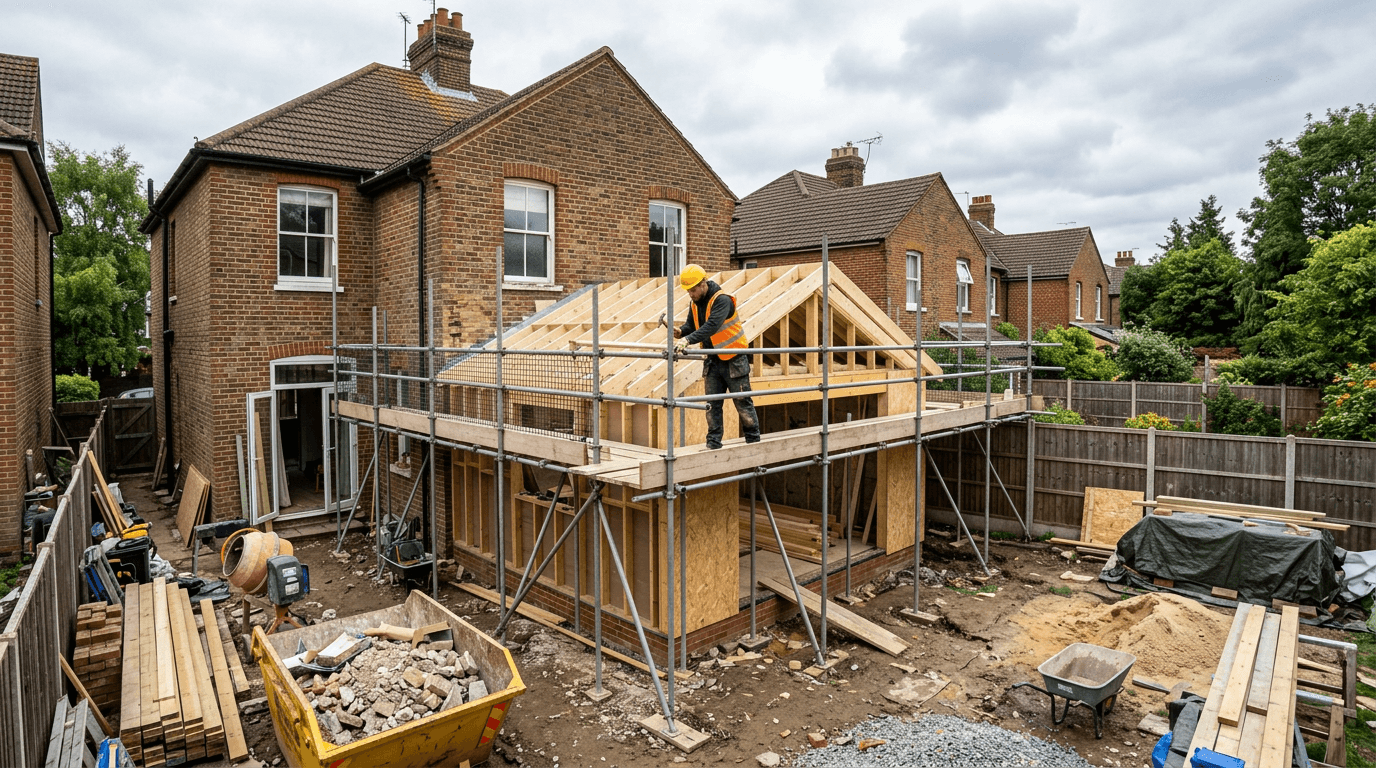
The dormer loft conversion cost band of £40,000–£75,000 covers the workhorse UK scheme: a flat-roof box dormer to the rear, two Velux windows to the front, a fixed staircase off the existing landing, and a 3-piece en-suite tiled to the door. It's the most common quote shape you'll receive.
Mansard loft conversion cost in detail
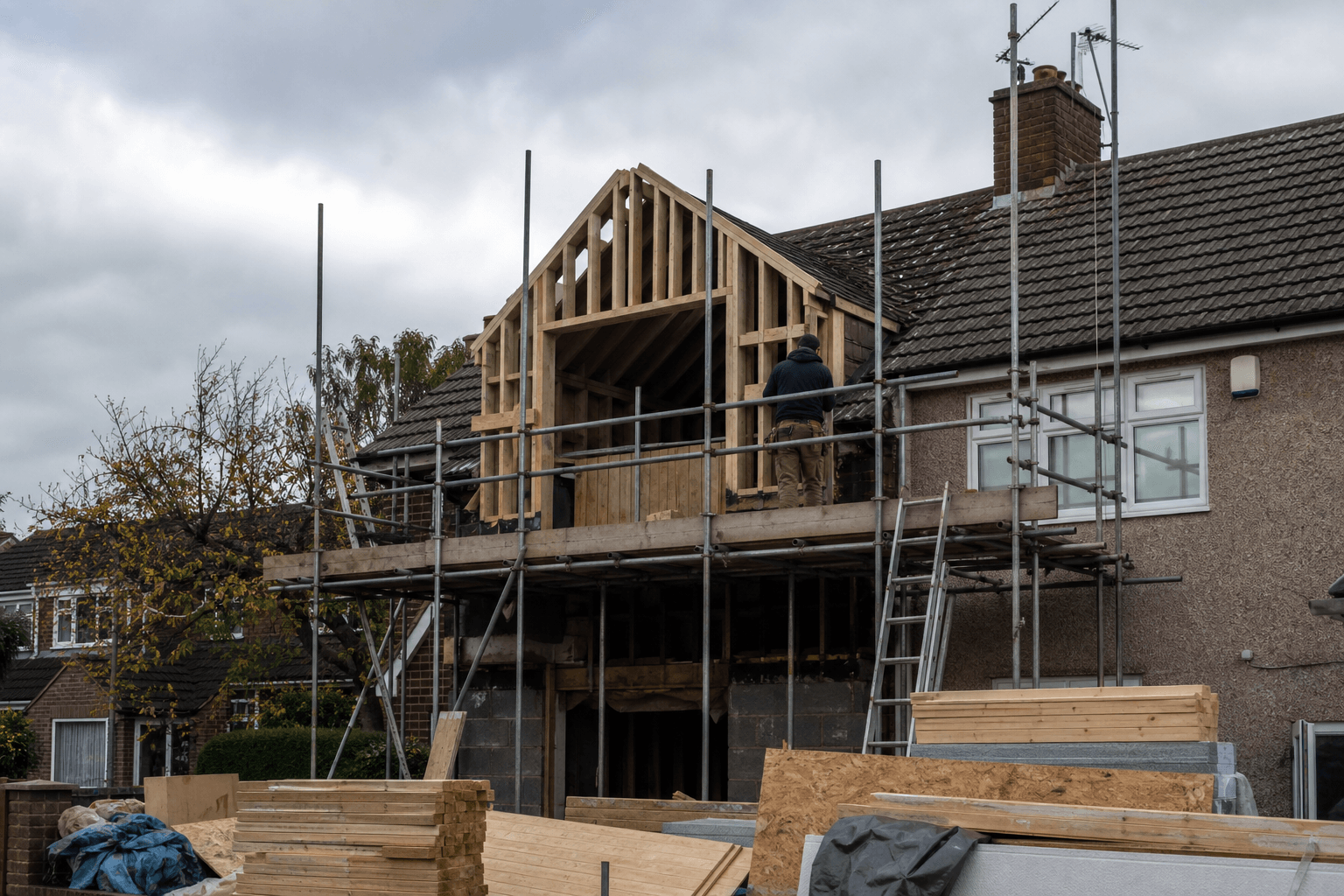
The mansard loft conversion cost is the heaviest at £60,000–£120,000 because the rear (or full) roof is rebuilt with near-vertical walls and a shallow top pitch. It almost always needs full planning permission, party wall awards on both sides, and lead-detail roofing. London Victorian terraces are the typical home.
Quick note. Build time is calendar weeks on site, not lead time. Add 10–16 weeks before that for survey, design, structural calcs, planning (where needed) and tender. Most 2026 UK loft starts have a 4–6 month run-up.
Explore our House extensions service
See what is included, typical timings, and what to prepare before you book.
What changes the price? The 7 cost drivers
Roughly 70% of variation between three quotes for the same UK loft conversion comes down to seven recurring drivers (Houzz UK, 2026). Understanding each one lets you read a quote rather than guess at it. Skip any of these and you risk a "provisional sum" line growing into a £6,000 variation halfway through the build.
- Type and footprint. Mansard vs Velux can be a 3x multiplier on the same house. Footprint matters too: a 30m² dormer rarely costs 50% more than a 20m² one because steels and staircase are largely fixed costs.
- Existing head height. Approved Document K requires a minimum 1.9m at the centre of the stair (Building Regs Part K, 2013, amended 2024). Under 2.2m to the ridge usually means raising the roof, adding £5,000–£15,000.
- Staircase position and Part K compliance. Above an existing stair is cheapest. A new run typically eats a bedroom on the floor below and adds £3,000–£8,000 in carpentry and remedial plaster.
- En-suite. Adds £5,000–£12,000. Macerator pumps cost less to install than a gravity-fed soil stack route, but they need annual servicing. Drainage route to the existing stack often dictates the bathroom's wall layout, not the other way around. For drainage red flags see our blocked drain guide.
- Steels and engineer fees. An IStructE-chartered structural engineer charges £400–£1,500 for calcs on a typical loft. Steel supply runs £80–£200 per RSJ depending on size, plus padstones and crane hire on tight London sites.
- Region. London uplift of 25–40% over Midlands and Northern equivalents (Architecture for London, 2026), driven by labour day rates and scaffold hire.
- Finish spec. Bifold dormer cheek windows triple the cost of a stock casement. Engineered oak floors run £45–£90/m² fitted vs £18–£28/m² for laminate (Wickes, 2026). Spec choices here can swing £8,000 on a single dormer. Our timber frame extension guide breaks down material trade-offs at this level.
Head height is the silent budget killer. Quotes from architects often assume the ridge stays put because raising it triggers full planning under GPDO 2015 Class B and rarely passes in conservation areas. If your tape measure shows under 2.2m to the apex, ask the engineer for a ridge-raise costing before the tender goes out, not after.
Citation capsule. Approved Document K requires 1.9m minimum headroom at the centre of a loft staircase (Building Regs Part K, 2013 ed. amended 2024). Where existing ridge height is under 2.2m, raising the roof typically adds £5,000–£15,000 to a UK loft conversion cost, and may push the scheme outside permitted development.
Hourly rates vs fixed quotes — which to ask for
For a UK loft conversion cost above £25,000, a fixed-price contract beats hourly rates roughly 9 times out of 10 (FMB, 2026 member survey). Hourly day rates still have a place for snagging, late-stage carpentry tweaks and aftercare, but the main works package should be a written fixed price with a schedule of rates for any variations.
When hourly is genuinely better
Day rates work for finishing trades after the main contract: a £280/day skilled carpenter to hang the last two doors, a £350/day decorator for snagging, or a £400/day spark to fit final-fix items the client supplied late (Checkatrade, 2026). Open-ended scopes belong on a day rate. Predictable ones don't.
When fixed-price protects you
A whole loft conversion cost should sit in a JCT Minor Works contract or, at minimum, a written fixed-price specification with named brands and a clear list of provisional sums. Fixed-price gives you a contract sum, a date for completion, retention (usually 5%), and a defects period of 12 months (JCT, 2024).
How to read a quote
A credible 2026 quote has separate line items for: preliminaries (site setup, skip, welfare), scaffolding, structural (steels and labour), carpentry (joists, roof, dormer cheeks), M&E (plumbing, electrics, ventilation), plasterboard and skim, decoration, and a small block of clearly-labelled provisional sums. Anything bundled as "the works" is hiding margin or risk.
Red flag callout. If a builder won't itemise scaffolding as its own line, walk. Scaffold for a UK loft conversion typically runs £2,500–£6,000 depending on access and duration (Travis Perkins Hire, 2026).
Ready to book Loft conversions?
Send a quick enquiry — we typically respond the same working day.
How do you get an accurate loft conversion quote?
A defensible quote needs six concrete steps before any builder writes a number (RIBA, 2026). Skipping the survey or structural stage is the single most common reason quotes vary by £20,000 on the same house. Builders aren't lying, they're guessing at different assumptions.
- Get a measured survey. A surveyor records existing dimensions, ridge height, joist depth and party wall positions. Expect £400–£900 from a RICS member.
- Confirm conversion type. Engage a RIBA-chartered architect or a design-and-build consultant to confirm whether you're Velux, dormer, hip-to-gable or mansard. Design fees run 5–10% of build cost.
- Commission IStructE structural calcs. A chartered engineer calculates steel sizes, padstones, and foundation impact. Calcs cost £400–£1,500 (IStructE, 2026).
- Submit a Planning Portal application if outside PD. Permitted development under GPDO 2015 Class B covers many dormers, but mansards, conservation areas and Article 4 zones need full planning. Fee: £258 for a householder application in England (Planning Portal, 2026).
- Issue a tender to three FMB or TrustMark builders. Same drawings, same spec, same provisional sums, same return date. For a deeper checklist see our extension builders near me guide on vetting questions.
- Compare line-by-line, not bottom-line. Look at scaffolding, prelims, structural and provisional sums side by side. The cheapest bottom line often hides the largest prov-sum risk.
What are the red flags that a quote is too good to be true?
A 2026 quote sitting 25% below the other two is almost always missing line items, not winning on efficiency (Which?, 2026). NHBC and FMB consumer data shows the same pattern year after year. If you spot two or more of the following, take the quote back to the builder and ask for the missing scope in writing.
- No IStructE calcs referenced. Structural calcs aren't optional. Building Control will reject the start notice.
- No scaffolding line. Scaffold is £2,500–£6,000. If it's missing, it'll arrive as a variation.
- "We'll sort party wall later." Party Wall etc. Act 1996 s.6 requires a 1-month notice for excavations and new steel padstones within 3m of a neighbour (gov.uk Party Walls, 2024). Awards are not optional.
- Deposit over 25%. FMB guidance caps deposits at 25% maximum (FMB, 2026). Anything more is a cashflow flag.
- Cash-only payment terms. No VAT receipt means no consumer protection and no insurance recourse.
- No written specification. A typed list of brand names, finishes and provisional sums protects both sides.
- No Building Control sign-off in scope. A completion certificate is a sale-day must-have.
- No NHBC, LABC or equivalent warranty. A 10-year structural warranty is the difference between a buyer pulling out and not.
Citation capsule. Party Wall etc. Act 1996 s.6 requires a 1-month written notice to adjoining owners for any excavation or new structural element within 3m of a shared boundary, including loft steel padstones (gov.uk Party Walls, 2024). FMB guidance also caps builder deposits at 25% (FMB consumer code, 2026).
Learn more about House extensions
Browse how we deliver House extensions and the questions homeowners ask most often.
What money-saving tips don't compromise quality?
Roughly £6,000–£12,000 can be trimmed from a typical UK loft conversion cost without dropping the spec below mortgage-survey standard (MoneySavingExpert, 2026). The savings come from sequencing, supply, and avoiding the upgrades that look better in a brochure than in a finished room. Don't cut scaffolding, structural or warranty.
- Choose Velux-only if head height allows. A 4–6 week Velux scheme at £20,000–£35,000 delivers usable space without dormer cheek, steels or planning, provided you have 2.3m+ to the ridge.
- Supply your own bathroom fittings via Wickes or B&Q. Customer-supplied taps, basin and shower can save 15–25% on the M&E line versus contractor mark-up (Wickes, 2026; B&Q, 2026). Confirm warranty implications first.
- Start in January or February. UK loft trades are quieter in Q1, and competitive quotes typically run 5–10% below summer pricing (Checkatrade, 2026).
- Avoid raising the ridge. Roof-raise adds £5,000–£15,000 plus planning risk. Live with a slightly lower head height if Part K still clears.
- Use stock-size dormer cheek windows. A Howdens or Velux stock unit is a third of the cost of bespoke joinery (Howdens, 2026; Velux, 2026).
- Share scaffolding with a kitchen extension. Sequencing a rear extension and loft within the same scaffold hire window saves £1,500–£3,500 on site setup.
In a March 2026 sample of 12 Taskino-quoted Bristol loft conversions, customer-supplied bathroom fittings reduced the M&E line by an average of £1,850 against the same builder's preferred-supplier quote. The same dataset showed Velux-only schemes completed in 32 working days on average vs 58 for a rear dormer.
How does Taskino's pricing work?
If you'd rather not spend another evening trying to decode three quotes that all seem to say something different, the platform's set up to do that comparison for you. Vetted FMB or TrustMark builders, fixed-price specifications, and a clear line on what's in scope and what's a provisional sum. Loft conversions go out to specialists, not generalists, and the brief includes the IStructE calcs, party wall position, and Part K headroom check before any number is written. See loft conversion specialists on Taskino.
Thinking about Loft conversions?
Share your postcode and job details for a no-obligation quote.
The short version
A 2026 UK loft conversion cost of £40,000–£75,000 covers most rear dormers, with Velux schemes from £20,000 and mansards reaching £120,000 in inner London. Head height, en-suite, region and finish spec do most of the heavy lifting on the final figure. Insist on IStructE calcs, party wall notices and a written line-item quote with itemised scaffolding before signing. The cheapest bottom-line quote is rarely the cheapest finished build.

Sources
- MyJobQuote — Loft Conversion Cost (2026): https://www.myjobquote.co.uk/costs/loft-conversion-cost
- Checkatrade — Loft Conversion Cost Guide (2026): https://www.checkatrade.com/blog/cost-guides/loft-conversion-cost/
- Architecture for London — 2026 Cost Report: https://www.architectureforlondon.com/
- HMRC VAT Notice 708 — Buildings and construction: https://www.gov.uk/guidance/buildings-and-construction-vat-notice-708
- Approved Document K (Building Regs Part K): https://www.gov.uk/government/publications/protection-from-falling-collision-and-impact-approved-document-k
- gov.uk — Party walls and building works: https://www.gov.uk/party-walls-building-works
- RICS Building Cost Information Service (BCIS): https://www.rics.org/
- IStructE — Find a Chartered Structural Engineer: https://www.istructe.org/
- FMB — Federation of Master Builders consumer code: https://www.fmb.org.uk/
- Planning Portal — Householder applications: https://www.planningportal.co.uk/
- Nationwide / Which? — Property value extension research (2025)
Frequently asked questions: How Much Does a Loft Conversion Cost in the UK? [2026 Price Guide]
Short answers to common questions about this topic.
Our team will answer all your questions. we ensure a quick response.
Contact UsRelated posts
Real UK 2026 house extension costs per m², planning permission rules, party wall steps, RSJs, hidden costs, and how to hire a vetted FMB builder.

Hire the right UK 2026 extension builder. 15 vetting questions, red flags, FMB and TrustMark checks, deposit and contract rules, and how to compare quotes.
Timber frame vs brick vs modular extension materials tested for UK 2026. Real Travis Perkins and Wickes prices, Part L U-values, what fits your build.
Latest in Construction
View all in this category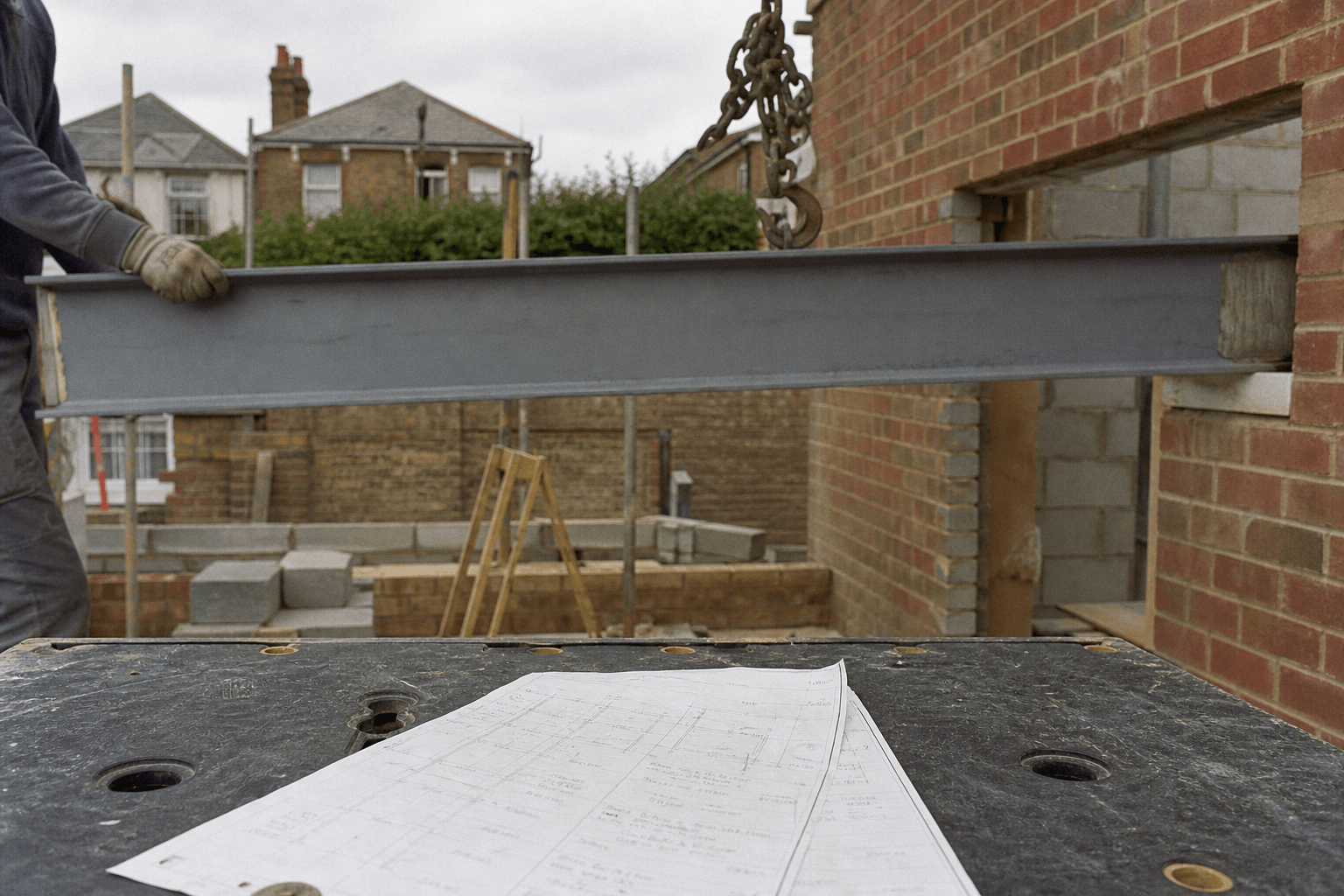
What an RSJ is, why UK 2026 extensions need pad foundations, IStructE engineer costs, Building Regs Part A, and when DIY won't fly. Honest UK guide.
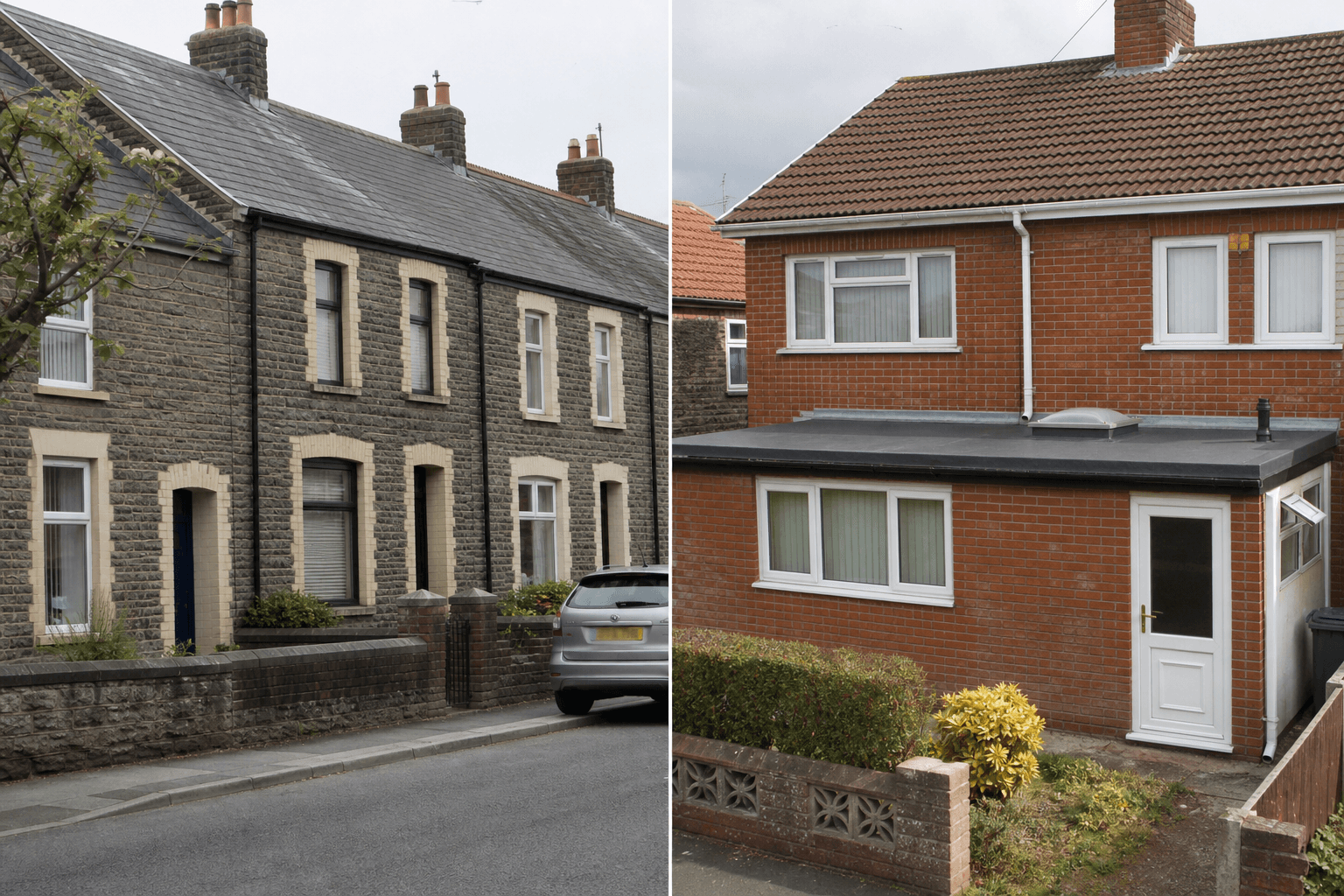
UK 2026 roof material comparison, slate, clay tile, concrete, metal, EPDM, GRP and felt. Lifespan, cost per m², maintenance and 10-year ownership cost.
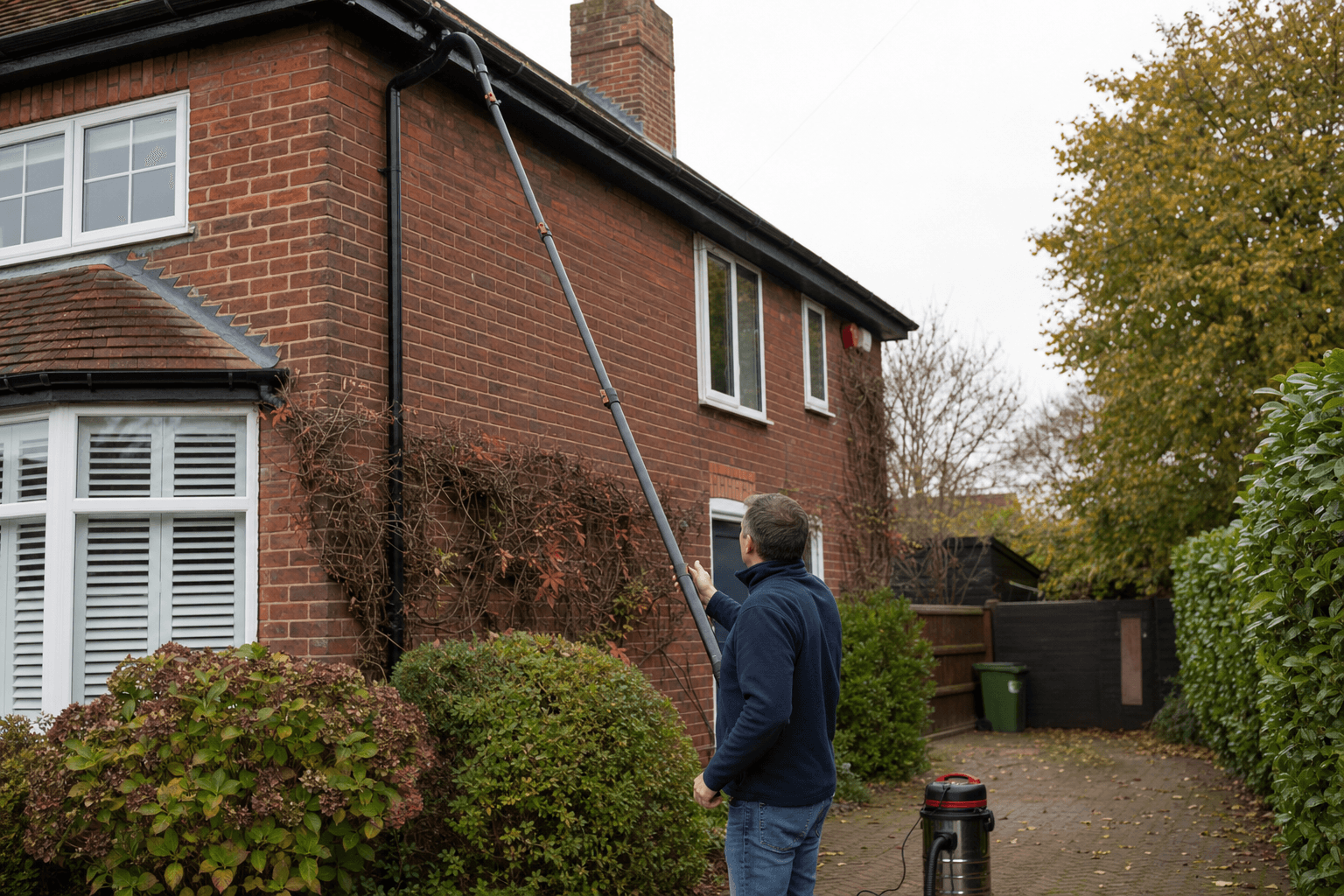
UK-tested gutter cleaning tools 2026: telescopic poles, gutter vacuums (SkyVac), drone roof inspection. Picks from £45 to £600 with safe ground-level use.
Related services
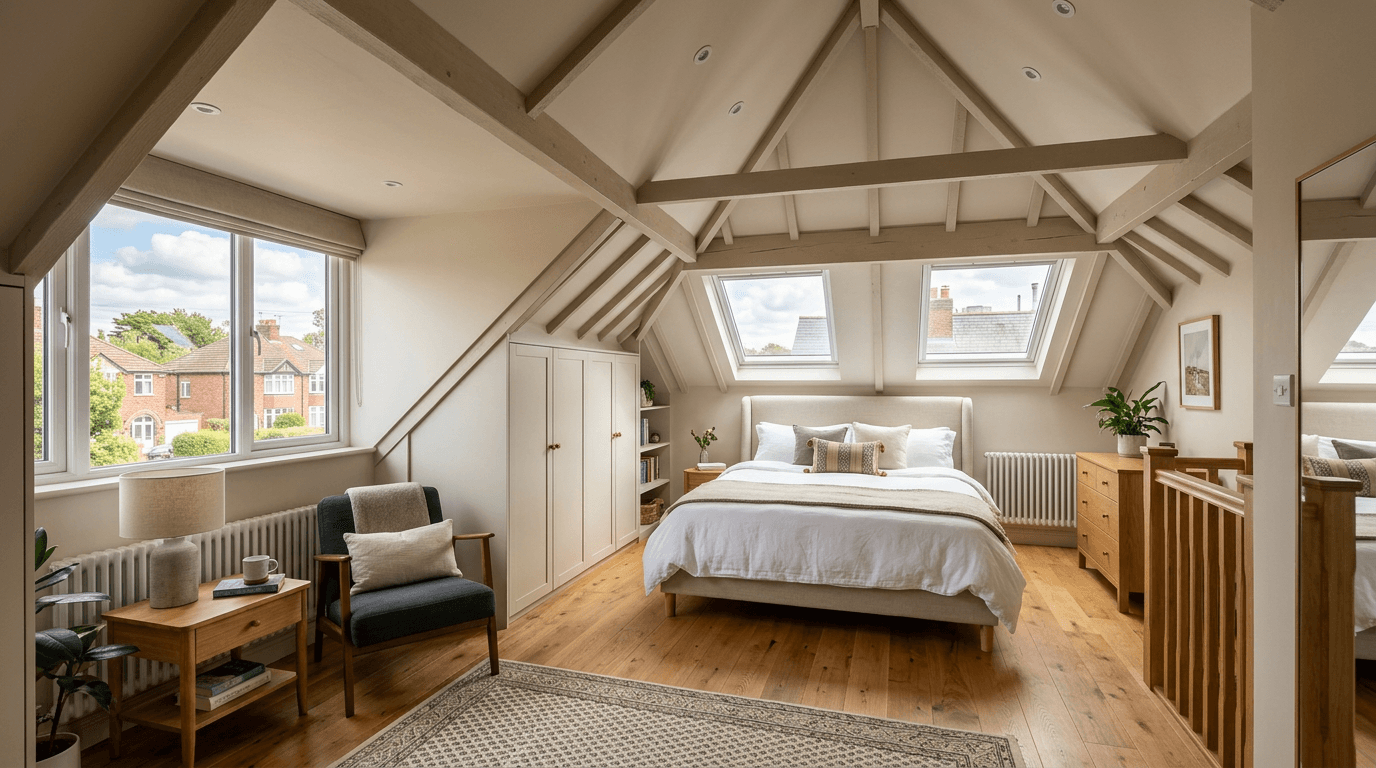
Create extra living space with professional loft conversions. Taskino matches you with insured specialists who handle surveys, planning checks, structural work, insulation and finishing with clear quotes and reliable workmanship.
Add valuable living space with trusted house extensions across the UK. Taskino connects you with insured builders for clear quotes, practical planning and reliable project delivery.
Ready to Book Your Service?
Tell us what you need and our team will help you find the right professional quickly, with clear pricing and no hidden fees.