
Block Paving vs Resin, Tarmac, Concrete and Gravel: Which Is Right for Your UK Home? [2026]
UK 2026 comparison: block paving, resin driveway, tarmac, concrete and gravel: cost, lifespan, SUDS compliance and which suits your home best.
Block paving is the most flexible all-rounder for a UK front garden, but a resin driveway is the modern alternative that satisfies SUDS 2008 with the least fuss. Tarmac wins on raw cost, gravel wins on install speed, and poured concrete only really makes sense for utility areas behind the house. Material cost ranges run from £35/m² (gravel) to £140/m² (premium block paving) in 2026 (MyJobQuote, 2026).
TL;DR
- Block paving holds the biggest UK new-driveway share thanks to pattern range and block-by-block repairability (Interpave, 2025).
- A resin driveway (bound, not bonded) is permeable and ticks SUDS 2008 without needing soakaways or planning (DEFRA, 2008).
- Tarmac drives are the cheapest at £40–£70/m² but lock you into one finish (WhatCost, 2026).
- Gravel is fastest to lay and SUDS-compliant by default, but poor for prams, wheelchairs and weekly maintenance.
What is the short answer for UK homes in 2026?
All five surfaces work in the UK climate, but only three pass the SUDS 2008 test without planning paperwork: permeable block paving, resin-bound, and gravel (DEFRA, 2008). Block paving's flexibility comes from being repairable a single unit at a time. A resin driveway's appeal is the permeable spec ticking SUDS without thought.
Many UK driveway installs since 2008 are technically non-compliant because installers laid impermeable surfaces over 5m² front gardens without diverting rainwater to lawn or border. Buyers should ask for SUDS sign-off in writing before paying the final invoice. Marshalls Register and Brett Approved Installers list contractors who document compliance as standard.
For most front gardens, the real choice narrows to permeable block paving (e.g. Marshalls Drivesett Tegula Priora), resin-bound, gravel, or a non-permeable surface plus rainwater diversion. Tarmac and standard concrete fall outside SUDS unless you redirect surface water. That single regulation reshapes the whole comparison.
Citation capsule. SUDS 2008 requires that new driveways over 5m² in front gardens either use a permeable surface or drain to a soft area such as lawn, otherwise planning permission is required (gov.uk, 2008).
Need help with Pressure Washing?
Tell us about your job and we will match you with the right professional for Pressure Washing.
What is block paving?
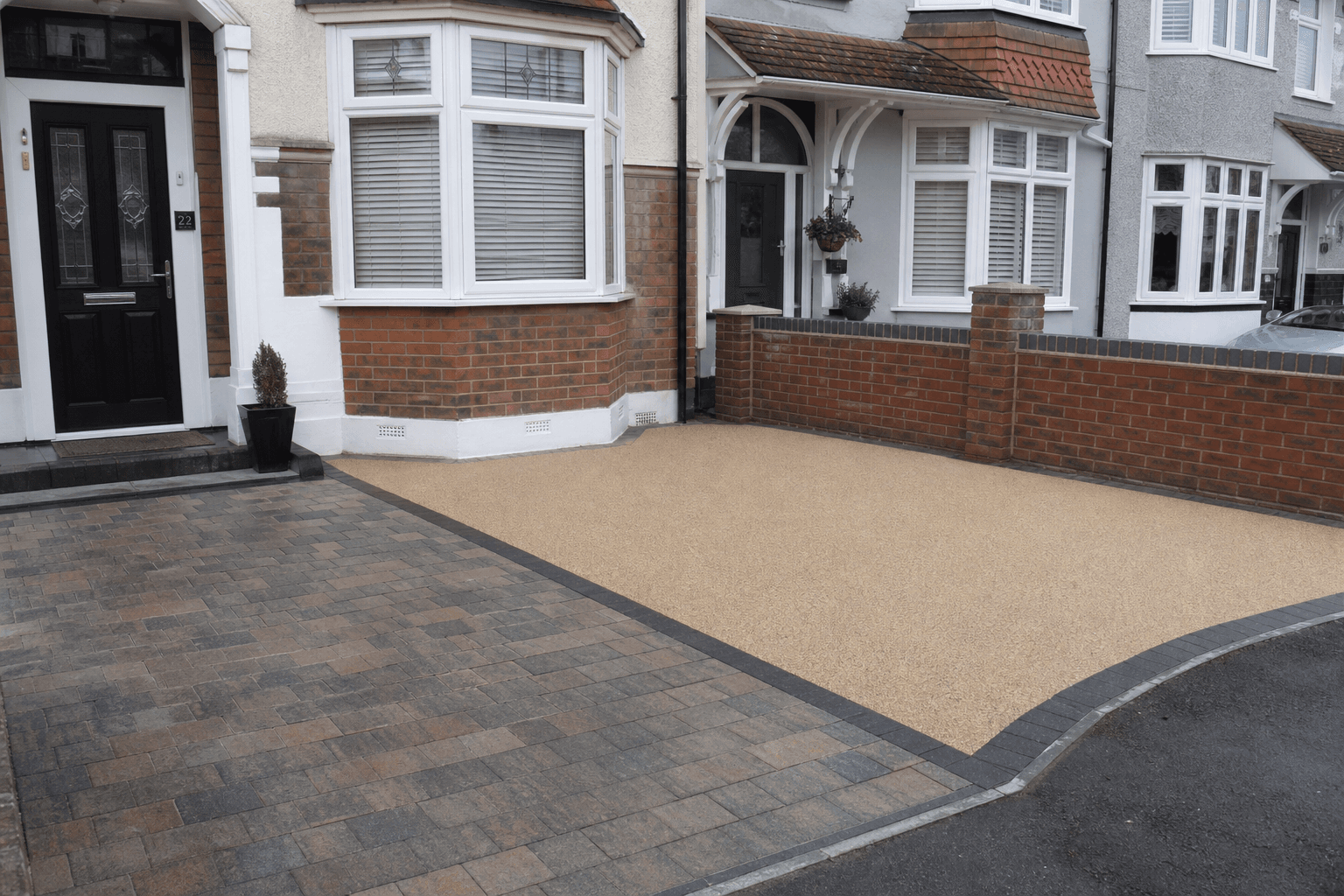
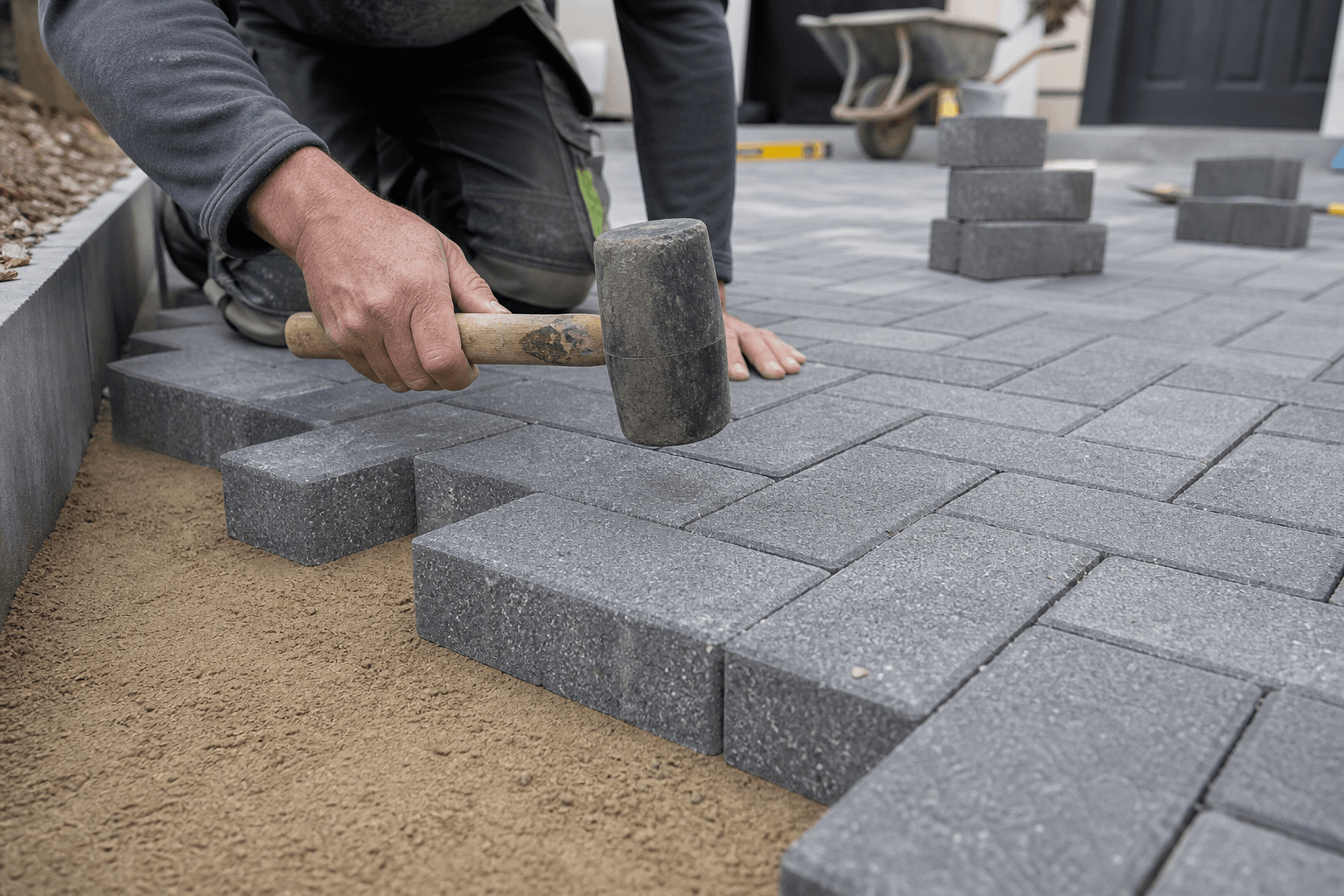
Block paving is made of concrete, clay or composite blocks laid on a compacted MOT Type 1 sub-base over a sharp-sand laying course, with kiln-dried sand brushed into the joints. Marshalls hold over 120 years of UK heritage and supply ranges from £25/m² to £137/m² (Marshalls, 2026). Standard block size is 200x100x50mm, or 200x100x60mm for HGV-trafficked surfaces (Interpave, 2025).
What block paving patterns are most common in the UK?
UK installers offer a wider pattern range than any other surface:
- Herringbone block paving (90° or 45° lay) — strongest interlock, best for drives that carry cars daily.
- Basketweave — period feel, suits Victorian and Edwardian homes.
- Stretcher bond — clean modern look, popular on new builds.
- Tegula — rounded-edge blocks, the Marshalls Drivesett Tegula range is the UK benchmark.
- Crazy paving — irregular shapes for patios more than drives, but worth noting for back-garden continuity.
Permeable variants (Marshalls Drivesett Tegula Priora, Brett Lossa Permeable) carry larger joints filled with grit over a porous laying course on a deeper aggregate sub-base (Marshalls, 2026).
What is a resin driveway?
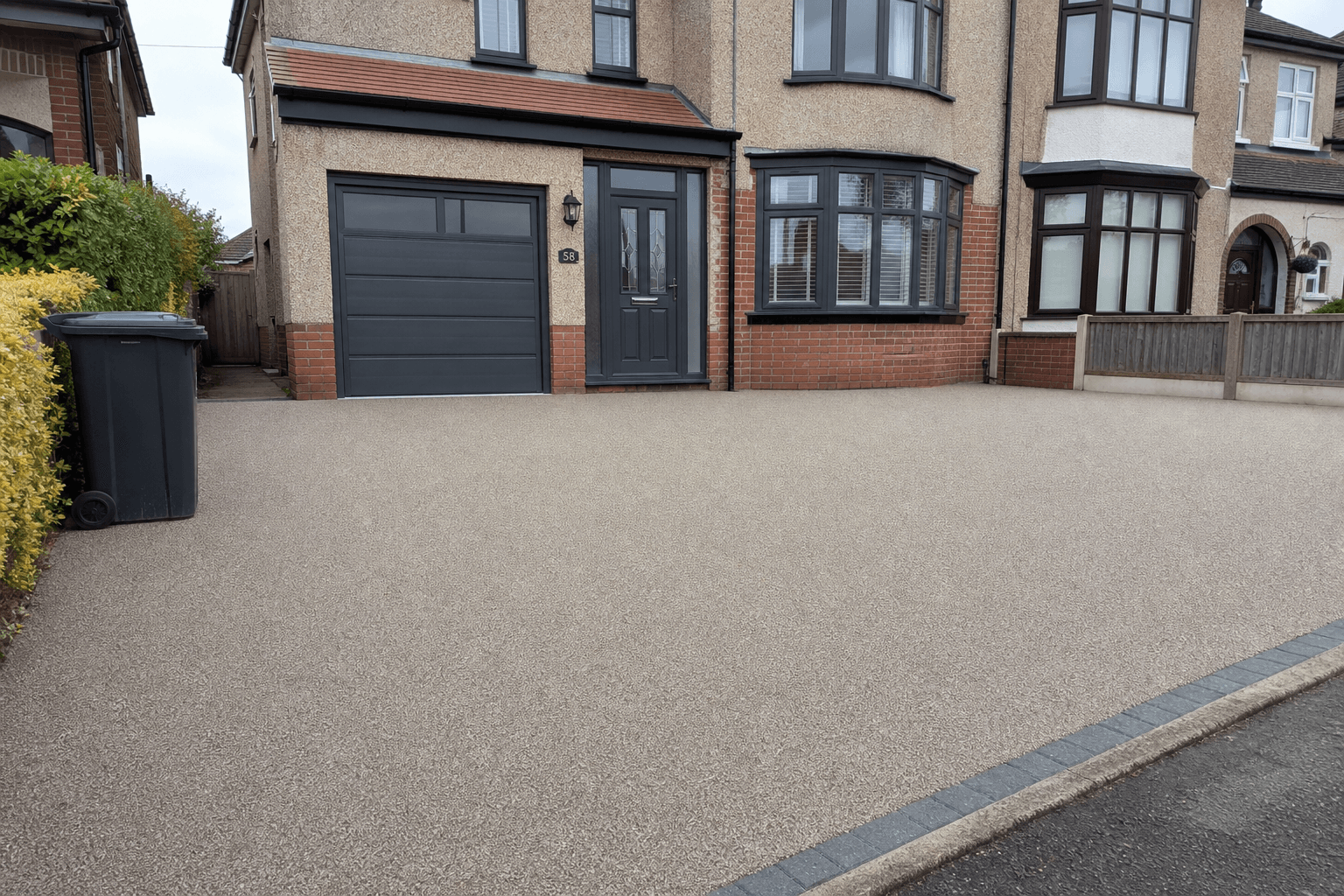
A resin driveway uses polyurethane resin mixed on-site with kiln-dried aggregate (typically Daltex marine-dredged gravel), then poured and trowelled over a structural base of existing tarmac or concrete. The two types are resin-bound (porous, SUDS-compliant, smooth) and resin-bonded (non-permeable, scattered loose aggregate, cheaper). Only resin-bound satisfies SUDS 2008 (Resin Bonded Driveways Federation, 2025).
The UK installation window is May to September. Resin needs above 5°C and dry conditions through cure (Resin Bonded Driveways Federation, 2025). Common resin systems include Resiblock and Smartseal, with Trent Resin a frequent spec source for contractors. A typical 50m² resin-bound install runs £3,000–£4,500 in 2026 (WhatCost, 2026).
We've found resin-bound jobs go wrong most often when installers try to lay in damp October weather to hit year-end. Push the install to spring. The finish lasts decades, but a wet cure can mean re-pour within 18 months.
Explore our Garden clearance service
See what is included, typical timings, and what to prepare before you book.
How do all five materials compare side-by-side?
Block paving wins on flexibility and repair, a resin driveway wins on SUDS-compliance plus a smooth modern finish, tarmac wins on raw price, concrete wins on lifespan, and gravel wins on speed of install (MyJobQuote, 2026). The full matrix below brings SUDS 2008 into every row so the regulation sits alongside cost, not as a footnote.
Comparison matrix synthesised from MyJobQuote 2026, WhatCost 2026, MyBuilder 2026, JW Landscaping 2026, Interpave specification tables, and DEFRA SUDS 2008 guidance.
| Factor | Block paving | Resin (bound) | Tarmac | Concrete | Gravel |
|---|---|---|---|---|---|
| Cost 2026 (£/m²) | £75–£140 | £60–£90 | £40–£70 | £40–£80 | £35–£60 |
| Lifespan (years) | 20–30 | 15–25 | 10–20 | 30+ | 5–15 |
| Maintenance | Mid (rejoint/seal) | Low | Low (reseal at 5 yrs) | Low | High (annual top-up) |
| Permeable / SUDS 2008? | Only Priora-style | Yes (bound only) | No | No | Yes |
| Repair small area? | Yes (block-by-block) | Hard (whole pour) | Patchable but visible | Hard (cracks spread) | Easy (rake/top up) |
| Appearance | Wide pattern range | Smooth modern | Plain | Plain | Rustic |
| Best for | All-round | Modern + SUDS | Budget large drives | Utility back-of-house | Rural or quick-fix |
| Avoid if | Tight budget | Wet/cold install windows | Heat-soft summers | Frost-prone clay | Wheelchair, pram users |
[IMAGE: Split-frame UK driveway showing herringbone block paving on the left and resin-bound on the right, same semi-detached house, late afternoon. Search "uk driveway block paving" on Pixabay]
What does each option cost over 10 years for a 50m² drive?
Tarmac wins £-per-year by a small margin, but block paving and a resin driveway typically claw that back through kerb-appeal resale uplift (MyBuilder, 2026). The figures below assume a 50m² UK suburban drive with standard sub-base. For a deeper breakdown see our block paving cost guide.
- Block paving: £4,500–£7,500 install plus ~£250/yr (rejoint, seal at year 5) = £7,000–£10,000 over 10 years.
- Resin driveway (bound): £3,000–£4,500 install plus ~£100/yr = £4,000–£5,500 over 10 years.
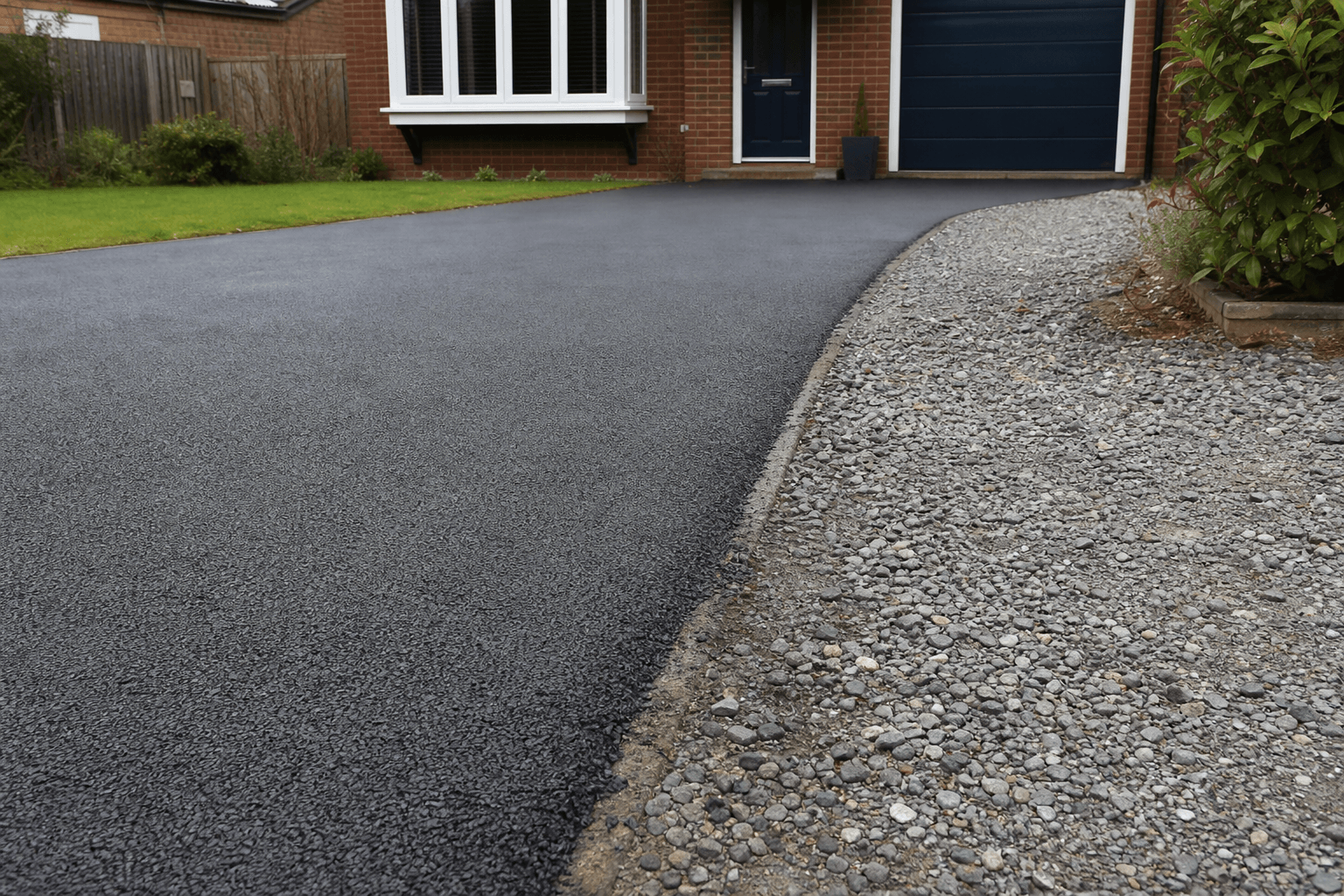
- Tarmac drives: £2,000–£3,500 install plus £400 reseal at year 5 = £2,400–£3,900 over 10 years (partial relay likely in year 10).
- Concrete driveway: £2,000–£4,000 install plus ~£200 crack repair = £2,200–£4,200 over 10 years.
- Gravel: £1,750–£3,000 install plus £150/yr top-up and weed treatment = £3,250–£4,500 over 10 years.
Resale callout. Estate agents at Savills and Rightmove have noted block paving and premium resin add visible kerb appeal that influences offer price in suburban UK markets, where tarmac and gravel do not (Which?, 2025).
Ready to book Builders Waste Removal?
Send a quick enquiry — we typically respond the same working day.
When is block paving the right choice?
Block paving suits mixed-use drives that carry cars, walkers and bikes, and it suits period properties where pattern continuity matters. UK new-driveway market share data shows block paving still holds the largest single category, despite resin's growth post-2008 (Interpave, 2025).
Mixed-use driveways
Cars, prams, bicycles and bins all roll across the same surface. Herringbone block paving's interlock handles point loads without rutting.
Period or character properties
Tegula and basketweave patterns suit Victorian, Edwardian and 1930s homes. Crazy paving works for connected patios.
Owners planning to sell within five years
Kerb appeal returns are immediate and visible. Tarmac and gravel rarely lift offers.
Sites with localised settlement risk
Where a tree root or service trench may shift the ground, individual blocks can be lifted, the sub-base re-compacted, and the blocks reset. Resin and concrete do not allow this.
Larger or multi-tier layouts
Pattern variation between parking bays, walking paths and edges helps zone the space visually.
When is a resin driveway the right choice?
A resin driveway suits modern properties, owners who want low maintenance, and any front garden over 5m² where SUDS 2008 compliance is non-negotiable (DEFRA, 2008). The smooth finish also helps prams and mobility aids, which matters under the Equality Act 2010 for accessible domestic frontages.
Modern properties
The seamless trowelled finish suits clean architectural lines.
Front gardens over 5m²
Resin-bound is one of the few non-block surfaces that passes SUDS without a soakaway.
No annual joint maintenance
No kiln-dried sand to top up, no moss in the joints.
Sites with an existing solid base
Resin-bound can go straight over sound tarmac or concrete. Install cost drops sharply.
Wheelchair and pram-friendly finishes
The flat surface beats block joints for wheel-rolling smoothness.
Learn more about Pressure Washing
Browse how we deliver Pressure Washing and the questions homeowners ask most often.
When is tarmac the right choice?
Tarmac drives win when £/m² dominates and the drive sits where SUDS doesn't apply, such as side passages or rear-of-house parking (WhatCost, 2026). At £40–£70/m² for 2026 installs, tarmac is the cheapest mainstream option for large drives. Reseal every 5 years per Marshalls maintenance guidance keeps the surface watertight.
Best fits include long shared drives where appearance is secondary, agricultural or rural access, and anywhere a homeowner wants near-zero maintenance for years. Avoid tarmac on south-facing front drives in heat-prone postcodes — UK summers since 2022 have softened tarmac more than the industry expected.
When is concrete the right choice?
Poured concrete makes sense for utility back-of-house areas where appearance is secondary, lifespan matters, and slip resistance can be brushed in (MyBuilder, 2026). A concrete driveway can last 30+ years with minimal upkeep. Crack risk rises on frost-prone clay soils without proper movement joints, so it isn't a default front-garden choice.
Sheds, workshops, garage approaches and sloped utility access all suit concrete. Front drives lose the appearance battle to block and resin almost every time.
Thinking about Garden clearance?
Share your postcode and job details for a no-obligation quote.
When is gravel the right choice?
Gravel wins for rural lodge entrances, temporary or transition driveways, and SUDS-compliant front gardens on a tight budget (Which?, 2025). At £35–£60/m² installed, it's the cheapest entry to the market. The hidden cost is the £150/year top-up and weed treatment, plus annual raking.
Gravel is poor for prams and wheelchairs. Under the Equality Act 2010, accessible domestic frontages should be considered when households include mobility-aid users.
When is none of them right? The third option
Permeable composite grid systems (such as plastic honeycomb grids planted with low grass or filled with bound aggregate) are niche but tick SUDS, retain a green appearance, and support vehicle loads (RHS, 2025). Best fits include rear-of-house overflow parking, eco-build front gardens, and any project where the brief is "green space that takes a car twice a week".
Niche tip. Composite grid systems also reduce surface water runoff into combined sewers, which some UK water companies now rebate against drainage charges where evidence is provided (Ofwat, 2025).
Check scope and pricing for Builders Waste Removal
Compare options, add-ons, and what affects the final price before you commit.
What do UK homeowners actually pick?
Block paving still holds the largest share of UK new-driveway installs, with resin-bound rising materially since SUDS 2008 enforcement tightened in late 2010s planning casework (Interpave, 2025). Tarmac dominates large suburban estate roads and rural drives. Concrete is a back-of-house surface for most domestic specifications.
In our experience quoting projects across Birmingham, Bristol and Leeds postcodes, the strongest resin-bound growth has come from owners replacing 1990s tarmac drives without lifting the base. The resin pours straight over sound tarmac and instantly satisfies SUDS, no soakaway dig required.
Brett Approved Installers, Marshalls Register, BALI, APL and TrustMark all maintain searchable contractor lists. In Northern Ireland, Tobermore is the dominant block manufacturer. In Scotland, SUDS 2003 applies in place of the England-and-Wales 2008 regulation.
What does the decision flowchart look like?
Six-question decision flow, validated against 2026 UK SUDS guidance and pricing data:
- Is the front garden over 5m²? Yes: SUDS applies. Continue.
- Do you want a permeable surface? Yes: resin-bound, permeable block paving, gravel, or composite grid. No: non-permeable plus rainwater diversion (or planning permission).
- Is repairability important? Yes: block paving. No: any.
- Is budget the top driver? Yes: tarmac (large) or gravel (small).
- Is kerb appeal the top driver? Yes: clay block paving or premium resin.
- Is wheelchair / pram access important? Yes: resin or smooth concrete (slip-tested).
Buy materials from B&Q, Wickes, Travis Perkins or Jewson for self-installs. For full installs, use Marshalls Register, Brett Approved Installers, BALI or TrustMark to source vetted contractors.
Need help with Pressure Washing?
Tell us about your job and we will match you with the right professional for Pressure Washing.
How does Taskino help you specify what you actually want?
Picking the surface is the easy bit. Specifying it properly (sub-base depth, SUDS compliance, edging, jointing) is what turns a quote into a comparable quote. Taskino can put you in front of three vetted driveway installers near me in your postcode, all quoting against the same brief, whether you've landed on block paving, resin, tarmac, concrete or gravel. Marshalls Register or BALI accreditation, public liability checked, no leaflet drop. Worth a look once you've narrowed the material choice. If you also need help maintaining the garden either side of the drive, see our garden maintenance guide.
Sources
- MyJobQuote, 2026 — myjobquote.co.uk/costs/block-paving-cost
- WhatCost, 2026 — whatcost.co.uk/driveways/materials/block/cost
- Marshalls Drivesett Tegula Priora documentation, 2026 — marshalls.co.uk
- DEFRA SUDS guidance, 2008 — gov.uk
- Interpave specification and market commentary, 2025 — paving.org.uk
- Resin Bonded Driveways Federation, 2025 — rbdf.org.uk
- MyBuilder driveway pricing, 2026 — mybuilder.com
- Which? Driveway research, 2025 — which.co.uk
Frequently asked questions: Block Paving vs Resin, Tarmac, Concrete and Gravel: Which Is Right for Your UK Home? [2026]
Short answers to common questions about this topic.
Our team will answer all your questions. we ensure a quick response.
Contact UsRelated posts
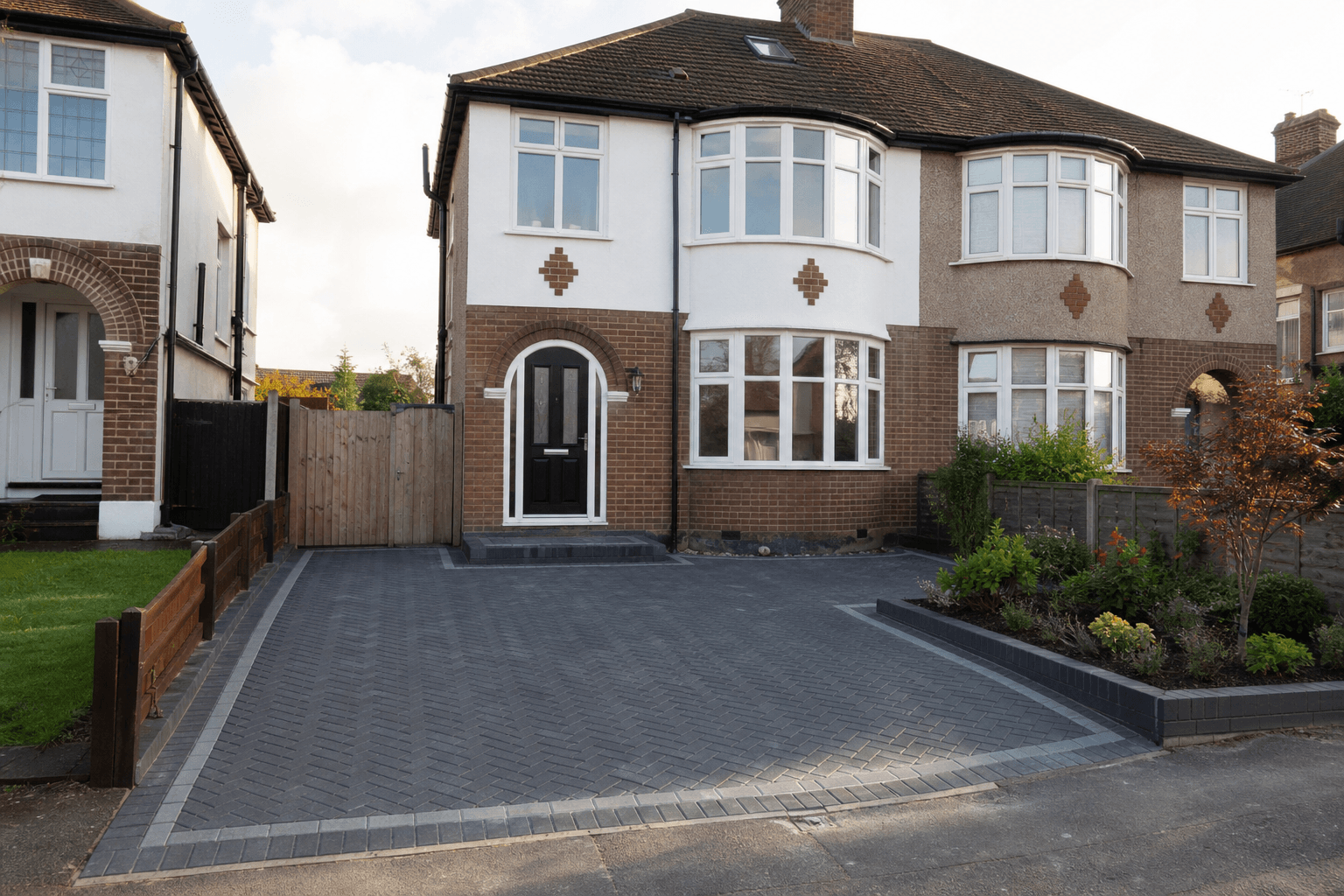
Complete UK 2026 guide to block paving: realistic costs per m², DIY laying steps, SUDS rules, comparison vs resin and tarmac, plus how to hire well.
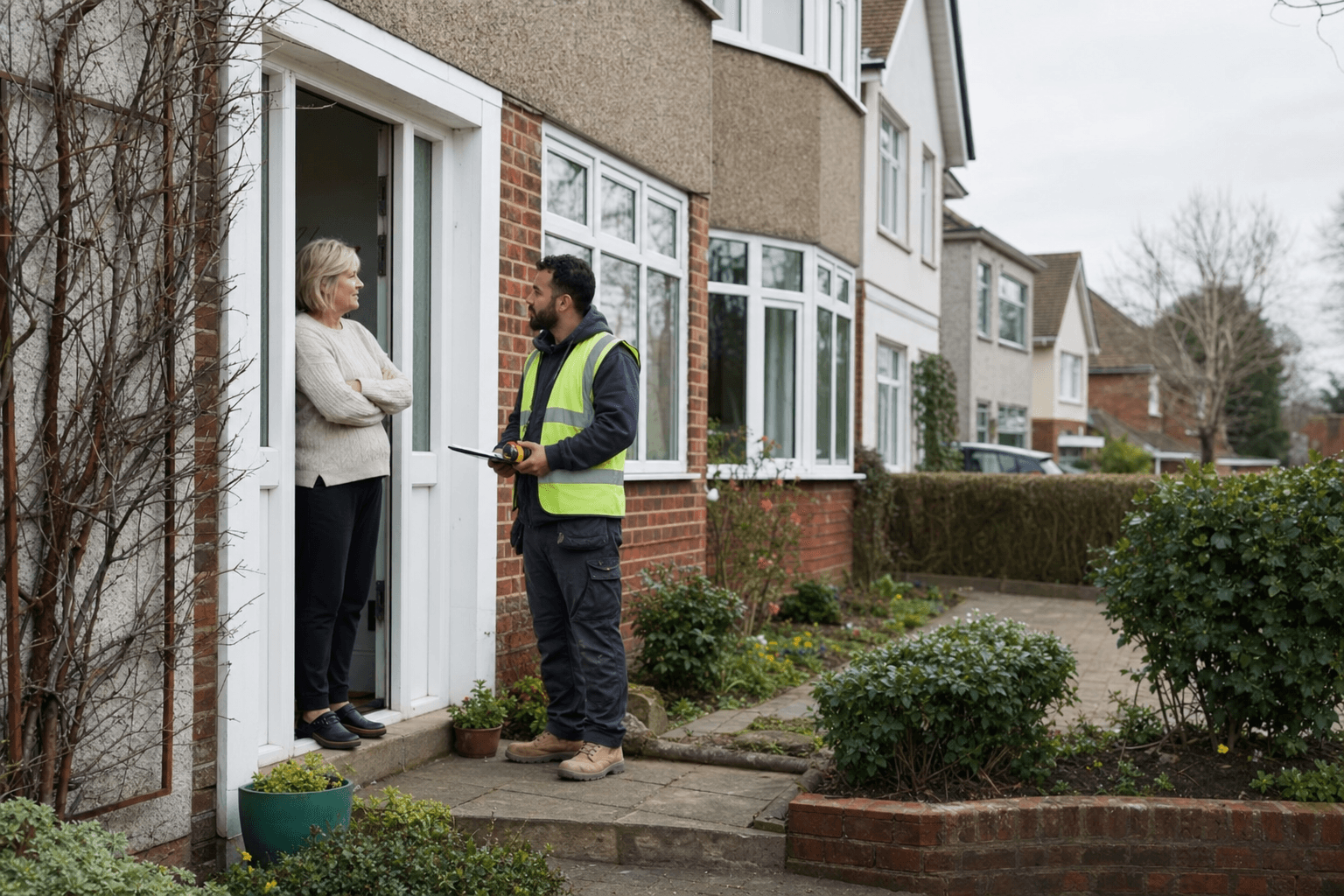
Find a trusted UK driveway installer in 2026, the 13 questions to ask, red flags to spot, and how to check Marshalls Register, BALI, APL and insurance.
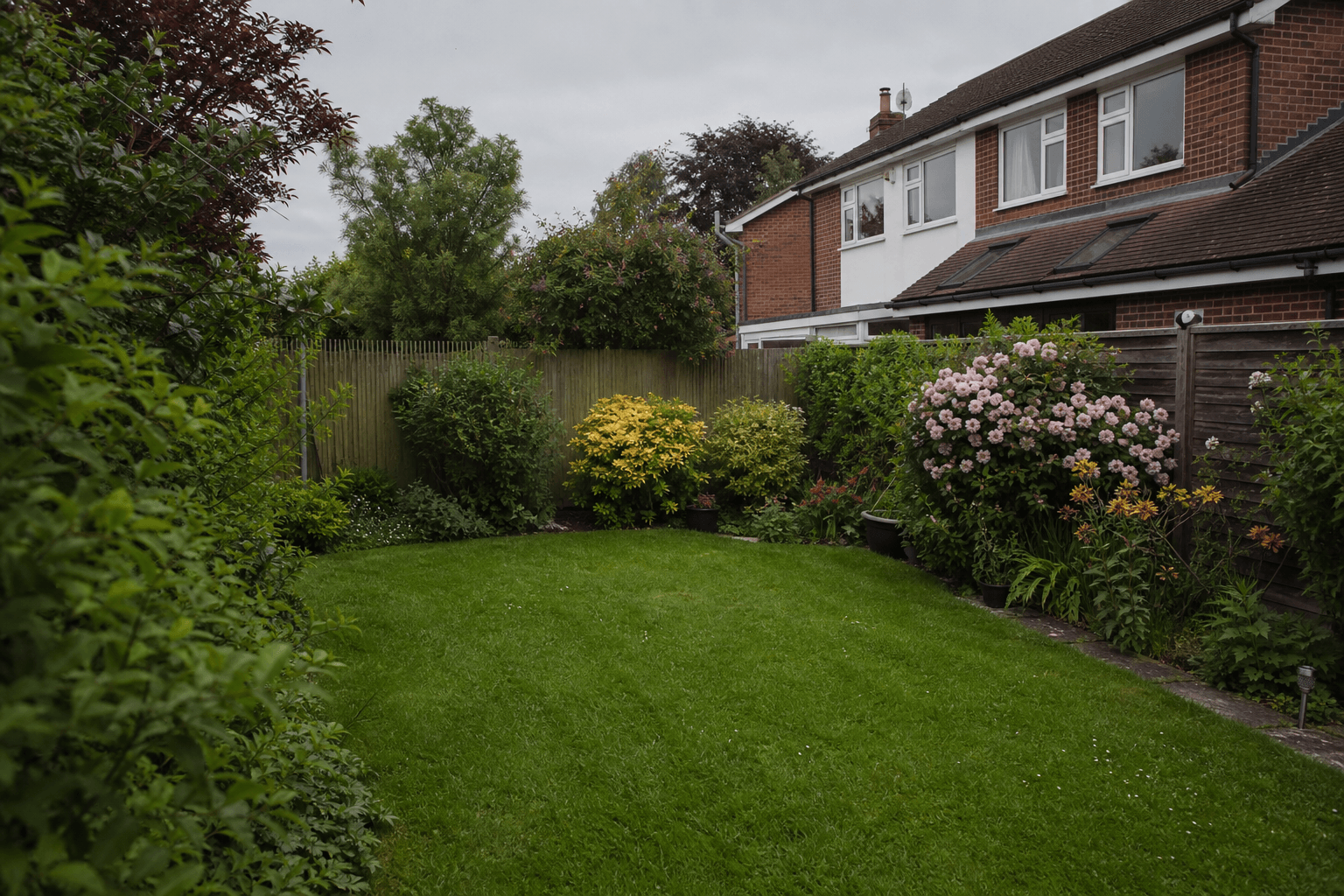
UK 2026 garden maintenance guide: gardener hourly rates £20-£45, legal hedge-cutting calendar (bird nesting), DIY lawn care and how to hire a BALI/APL pro.
Latest in Outdoor Services
View all in this category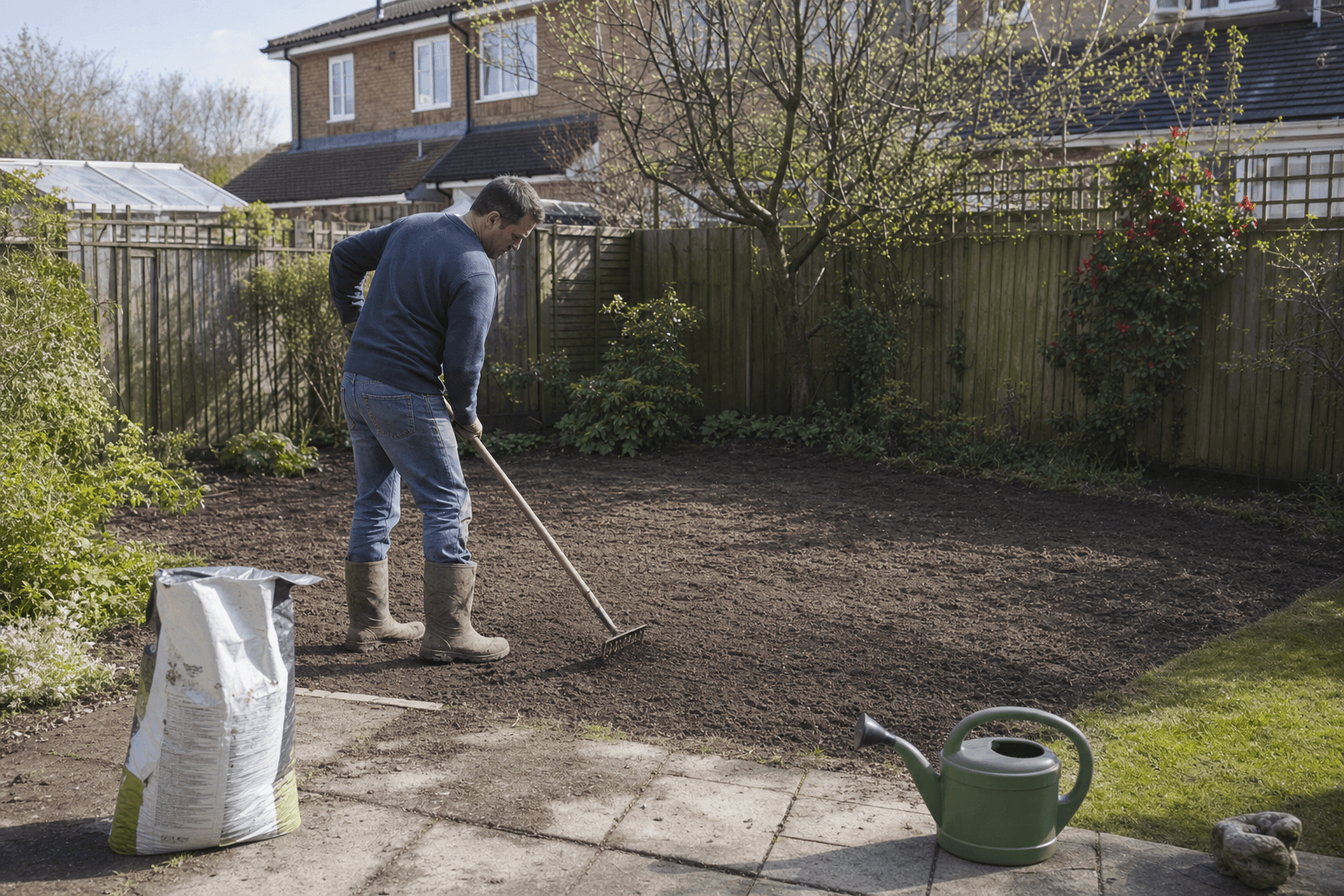
Sow a UK lawn from seed: best months (Apr-May, Sep), prep, seed rate, watering schedule, troubleshooting and when to lay turf instead.
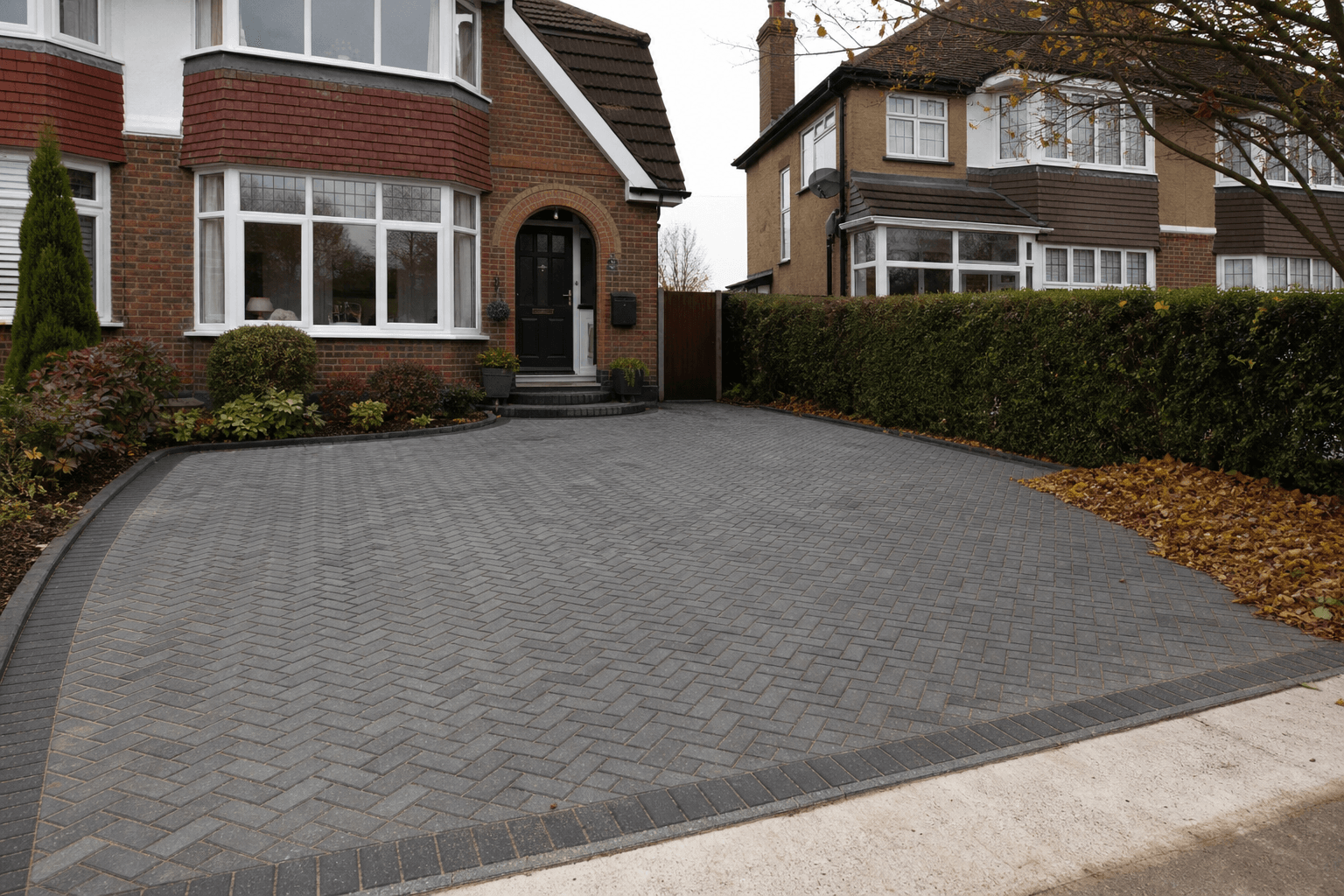
Prevent weeds, moss and stains on UK block paving in 2026. Seasonal maintenance calendar, kit list, pressure-wash settings and what to leave to a pro.
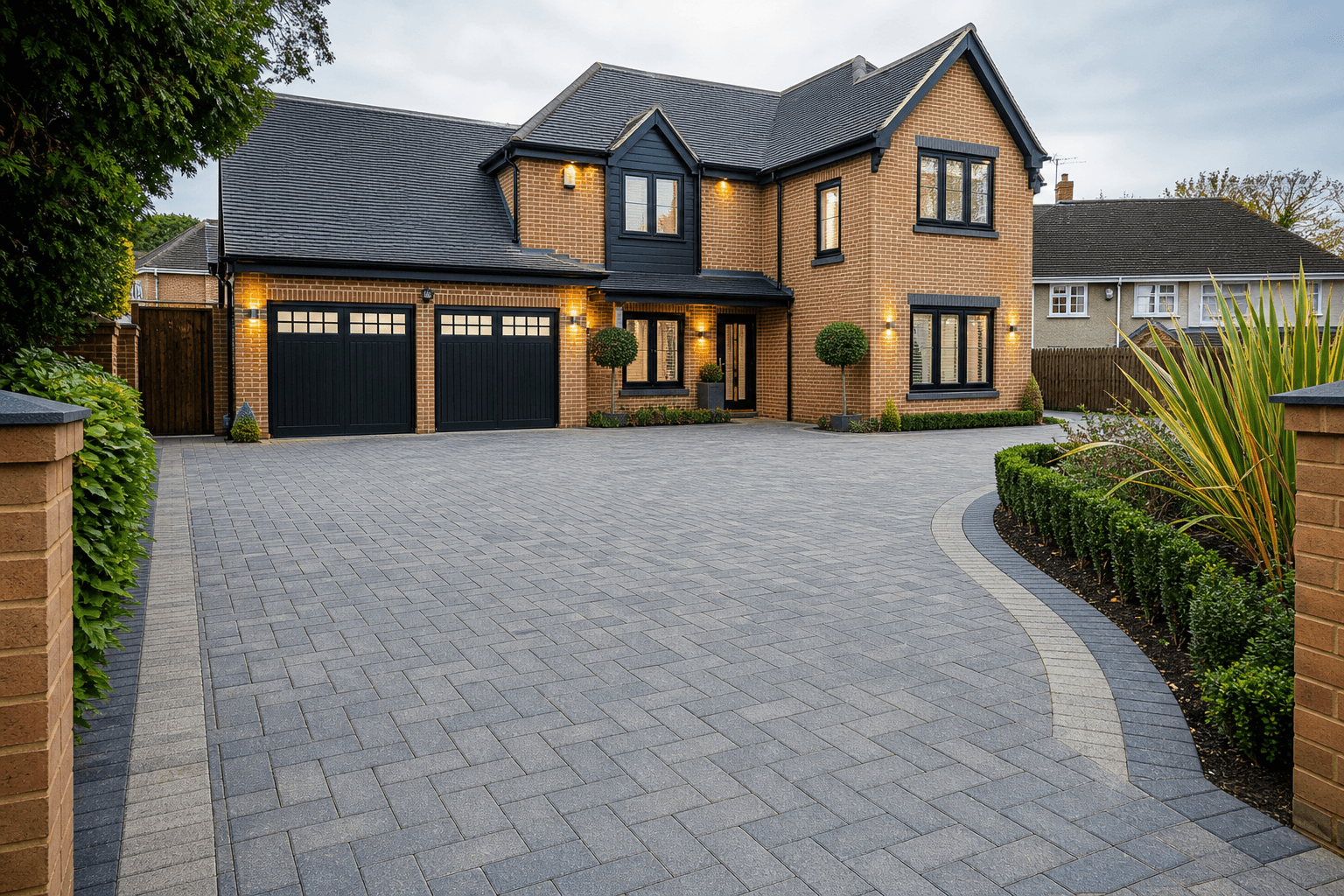
Should you DIY a block paving driveway, use a resin driveway kit, or hire a pro in 2026? Honest UK cost, time and risk comparison with a decision flowchart
Related services
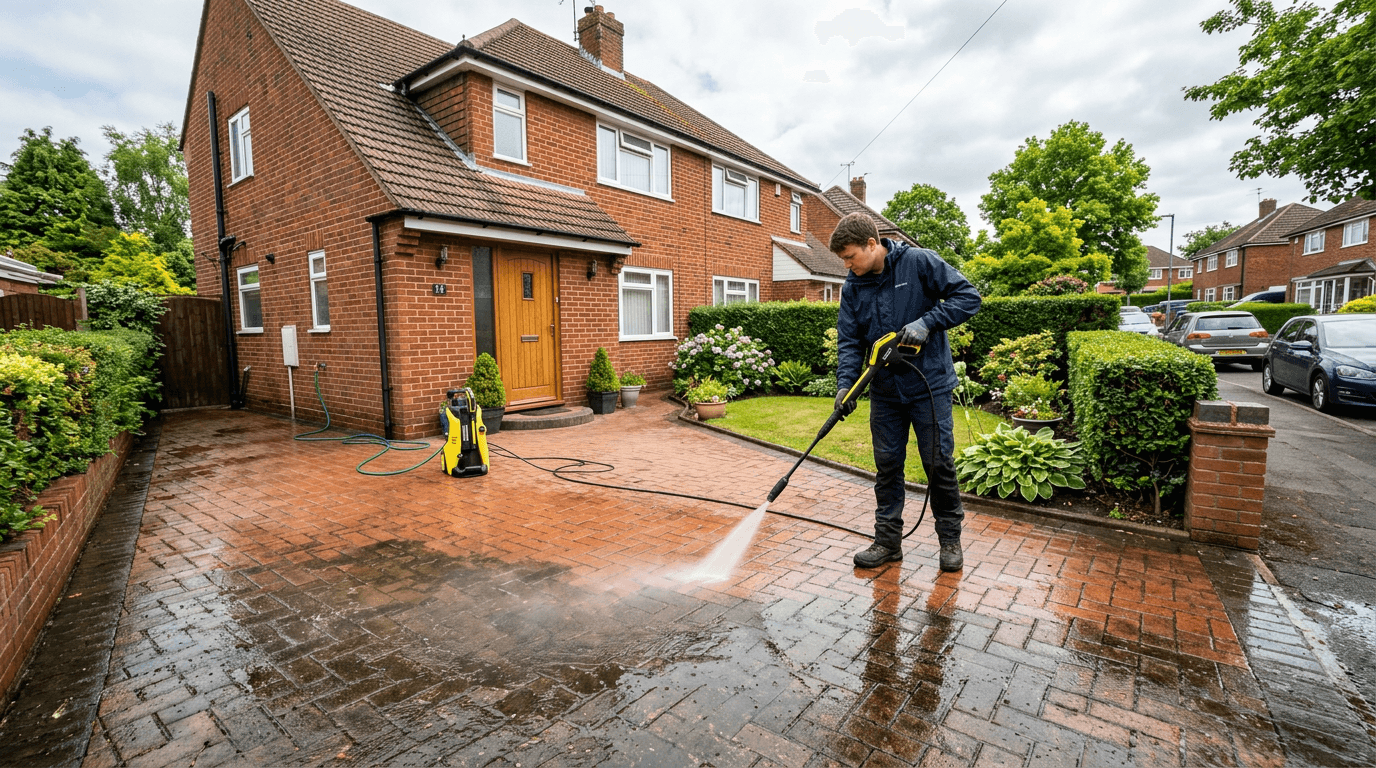
Professional pressure washing for patios, driveways, decking and exterior walls. Trusted, insured teams on Taskino deliver clear quotes, quick bookings and a thorough clean with responsible waste removal.
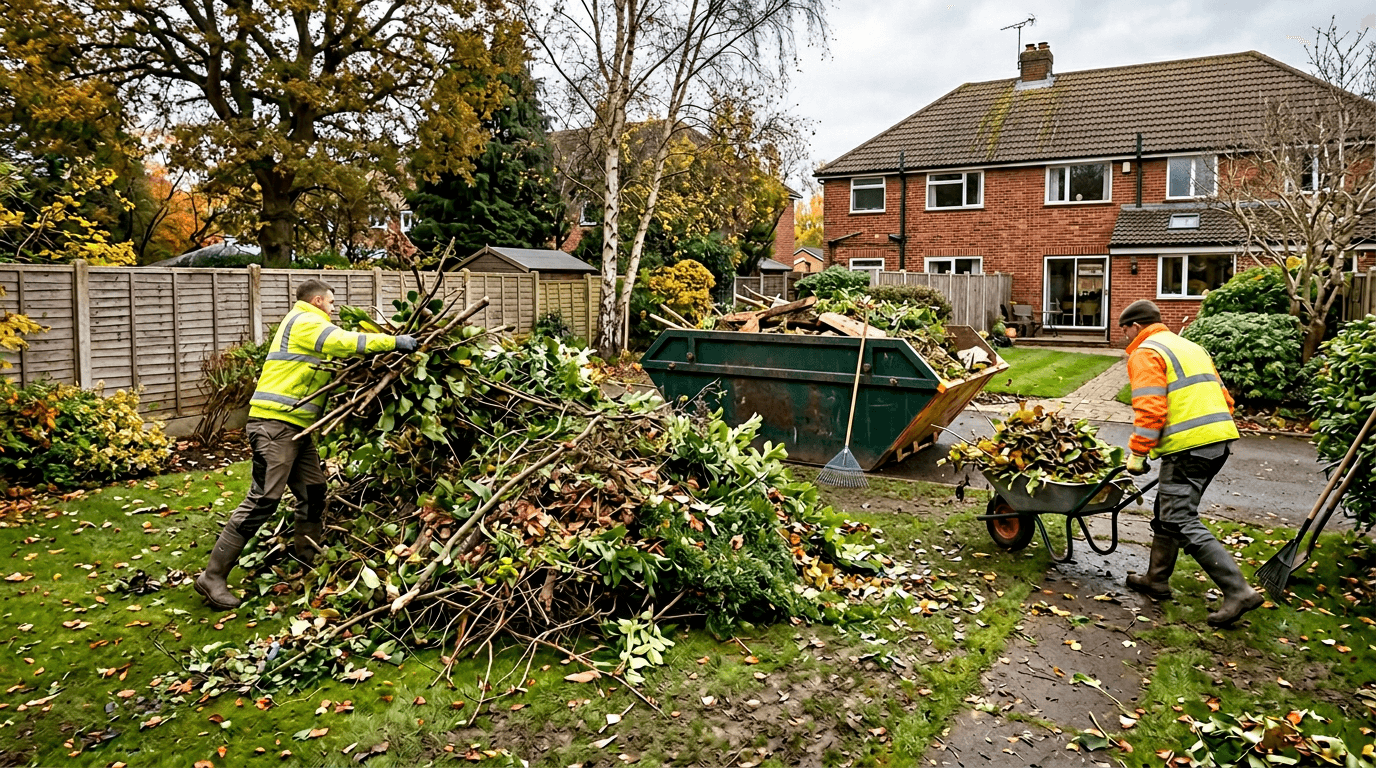
Garden clearance across the UK: green waste, soil, rubble and project leftovers removed by licensed crews. Clear quotes, complete clear-up, no hidden fees. Contact us for a tailored quote.
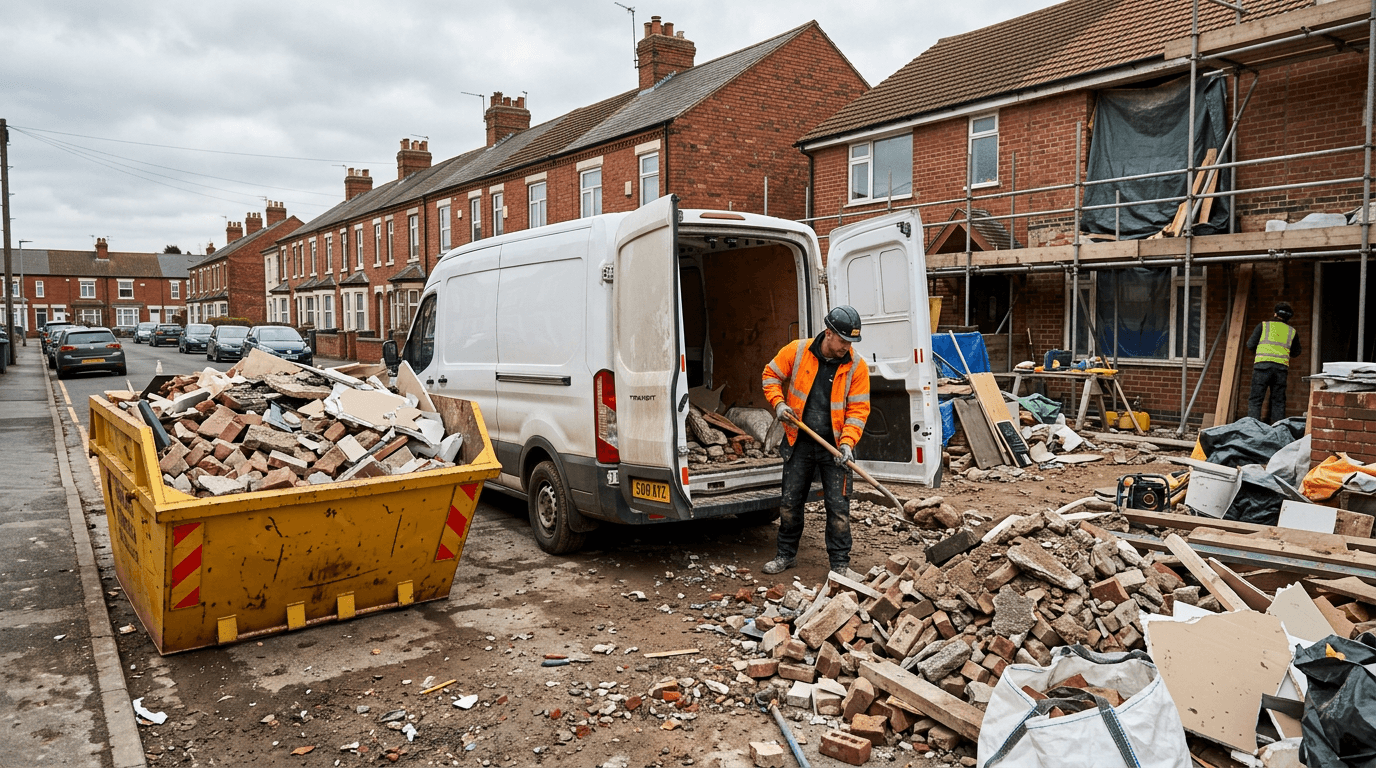
Professional builders waste removal across the UK. Insured crews clear rubble, plasterboard and mixed site waste from renovations with clear quotes and licensed disposal.
Ready to Book Your Service?
Tell us what you need and our team will help you find the right professional quickly, with clear pricing and no hidden fees.