
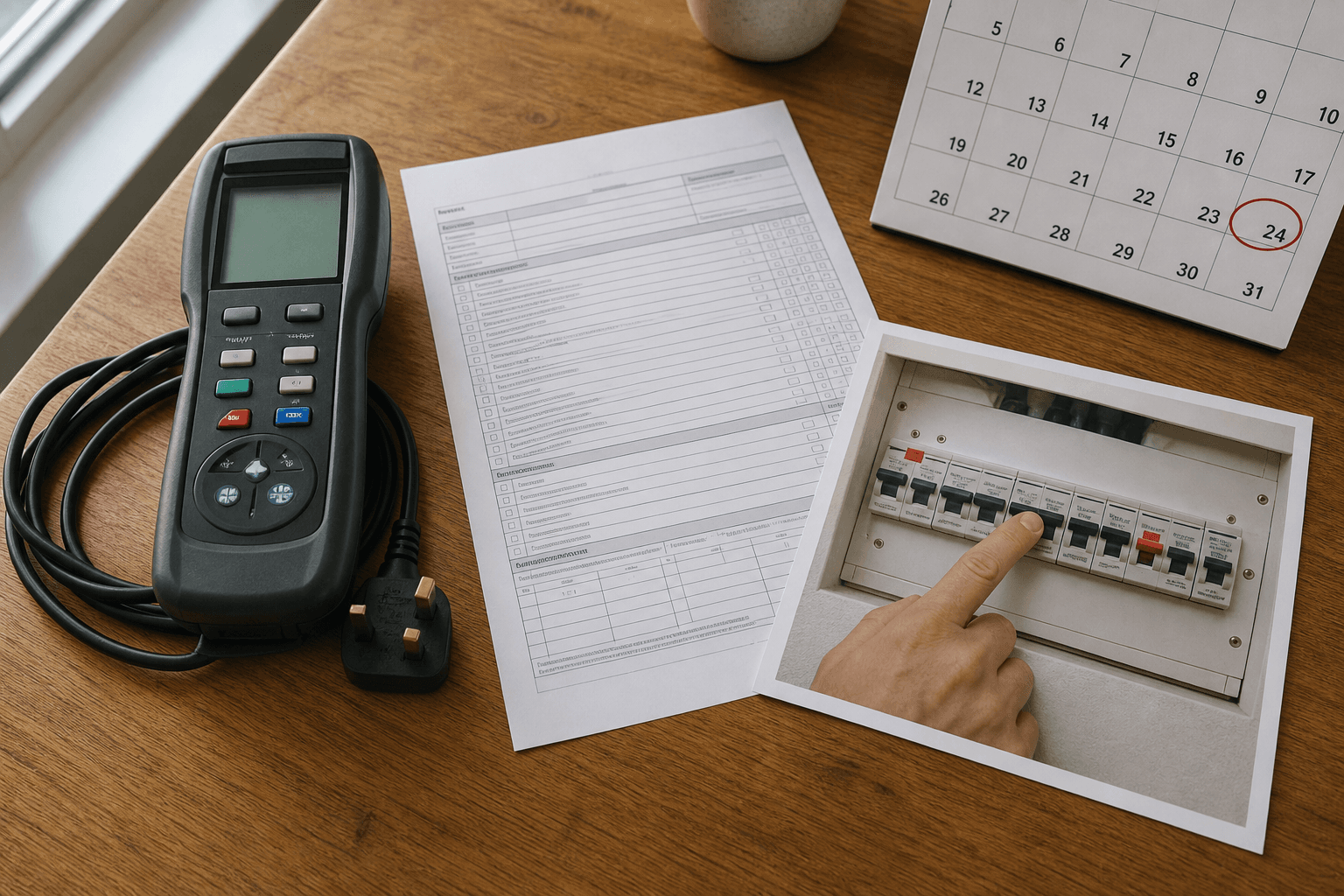
How to Prevent PAT and EICR Failures in Your UK Home (Maintenance Guide for 2026)
What is PAT testing, when you actually need it, and how to prevent EICR failures in a UK home in 2026, with frequencies and BS 7671 references.
So, what is PAT testing, and do you actually need to bother with it as a UK homeowner? PAT (Portable Appliance Testing) is a visual and instrument-led check of any item that plugs into a socket. It is not legally required for owner-occupiers, but for landlords and anyone wanting to prevent an EICR (Electrical Installation Condition Report) failure, it is one of the cheapest preventive steps you can take.
TL;DR
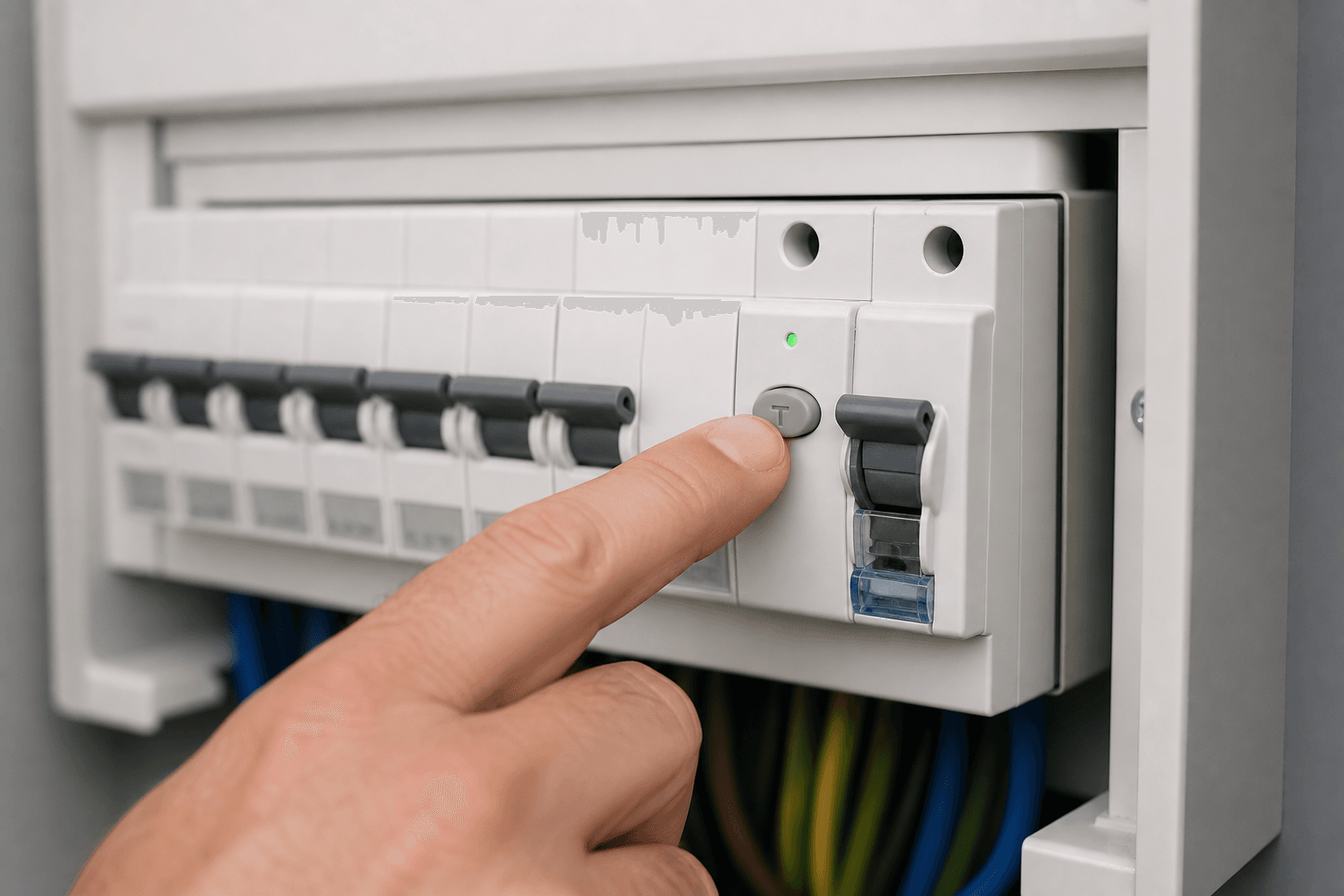
- Press the RCD 'T' button every six months. A working RCD prevents almost every shock-related EICR fail.
- Walk the house once a year looking for cracked sockets, warm faceplates, brown discolouration, and frayed flexes.
- Book an EICR every 10 years if owner-occupied, every 5 years if you let property (Electrical Safety Standards in the Private Rented Sector Regs 2020).
Why prevention matters
A £200 EICR catches what would otherwise be a £2,500–£8,000 remedial bill on the day of a property sale, according to Checkatrade's 2026 EICR cost guide. PAT testing on landlord properties at £1–£2 per appliance heads off the average UK electrical-fire damage bill of around £1,200 (insurer averages, ABI). The maintenance multiplier is roughly 10–40×.
Most homeowners only think about the EICR when they sell. By that point, any C1 or C2 defect is a buyer's solicitor query that drags completion by weeks. Prevention is not just safety, it is liquidity at the point of sale.
Callout. Every £1 spent on preventive electrical maintenance saves £10–£40 in reactive work, based on Taskino-vetted electrician quotes across Sheffield, Leeds, and Manchester in 2025.
Need help with Electrical jobs?
Tell us about your job and we will match you with the right professional for Electrical jobs.
PAT testing vs EICR, the two-test cheat sheet
What is PAT testing in plain language? It is a check of the things that plug in (kettle, hoover, lamp, drill). The PAT test meaning covers a visual inspection plus an instrument test for earth continuity and insulation. An EICR (also called an electrical installation certificate when issued at the end of a new install) is the inspection of the fixed wiring, the consumer unit, and the circuits behind your walls. Two different jobs, two different professionals.
Most homeowners do not legally need PAT. Most English landlords do legally need an EICR every 5 years under the Electrical Safety Standards in the Private Rented Sector (England) Regulations 2020. Landlords also typically PAT their let appliances, because Regulation 4(2) of the Electricity at Work Regulations 1989 puts a duty on them to keep equipment safe.
Citation capsule. PAT testing is not a statutory requirement for English landlords by name, but the Electricity at Work Regulations 1989 (Regulation 4(2)) places a duty on the responsible person to keep electrical equipment in a condition that prevents danger. Most landlords meet that duty by combining annual visual checks with formal PAT every 1–2 years for high-use items.
The seasonal maintenance calendar
A 90-minute total annual commitment, spread across four short sessions, catches around 80% of the defects we see flagged on EICRs in Yorkshire and the Midlands . Stagger the tasks so you are not doing it all in one weekend.
| Season | Task | Time required | Tools needed | DIY-able? |
|---|---|---|---|---|
| Spring | Press the RCD 'T' button. Visually inspect outdoor sockets, garden-light cables, shed feed | 20 min | none | Yes |
| Summer | Check extension leads for damage. Check loft and outbuilding flex for rodent damage. Clean accumulated dust from CU vents | 30 min | torch | Yes |
| Autumn | Visual sweep of every socket and switch (cracks, brown stains, warmth). Test smoke alarms (10-year sealed units) | 40 min | torch, ladder | Yes |
| Winter | Note any flickering lights, intermittent RCD trips, buzzing accessories. Book a pro for any recurring symptom | 15 min | a notepad | Yes for noting. No for fixing |
Explore our Electrical jobs service
See what is included, typical timings, and what to prepare before you book.
Daily and weekly habits that prevent failures
A Taskino NICEIC electrician in Sheffield reviewed 42 EICR fails across a 12-month period in 2025. Around two thirds of the C1/C2 defects could have been spotted by the occupier with no tools at all. The habits below are the ones we kept seeing missed.
- Never plug a high-load appliance (heater, kettle) into a multi-way extension you cannot see.
- Unplug appliances by the plug, not by the flex.
- Do not run cables under rugs.
- Do not "cover" plug sockets. The BS 1363 shutter design already protects them (see RoSPA / FatallyFlawed).
- Do not ignore a buzzing socket, brown discolouration, or warm faceplate. Any of these means call an electrician.
- Keep CU cupboards ventilated and accessible.
- Do not store flammables next to the consumer unit.
Monthly checks
If a circuit keeps tripping, read our guide on why your RCD keeps tripping before you book a diagnostic.
A 10-minute monthly sweep is enough. The point is consistency, not depth.
- Press the RCD 'T' button (if your CU has an RCD). Confirm it trips, then reset.
- Walk every socket. Look for scorch marks.
- Check kitchen flexes (kettle, toaster) for kinks and frays.
- Check the bathroom shaver-socket and extractor for water ingress.
- Confirm no appliance is left running unattended on a regular daisy-chain.
- Note any recurring MCB trips and the circuit. If a circuit keeps tripping, search electrical repairs near me and book a diagnostic, do not just keep resetting it.
- Inspect outdoor lighting and any shed or garage feed.
Ready to book Electrical jobs?
Send a quick enquiry — we typically respond the same working day.
Annual maintenance jobs
Annual jobs split cleanly into things you can do yourself and things that need a professional. The split below follows the IET Wiring Regulations (BS 7671:2018+A2:2022) on what counts as "ordinary use" vs notifiable work under Approved Document P.
DIY-able annuals
- Full RCD test using the 'T' button on every RCD in the consumer unit.
- Visual inspection of every socket, switch, light pendant, and accessible junction box.
- Kitchen flex audit (kettle, toaster, microwave cable, dishwasher tail).
- Garden extension audit (look for UV damage on outdoor flex).
- Smoke alarm test, and check expiry dates on 10-year sealed units.
- Combi service is often EICR-adjacent. If you have not had one recently, check boiler problems for the basics.
Pro-level annuals
- PAT testing for landlord properties, typically £1–£2 per appliance.
- EICR every 5 years for landlords (England, statutory).
- EICR every 10 years for owner-occupiers (recommended by Electrical Safety First, not legally required).
- PAT every 1–2 years for heavy-use rental appliances, per the IET PAT Code of Practice 5th edition.
- Smoke alarm interlinking check for Scottish properties (statutory since February 2022).
How to spot EICR failures before they get bad
These are the early warning signs. Any one of them is reason enough to book a pro. Two or more together, and you are almost certainly looking at a C2 (potentially dangerous) on your next EICR.
- Recurring RCD or MCB trips.
- Warm or discoloured socket faceplates. Any brown staining around terminals is the textbook signature of a loose connection arcing.
- Lights dimming when an appliance kicks in.
- Buzzing from a switch or socket.
- Visible old red and black wiring at an accessible point (pre-2006 colour code). Read up on uk wiring colours before you panic. It is usually a C3 advisory, not an automatic fail.
- No RCD on the consumer unit.
- Rewirable fuses. This usually signals a 1970s-era CU. Likely an EICR C2.
Callout. A C1 means "danger present, risk of injury, immediate action required." A C2 means "potentially dangerous, urgent remedial action required." Both fail the report. A C3 is "improvement recommended" and does not fail.
Learn more about Electrical jobs
Browse how we deliver Electrical jobs and the questions homeowners ask most often.
The cheapest preventive products that actually work
The five items below cover roughly 90% of the preventive work a homeowner will ever need. Prices are checked against retailer sites in May 2026 and will drift.
- Martindale VI13700 GS38 two-pole voltage indicator (Toolstation £42). For your own safe-isolation before unscrewing anything live.
- Plug-in RCD adapter for outdoor power tools (Screwfix £18–£25). Supplemental protection on garden circuits.
- Aico Ei3024 10-year sealed-battery interlinked smoke alarm (CEF c.£28 each). Building Regulations Approved Document B requires interlinked alarms in Scotland and new English builds.
- BG IP66 outdoor junction box (B&Q £8). For garden lighting feeds. Anything beyond a like-for-like swap is notifiable under Part P.
- Megger MFT1741+ multifunction tester (CEF £1,650). Only worth it for landlords managing 5+ properties who want to DIY their interim insulation-resistance checks.
Quoted price line. A Taskino NICEIC electrician in Sheffield does PAT testing on a 6-property landlord portfolio for £1.20 per appliance, which works out at around £90 per house per year.
When professional maintenance pays for itself
A £200 EICR every 5 years on a landlord property avoids the £30,000-per-breach maximum fine under the Electrical Safety Standards in the Private Rented Sector (England) Regulations 2020. That is a 150× return on the inspection cost in pure fine-avoidance, before you even count the tenant safety case.
For an owner-occupier, a £200 EICR at the 10-year mark plus one before a sale clears the buyer's solicitor query and removes a renegotiation lever. For full pricing context, see our breakdown of eicr certificate cost. It typically pays for itself the first time a buyer's surveyor asks for it.
Citation capsule. Under the Electrical Safety Standards in the Private Rented Sector (England) Regulations 2020, English landlords must hold a valid EICR (no older than 5 years) for every let property. Local authorities can issue civil penalties of up to £30,000 per breach, with no upper limit on repeated breaches across a portfolio.
Thinking about Electrical jobs?
Share your postcode and job details for a no-obligation quote.
How Taskino's maintenance-plan service works
If you would rather not keep your own calendar entries for RCD tests and 5-year EICRs, that is where a maintenance plan earns its keep. Taskino can pair you with a local NICEIC electrician who will diary the inspection, run the PAT if you let properties, and email you the paperwork the moment it is signed. No upsells, no monthly direct debit lock-in. Book a one-off or a recurring plan via Taskino's electrician service and we will sort the rest.

Sources
- IET PAT Code of Practice 5th edition: https://electrical.theiet.org/pat/
- Electricity at Work Regulations 1989: https://www.legislation.gov.uk/uksi/1989/635/contents/made
- Electrical Safety Standards in the Private Rented Sector (England) Regulations 2020: https://www.gov.uk/government/publications/electrical-safety-standards-in-the-private-rented-sector-guidance-for-landlords-tenants-and-local-authorities
- BS 7671:2018+A2:2022 (IET Wiring Regulations): https://electrical.theiet.org/bs-7671/
- Checkatrade EICR cost guide 2026: https://www.checkatrade.com/blog/cost-guides/eicr-cost/
- Electrical Safety First, Best Practice Guides: https://www.electricalsafetyfirst.org.uk/
- RoSPA / FatallyFlawed campaign on socket covers: https://www.fatallyflawed.org.uk/
Frequently asked questions: How to Prevent PAT and EICR Failures in Your UK Home (Maintenance Guide for 2026)
Short answers to common questions about this topic.
Our team will answer all your questions. we ensure a quick response.
Contact UsRelated posts
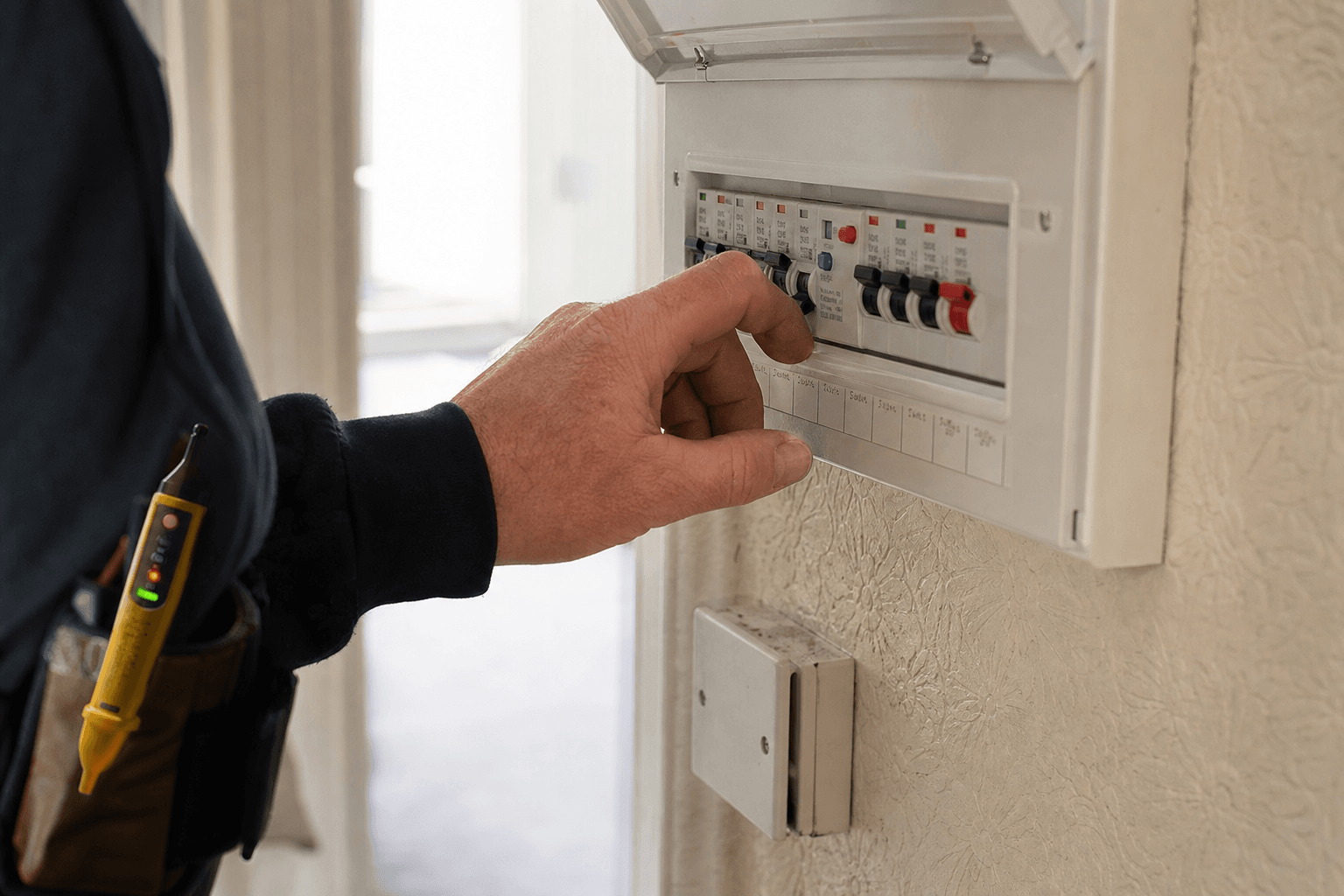
Why your RCD keeps tripping in the UK: 8 causes explained, what to safely check yourself, and when to book electrical repairs near you in 2026.

EICR certificate cost in the UK 2026: £150-£300 typical, by region, flat vs house. Plus rewire costs and electrician hourly rates explained.

UK wiring colours old vs new, what DIY is legal under Part-P, current EICR & rewire costs, and how to hire a NICEIC electrician in 2026.
Latest in Handyman
View all in this category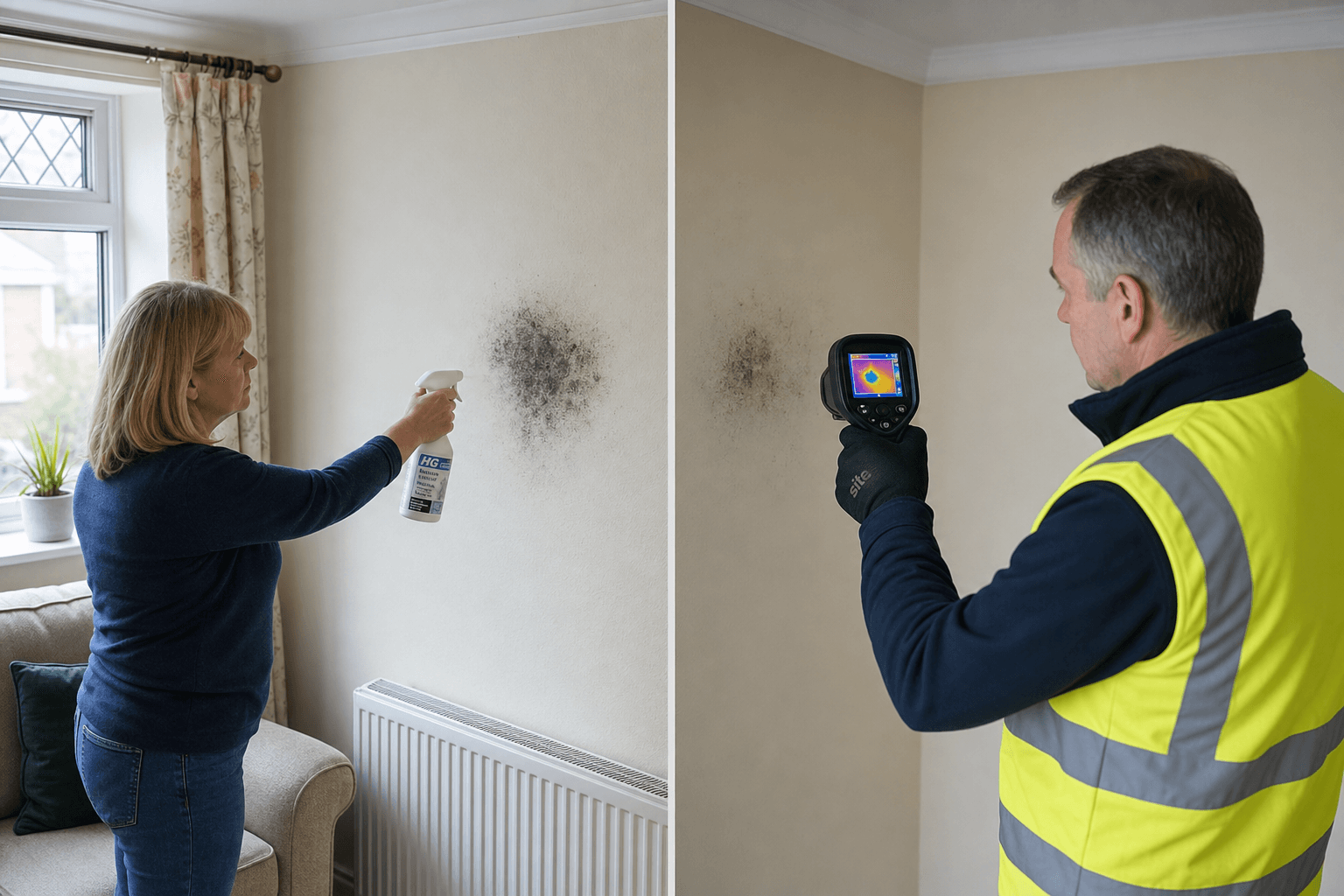
How to get rid of mould on walls permanently: when DIY beats a damp pro and when it doesn't. UK costs, HHSRS rules, and Awaab's Law thresholds.
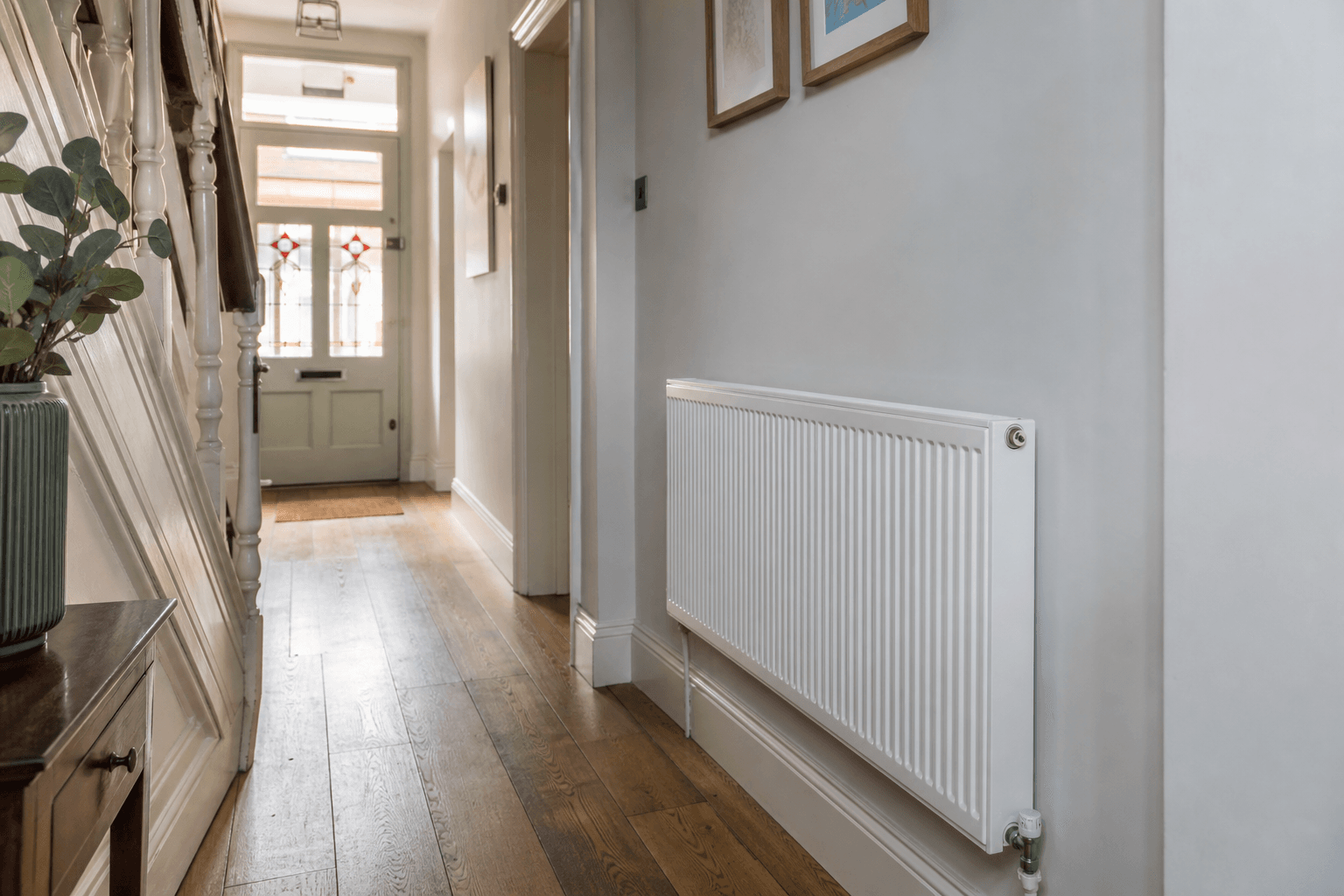
Bleed a radiator safely in 8 steps. UK tools (£3 radiator key), when to STOP and call a Gas Safe engineer, plus how to balance afterwards.

UK mould treatment cost ranges from £150 for a single-room wash to £4,000 for a damp-proof course. Full 2026 banded pricing with sources.
Related services
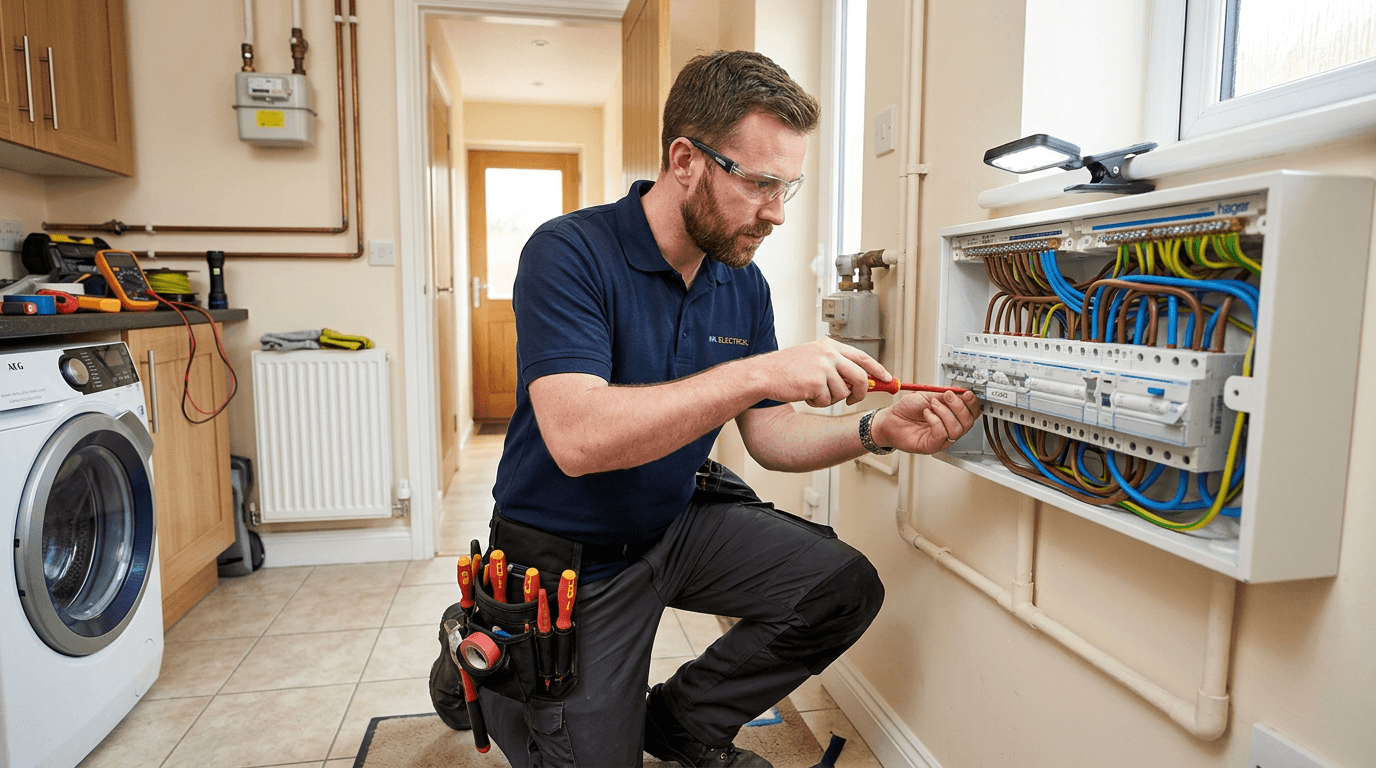
Book electrical jobs with Taskino to find qualified, insured electricians across the UK for safe repairs, installations and testing with clear quotes.
Ready to Book Your Service?
Tell us what you need and our team will help you find the right professional quickly, with clear pricing and no hidden fees.