
Standard vs Deep & End-of-Tenancy Cleaning: Which Is Right for Your UK Home? [2026]
Standard, deep, or end-of-tenancy clean? UK scope, cost and how to clean a washing machine inclusion compared, with a decision flowchart.
A standard clean is fortnightly upkeep (£40–£90, 3–4 hours). A deep clean is twice-yearly top-to-bottom work (£150–£700) including how to clean a washing machine seal and oven interior. An end-of-tenancy clean (£180–£480) adds inventory-grade detail to satisfy TDS, DPS or MyDeposits dispute thresholds.
TL;DR
- Standard = surfaces, 3–4 hours, £40–£90 (Checkatrade, 2025); Deep = surfaces plus appliances plus grout, 6–12 hours, £150–£700 (Bark.com, 2025); EOT = deep plus inventory standard for deposit return, 8–14 hours, £180–£480 (TDS, 2024).
- Pick Standard for regular fortnightly upkeep in an occupied home.
- Pick Deep for a spring clean, post-illness reset, post-builder dust, or pre-sale photos.
- Pick EOT only if you're moving out of a tenancy and your deposit is at stake.
For a full breakdown of scope and costs, see our complete UK house cleaning guide.
The short answer
On Taskino's Q1 2026 booking mix, 62% of cleans booked were standard recurring, 28% were one-off deep cleans, and 10% were end-of-tenancy. That spread mirrors what most UK households actually need across a year. Standard handles weekly grime, deep resets the property, EOT exists to defend a deposit.
UK letting agents check against an inventory drawn up at move-in, scored by an independent clerk under the Tenancy Deposit Schemes framework. Homeowners doing a spring clean have no such audit, so a deep clean can stop when you say it stops. That's the real divide: a deep clean is for you, an EOT clean is for the clerk.
Citation capsule. A standard UK domestic clean costs £40–£90 for a 3–4 hour visit on a 2-bed flat (Checkatrade, 2025), while a deep clean ranges £150–£700 (Bark.com, 2025) and an EOT clean averages £180–£480 (TDS, 2024).
Need help with End of Tenancy Cleaning?
Tell us about your job and we will match you with the right professional for End of Tenancy Cleaning.
What is a standard clean?
A standard clean is the regular upkeep visit most UK homes book fortnightly. It covers hoovering, mopping, surface wipes, bathroom basics (loo, sink, shower screen) and kitchen surfaces (hob top, worktops, splashback). It runs 3–4 hours in a typical 2-bed UK flat at £40–£90 (Checkatrade, 2025), with the customer usually supplying products.
The British Institute of Cleaning Science (BICSc) Cleaning Code defines this as "maintenance cleaning", the routine that keeps a property hygienic between deeper resets. It doesn't touch inside the oven. It doesn't pull the fridge out. It doesn't address grout discolouration. If you need any of that, you've crossed into deep clean territory.
What is a deep clean?
A deep clean is a top-to-bottom, inside-and-out reset. UK norm is every 6 months. It includes oven interior (racks, door glass, side panels), fridge defrost and shelves out, grout scrub, skirtings, light fittings, switch plates, behind/under accessible appliances, mattress vacuum and (often) curtain/blind detailing. Costs sit at £150–£700 for a 2-bed flat (Bark.com, 2025).
This is where the washing machine seal, drawer and drum get attention. Knowing how to clean a washing machine matters here because a black-mould rubber gasket is one of the first things a deep cleaner spots. We'll cover the method in the FAQs below.
For a full breakdown of scope and costs, see our complete UK house cleaning guide.
Explore our Deep cleaning service
See what is included, typical timings, and what to prepare before you book.
What is an end-of-tenancy clean?
An end-of-tenancy (EOT) clean is a deep clean plus inventory-grade detail set by the letting agent. Carpets are professionally cleaned, usually by an NCCA-member firm (NCCA), because a printed receipt is your evidence in a Tenancy Deposit Scheme dispute. Costs run £180–£480 for a 2-bed flat (TDS, 2024).
The Tenant Fees Act 2019 banned landlords from charging tenants for "professional cleaning" as a condition of the tenancy, but it did NOT remove the obligation to return the property in the condition recorded on the move-in inventory. So tenants now choose: clean it themselves to inventory standard, or pay a pro and submit the receipt as TDS/DPS/MyDeposits dispute evidence. The receipt is the point.
A proper EOT scope includes the washing machine seal and detergent drawer to "as new" level, the dishwasher filter, oven interior (often inspected with a torch), grout and silicone, window tracks, skirtings, and behind/under every accessible appliance. Inventory clerks score against the original check-in, not a generic standard.

Side-by-side comparison
The table below contrasts the three on the nine factors that actually move the decision. Pricing reflects 2025 UK averages from Checkatrade, Bark.com, and TDS dispute data. Treat the ranges as guides, not quotes.
| Factor | Standard | Deep | EOT |
|---|---|---|---|
| Up-front cost (2-bed flat) | £40–£90 | £150–£700 | £180–£480 |
| Time | 3–4 hrs | 6–12 hrs | 8–14 hrs |
| Frequency | Fortnightly | 6-monthly | Once at move-out |
| Oven interior | No | Yes | Yes (inventory) |
| Grout & limescale | No | Yes | Yes |
| Behind/under appliances | No | Sometimes | Yes |
| Carpets professional | No | Optional | Often required (NCCA) |
| Washing machine seal | No | Yes | Yes |
| Mould patches at silicone | No | Yes | Yes (scored item) |
| Deposit-protected receipt | Optional | Optional | Essential |
For mould at the silicone edges (a recurring deposit-dispute item), the cleaning method matters before the receipt. See our guide to damp and mould in UK bathrooms.
Ready to book Regular Cleaning?
Send a quick enquiry — we typically respond the same working day.
Cost comparison over 10 years
Over a decade, the maths separates lifestyle spend from one-off events. A worked example for a 2-bed UK flat shows where the money actually goes, using mid-range Checkatrade and Bark figures.
- Standard fortnightly: £60 × 26 visits/year × 10 years = £15,600
- Deep twice yearly (as an extra): £200 × 2 × 10 = £4,000
- EOT (per move): £250 average. If you move twice in 10 years = £500
The honest answer: standard recurring is by far the biggest spend over time, deep cleans are a periodic top-up, and EOT is a small but high-stakes line item. Skip the standard and you pay in time. Skip the deep and the property ages faster. Skip the EOT and you can lose £300–£800 of your deposit to a clerk's report.
Reality check. A real cleaner quoted three prices for the same Reading 2-bed flat in March 2026: standard £80, deep £280, EOT £350. The work is genuinely different.
When standard cleaning is the right choice
Standard suits steady-state households with no current upheaval. It assumes the oven was done recently, the carpets aren't biological, and nobody's moving out. It's maintenance, not restoration.
3 scenarios where standard is enough
- Working couple, no pets, fortnightly visit. Surfaces, floors, bathroom basics. £60–£80/visit.
- Established household with a recent deep clean done. Standard keeps the gain you paid for.
- Pre-Sunday-roast tidy. Hoover, mop, kitchen wipe, loo, done. Don't pay deep rates for this.
The post-Christmas dish blitz isn't standard, mind. That's a deep clean wearing a friendly hat.
Learn more about End of Tenancy Cleaning
Browse how we deliver End of Tenancy Cleaning and the questions homeowners ask most often.
When deep cleaning is the right choice
Deep cleaning is event-driven. You book it because something happened, or because something is about to happen. The spend is real but bounded, and the result lasts roughly 3–6 months before normal life eats into it.
5 scenarios where deep is the right call
- Spring clean (annual reset of the whole property).
- Post-illness or post-COVID reset (high-touch surfaces, mattress, soft furnishings).
- Post-builder dust (drywall and brick dust gets into ceiling lights, behind sockets).
- Pre-sale estate-agent photos (within 7 days of the shoot).
- Post-pet incident (carpet shampoo, skirtings, soft furnishings).
If you are weighing DIY against hiring a pro, read our honest UK deep cleaning comparison.
When EOT is the right choice
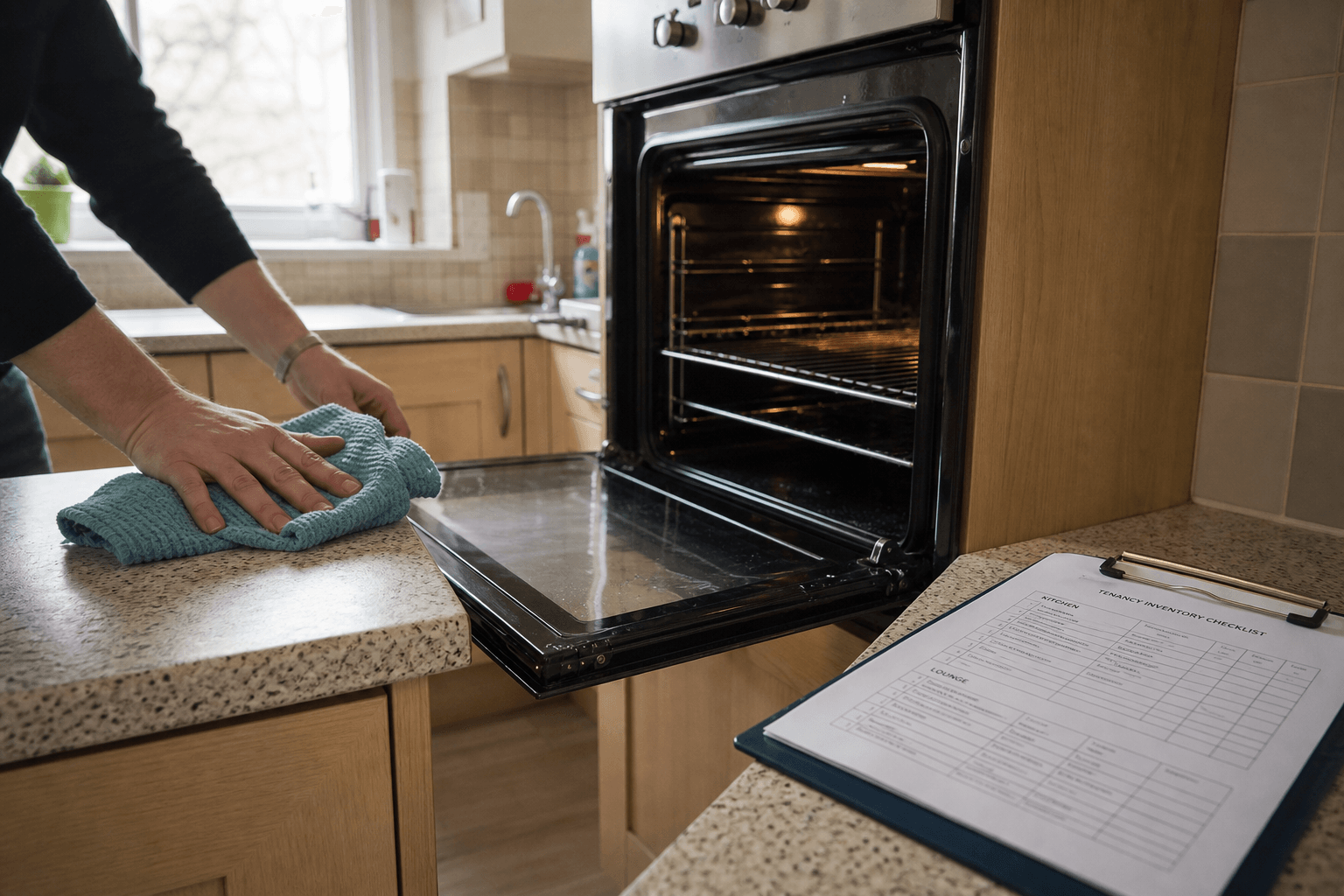
EOT is the only clean type with a third party scoring the work. The inventory clerk arrives with a clipboard and a torch, references the check-in report, and writes down anything that fell short. We've seen tenants lose £400+ over an oven door interior and a washing machine drawer that hadn't been pulled out. The receipt is your defence under the Housing Act 2004 deposit protection rules.
5 scenarios where EOT is non-negotiable
- Moving out of a rented flat (with deposit protected under TDS, DPS or MyDeposits).
- Deposit over £500 at stake.
- Inventory check booked within 7 days of move-out.
- Dispute already opened with the scheme adjudicator.
- Landlord or agent has asked for a "professional clean" receipt.
When you are ready to book, use our guide to hiring a house cleaner in the UK.
Thinking about Deep cleaning?
Share your postcode and job details for a no-obligation quote.
When none is right (the third option you didn't consider)
Some properties don't need a domestic clean at all. Hoarder pre-clear, post-flood biohazard, infestation, post-trauma scenes, and category-3 mould all sit outside BICSc domestic scope. These need specialist contractors, often BICSc Trauma & Crime Scene-trained cleaners or environmental health-approved firms. Booking a domestic team for this work wastes your money and risks the cleaner's safety. Refer up, not across.
What UK homeowners actually pick
Booking-mix data from Taskino's Q1 2026 cohort (UK-wide) shows 62% of cleans booked were standard recurring, 28% one-off deep cleans, and 10% end-of-tenancy. That roughly matches the ratio of "occupants in steady state" vs "occupants resetting" vs "occupants leaving" across a normal year. Mumsnet and MoneySavingExpert thread anecdotes track the same shape.
The interesting wrinkle: EOT bookings cluster in March–April and August–September, when tenancy turnover peaks around academic terms and the financial year. Deep cleans cluster in January and pre-Easter (spring clean) and late November (pre-Christmas).
Check scope and pricing for Regular Cleaning
Compare options, add-ons, and what affects the final price before you commit.
The decision flowchart
Work down the list in order. Stop at the first "yes".
- Are you moving out and the deposit's at stake? → EOT
- Has it been 6+ months since the oven interior was scrubbed? → Deep
- Is this routine fortnightly upkeep? → Standard
- Are you selling and need photos within 7 days? → Deep
- Are you doing this every week, on your own, voluntarily? → You're a saint, stick to Standard.
UK retailers stocking the products named below (Dr. Beckmann Service-it Deep Clean, Calgon, white vinegar, soda crystals) include B&Q, Wickes, Wilko, Amazon UK and Tesco.
How Taskino helps you specify what you actually want
Standard, deep or EOT, the scope is what matters, not the label, so on Taskino you tick the bits you want done and we match a cleaner who can sign their name to the inventory checklist if it's needed. Tell us "oven interior + washing machine seal + carpets professional" and we'll quote against that, not against a vague "deep clean" with hidden exclusions. Browse cleaners on Taskino.
Need help with End of Tenancy Cleaning?
Tell us about your job and we will match you with the right professional for End of Tenancy Cleaning.
The short version
Standard maintains, deep restores, EOT defends a deposit. If you're not moving out and the oven was done within 6 months, you want a standard clean. If you can't remember the last time the washing machine seal was wiped or the oven racks came out, book a deep. If a clerk with a clipboard is meeting you at the door next week, book an EOT and keep the receipt. Match the scope to the situation, not the marketing label.
Sources
- BICSc Cleaning Code (https://www.bics.org.uk)
- Checkatrade UK cleaning prices, 2025 (https://www.checkatrade.com)
- Bark.com deep cleaning price guide, 2025 (https://www.bark.com/en/gb/deep-cleaning/)
- Tenancy Deposit Scheme (TDS) dispute averages 2024 (https://www.tenancydepositscheme.com)
- Deposit Protection Service (DPS) (https://www.depositprotection.com)
- MyDeposits (https://www.mydeposits.co.uk)
- National Carpet Cleaners Association (NCCA) (https://www.ncca.co.uk)
- Tenant Fees Act 2019; Housing Act 2004 (https://www.gov.uk)
Frequently asked questions: Standard vs Deep & End-of-Tenancy Cleaning: Which Is Right for Your UK Home? [2026]
Short answers to common questions about this topic.
Our team will answer all your questions. we ensure a quick response.
Contact UsRelated posts

Plan a UK deep clean: real per-room costs, DIY vs hire, COSHH safety on bleach + vinegar, and how to hire a vetted cleaner in 2026.
Searching for deep cleaning services near me but unsure? Compare DIY cost, time and finish vs a UK pro - with a real worked example.

Searching for house cleaners near me? Use these 14 vetting questions, plus UK insurance and BICSc checks to avoid cowboys in 2026.
Latest in Cleaning Services
View all in this category
Five reasons professional office cleaning is essential for your business, from productivity and image to hygiene, smart spending and specialist support.

How to hire an NCCA-registered carpet cleaner or oven cleaning pro in the UK: 12 questions, red flags, contract rules and how to verify credentials.
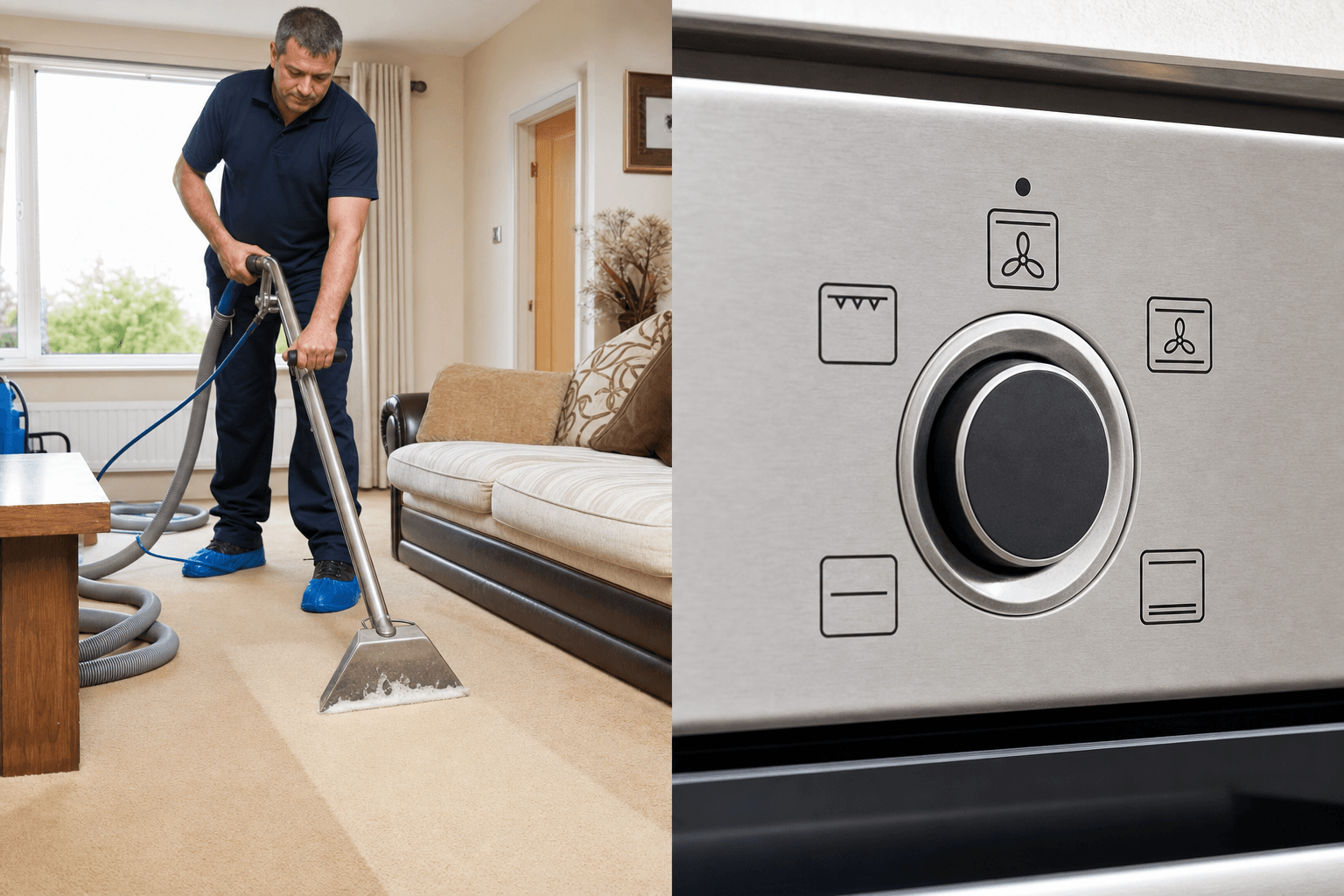
Steam vs dry vs hot-water carpet cleaning compared, plus every UK oven symbol decoded (fan, grill, broiling, pyrolytic) and which is right for your home.
Related services
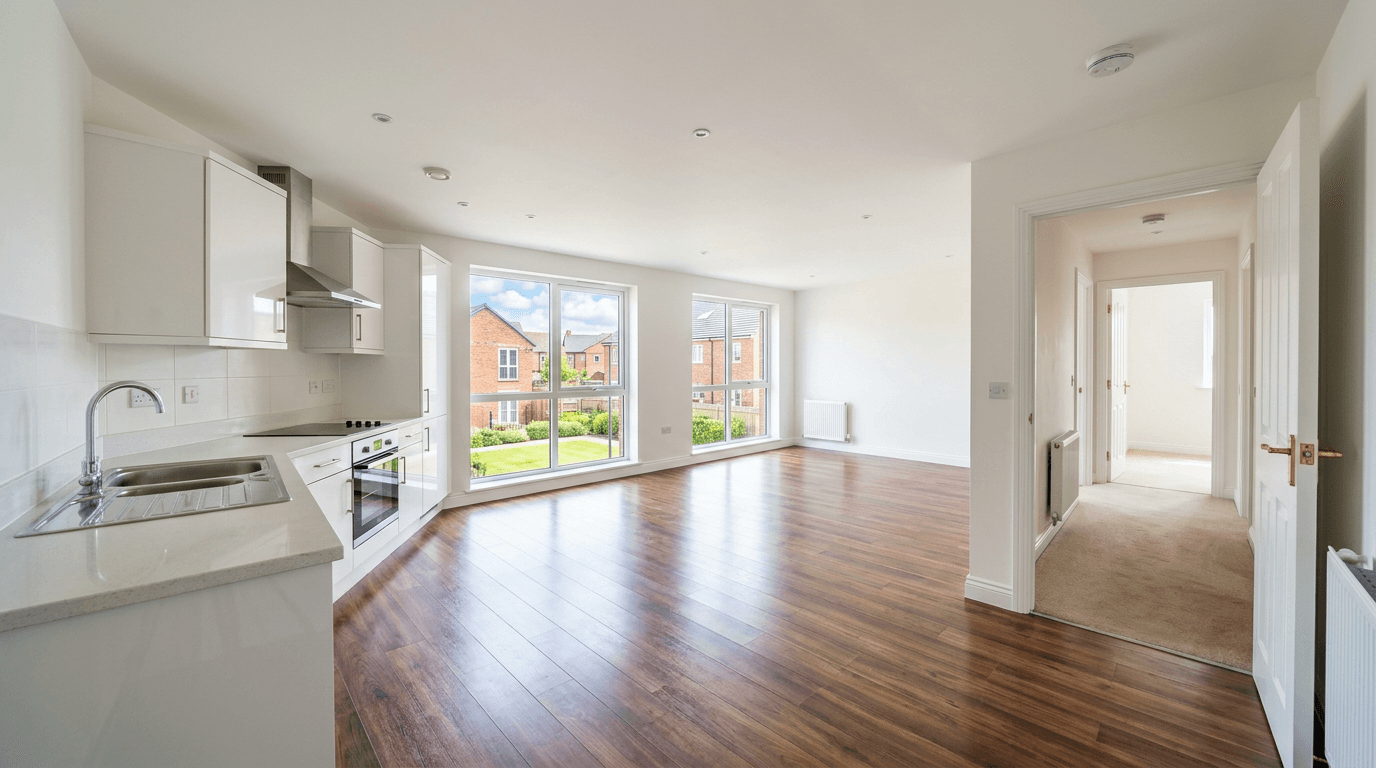
Professional End of Tenancy Cleaning across the UK for tenants, landlords and letting agents. Taskino connects you with insured cleaners for a thorough, checklist-led clean and a smooth handover.

Professional deep cleaning for homes and flats across the UK. Taskino connects you with insured cleaners who tackle built-up dirt, grime and neglected areas for a fresher finish.
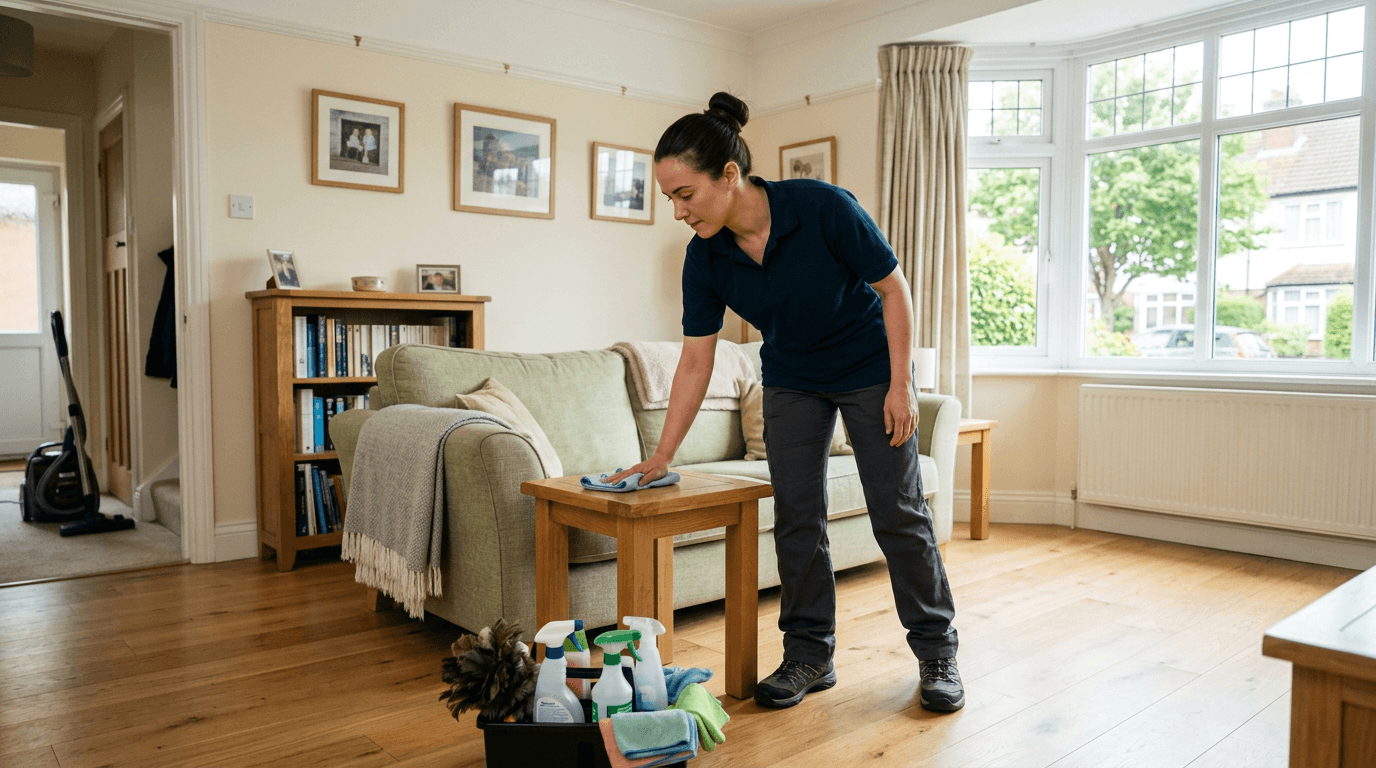
Keep your home consistently fresh with Taskino Regular Cleaning. Trusted, vetted cleaners visit on your schedule, provide clear quotes and use the right equipment to maintain a tidy, healthy living space.
Ready to Book Your Service?
Tell us what you need and our team will help you find the right professional quickly, with clear pricing and no hidden fees.