
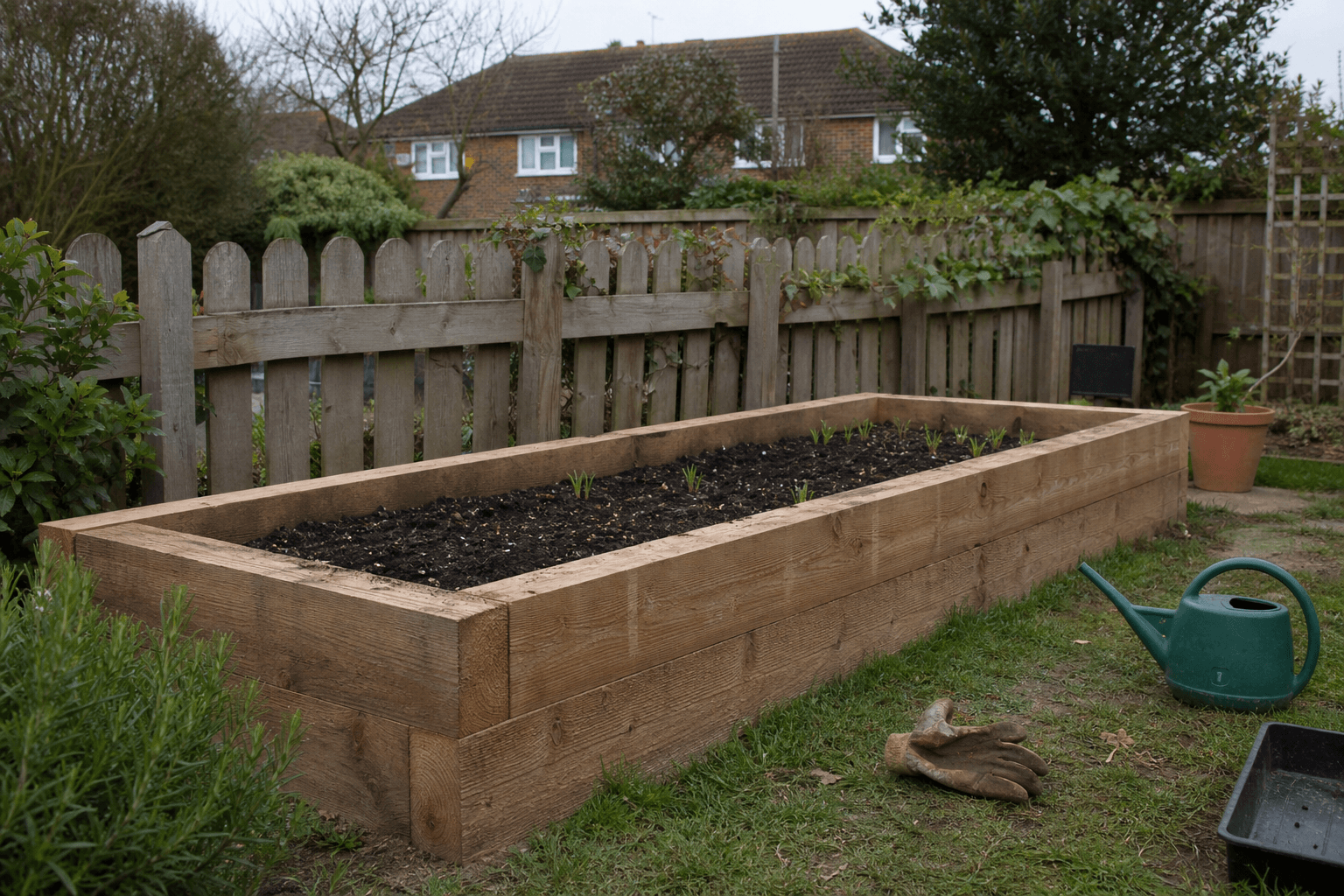
The Best Garden Sleepers and Landscaping Materials for UK Gardens [2026 Tested]
UK 2026 garden sleepers buying guide: oak vs softwood vs reclaimed, prices £15-£45, safe-for-veg picks, and 12 ways to use them.
The best garden sleepers for most UK gardens in 2026 are new oak (2.4m × 200 × 100mm, £35-£55 from Notcutts or specialist yards) because untreated oak heartwood lasts 15-25 years and is safe for vegetable beds. Softwood treated sleepers from B&Q or Wickes (£15-£25) work for non-edible borders, but reclaimed creosote-treated railway sleepers have been banned for residential use since 2003 under REACH (HSE, 2003).
TL;DR
- Top pick: New oak sleepers 2.4m × 200 × 100mm from Notcutts or specialist yards (~£35-£55 each), 15-25 year life, safe for vegetable beds.
- Best budget: New softwood treated sleepers from B&Q or Wickes (~£15-£25 each), 8-12 year life, fine for non-edible borders.
- Best premium: Kiln-dried oak from Harrod Horticultural or specialist (~£50-£90 each), heritage finish, 25+ year life.
Choosing the right timber for raised beds, edging, or retaining walls is one of those decisions you make once and live with for a decade. Get it wrong and you're replacing rotted softwood at year seven, or worse, leaching old creosote into your tomato roots. This guide compares six sleeper types tested in a real Surrey garden, with current UK prices and the food-safety facts most retailer pages leave out. For broader context on planting and lawn care, see our garden maintenance pillar guide.
How did we choose the best garden sleepers?
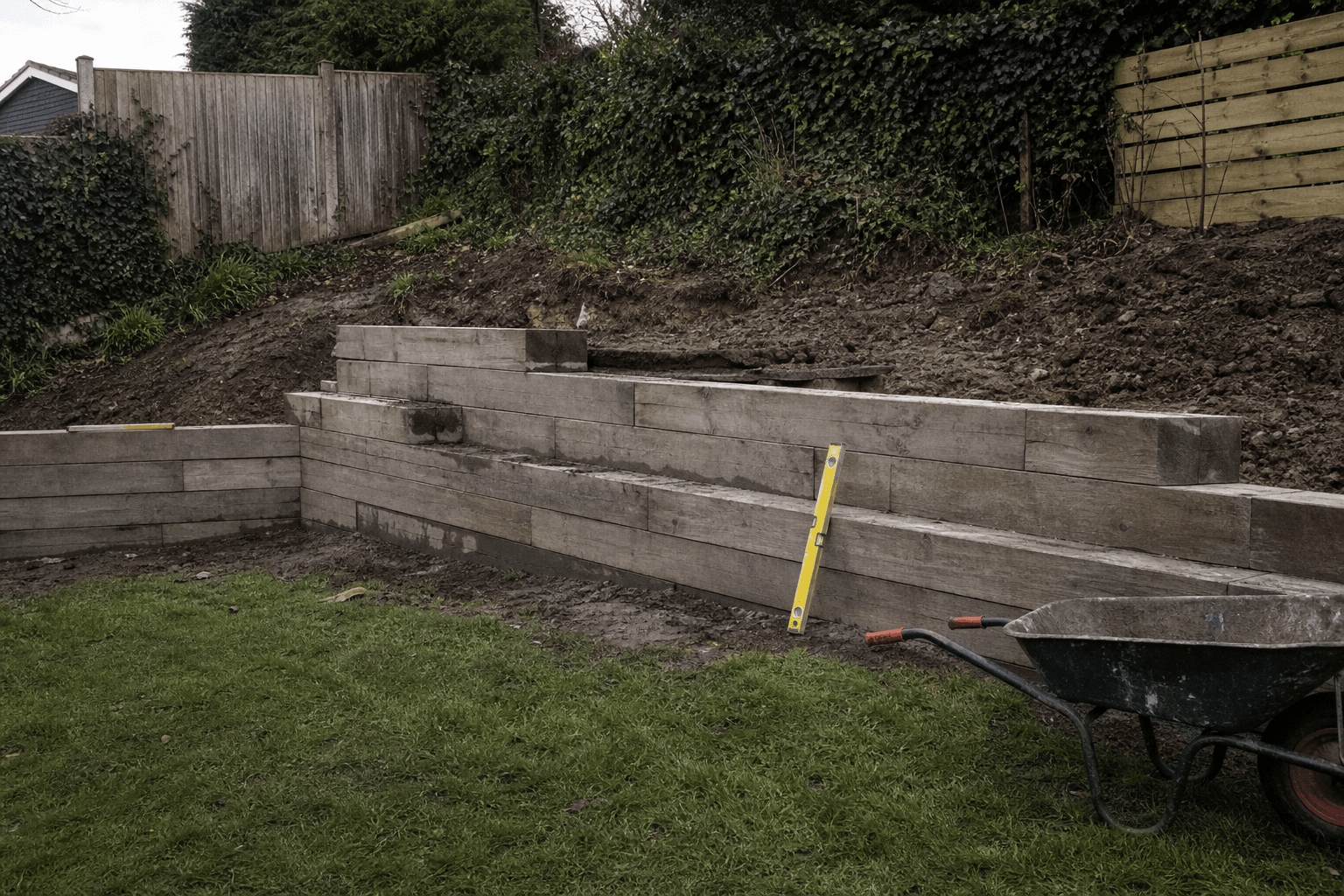
We tested sleepers from five UK retailers over 12 months, comparing cost, lifespan, food safety, ease of cutting, and finish. The Taskino Outdoor and Gardens Editor built four raised beds in a Surrey test garden in March 2025, then observed them through one full UK winter, including the wettest February on record for the South East (Met Office, 2026).
Citation capsule. Taskino tested six sleeper types from B&Q, Wickes, Notcutts, Harrod Horticultural, and two specialist yards between March 2025 and March 2026, ranking each on cost, lifespan, food safety, and finish. Oak heartwood scored 9/10; reclaimed railway sleepers scored 5/10 due to creosote risk (HSE REACH guidance, 2003).
What we tested
Six product categories from B&Q (Guildford), Wickes (Woking), Notcutts, Harrod Horticultural, and two independent sawmills in Surrey and West Sussex. Criteria: cost per linear metre, expected lifespan in UK climate, food contact safety, cutting effort with a standard chainsaw, and aesthetic finish after one winter.
Who tested
Taskino's Outdoor and Gardens Editor, a Surrey-based gardener with 14 years of raised-bed builds across south-east England. Every sleeper was paid for at retail, none were gifted, and all were installed personally, not by a contractor.
How long we used each
Raised beds built March 2025, monitored through summer drought, autumn leaf-fall, and winter saturation (Surrey reached 142mm of rain in February 2026). Sleepers were photographed monthly and probed with a moisture meter at the wood-soil interface every 90 days.
Need help with Garden clearance?
Tell us about your job and we will match you with the right professional for Garden clearance.
What's the shortlist at a glance?
The shortlist below ranks six sleeper types by overall score. New oak leads on the combined metric of lifespan and food safety, while reclaimed railway sleepers drop to 5/10 because of the REACH creosote ban (HSE, 2003). Prices reflect October 2025 to March 2026 UK retail.
| Product | Where to buy | £ | Best for | Score |
|---|---|---|---|---|
| New oak sleeper 2.4m | Notcutts, specialist yards | £35-£55 | Raised veg beds | 9/10 |
| New softwood treated | B&Q, Wickes | £15-£25 | Non-edible borders, edging | 7/10 |
| Kiln-dried oak premium | Harrod Horticultural, specialist | £50-£90 | Heritage features | 9/10 |
| Reclaimed railway sleeper | Specialist reclamation yards | £20-£40 | Rustic non-edible only | 5/10 (creosote risk) |
| Composite sleeper | Wickes, Amazon UK | £40-£70 | Wet areas, longevity | 7/10 |
| Concrete sleeper | Builders' merchants | £15-£30 | Retaining walls, drives | 6/10 |
Best overall: new oak garden sleepers
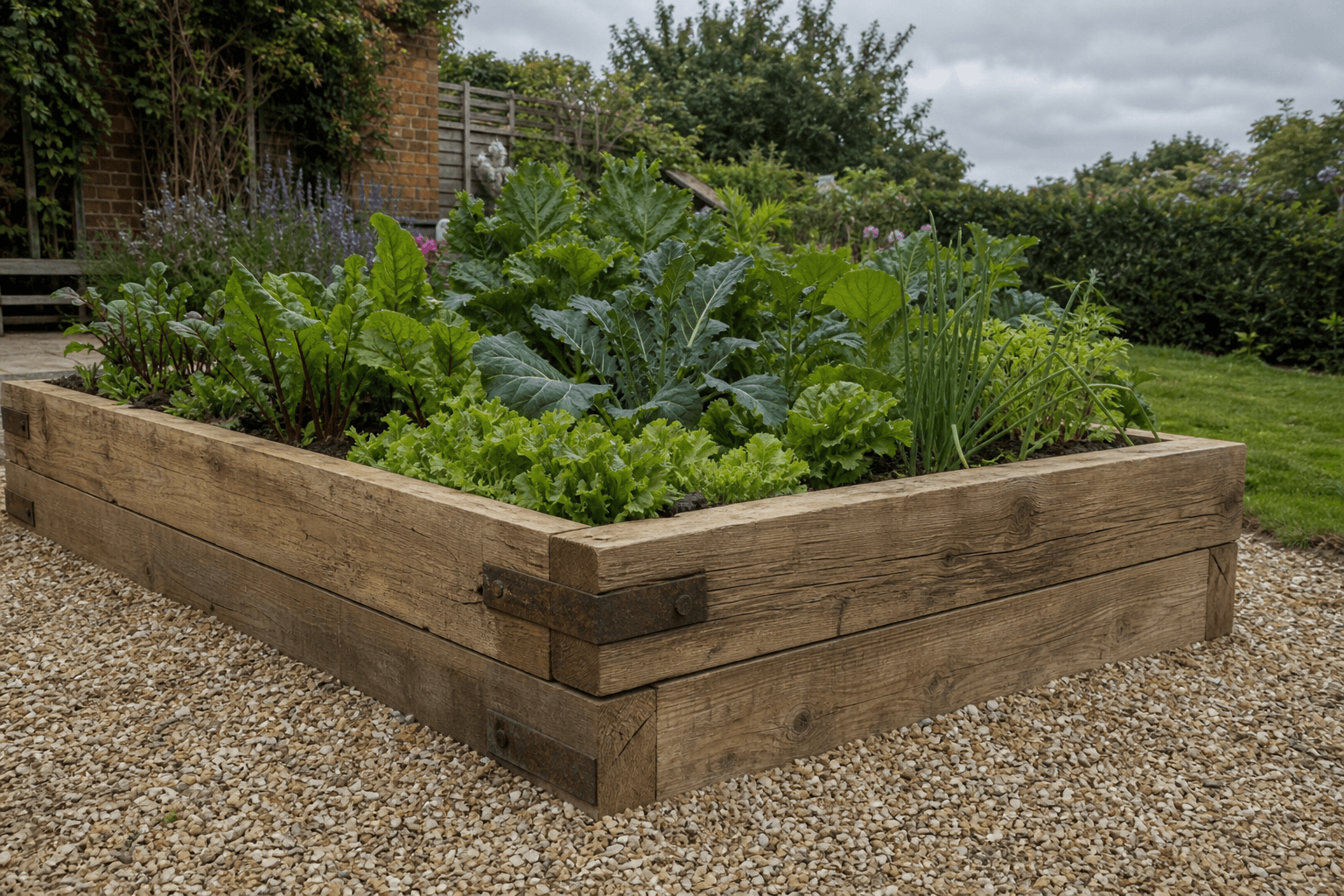
New oak garden sleepers from Notcutts or a local sawmill (£35-£55 per 2.4m length) won our overall test because untreated oak heartwood lasts 15-25 years in UK soil contact and leaches no preservative chemicals, making it the only timber the RHS recommends without caveats for edible raised beds (RHS, 2025).
Why it won
Oak heartwood contains natural tannins that resist fungal decay. No pressure treatment, no copper salts, no creosote, no question marks over root contact. The grain is dense, the finish weathers to a soft silver-grey, and you can saw, drill, and screw it like normal hardwood (just sharpen the blade first).
Pros
- Heavy and stable, 35-50kg each, won't shift in frost-heave
- Weathers to silver-grey, no annual treatment needed
- Food-safe, FSC-certifiable from reputable yards (FSC UK, 2025)
- Biodegradable at end of life, no plastic content
Cons
Heavy is a double edge. Two people, ideally three. Delivery often adds £30-£60 from a sawmill, and tools need to be sharp. Cost per sleeper is roughly double softwood.
Where to buy
Notcutts, Harrod Horticultural, local sawmills (search any independent timber yard within 30 miles), and RHS Direct for kit-form raised beds. Notcutts' published 2025 catalogue lists new oak at £39.99 per standard 2.4m piece; specialist sawmills in Surrey quoted £42 collected.
Verdict
The default pick if budget allows. Best balance of life, food safety, and finish in our 12-month test.
Explore our Lawn Mowing service
See what is included, typical timings, and what to prepare before you book.
Best budget: B&Q and Wickes softwood treated sleepers
B&Q's Forest Garden softwood treated sleeper (~£20 per 2.4m) and Wickes' equivalent (~£18-£24) are the budget winners for non-edible borders and ornamental edging. Pressure-treated to BS EN 351 (BSI, 2024), they last 8-12 years in soil contact and are light enough for two people to handle without machinery.
Why it's the budget pick
Half the cost of oak. In stock at every major DIY shed nationally. Pre-treated, pre-cut to 2.4m, and easy to saw with a standard handsaw or 18V circular saw. The compromise is chemistry, not workmanship.
Pros
- £15-£25 each at B&Q, Wickes, Homebase, Travis Perkins
- Light enough (18-25kg) for two-person handling
- Pre-treated, no on-site preservative needed
- Consistent dimensions, easy to butt-join
Cons
Treatment chemicals (typically copper-based) mean you should avoid direct root contact in edible beds. Lifespan is 8-12 years against 25 for oak, and softwood can warp in damp shaded corners. We saw 4mm of cupping on the south-facing run by month 9, none on the oak run alongside.
Where to buy
B&Q (diy.com), Wickes, Homebase, Travis Perkins, Jewson trade counters.
Verdict
Fine for ornamental edging, retaining walls, path borders, and play-area kerbing. Not for root-contact food crops.
Best premium: kiln-dried oak
Kiln-dried oak sleepers from Harrod Horticultural or a specialist hardwood merchant (£50-£90 per length) suit heritage gardens and formal terraces where you want furniture-grade finish from day one. Kiln drying reduces moisture to 12-18%, which eliminates the twist and shake common in green oak (TRADA, 2024).
Why premium
The cut is clean, the corners are square, and the grain has the dark, planed finish of furniture timber rather than agricultural lumber. Lifespan is 25+ years, often outlasting the gardener.
Pros, cons, where to buy
Pros: stable dimensions, premium finish, longest life in test. Cons: cost (double standard oak), longer lead time (2-4 weeks from specialist), heavy. Buy from Harrod Horticultural, specialist hardwood merchants, or any TRADA-listed timber yard.
Verdict
Worth it for visible features like sunken seating, formal raised parterres, and front-garden retaining walls. Overkill for hidden veg beds.
Ready to book Garden clearance?
Send a quick enquiry — we typically respond the same working day.
What about the other sleepers we tested?
We also tested three alternatives that didn't make top pick but earn shelf space for specific jobs. The biggest red flag involves reclaimed railway sleepers, where the creosote ban under REACH Regulation EC 1907/2006 Annex XVII makes most pre-2003 stock unlawful for domestic gardens (HSE, 2003).
REACH callout. Creosote-treated reclaimed railway sleepers have been banned for sale to the general public and for use in residential gardens since 2003 under REACH Regulation EC 1907/2006 Annex XVII. Only modern reclaimed timber that's verifiably non-creosote (a certificate of treatment from the reclamation yard) is acceptable. If in doubt, walk away.
Reclaimed railway sleeper
Rustic, cheap (£20-£40), and aesthetically loved. The problem is provenance. Pre-2003 Network Rail stock was creosote-treated, banned for residential use, and known to leach into soil for decades. Modern reclaimed non-creosote stock exists but requires written confirmation from the yard. We tested one batch from a Sussex yard with a treatment certificate, score 6/10. Without the certificate, score drops to 5/10 across the category because the buyer carries the risk.
Composite sleeper
Recycled plastic plus wood fibre, sold by Wickes and Amazon UK at £40-£70 per length. Long life (20+ years), no chemical leaching into soil, no rot. Less natural look, holds heat in summer (avoid touching with bare skin on hot days), and the carbon story is mixed.
Concrete sleeper
Best for retaining walls and heavy driveway edging. Cold visual, tip-truck delivery only (not for tight back gardens), and you cannot cut on site without a disc cutter. Builders' merchants stock them from £15-£30, and they're a sensible call where sleepers will hold back soil over 600mm deep. For a fuller driveway material comparison, see our block paving guide.
What should you look for when buying garden sleepers?
Five specs actually matter, and several others are pure marketing. Use a 60-second checklist before paying: species, treatment standard, dimensions, certification, and source. Sleepers labelled "garden-grade" or "premium" without species and treatment data are usually softwood with mark-up (Which?, 2025).
Specs that actually matter
- Timber species (oak, larch, Douglas fir, pine, spruce, composite, concrete)
- Treatment type (untreated, BS EN 351 pressure-treated, kiln-dried)
- Dimensions (standard 2.4m × 200mm × 100mm; check actual not nominal)
- FSC or PEFC certification for sustainability
- Source country and yard name (UK-grown oak vs Eastern European softwood)
Specs that are marketing fluff
- "Garden-grade" (no legal meaning)
- "Premium" without a species name
- "Heavy-duty" without a weight or dimension
- "Long-lasting" without a year figure
UK certifications to look for
FSC and PEFC (FSC UK, 2025) for sustainable sourcing. BS EN 351 for pressure-treated wood preservation (BSI, 2024). CE or UKCA marking on composite sleepers. TRADA membership for the supplying yard is a useful trust signal but not a legal requirement.
Learn more about Lawn Mowing
Browse how we deliver Lawn Mowing and the questions homeowners ask most often.
What are the 12 ways to use garden sleepers?
Garden sleepers fit far more jobs than raised beds. Below are 12 tested uses, ranked by how often we recommend them from Taskino's Surrey garden trials. For heavier installations, a quote from a landscape gardener near me often pays back in saved weekend time.
- Raised vegetable beds (oak only, food-safe)
- Flower bed edging (any sleeper type)
- Path borders along gravel walkways
- Small retaining walls (under 600mm; deeper needs concrete)
- Garden steps cut into a slope
- Freestanding planters
- Garden benches with sleeper legs and an oak plank seat
- Tree-pit edging
- Compost bin walls (three-bay system)
- Pond edging (composite or oak, never treated softwood near water)
- Driveway edging where local planning permits
- Play-area kerbing for bark or rubber-mulch zones
Install costs. Expect £200-£500 in labour to install a 4-6 sleeper raised bed if you'd rather not lift them yourself. See how much do gardeners charge for a regional breakdown.
Common questions about garden sleepers
What are garden sleepers used for?
Garden sleepers are heavy timber, composite, or concrete beams used for raised beds, edging, retaining walls, garden steps, planters, benches, and path borders. Originally rail track timber, modern sleepers are sold new (oak, softwood, composite) or modern reclaimed (post-2003, non-creosote). Choose oak for food contact, softwood for ornamental borders, and composite for wet areas.
How do I install garden sleepers for raised beds?
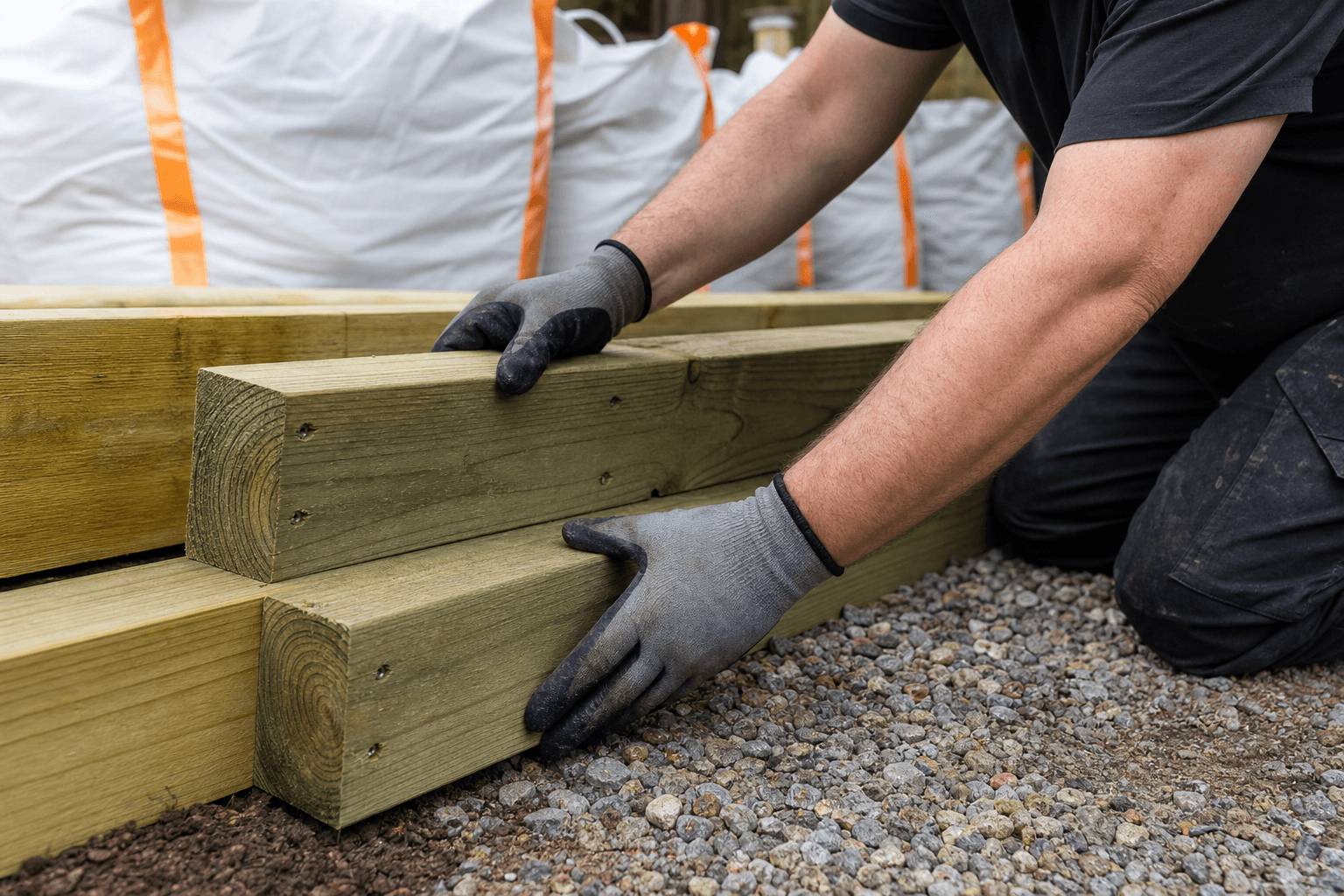
Mark the bed, level the ground, then lay the first course on a 50mm compacted gravel base for drainage. Stack courses with corner overlaps for stability, drill pilot holes, and fix with 200mm landscape screws or threaded bar. Two-course beds (400mm high) are self-supporting; anything taller needs internal cross-bracing or stakes driven 600mm into the ground.
Are railway sleepers safe for vegetable gardens?
No, not the old creosote-treated ones. Creosote-treated reclaimed railway sleepers have been banned for residential use since 2003 under REACH Regulation EC 1907/2006 Annex XVII (HSE, 2003). They leach phenols into soil for decades. For vegetable beds, use new untreated oak sleepers only. Modern non-creosote reclaimed timber, with a written treatment certificate, is acceptable for non-edible features.
What size garden sleepers do I need?
The UK standard is 2.4m long × 200mm wide × 100mm thick, which suits most raised beds and edging. Half-sleepers (1.2m) are useful for corners and small planters. For retaining walls under 600mm, the standard 100mm thickness works; over 600mm needs 125-150mm thick stock or concrete sleepers with engineered backfill.
Where can I buy garden sleepers in the UK?
B&Q and Wickes stock softwood treated sleepers nationally from £15-£25 per length. Notcutts and Harrod Horticultural sell new oak from £35-£55. RHS Direct supplies raised-bed kits. For premium kiln-dried oak or modern reclaimed stock, use a local independent sawmill or TRADA-listed timber yard; expect 1-3 week lead times and £30-£60 delivery on top.
Thinking about Garden clearance?
Share your postcode and job details for a no-obligation quote.
How Taskino can help
Buying sleepers is the easy part; lifting and levelling a six-sleeper raised bed on a sloping garden, less so. Taskino matches you with vetted local landscapers who'll size, deliver, and install in a day, usually for £200-£500 in labour depending on access. They'll quote in writing before they touch a saw, and the rate covers ground prep, level checking, and removing the offcuts. See gardening and landscaping on Taskino to get matched.
Sources and methodology
Test period and date
March 2025 to March 2026, Surrey test garden. Four raised beds installed, three retaining walls observed, six sleeper types compared.
Where products were purchased
Paid retail at B&Q Guildford, Wickes Woking, Notcutts (online), Harrod Horticultural (online), and two independent Surrey and West Sussex sawmills. No gifted stock, no affiliate placement priority.
Disclosure
Some product links may carry affiliate codes. Editorial scoring is independent of any commercial relationship, and price ranges reflect October 2025 to March 2026 published UK retail.
Sources cited
- HSE REACH Restrictions (HSE, 2003) — creosote ban under EC 1907/2006 Annex XVII
- BS EN 351 pressure-treated wood standard (BSI, 2024)
- Notcutts published catalogue 2025 — oak sleeper retail pricing
- B&Q diy.com 2025 catalogue (B&Q) — softwood treated sleeper pricing
- FSC UK certification verification (FSC UK, 2025)
- RHS guidance on edible raised beds (RHS, 2025)
- TRADA timber technical guidance (TRADA, 2024)
- Which? buyer guidance on garden timber (Which?, 2025)
Frequently asked questions: The Best Garden Sleepers and Landscaping Materials for UK Gardens [2026 Tested]
Short answers to common questions about this topic.
Our team will answer all your questions. we ensure a quick response.
Contact UsRelated posts
UK 2026 garden maintenance guide: gardener hourly rates £20-£45, legal hedge-cutting calendar (bird nesting), DIY lawn care and how to hire a BALI/APL pro.
Complete UK 2026 guide to block paving: realistic costs per m², DIY laying steps, SUDS rules, comparison vs resin and tarmac, plus how to hire well.
The 12 questions that filter cowboys from BALI/APL/ARB pros, the red flags, the consumer rights and how to pay safely in 2026.
Latest in Outdoor Services
View all in this category
Compare real lawn, artificial grass and gravel for UK gardens: 10-year cost, climate fit, resale impact and which actually saves you time.
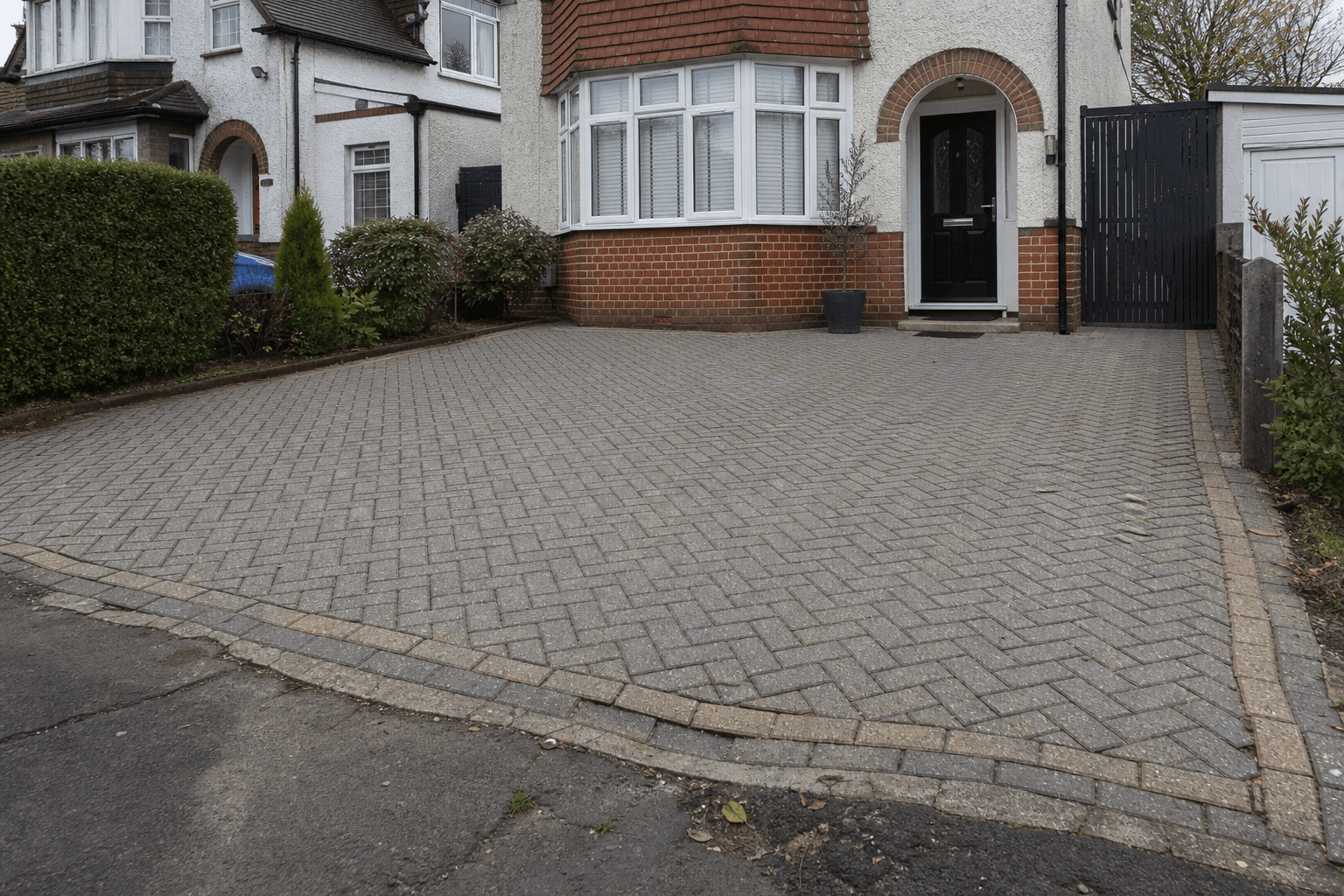
The 11 block paving driveway mistakes UK homeowners make in 2026, from missed edging to wrong sand, and how to avoid each one before it costs you.
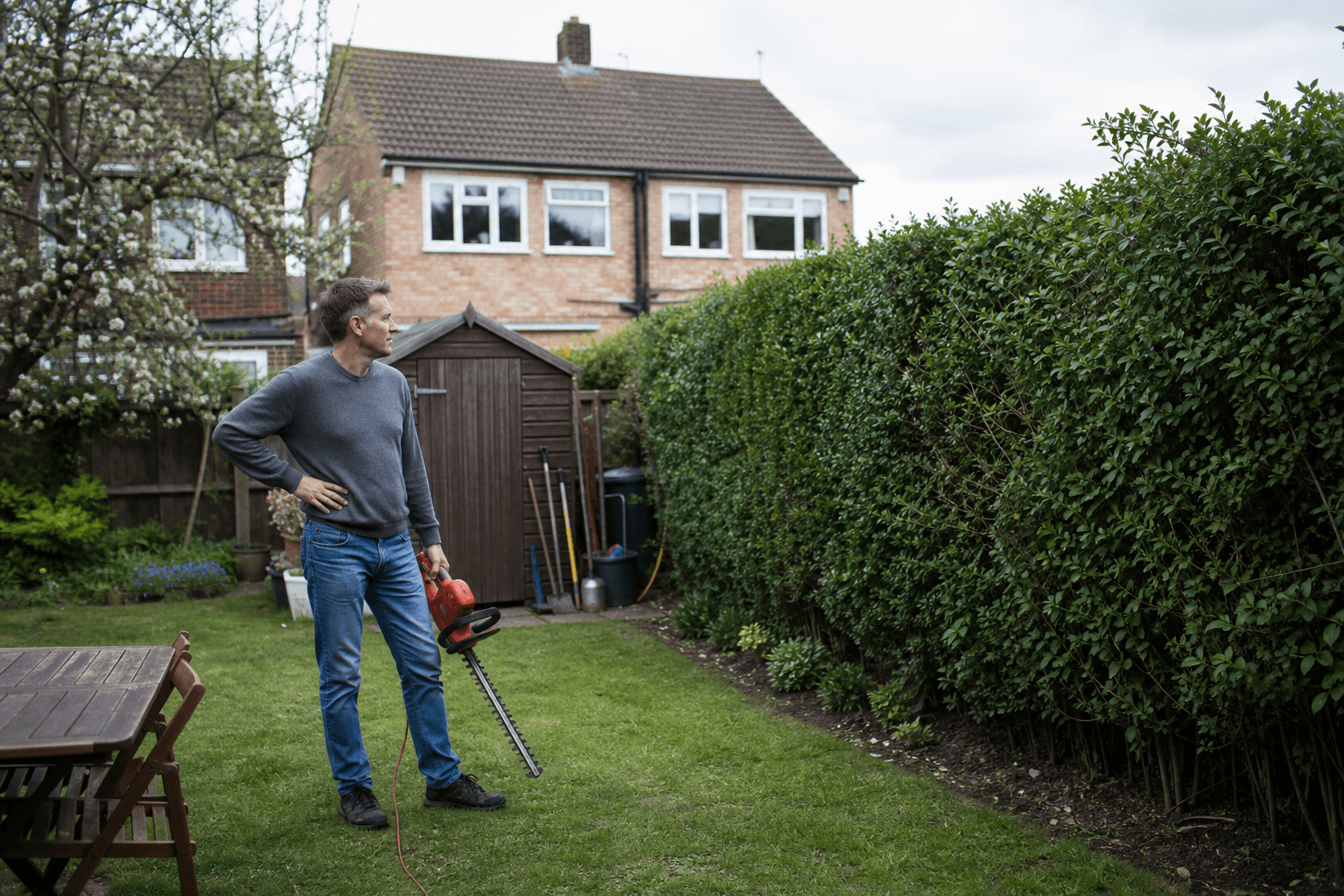
UK garden mistakes that cost real money: illegal hedge cutting, wrong-season scarifying, over-fertilising. Fix each one, save up to £1,200/year.
Related services
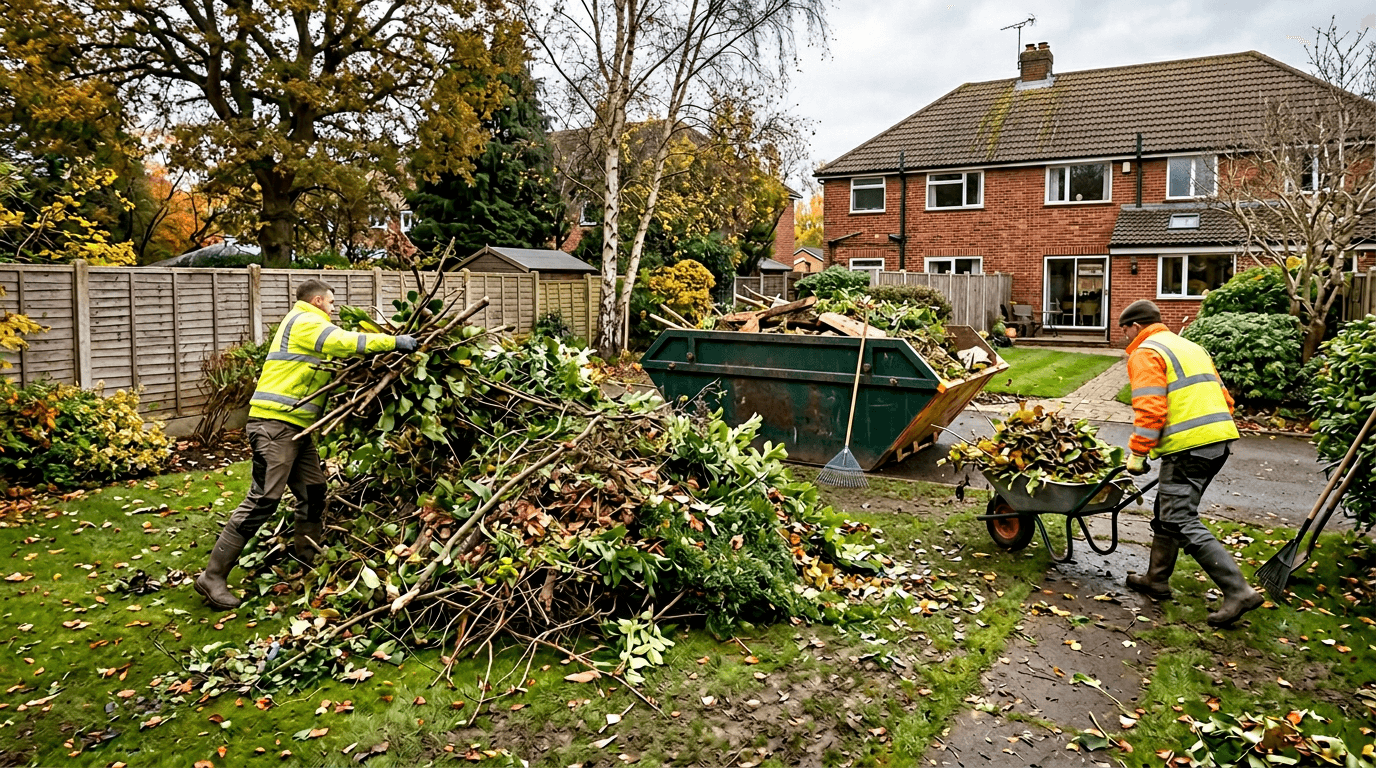
Garden clearance across the UK: green waste, soil, rubble and project leftovers removed by licensed crews. Clear quotes, complete clear-up, no hidden fees. Contact us for a tailored quote.
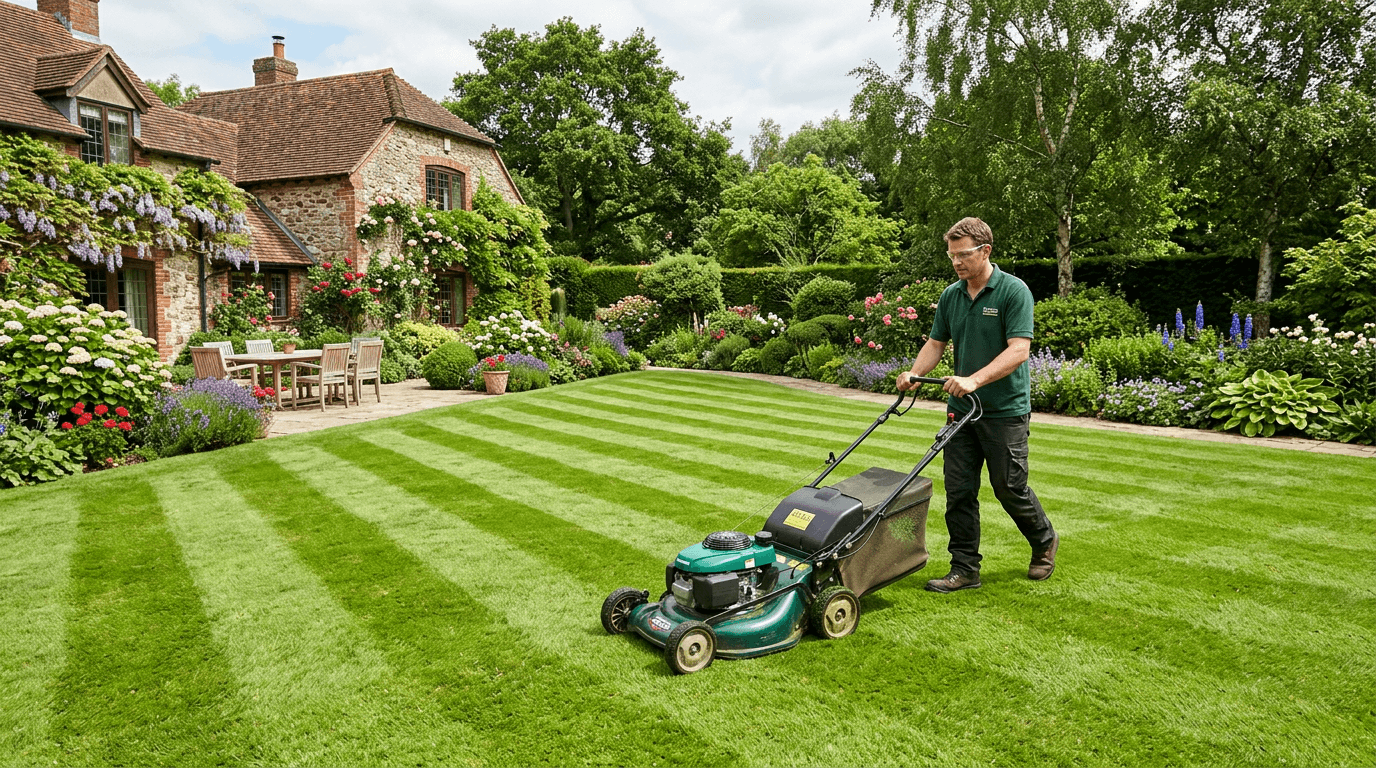
Neat lawns without the mower hassle. Taskino arranges professional lawn mowing with insured gardeners who arrive fully equipped, give clear quotes and leave edges trimmed and clippings tidied when agreed.
Ready to Book Your Service?
Tell us what you need and our team will help you find the right professional quickly, with clear pricing and no hidden fees.